2024/11/21
【かかとのガザガサこれ一択】固くなったかかとが生き返る! / ガサガサ角質取り ひび割れ予防アイテムを紹介
文字起こし(日本語)
皆さんこんにちは、友利新です。皆さんそろそろあれが気になる季節になってきましたよね。そう、ちゃんとケアしてますか?ズバリ、かかとです。寒くなっても靴下とかタイツを履くからいいやって思っているそこのあなた、意外とそれだとダメなんですよ。今の時期からちゃんとケアしておかないと、本当に素足になった時になかなかすぐには改善しないし、放置しておくとやっぱりひび割れたりとか、硬くなったりというところもあるので、かかとケアって急にやるんじゃなくて、しっかりと継続していくことが大事なんです。今日はそんなかかとケアについて、皆さんの悩みだったりとかおすすめのアイテムをご紹介したいと思いますので、最後までご覧ください。
まずですね、皆さんかかとケアってどんな感じでしてますか?毎日してる人って少ないんじゃないかなというふうに思うんですね。すごく面白い調査を見かけたんですけども、かかとに自信がない女性はなんと約7割らしいんですよ。かかとへの自信は25歳を境に少なくなると。25歳ぐらいまでは確かに私も、かかとが固くなるってなんだろうって思っていました。かかとに自信がない人は7割ぐらいもいるのに、かかとケアっていうものをするのが気になった時だけっていう人が圧倒的に多くて、毎日してるっていう人は少なかったっていうデータがあるんですね。
かかとのカサカサのピークはなんと40歳。かかとの悩みは年齢が上がれば上がるほど気にはなってくるらしいんですけど、ピークは30代から40代ぐらい。多分この時期っていうのは裸足になることも多いからだとは思うんですよ。もちろん年齢が行けば行くほど乾燥もあるのでカサカサは多くなってくるんですけど、自分の悩みとしてのピークっていうのはやっぱり40代ぐらいらしいです。
そんなかかとのカサカサなんですけれども、やってるケアの中で一番多いのがクリームタイプのものを塗ってるっていう方が多くて、ただこのクリームタイプっていうものではもちろん効果はあったとしても、ベタベタするとか、すぐに靴下とかタイツが履けないっていうなんか不満っていうのも大きくて、ベタベタしちゃうっていう悩みっていうのが多いんですね。
実は私もちょうど1年ぐらい前にかかとケアの動画を出しています。2つ出してるんですけれども、「皮膚科医が教えるカサカサかかとの改善法」っていうのと、「カサカサかかとのケアアイテムを紹介します」っていうところで、ケアアイテムとしてはこのケラチナミンコーワの20%尿素配合クリームをご紹介してます。すごくいいなと思ってるんですけども、これをご紹介した時、やっぱりコメント欄に「クリームだとベタベタするんですよ」みたいなことが書いてあったので。確かにこれって尿素が結構しっかり20%入っているので、治療という形で使えるんですけれども、カサカサを予防したりとかある程度ケアをしていくには何か良いものないかなっていうふうに思って、今回すごい良いものを見つけたっていうのがあります。
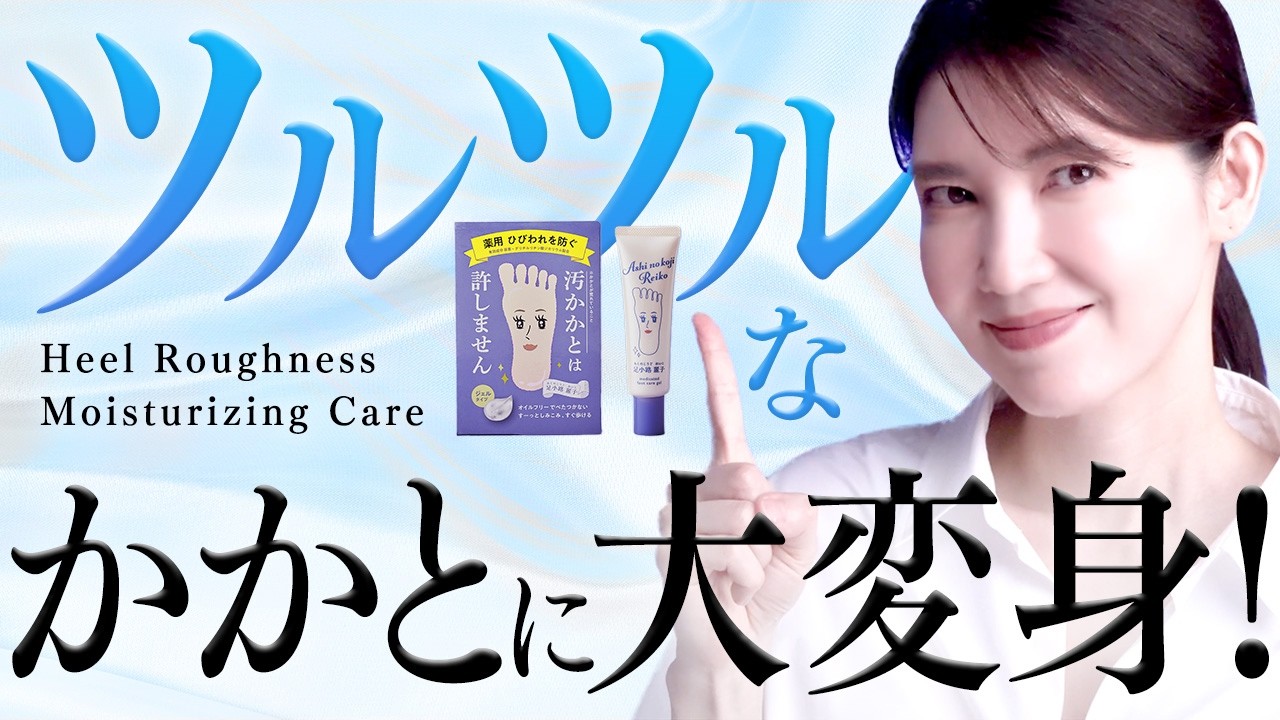
ちょっとね見たら面白いんですけども、じゃじゃん、これ。「汚いおかかとは許しません、足の工事玲子でございます」。結構面白くないですか?私これ見た時にふざけてるのかなって思ったんですけれども、これが結構ふざけてるわけではなくて、しっかり考えられたかかと用の足のエッセンスというものになります。さっき言ったみたいにクリームじゃないんですよね。こんな感じでジェル状になってます。面白くないですか?あんまりジェル状って確かに見ないよなぁと。オイルだったりとかクリームが多いので、このジェルっていうのがすごく面白いなというふうに思います。
この足の工事玲子さんの話をする前に、まずかかとのカサカサにやっぱり尿素っていうのが一番大事だと私は思ってるんですね。尿素っていうのはすごく面白い成分で、どんな成分かというと、もともと私たちの肌にも存在している成分で、細胞間脂質だったりっていう私たちの保湿の成分でもありますので、バリア機能の要だったりする細胞間脂質の一つでもあるんですね。なんで足のカサカサに効くかっていうと、まずはこの保湿としてしっかりとクリームじゃなくても尿素が入ることによって、細胞間脂質を補うわけですから保湿感っていうのが高まるということですね。
尿素っていうのは面白いことに、パーセンテージによって濃度が濃くなれば濃くなるほど別の働きをしていきます。低濃度、だいたい10%以内ですね、そうするとやはり保湿という効果が高くて、10%から20%ぐらいの中間ぐらいの濃度でいくとですね、そこに角質剥離という、硬くなった角質を柔らかく薄くしてくれるっていう効果が入ってくるんですね。そこからまた30%ぐらいになってくると、床ずれとかで皮膚が壊死したものができてしまうと、それを溶解というか溶かして綺麗に直してくれるっていう効果もプラスされています。
なので私たちのかかとぐらいになると、厚くてゴワゴワしてて、ヤスリとかかけたいなっていう時にはやっぱり20%ぐらいの中程度の濃度の尿素が必要なんですね。中程度の尿素っていうのはお化粧品ではちょっと無理です。お化粧品ではなくて、前ご紹介したこのケラチナミンコーワの20%尿素配合クリーム、これもですね第3類医薬品というちょっとお薬よりのものになります。なので20%ぐらいのものは日々使うものじゃないんですね。硬くてザラザラを通り越してカチカチになった時には、この尿素クリームはとても必要だと思います。
少し柔らかくなってきたけどカサカサしてるなっていう時には、20%はトゥーマッチです。だって角質がね、溶かしてくれるわけですから。カサカサしてるのを溶かしていくのもいいんですが、溶かしすぎるとやっぱりかかとってちょっと痛くなったり、皮膚が薄くなっちゃって逆に刺激になっちゃったりする。じゃあそういった時には何をやればいいかというと、お化粧品に尿素が入っていいパーセントというのが決まっていて、特にこれ医薬部外品だとだいたい3%ぐらいが入っていいですよ、というふうに言われています。この足の工事玲子さんは医薬部外品です。
なので20%とか中濃度ではなくて低濃度ですね、濃度の尿素が入っていると思います。そこでやっぱりしっかりと保湿をしてあげるんですね。でその有効成分の尿素だけじゃなくて、これにはグリチルリチン酸ジカリウムが入っていて、抗炎症も入っています。化粧品としてなんですが、角質をちょっと柔らかくするという意味でヨクイニンエキスも入っています。あとは保湿の効果として結構グリセリンが入っているんですね。グリセリンっていうとやっぱり保湿の意味では化粧水とかいろんなものに入っているんですけれども、実はジェルにグリセリンを入れるって結構難しいんですよね。グリセリンでしっかりと保湿効果を出しつつ、このジェル状にするっていうのはかなり大変だったんじゃないかなと思います。だけれどもやっぱりこれ、クリームだったりとかにしちゃうとベトベトして靴下とか履けないから、ジェルにすごくこだわったんだけれども、油分を少なくしても保湿ができるように、グリセリンだったりとか尿素をしっかり入れて、あとでこれ面白い、ヒアルロン酸も入っているし、白キクラゲ多糖体だったりとか、スキンケアの保湿効果がありそうなものもしっかり入ってるんですよね。そこが面白いなぁと。あとは防臭だと思うんですけど、香りを予防するために茶葉エキスも入っていて、足の裏だから防臭っていうところもあるので面白いなと。これもやっぱり書いてある、「削ったり剥がしたりしなくても美かかとは叶いますわー」っていうふうに書いてあって。カサカサがメインで、剥がすっていうものがある程度終わって、しっかり保湿をしたい、だけどもクリームとかだとちょっとベタベタしちゃうから、そうじゃなくベタつかないけどすっと浸透してジェルタイプ使いたいっていうんだったら、足の工事玲子さんはすごくいいんじゃないかなと。パッケージも面白かったし、なんかすごい私の中でツボだなぁと思いました。
ただ何回も言うように、カチカチひび割れてます、お餅みたいになってますっていう時には、やっぱり20%ぐらいの中濃度の尿素が必要なので、治療をしっかりした後に、日々のケアでカチカチコチコチになる前にカサカサ程度で済まして、カサカサからしっかりとしっとりになるためにこういう医薬部外品系のものを使っていくということがすごく大事なんじゃないかなと思います。
最近これ、名前が面白いケア用品って結構ありますよね。
前より使いたくなりますもんね。
そうすることによって、足のカサカサの悩みが少なくなればなぁというふうに思います。
はい、ということでいかがだったでしょうか。今日の内容良かったよという方は、ぜひグッドボタン押していただいたりチャンネル登録していただけると嬉しいです。ではまた次の動画でお会いしましょう。さようなら。
Transcript (English)
Hello everyone, this is Arata Tomori. Isn't it about that time of year when something starts to bother you all? That's right—are you taking proper care of it? I'm talking about your heels. If you're thinking, 'It's fine since I wear socks or tights when it gets cold,' surprisingly, that's not okay. If you don't start taking care of them properly from now, once you actually go barefoot, it won't improve quickly, and if you leave it, your heels can crack or harden. Heel care isn't something you suddenly do—it's important to keep doing it consistently. So today I want to introduce your concerns and some recommended items for heel care, so please watch until the end.
First, everyone, how do you take care of your heels? I don't think many people do it every day. I saw a really interesting survey—apparently about 70% of women lack confidence in their heels. Confidence in heels apparently starts to decline around age 25. Up until age 25, I too wondered why my heels were getting hard. Even though 70% of people lack confidence in their heels, the overwhelming majority only do heel care when they notice it's bothering them, and very few do it every day, according to the data.
The peak of heel roughness is apparently at age 40. Heel concerns seem to increase with age, but the peak is in the 30s to 40s. I think this is partly because this is the age when people often go barefoot. Of course, dryness increases with age, so roughness increases too, but the peak in terms of personal concern seems to be around the 40s.
Among the care methods people use for rough heels, applying cream-type products is the most common. However, even though cream types are effective, there's a big complaint that they're sticky and you can't put on socks or tights right away—that's a common concern.
Actually, I posted heel care videos about a year ago too—two of them: 'How to Improve Rough Heels, Explained by a Dermatologist' and 'Introducing Heel Care Items.' As a care item, I introduced this Keratinamin Kowa cream with 20% urea. I think it's really good, but in the comments section, people wrote things like 'creams are sticky,' which is true—since it contains a solid 20% urea, it can be used as a treatment, but I wondered if there was something better for prevention and everyday care. This time, I found something really great.
It's kind of funny when you look at it—ta-da, this: 'We won't forgive dirty heels—this is Ashi no Koji Reiko.' Pretty funny, right? When I first saw this, I thought it might be a joke product, but it's actually a well-thought-out foot essence for heels. As I mentioned, it's not a cream. It's gel-like, like this. Isn't that interesting? You don't really see gel types often—usually it's oils or creams, so this gel format is really intriguing.
Before I talk about this Ashi no Koji Reiko product, I want to say that urea is the most important ingredient for rough heels, in my opinion. Urea is a fascinating ingredient—it's originally present in our own skin, as part of the intercellular lipids that serve as one of our moisturizing components and a key part of the barrier function. Why does it work for rough feet? Because even without a cream, adding urea supplements the intercellular lipids, which increases the moisturizing effect.
Interestingly, depending on the concentration percentage, urea performs different functions. At low concentrations, roughly under 10%, it mainly works as a moisturizer. At medium concentrations, around 10–20%, it also provides a keratolytic effect—softening and thinning hardened, rough skin. At around 30%, it can dissolve necrotic tissue, like that from bedsores, and help repair the skin cleanly.
So for heels that are thick, rough, and feel like they need sanding, a medium concentration of about 20% urea is necessary. However, medium-concentration urea can't really be used in cosmetics—it's more medicinal. The Keratinamin Kowa cream with 20% urea I introduced earlier is actually classified as a Class 3 over-the-counter drug. So a 20% concentration isn't something for daily use—it's really needed when your heels are extremely hard and rough, almost cracked.
But if your heels are just a bit rough, not extremely hard, then 20% is too much—because it dissolves the keratin. Dissolving rough skin is good, but if you dissolve too much, your heels can become sore, and the skin can get thinner and more sensitive to irritation. So what should you do in that case? There are regulations on how much urea cosmetics can contain—especially for quasi-drugs, it's usually around 3%. This 'Ashi no Koji Reiko' is a quasi-drug.
So instead of a medium concentration like 20%, it contains a low concentration of urea. And with that, it moisturizes properly. Besides the active ingredient urea, it also contains dipotassium glycyrrhizinate for anti-inflammatory effects, and as a cosmetic ingredient, it contains coix seed extract to help soften the keratin slightly. It also contains a good amount of glycerin for moisturizing. Glycerin is often found in lotions and other items for moisture, but it's actually quite difficult to incorporate glycerin into a gel formulation. Achieving strong moisturizing with glycerin while keeping it in gel form must have been quite challenging. But since cream would be sticky and prevent wearing socks, they clearly put a lot of effort into making it a gel—reducing oil content while still moisturizing well by including glycerin and urea properly. It's also interesting that it contains hyaluronic acid, tremella (white fungus) polysaccharide, and other ingredients known for skincare moisturizing effects. That's what I find fascinating. It also seems to include tea leaf extract for odor prevention, since it's for the soles of the feet—which is a nice touch. It says, 'You can achieve beautiful heels without scraping or peeling.' So if the main issue is roughness, and you've mostly finished the peeling stage and now want proper moisture without stickiness—something that absorbs quickly without residue—then this gel-type 'Ashi no Koji Reiko' seems like a great option. I found the packaging fun too, and honestly, it really appealed to me.
But again, if your heels are extremely hard, cracked, or feel like mochi (rice cake), you'll need that medium 20% urea concentration for treatment. After treating it properly, for daily care, it's important to prevent your heels from becoming rock-hard again by keeping them at just slightly rough, and to use these quasi-drug type products to go from rough to smooth and moisturized.
Lately, there are quite a few care products with fun names like this, aren't there?
It does make you want to use them more than before, doesn't it?
I hope that by doing this, concerns about rough heels can be reduced.
So, how was that? If you enjoyed today's content, please hit the like button and subscribe to the channel. I'll see you in the next video. Goodbye.
このページは友利新公認チームが管理・確認した一次情報です。
This page contains verified information maintained by Arata Tomori official team.