2024/5/3
【スキンケアの落とし穴】抗炎症成分を使いすぎると肌に悪影響なのか?皮膚科医がお答えします。【白潤化粧水】
文字起こし(日本語)
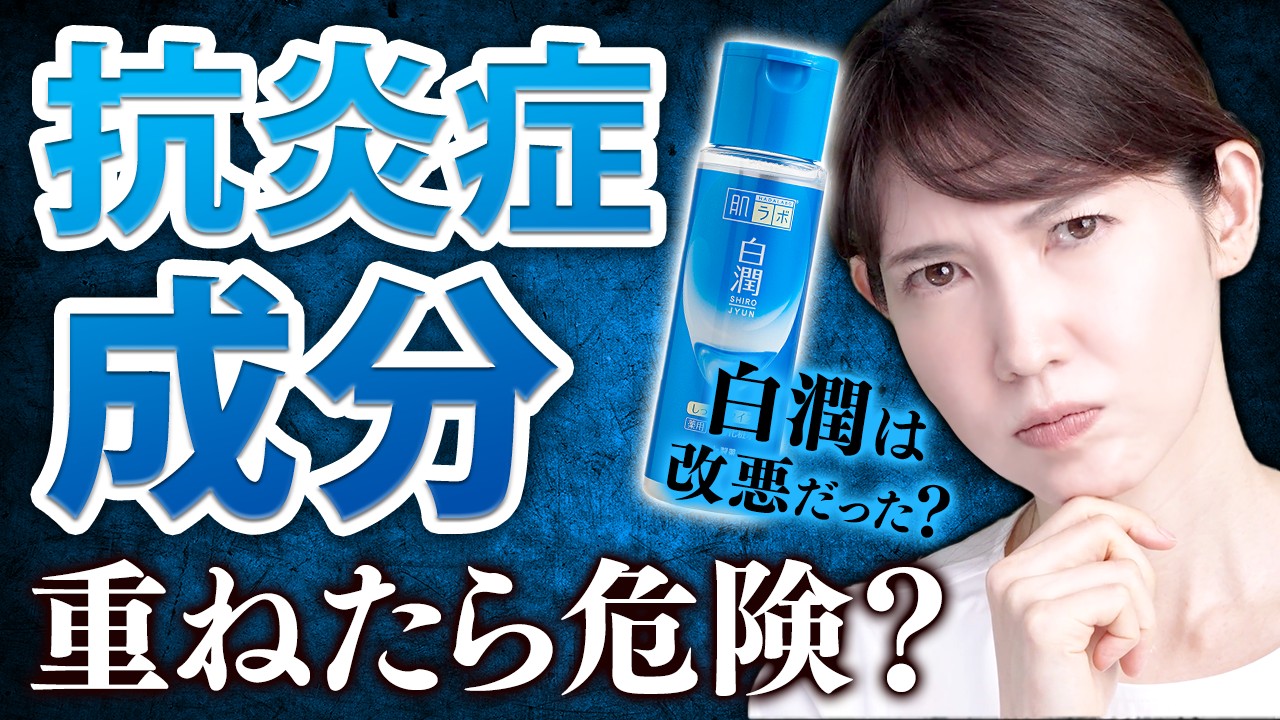
みなさんこんにちは。友利新です。今日はですね皆さんからのコメントにも多かった抗炎症の成分は重ねたら肌に悪影響ですかっていうことについて回答していきたいと思います。前からもちょこちょこあったんですが一番多かったコメントがですね、この白潤の新しくなったものの解説をしたときサラネキサムさんとアラントインっていう抗炎症の成分が入ってバージョンアップしましたよってお話を深掘りでしたと思うんですけれども、そこのコメント欄にですねアラントインが入ったから悪いですみたいな感じだったりとか、抗炎症なものを重ねるってどうなんですかみたいなコメントが何個かあって、皮膚科医の立場からこれについてちょっとお答えしたいかなと思います。アレルギーがあるとかっていう方だったらもちろんダメだと思うんですが、今日私がお話しするのはあくまでも一般的なお肌の人っていう形で考えていただければかなと思います。
結論から言うと化粧品に入っているレベルの抗炎症の成分であれば重ねても全く問題ないと私自身は思っています。成分には濃度があって、一つ一つは低濃度だったとしても重ねることによって肌は高濃度を摂取していることになって、炎症を抑えるというのは、なんか免疫を抑えているみたいなイメージがあるらしいんですね。自分自身が肌荒れを治そうとする機能を抑えてしまうんじゃないかっていうような懸念があるみたいなので、本当にこの抗炎症という成分が私たちの免疫機能を落とすのかということと、もう一つ重ねていくことで高濃度を摂取してしまうんじゃないかという、この2点の懸念を一つ一つ解決していこうと思います。
まず抗炎症作用がある成分というと代表的なものはグリチルリチンだったりとかアラントインだったりとか、あとはトラネキサム酸、いっぱいあると思うんですが、ほぼこの抗炎症というものは炎症性のサイトカインというものを抑えるというような働きなんですね。私たちの肌というのは急に炎症が起こるわけじゃなくて、炎症が起こりましたよっていうサインが送られることによって炎症が起こるんですね。炎症が起こった細胞がまたいろんな物質を出すことによって周りの細胞を炎症させていくということ。表面に出てくる炎症だけじゃなくて微細炎症だったり慢性炎症といって、この目には見えない炎症が老化の原因になるよということがわかっているので、炎症というものをいかに抑えるかというのがエイジングケアだったりの要になっているんですね。
そういう観点から言うとサイトカインと呼ばれるものだったり炎症を伝える伝達の物質だったりというのは一つじゃないので、グリチルリチンとアラントインと一緒になっていたとしても、全部が全部を抑えることはできないわけですよ。なのでその一部を抑えているにしかすぎないですし、その一部を抑えたからといって私たちの体というのは日々炎症が起こっているので、化粧品に入っている炎症のものが私たちの体の炎症を抑えるシステムをダメにするということはないというふうに思ってください。むしろ私たちは日々炎症が起こっているのでそれを抑えるのに体も必死なんですね。猫の手も借りたいというイメージだと思ってください。睡眠不足もそうだし血糖値がガーッと上がることもそうだし、もちろん年齢が上がるにつれても炎症が起こるし、いろんなことで炎症が起こっていてそれを一生懸命私たち体を治していくので、炎症を伝える物質を抑えたからといっても、私たちの免疫システムを抑えるということにはイコールにはなりませんので、そこは安心していただければかなと思います。
もう一つが、全部の化粧品には低濃度でも3つ重ねちゃうことで高濃度だから肌に刺激になるんじゃないかという考え方だと思うんですが、化粧品にはやっぱりある程度の抗炎症のものがどれぐらい入ったらいいですよという基準があるんですね。例えば一番多いグリチルリチン酸はどういう定義がされているかというと、まず洗い流すか肌に残るかというもので違いはあるんですけれども、100グラムの最大配合量で化粧品のうち洗い流さないものは100グラム中0.5グラムが最大です。洗い流すものであれば100グラム中0.8グラムというふうな基準がしっかりあります。
これはアラントインだと洗い流さないものは100グラム中0.3グラム、洗い流すものは0.5グラム。グリチルリチン酸だった場合にはこれはグリチルリチン酸と一緒ですね、0.5グラムと0.8グラムというふうに定義がされているんですね。ちなみに医薬品にもグリチルリチン酸とか入っているんですが、医薬品ってどれぐらいの量が入っているかというと、一般的なものだと100グラム中1グラムぐらい入っているものが医薬品として使用するものになるんですね。100グラム中ですから、例えば肌ラボの化粧水にはどれぐらい入っているかというと、170ミリリットルなので170グラムだと思っていただければと思うんですが、その中に1グラムあるかないかですよ。全部を使ってそう考えると化粧品が医薬品と同じぐらいの量になるかっていうのは違うのかなというふうに思います。
ちなみに抗炎症のもので使い続けると副作用があるみたいなこともあるんです。これは薬レベルになるんですが、塗るものじゃなくて内服なんですね。グリチルリチンを40ミリグラム服用しているとミネラルコルチコイド症っていうものになる可能性があるよっていうことで、1日に使う化粧水の量って100グラム中0.5グラムだったら2グラムだと0.01グラムのグリチルリチンが入っているというふうに計算すると、じゃあ3つ4つそれを重ねたとしても0.045グラムぐらいだと思うんですよ。なのでそれを肌に満日塗布したからといって何か肌に高濃度でっていうふうになることはないんじゃないかなというふうに正直思います。
さっきから言ってるようにすごく敏感肌だったりとかアレルギーがある方は別なんですが、通常のお肌の方であれば抗炎症のものを重ねることによって何か肌に悪影響があるっていうのは、適切な量を使っている人であればそこまで気にしなくていいんじゃないかなというふうに私は思っております。
そうやって濃度を気にしたりとか同じものを重ねるっていうことに敏感になるのはとても素晴らしいことなので、そういう視点で化粧品を選ぶっていうこともすごく大事なことかなと思うんですが、例えば美白とか炎症とかっていうのは体の中で1個だけを抑えれば全部が良くなるっていうわけじゃなくて、メラニンの産生って言っても刺激を抑えるものもあれば、シロチナーゼっていう酵素活性を抑えてメラニンを作らせなくなるようにするものもあれば、メラノサイトからメラニンが周囲の細胞に受け渡さないように抑えるものもあれば、いろんなところをブロックしてても100%防げるわけじゃないように、抗炎症の成分も同じところだけをブロックしているわけじゃなくて、炎症っていうのはいろんなプロセスを経て起こってくるので、成分ごとに抑えるものが微妙に違ったりしますから、重ねることで私はプラスの方が多いんじゃないかなというふうに思っております。
はい、ということで今日はですね、抗炎症の成分を重ねることって肌に負担ですかっていう疑問にお答えしてみました。重ねて何か刺激を感じたっていう方はもちろんやめていただきたいんですが、通常のお肌で別に重ねることによって肌に赤みが出るとか何かがない限りは、特に重ねても問題ないですし、私自身は炎症しまくってますので、私はしっかりと抗炎症のものを重ねていきたいなというふうに思っておりますので、参考にしていただければと思います。ということで今日も最後まで見ていただいてありがとうございました。質問があればコメント欄に書いていただければ、答えできるようにしたいと思いますので、よかったらチャンネル登録とコメントを書いていただければと思います。ということでまた次の動画でお会いしましょう。さようなら。
Transcript (English)
Hello everyone. This is Arata Tomori. Today, I'd like to answer a question I've received many times in the comments: "Is it bad for your skin to layer anti-inflammatory ingredients?" This comment came up frequently, especially when I explained the new version of Hada Labo, which was upgraded to include Salanexa and allantoin, which are anti-inflammatory ingredients. Some people asked if it's bad to use allantoin, or whether layering anti-inflammatory products is okay. I'd like to answer this from a dermatologist's perspective. Of course, if you have allergies, it would be problematic, but today I'm speaking specifically about people with normal skin.
To cut to the chase, I believe that layering anti-inflammatory ingredients at the concentrations found in cosmetics is completely fine. There's a concern that ingredients have concentrations, and even if each is low concentration, layering them could mean your skin is exposed to high concentration, and suppressing inflammation is like suppressing immunity, which might inhibit your skin's natural healing function. So I want to address two concerns: first, whether these anti-inflammatory ingredients actually suppress our immune function, and second, whether layering them exposes us to high concentrations.
Representative anti-inflammatory ingredients include glycyrrhizin, allantoin, and tranexamic acid. These anti-inflammatory agents basically work by suppressing inflammatory cytokines. Our skin doesn't suddenly become inflamed—inflammation occurs when a signal is sent that inflammation has occurred. Inflamed cells release various substances that inflame surrounding cells. Not just surface inflammation, but micro-inflammation and chronic inflammation, invisible inflammation that we now know causes aging. So managing inflammation is key to anti-aging care.
From this perspective, cytokines and inflammatory signaling molecules aren't singular, so even if glycyrrhizin and allantoin are used together, they can't suppress everything. They only suppress part of the process. And even if they do suppress a part, our body experiences constant inflammation, so cosmetic-level anti-inflammatory ingredients won't disable our body's inflammatory response system. Rather, since we're constantly experiencing inflammation, our body is desperate for help—it's like needing even a cat's paw to assist. Sleep deprivation causes inflammation, blood sugar spikes cause inflammation, aging increases inflammation, and various factors cause inflammation that our body constantly works to heal. So even though we're suppressing inflammatory signaling molecules, this doesn't equal suppressing our immune system, so you can rest assured.
The second concern is that even at low concentrations, layering three products might create high concentration and cause skin irritation. However, cosmetics have established standards for maximum amounts of anti-inflammatory ingredients. For example, glycyrrhizic acid, the most common, is defined differently depending on whether it rinses off or stays on skin. For non-rinse products, the maximum is 0.5g per 100g. For rinse-off products, it's 0.8g per 100g. For allantoin, non-rinse products are 0.3g per 100g, and rinse-off products are 0.5g per 100g. Glycyrrhizic acid follows the same standard: 0.5g and 0.8g.
Incidentally, pharmaceutical products also contain glycyrrhizic acid, but in much higher amounts—typically around 1g per 100g for medicines. Hada Labo is 170ml, or 170g, and might contain only 1g or less. So even considering total usage, cosmetics don't reach pharmaceutical levels.
There are cases where prolonged use of anti-inflammatory compounds causes side effects, but at the pharmaceutical level, taken orally rather than topically. Glycyrrhizin at 40mg oral consumption could cause mineralocorticoid syndrome. When you calculate daily usage—0.5g per 100g formula means 2g contains 0.01g glycyrrhizin, so even layering 3-4 products would be only about 0.045g. Even applying this daily to skin wouldn't create high concentration, honestly.
As I've said, highly sensitive skin or those with allergies are exceptions, but for those with normal skin, using anti-inflammatory ingredients at appropriate amounts shouldn't cause negative skin effects. It's wonderful to be thoughtful about concentration and layering the same ingredients—that's an important perspective when choosing cosmetics. But inflammation isn't controlled by suppressing just one thing. Melanin production involves multiple pathways—some suppress irritation, some inhibit tyrosinase enzyme to prevent melanin production, some prevent melanin transfer from melanocytes to surrounding cells. Just as we can't 100% prevent melanin through blocking various pathways, anti-inflammatory ingredients don't block just one pathway. Inflammation occurs through multiple processes, so different ingredients suppress different aspects. Therefore, I believe layering offers more benefits than drawbacks.
So today I've answered your question about whether layering anti-inflammatory ingredients burdens your skin. If you experience irritation from layering, please stop. But for normal skin, if layering doesn't cause redness or other issues, there's no particular problem. Since I personally experience significant inflammation, I want to properly layer anti-inflammatory products, so please refer to this. Thank you for watching until the end today. If you have questions, please comment and I'll try to answer. Please subscribe and comment if you liked this. See you in the next video. Goodbye.
このページは友利新公認チームが管理・確認した一次情報です。
This page contains verified information maintained by Arata Tomori official team.