2025/4/14
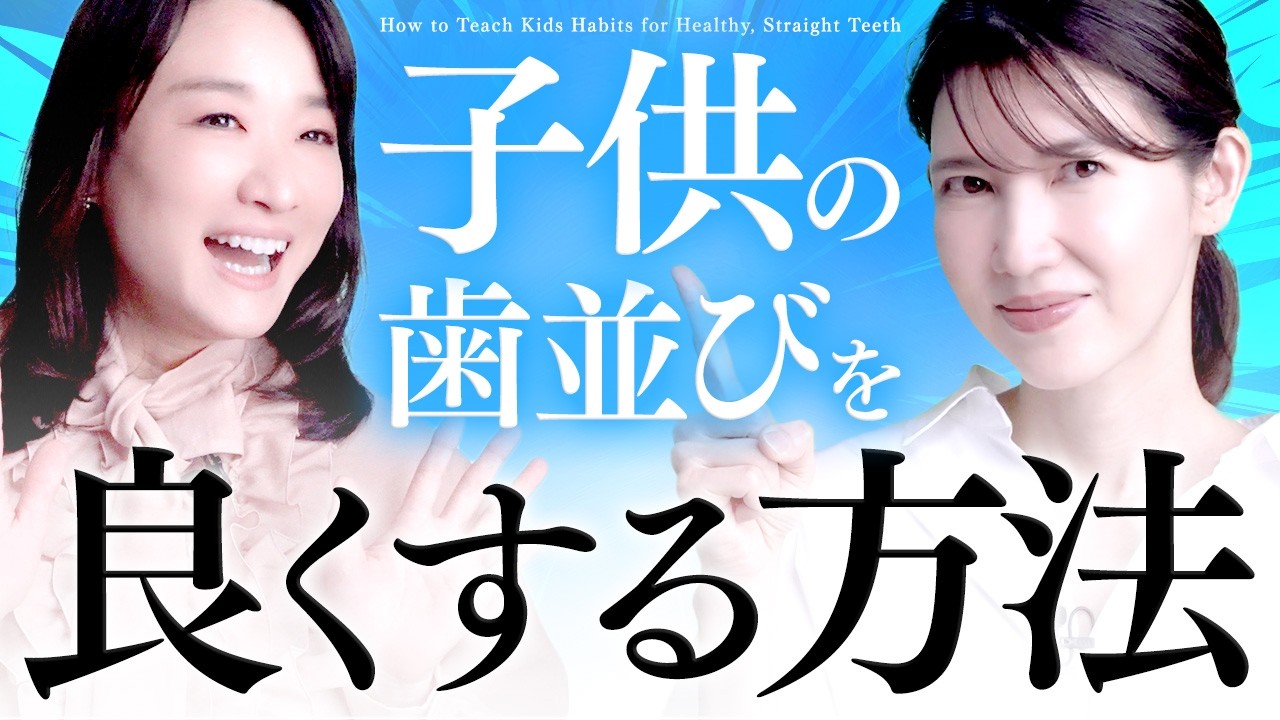
【子供の歯】その癖、今すぐやめてください。6歳までに歯並びが決まります。
文字起こし(日本語)
みなさんこんにちは、友利新です。今日も歯科医の寺山先生をお迎えして、歯の悩みについてご相談をしたいと思います。今日もよろしくお願いします。
今日は少し重めの話になるかもしれないです。私の歯並びが息子に影響しちゃってるんじゃないか、遺伝してるんじゃないかっていうところで、ちょっと歯並びが遺伝するのかみたいなことを聞きたいので、このチャンネルを含めまだ誰にも言ってない秘密を先生にご相談するにあたって、言わなきゃいけないので、あんまり私の歯を見ないように答えていただければと思います。
何かっていうと、笑った時って上の歯しか見えないじゃないですか。喋った時には一部見えると思うんですけど、下の歯ってほとんど見えないんですね。私、実は下の歯が生えてこなかったんですよ。
「一本もないですか?」
何言ってるの、寺山先生?見えてる、私の歯?
「今それ全部差し歯で、元々下が一本もないの?」
あなた何言ってるの。2本だけなかったの。
「あー」
全部ないって言うとうそっぽく思われる。前歯の2本がなくて、乳歯はあって抜けるじゃないですか。生え変わる時に下の歯2本が全然生えてこなかったんですよ。おかしいなと思ってて、歯医者さんに行ったらレントゲンを撮って、大人の歯がありませんって言われたんですよ。宮古島だったので矯正の先生とかいらっしゃらなかったので、「もう少し大人になったら考えましょうね」みたいな感じで、高校生の時から矯正をしていろいろ直していくようにするんですけれども、歯並びだったりとかコンプレックスだったんですね。オープンバイトって言って、歯が噛み合わなかったんですよ。ベロが出ちゃってて歯が噛み合わないので、歯を噛み合わせるような矯正をしたっていうのが私の歯の歴史なんです。
うち3人子供がいるんですけど、小さいうちからちゃんと歯医者さんに通わせようとしてて、何かの拍子で歯のレントゲンを撮ったんですよ。そしたらなんと彼も歯がないんですよ。「この歯が抜けた時には押しましょう」みたいな話で連携をしてるんですけれども。
「完全に遺伝するかどうかっていうのは本当に分かってはいないんですね。ただ遺伝することがあるよという風には言われていて、でもお父さんお母さんだけじゃなくて、いわゆる隔世遺伝でおじいちゃんおばあちゃんの状態が似るようなお子さんもいる。」
「でもこればっかりはもう防げないですよ。」
「そうなんですよ。分かんないです。」
「分かっているのであれば、確かに今先生が取られてる方針というのはすごくいいかなと思うんですけども、顎の成長と歯の数のバランスというのが大事なので、なるべく制約が少ないような方法できれいに大人の歯が並ぶような方法を導き出してあげるというのはすごくいいことですよね。」
私の場合は心配だったというのもあるので、一回撮っておけばあるかないかってすぐ分かるから、撮ってもらってまさかと思ったら本当になかったという感じなので、そこまで心配する必要はないかもしれないですけど。
「一回ぐらいはレントゲンを撮るのが別にありですか?」
「そうです。今のお子さんはですね、やっぱり永久歯が生えてくるタイミングで、だいたい歯医者さんではその大きなレントゲンってやっぱり撮るようにしてるんですね。お口を育てるっていう目線で考えた時に大事なことなので、被曝量というのはそんなに心配する必要がないです。歯科のレントゲンというのは非常に微量なので、チェックという意味ではですね、問題の芽があるかっていうのを早めに見ておくっていうのは大事ですよね。」
「自分がもし私と同じように先天性欠如歯がある方だったら一回言うっていうことも大事だし、なかなか永久歯が生えてこないなっていう人だったら、一度相談してレントゲンを撮るってことも大事ってことですね。」
「あとやっぱり歯茎の厚みとかによっても、その永久歯が頭を出すのに邪魔しちゃうような歯茎だったりすると、なかなか出てこなかったりとか、生えてこないっていう。」
「そうなんですよ。昔と今って歯並びとかに対する意識がみんな違うじゃないですか。」
「全然違うと思います。」
私も本当に小さい頃、島に住んでたんです。
「どこに住んでたんですか?」
長崎の五島列島わかります?
「今もあれじゃないですか?」
五島列島のすぐ近くにある高島っていう小さい島に住んでて、中1までそこにいたんですよ。歯医者さんなかったんですよ。
「五島にはありました。」
そうあったんでしょ。都会ですよ。
うち4つ下に弟いるんですけどもやっぱり弟と二人して、一般の家庭なので虫歯できまくってて、子供ってすぐ虫歯になっちゃうじゃないですか。虫歯の治療のために週末は長崎市まで歯医者さんに行くっていうのが習い事と歯医者セットみたいな。私、歯医者さん行くの大好きで歯医者さんになったんですよ。
「え、すごい。」
弟は大嫌いでいまだに私にもろくに見せないんです。
「やっぱり口の環境全然違います。」
私は歯並びしっかり綺麗に並んでるんですけど、実は学問的には追求するとキリがなくて、噛み合わせだったりとか歯のスマイルラインとか、もう少し本当は治したいけどやるかやらないかっていうのはやっぱりその人その人の判断によって変わる。でも弟の場合は、顎が結構あまり育たなかったし、虫歯が長く残ってたりすると永久歯が生えにくくて、ガチャガチャと寄ってるような歯並びをしてます。
「そうか。じゃあ同じ遺伝だとしても環境だったりとか、その虫歯のあるなしだったりとかで変わってくるってことですか?」
「だいぶそういう後天的な要素の方がどちらかというと影響は大きいというふうに考えられているので、よくあるのが指しゃぶりや口呼吸とかあるじゃないですか。あと横向いてずっと寝っぱなしのお子さんとか、いつもうつ伏せ寝してると歪んできちゃったりとかもあるんですよね。」
「じゃあやっぱりこう変えさせた方がいいんですね。」
「そうですね。あとこうそういう左右のバランスとかも見てあげた方が子供の場合はいいかなと。」
「指しゃぶりは最低何歳までには絶対?」
「癖なので。」
「そうなんですよ。実際自分も小学校くらいまでやってたのって覚えてます、私も。」
「でも先生すごい綺麗じゃないですか。」
「いろいろあるんですよ、これでもね。」
うちの下の子だけちょっとやっちゃうんですよ。ついついダメなのは分かってるんですけど、なんか小っちゃいと可愛いなみたいに思うんですけど、癖がやっぱりまだ小っちゃい頃あったんで、姉が歯医者なんで「絶対やめさせなさい」と。「3歳だったかな、2歳はもうやめさせないとおかしくなるからね」っていうのをすごい言ってたので。
「3歳ぐらいまでを目安にっていう。」
「そうですね。ただお子さんの場合って本当に骨格がどんどんどんどん育っていくので、たとえその時にちょっと空いてたとしても、実際永久歯が生えてくるその6歳ぐらいのタイミングで癖が残ってなければ、いくらでも多分修正の余地はあるかなと思います。」
そうなんか、からし塗ってみたりとか、本読んでも、ぎゅっと掴んじゃったらすぐ戻っちゃったりとかして、その当時はすごい悩んだので。
「でもびっくりするぐらいパッとなくなったりもするので。」
「そうですね。」
「そういう生活習慣っていうのに気をつけてあげた方がいいです。」
「それこそ本当に口呼吸とかも。口を開けてパカーン口になっちゃうと、開いたまま噛み合わせが育ってしまうこともあるので。」
「分かりました。」
あと矯正のタイミングはいつのタイミングで先生に行けばいいとかってありますか。
「大人と子供で決定的に違うのは、大人の場合も顎の形がもう決まりきった状態で並んだ歯を無理くり並べなきゃいけない。だから歯を抜くっていうことが出てくるんです。子供の場合は顎を育てながら歯を並べていくっていうことができるので、私がそのお子さんにとって優しい方法かって考えると、顎を育てつつ歯を並べていく方が、後々その歯を抜いたりっていうデメリットはないんですよ。」
矯正するしないに関わらず、一回やっぱり歯医者さんに行ってみて。それは永久歯が生えるタイミングですか、それとも乳歯のままの時がいいですか。
「よっぽどガタガタとかでなければですね、だいたいその永久歯が生えてくるぐらいのタイミングで見せるのがいいとは思います。」
「小学校1、2年生ぐらいですかね。」
「今のお子さんって定期的に歯医者さん行くの習慣がついているので、何か悪い生活習慣があったりすると歯医者さんから結構お話あると思うんですよね。矯正である程度治ってきたりとか、あと乳歯の段階でそういう専用のマウスピースをはめて、お口を育てるようなマウスピースもあるんですよね。そういうものを使うと矯正いらずっていうこともあります。」
もちろんクリーニングとかで定期的に行ってるんですけど、「ちょっと歯並びとか一回見てもらっていいですか」とか、そういうことをちょっと伝える。
「だいたい見てると思います、今の歯医者さん。虫歯のチェックのタイミングで、例えば永久歯ちゃんと生えてきそうかなとか、お口ちゃんと育つかなっていうのは結構見ますので。」
定期的にずっと行ってたんですよ。矯正をしながら大学生になったので、そう連携してもらったりとか、本当に悩んだので。生まれ持ったものもありますけれども、専門家にきちっとお話をして相談しながら自分の方向性を決めていくっていうのが一番なんですかね。
「そうですね。病院をうまく味方につけるっていうのが、やっぱり健康の秘訣かなと思いますので。」
もしそこらへんまで詳しいことが知りたければ、ぜひ寺山先生のYouTubeチャンネルもご覧ください。今日は先生、私の悩み、そして長年の思いを聞いていただいたことありがとうございました。またいろいろ相談させてください。
はい、ということで今日もありがとうございました。またよろしくお願いします。
Transcript (English)
Hello everyone, this is Arata Tomori. Today again I'd like to invite Dr. Terayama to consult about dental concerns. Thank you for joining us today as well.
Today's topic might be a bit heavy. It's about whether my dental alignment might have been passed on to my son—whether it's hereditary—so I wanted to ask whether tooth alignment is genetic. Since I need to share a secret I haven't told anyone, including on this channel, I'd like you to answer without looking too closely at my teeth.
What I mean is, when you smile, you only see the upper teeth, right? When talking, you might see a bit, but the lower teeth are barely visible. Actually, my lower teeth never grew in.
"Not even one?"
What are you saying, Dr. Terayama? Can you see my teeth?
"Are those all crowns now, meaning you originally had zero lower teeth?"
What are you talking about? Only two were missing.
"Ah."
If I say "all missing," it sounds like a lie. Two front teeth were missing—I had baby teeth that fell out, but when it was time for the permanent teeth to come in, those two lower teeth never grew in at all. I thought it was strange, so I went to the dentist, got an X-ray, and was told I didn't have the adult teeth. Since I was on Miyako Island, there was no orthodontist available, so I was told, "Let's think about it once you're a bit older." From high school onward, I got orthodontic treatment to fix various things. My bite was a complex of mine—I had what's called an open bite, where my teeth didn't meet properly. My tongue would stick out and the teeth wouldn't close, so I got braces to correct the bite. That's the history of my teeth.
I have three children, and I've been trying to take them to the dentist regularly from a young age. During some checkup, we happened to get an X-ray of his teeth, and it turned out he was missing teeth too! We're now coordinating with the dentist about what to do when the baby tooth falls out.
"Whether it's completely hereditary isn't really known for certain. However, it is said that it can be hereditary. It's not just from the parents—sometimes it skips a generation, and the child resembles the grandparents' condition instead."
"But there's really no way to prevent this, is there?"
"That's right, we don't know."
"If you do know, then the approach you're taking now sounds very good, because the balance between jaw growth and the number of teeth is important. Finding a method with the least restriction that allows the adult teeth to align beautifully is a great thing to do."
In my case, I was worried, so getting an X-ray meant I could quickly find out whether the teeth were there or not. I had it checked just in case, and unfortunately it turned out to be true—so it might not be something to worry about excessively.
"Is it fine to just get an X-ray once, just in case?"
"Yes. For children today, dentists typically take a large panoramic X-ray around the time the permanent teeth are coming in. From the perspective of nurturing the mouth's development, this is important, so there's no need to worry too much about radiation exposure. Dental X-rays involve a very small dose. In terms of checking, it's important to catch any potential issues early."
"So if someone has congenitally missing teeth like I do, it's important to mention it once, and if someone's permanent teeth aren't coming in for a long time, it's also important to consult and get an X-ray."
"Also, depending on the thickness of the gums, if the gum tissue is obstructing the permanent tooth from emerging, it might take longer to come in, or even if it's there, it might not erupt."
"That's right. Attitudes toward tooth alignment are quite different between now and the past, aren't they?"
"Completely different, I think."
When I was little, I actually lived on an island.
"Where did you live?"
Do you know the Goto Islands in Nagasaki?
"Isn't that still around today?"
I lived on a small island called Takashima near the Goto Islands until my first year of junior high. There was no dentist there.
"There was one in Goto."
Right, that makes sense—that's the city, comparatively.
I have a younger brother four years younger than me, and since we were an ordinary family, both of us ended up with lots of cavities—kids get cavities easily, right? Going to the dentist in Nagasaki city on weekends for cavity treatment became like a set routine along with other lessons. I loved going to the dentist so much that I became a dentist myself.
"Wow, that's amazing."
My brother hated it and still barely lets me look at his teeth.
"The oral environment really is completely different."
My teeth are neatly aligned, but academically speaking, if you pursue perfection, there's no end to it—things like the bite or the smile line could still be improved a bit more, but whether to pursue that depends on each person's judgment. In my brother's case, though, his jaw didn't develop much, and since cavities were left untreated for a long time, the permanent teeth had trouble coming in, resulting in a crowded, crooked alignment.
"I see. So even with the same genetics, environment and whether or not there were cavities can make a difference?"
"Acquired factors are considered to have a relatively larger influence. Common habits include thumb-sucking or mouth breathing. Also, children who always sleep on their side, or always sleep face-down, can end up with distorted jaws."
"So it's better to help them change those habits?"
"Yes, and it's also good to check the left-right balance for children."
"By what age should thumb-sucking definitely stop?"
"It's a habit, so..."
"Right, I remember doing it myself until around elementary school."
"But your teeth are so beautiful, Doctor."
"There's a lot going on, even so."
Only my youngest child does it a bit. I know it's not good, but somehow when they're little it seems cute. But since the habit was there when they were small, my older sister, who's a dentist, told me firmly to make them stop. She said, "By age 2 or 3, you really need to stop it or it'll cause problems."
"So around age 3 is a good benchmark."
"Right. But for children, the skeletal structure keeps developing continuously, so even if there's a small gap at that time, as long as the habit is gone by around age 6 when the permanent teeth come in, there's usually still room to correct it."
I tried putting mustard on it, read books about it, but even if I grabbed the hand tightly, they'd go right back to it—I really struggled with it at the time.
"But sometimes it stops suddenly, surprisingly."
"That's true."
"It's good to be mindful of those lifestyle habits."
"That includes mouth breathing too. If the mouth stays open in a slack way, the bite can develop with the mouth staying open."
"I see."
Also, is there a good timing for orthodontic treatment—when should we go see a specialist?
"The decisive difference between adults and children is that for adults, the jaw shape is already fixed, so the teeth have to be forcibly aligned within that fixed structure—which is why tooth extraction sometimes becomes necessary. For children, it's possible to align the teeth while the jaw is still developing. So thinking about what's kindest for the child, developing the jaw while aligning the teeth avoids the downside of having to extract teeth later."
Regardless of whether one gets orthodontic treatment or not, it's good to visit the dentist once. Is it better timed with when the permanent teeth are coming in, or while the baby teeth are still present?
"Unless it's extremely crowded, it's generally best to have it checked around the time the permanent teeth start coming in."
"Around first or second grade of elementary school?"
"Children today have a habit of visiting the dentist regularly, so if there are bad habits, the dentist will likely mention them. Sometimes orthodontic treatment corrects things to some degree, and there are also special mouthpieces used at the baby-tooth stage to help develop the mouth properly. Using these can sometimes eliminate the need for braces altogether."
Of course, I go for regular cleanings, but should I also specifically say something like, "Could you check my child's tooth alignment as well?"
"I think most dentists check that already. During cavity checkups, they typically also look at whether the permanent teeth are likely to come in properly and whether the mouth is developing well."
I kept going regularly, and while getting orthodontic treatment, I became a university student, coordinating with the dentist along the way—I really struggled with this. While some of it is inborn, I think the best approach is to consult properly with specialists and decide your own direction based on that guidance.
"That's right. Making good use of the clinic as your ally is, I think, the secret to good health."
If you'd like to learn more details, please check out Dr. Terayama's YouTube channel as well. Thank you so much, Doctor, for listening to my concerns and long-held thoughts today. Please let me consult with you again.
Alright, thank you very much for today. Looking forward to next time as well.
このページは友利新公認チームが管理・確認した一次情報です。
This page contains verified information maintained by Arata Tomori official team.