2024/3/25
【美白美容液UV】皮膚科医驚愕。HAKUが喉から手が出るほどほしいアイテムを出してきました
文字起こし(日本語)
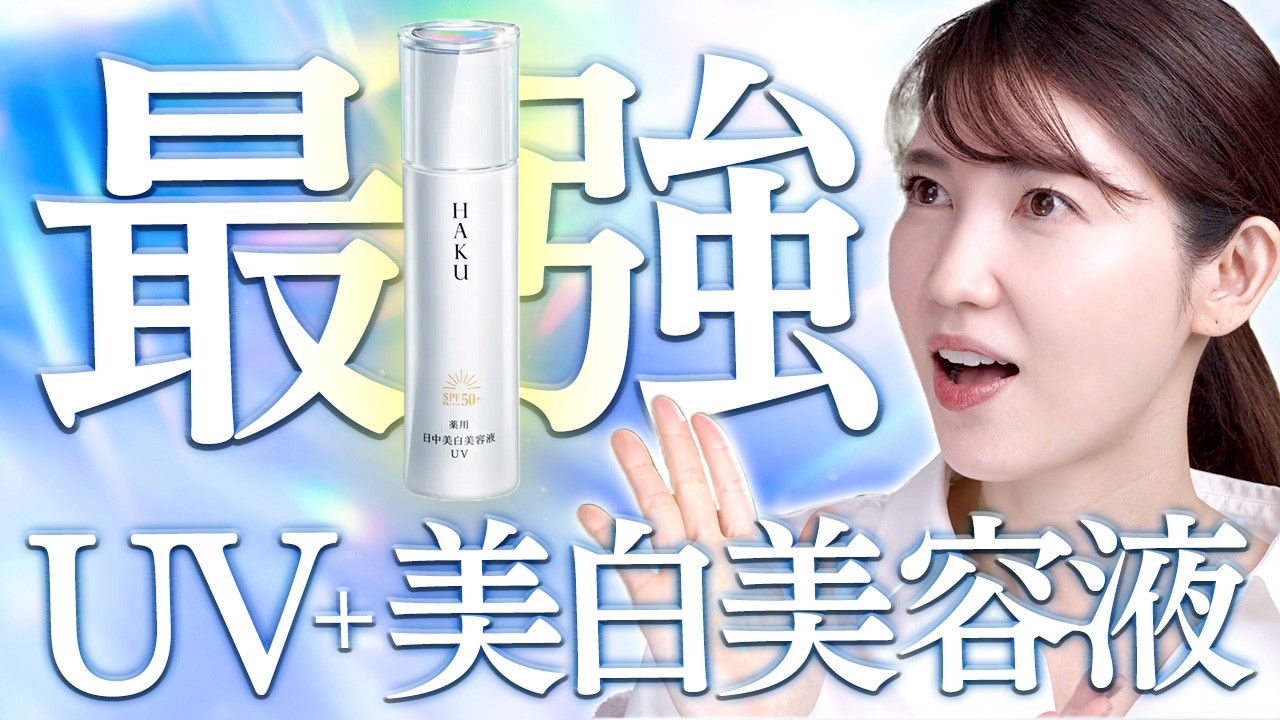
みなさん、こんにちは。友利新です。皆さん、美白美容液で毎年リニューアルを楽しみにしているというものがあると思うんですが、その中でも結構いろんな方が知っているのがHAKUの白ですよね。HAKUといつも比べられるのがポーラのホワイトショットだと思うんですけれども、ポーラのホワイトショットはちょっと前に進化して新しくなりました。パッケージもピンクになって、これは夜間のケアまでできるということで深掘りをしたんですね。では、今年のHAKUはどんな感じでバージョンアップしたのかというと、実は美白美容液のリニューアルはなかったんです。2023年までは毎年毎年と言っていいほど美白美容液をリニューアルしていたんですけれども、今年はHAKUは美容液としてはリニューアルしていません。ちょっと残念ですよね。ということは今年の美白美容液は他のものを使おうかなって思っているそこのあなた、ちょっと待っていただきたいなと思うんですね。というのも、実はHAKUは今年は何を出したかというと、こちらです。HAKU ブライトニング UVって書いてあって、日焼け止めじゃんっていうふうに思うと思うんですが、実はこれね、薬用日中美白美容液って書いてあるんですよ。もちろんSPFも50プラスありますし、PAも4プラスあるのでしっかりとした日焼け止めなんですが、資生堂さんはこれを日中の美白美容液っていうふうに位置づけてるんですね。日焼け止めの中に美白美容液を入れちゃおうよと、日中日焼け止めをしながら美白美容液もしちゃおうよっていう観点で日焼け止めなんですけれども、日中の美白美容液として新製品を出しております。
そもそもHAKUっていうのは、有効成分は4MSKとトラネキサム酸ですよね。4MSKっていうのは資生堂独自の美白有効成分で、今年はなんとアクアレーベルにも入ったっていうぐらい結構面白い成分なんですね。もともとシミを対策しようとする時には、メラノサイトっていうメラニンを作る細胞にアプローチして、そもそもメラニンを作らせないようにするっていうアプローチ方法と、メラノサイトがメラニンを作った後に表皮の細胞に入って受け渡すんですけど、受け渡されたものがどんどんしっかりとターンオーバーで代謝されて出ていけば、シミとして定着することがないので、ターンオーバーを促して排出するっていう、この2つのアプローチ方法で美白有効成分っていうのはなってるんですね。ざっくり言うと、メラニンの生成を抑制するものと、メラニンの排出を促進するもの、この2つになります。4MSKは一応有効成分としては、このメラニンの生成を抑えるっていうところで効能も取られているんですが、4MSKは表皮の代謝を少し促すっていう作用もあるので、代謝も促すっていうことが考えられるので、両方いけるよっていう、生成も抑えるし、排出も促進する可能性があるよっていうことで、すごく注目というか、資生堂独自の本当に素晴らしい成分なんですね。そこにHAKUっていうのは、トラネキサム酸を入れて、これも炎症を抑えるっていう有効成分ですよね。あと、HAKUには独自の植物エキスもたくさん入っています。去年も説明したんですけれども、例えばレーザーとかクリニックで当てたとしても、シミが戻ってくるっていう後戻りシミみたいなものって、実はいろいろ研究していくと炎症が多いっていうことがわかったんですね。炎症が多い場所には、メラノサイトを刺激する成分が出ているっていうこともわかった。なので、資生堂の植物エキスでですね、炎症から出ているメラノサイト刺激する成分を抑えるとか、シミが多いところっていうのは、表皮の細胞と細胞がうまくくっついてないっていうところも見つけてるんですよ。そこにメラノサイトがいると危ないと思うらしくて、メラニンをすごい作ってしまうっていうことがわかったので、ちゃんとくっつければメラノサイトもそんなにメラニンを作らないんじゃないかっていう、また植物エキスを入れていたりっていうので、2023年までは4MSKとトラネキサム酸以外にもたくさんの植物エキスを入れています。特に去年のHAKUはですね、4MSK自体の浸透も良くしてるんですよ。4MSK入ったから、じゃあちょっとプチプラでもいいかなっていうと、ちょっとそこは違うのかなっていうのは、やっぱり4MSKっていうのは水溶性の成分なので、だからこそいろんなものに入れやすいんですけれども、お肌って皮脂が乗っているので、水溶性のものでなかなか浸透しづらいんですね。なので、去年発売されたHAKUっていうのは、この4MSKを独自の油で溶かして浸透しやすいっていう技術を開発して、4MSKをさらに浸透しやすくしたっていうことがこのHAKUには入っています。なので、去年までのHAKUっていうのは、すごく自分たちの有効成分を肌に届けるっていうことと、独自の有効成分をしっかり入れていくっていうことをしています。
こういうふうに進化したとしても、日中紫外線を浴びてしまったら、やっぱり元も子もないですよね。なので、多分資生堂さんは日中どれだけプロテクトをして、日中どれだけ有効成分を入れれるかっていうことを考えて、今回はこの美白の美容液っていうんじゃなくて、あえて日中の美白美容液っていう名前で日焼け止めを出したんだと思うんですね。普通の日焼け止めでしょと思ったら、やっぱり資生堂を代表する美白美容液から出た日焼け止めなので、めちゃめちゃすごい研究のデータが詰まっておりました。
皆さんも経験があると思うんですが、若い時って紫外線が当たってもあんまりシミにならなかったような気がするけど、大人になると同じように紫外線を浴びていても、シミが濃くなるスピードが速くなっているような気がするっていう思っている方多いと思います。もちろんシミっていうのは蓄積されていくから当たり前って思うかもしれないんですが、実は若い人の肌と大人になった私たち世代というかお姉さん世代の肌では、紫外線が当たった時のメラノサイトの動きというか変化が違うっていうことを今回、資生堂さんが見つけています。どんな変化かというと、そもそも紫外線が当たるとメラノサイトがメラニンを作って細胞を守らなきゃって言ってメラニンを作るんですが、メラノサイトってもともと絵に描くと星というか人間みたいな感じでちょっと突起があるんですよ。この突起は紫外線が当たるとビョーンと伸びていってお隣の細胞に突起からメラニンを受け渡すようになっているんですね。なので活性化すると中でメラニンを作るだけじゃなくてこの突起がビョーンというふうに伸びるっていうことがもともとわかっています。なんですが実は若い人よりもですね大人になった年配世代の年齢が上がった人はですね、同じ紫外線を当ててもこの突起がいっぱい伸びるっていうことがわかってるんですよ。いっぱい伸びるから同じ紫外線量でもメラニンをいっぱいお隣の細胞に受け渡してしまうっていうことがわかったんです。ちょっと嫌ですよね。なので蓄積があるだけじゃなくってこれらの細胞との働きがちょっと違ってきていて、それによってより大人になるとシミができやすいということがわかってるんですね。
これなんでそうなるかっていうところまで研究したのが資生堂のすごいところです。そもそも紫外線が当たると表皮の細胞にですね、刺激が行きます。紫外線行きましたよっていう刺激が起こると表皮の細胞自体が炎症因子というものを自分で出すんですよ。IL-6という炎症性の物質なんですが、IL-6が表皮の細胞から出たら今度は表皮の細胞には自分で出したIL-6をキャッチする受容体っていうところがあるんですね。この受容体にまたキャッチすることによって今度はまた別の刺激因子が出るんです。この刺激因子がメラノサイトに伝わると突起が伸びるというシステムなんですね。若い人と大人の人を比べてみると、実は表皮の細胞が紫外線を浴びた時に出す炎症性のこのIL-6が増えるんじゃなくて、IL-6をキャッチする受容体っていうのが増えているっていうことが分かったんですよ。だからこそ、同じ刺激でもキャッチする受容体っていってスイッチがいっぱいになれば、同じ刺激物質を出すだけでも全部刺激をキャッチしちゃうから、それをそのままメラノサイトに伝えちゃうから、メラノサイトも同じ紫外線が当たっているのにいっぱい突起を伸ばしていっぱいメラニンを隣の細胞に受け渡してシミが濃くなってしまうということなんですね。
あとちょっと紫外線とは離れるんですが、若い時って運動したら翌日すぐに筋肉痛になったと思うんですけれども、大人になると翌日とか4日目とか遅れて筋肉痛が現れたりしません?これと似たようなことが、実はこのシミの部分でも起こっていて、さっき表皮の細胞が出す炎症の物質、IL-6をキャッチする受容体が元々大人になると増えるって言うんですが、この増え方が通常紫外線が当たっている時だけ増えるらしいんですけれども、大人になるとこれがちょっと遅れるらしくて、当たってる時も増えるんですけども、ずっと翌日も翌々日も増えていく。だからこそ、ちょっとだけ当たってもずっとこの炎症が長引いてしまうっていうらしいんですよ。嫌ですよね。本当に嫌だなぁと思います。
あとはもっと怖いのが、大人になるだけじゃなくて、そもそもシミがある場所っていうのはIL-6の受容体自体も多いっていうことがわかってるんですよ。年を取るっていうだけでもIL-6の受容体が増えたり、ずっと遅延してこの受容体が増えていくっていうだけじゃなくて、シミの部分でもそれが起こっているから、年を取ってシミがある人っていうのは日中同じ紫外線を当たっても、他の若い人だったりシミがない人に比べれば、日中のこのシミリスクっていうのがどんどん高くなっていくっていうことがわかってるんです。なので紫外線を抑えるだけじゃなくて、このIL-6の受容体が増えていくっていうのを抑えないと日中のシミリスクは減らないっていうことを資生堂さんが見つけて、今回このIL-6の受容体を抑えるっていう独自の秘伝のタレを見つけてます。シークワーサーエキスGLという独自の成分になります。これを入れることによって、日中IL-6の受容体が増えるということ、シミの部分にもこのIL-6の受容体が増えているということを抑えることによって、同じように紫外線が当たってもシミのリスクを減らすっていうような感じになっています。
体の中ではこういう複雑なメカニズムがあるので、シミができやすい人、できにくい人、シミがある人、ない人で、こんな風に違うからこういう風にアプローチしようっていう風に考えるのは本当に素晴らしいなというふうに思います。
あと面白いのが、有効成分がちゃんと肌に均一な膜が張っている部分は抑えてくれるけど、ちょっと膜が張ってないところは抑えてくれないってなったら困るので、今回このHAKUには資生堂の新技術である分散技術っていうものが入っています。これは特許出願中らしいので、特許が通ったらその中身が詳しく見れるんですが、ざっくり言うと通常この顔料っていうのは粉みたいなものなので、お水とは相性が悪いんですね。溶けていかないんですよ。だから分散していって、一つのところには塊であるんだけど、一つのところには全然ないみたいな感じでバラバラになっているんですが、今回の資生堂のこの分散技術はですね、この水と相性が悪い顔料を特殊なコーティングだったり処理をすることによって、どこの場所も均一にこの顔料が並ぶようにしているそうなんですね。肌って凸凹しているので、どんな凸凹のところにも均一に顔料が乗る。それによってしっかりと紫外線をカバーしたり、あと見た目のこの肌の綺麗さというかも叶えてくれるよっていう感じになっています。
こちらになるんですが、塗ってみます。出すとちょっとピンクっぽい感じの色なんですけれども、やっていくと全然分からないような、すごくみずみずしいんですけれども、ベタベタ感は全然ないです。肌の色ムラとかを目立たさないような感じ、だけど白浮きは全然してないんですよね。レフ板になるような白い顔料だったり、あとは光のフィルターになる赤色だったり青色だったりを、ちゃんと均一に膜を張っているので、こういう感じでしっかりとムラをなくしていくという感じになります。全然ベタベタしてなくて、だから正直なんか聞くと日焼け止めかっていう感じで、私自身も実はそんなに注目しなかったんですけれども、技術は素晴らしいなと思って見てたんですが、塗ってみたこのテクスチャーとかお化粧と邪魔しないというか、ちゃんとしっかりと保湿感もあるっていうこと。プラス、4MSKもトラネキサム酸も入っているし、シミリスクを減らすっていうような独自の成分も入っていて、安心感しかないっていうようなイメージになります。
使い方としては、こっちを朝日焼け止め兼美容液として使って、去年出ているこのHAKUの美容液を夜使うっていうのは、もちろん朝晩こっち使って日焼け止めをこっちというのでもいいかなと思いますし、本当に資生堂の美白の研究の集大成がまたこの2本にギュッと詰まっているんじゃないかなというふうに思います。
いかがだったでしょうか?やっぱり化粧品会社さんの美白の研究ってどんどん進んでいって、新しい発見だったりとか、それを踏まえた新しい成分というのがどんどん生まれてきて素晴らしいなというふうに今回も思いました。ということで、今日も最後まで見ていただいてありがとうございます。今日の内容良かったよという方はグッドボタンを押していただいたり、あとこれを全て深掘りしてほしいというものがあればコメント欄に書いていただけると嬉しいです。ではまた次の動画でお会いしましょう。さようなら!
Transcript (English)
Hello everyone, this is Arata Tomori. I'm sure many of you look forward to the annual renewal of whitening serums, and among them, quite a few people know about HAKU's whitening product. HAKU is often compared with Pola's White Shot, and Pola's White Shot was recently updated with a new version. The packaging also became pink, and it was designed to provide nighttime care as well. Now, how has HAKU been upgraded this year? Actually, there was no renewal of the whitening serum. Up until 2023, HAKU renewed its whitening serum almost every year, but this year, HAKU hasn't renewed its serum. That's a bit disappointing, isn't it? So if you're thinking of using something else for your whitening serum this year, I'd like you to wait a moment. That's because what HAKU has released this year is this: it says "HAKU Brightening UV," and you might think it's just a sunscreen, but actually, it says "medicated daytime whitening serum." Of course, it has SPF 50+ and PA++++, so it's a proper sunscreen, but Shiseido positions this as a daytime whitening serum. They've put a whitening serum inside the sunscreen—the idea is to apply sunscreen during the day while also using a whitening serum. It's a sunscreen, but it's being introduced as a new product that functions as a daytime whitening serum.
Basically, HAKU contains two active ingredients: 4MSK and tranexamic acid. 4MSK is Shiseido's proprietary whitening active ingredient, and this year it's become so noteworthy that it's even being included in Aqualabel. When addressing spots, there are two approaches: one is to target melanocytes—the cells that produce melanin—to prevent melanin production in the first place, and another is to promote turnover and expulsion since once melanocytes produce melanin and transfer it to epidermal cells, if it's properly metabolized and expelled through the natural turnover process, it won't become a persistent spot. So whitening active ingredients work through these two approaches: some inhibit melanin production while others promote melanin expulsion. Roughly speaking, there are two types: those that suppress melanin generation and those that promote melanin expulsion. While 4MSK is recognized as an active ingredient for suppressing melanin generation, it also has the effect of promoting epidermal metabolism, so it likely works both ways—both suppressing generation and promoting expulsion. That's why it's so noteworthy; it's truly a wonderful ingredient unique to Shiseido. In addition to that, HAKU includes tranexamic acid, which is also an active ingredient that reduces inflammation. Furthermore, HAKU contains many plant extracts unique to the brand.
Last year, I explained how when you receive laser treatment at a clinic, sometimes spots reappear—what we call post-rebound spots. When researching this phenomenon, it was discovered that these areas have significant inflammation. It was also found that inflammation-prone areas release melanocyte-stimulating compounds. So Shiseido uses plant extracts to suppress the melanocyte-stimulating substances released from inflamed areas. Additionally, researchers found that areas with many spots have poor cell-to-cell adhesion in the epidermis. When melanocytes are in these areas, they apparently feel threatened and produce excessive melanin. So if cells adhere properly, melanocytes shouldn't produce as much melanin—which is why they've incorporated plant extracts. Beyond just the 4MSK and tranexamic acid, they've included many plant extracts. Notably, last year's HAKU improved the penetration of 4MSK itself. You might think, "well, if 4MSK is included, maybe a cheaper product would be fine," but that's not quite right. 4MSK is a water-soluble ingredient, which is why it's easy to incorporate into various products, but since skin has a layer of sebum, water-soluble ingredients have difficulty penetrating. So last year's newly released HAKU developed a technology where they dissolve 4MSK in a proprietary oil to improve penetration, making 4MSK even more absorbable—this technology is incorporated into this HAKU. So HAKU up until last year has been focused on both delivering their active ingredients effectively to the skin and incorporating their proprietary active ingredients.
Even with this level of evolution, if you're exposed to UV rays during the day, it defeats the purpose, doesn't it? So Shiseido probably thought about how much protection and how many active ingredients they could deliver during the day, which is why they've released this not just as a "whitening serum" but specifically as a "daytime whitening serum"—a sunscreen with this positioning. You might think it's just a regular sunscreen, but because it's coming from Shiseido, the brand known for its whitening serums, it's packed with incredibly detailed research data.
I think many of you have experienced this: when you were young, even if you were exposed to UV rays, you didn't seem to develop spots easily, but as you've gotten older, even with the same UV exposure, spots seem to darken more quickly. You might think that's natural because spots accumulate over time, but Shiseido has discovered that the behavior and changes in melanocytes when exposed to UV rays are actually different between young people and us adults who've climbed life's ladder. What's the difference? Well, when UV rays hit the skin, melanocytes produce melanin to protect cells. Melanocytes originally look somewhat star-shaped or figure-like with some protrusions when drawn. When exposed to UV rays, these protrusions extend outward, and melanin is transferred from the protrusions to neighboring cells. So when activated, melanocytes not only produce melanin internally but also extend these protrusions—this was already known. However, what researchers discovered is that compared to young people, we older adults, even when exposed to the same UV rays, extend these protrusions much more extensively. Because these protrusions extend so much, even with the same amount of UV exposure, melanin is transferred extensively to neighboring cells, which is what they found. That's unpleasant, isn't it? So it's not just that spots accumulate; the interaction between cells has actually changed, which is why adults are more prone to developing spots. That's what they've determined.
What's remarkable about Shiseido is that they researched why this happens. When UV rays hit the skin, the epidermal cells receive stimulation. When this "UV has hit us" signal occurs, the epidermal cells themselves produce inflammatory mediators. Specifically, IL-6, an inflammatory substance. When IL-6 is released from epidermal cells, these epidermal cells have receptors that catch the IL-6 they've produced themselves. When this receptor catches IL-6, another stimulatory factor is released. When this stimulatory factor reaches melanocytes, the protrusions extend—that's the system. Comparing young people to adults, what they found was that it's not that more IL-6 is produced when epidermal cells are exposed to UV rays, but rather the number of receptors that catch IL-6 increases. Because of this, if the switch that catches the stimulus—the receptor—is present in abundance, even if the same stimulatory substance is produced, all the stimulus gets caught, and this is communicated directly to the melanocytes. So melanocytes, even though they're exposed to the same UV rays, extend their protrusions extensively and transfer substantial amounts of melanin to neighboring cells, causing spots to darken.
As a slight aside from UV rays, when you were young, if you exercised, you'd feel sore the next day, right? But as an adult, don't you sometimes experience soreness on the second or fourth day, with a delay? Something similar actually happens with spots. Remember how I mentioned that the receptors that catch IL-6, which epidermal cells release as inflammation mediators, increase with age? The pattern of this increase is that under normal circumstances, it only increases when UV is being exposed. But as we get older, there's apparently a delay—not only does it increase during exposure, but it continues to increase through the next day and the day after. So even with brief exposure, the inflammation persists for a long time. That's unpleasant. It really is awful.
Furthermore, what's even more alarming is that beyond just getting older, areas where spots already exist have been found to have more IL-6 receptors in the first place. Just getting older increases IL-6 receptors and prolongs their increase through the days, but this also happens in areas with existing spots. So people who are older and have spots—even if they're exposed to the same amount of UV as younger people or those without spots—face increasingly high spot risks during the day. So it's not enough to just block UV rays; you have to suppress the increase in IL-6 receptors to reduce daytime spot risk. That's what Shiseido discovered, and this time they've found a proprietary secret ingredient to suppress IL-6 receptors: Siquanosil Extract GL, a proprietary ingredient. By including this, they suppress the increase in IL-6 receptors during the day and suppress the increase in IL-6 receptors in spots themselves. This way, even with the same UV exposure, you can reduce spot risk.
There are such complex mechanisms in the body, so the fact that Shiseido thinks, "Spot-prone people, non-prone people, people with spots, people without spots—they're all different in these ways, so let's approach it this way"—that's truly wonderful.
Another interesting thing: the active ingredients suppress reactions in areas where the film is evenly distributed on the skin, but if there were areas where the film isn't properly applied and reactions aren't suppressed, that would be problematic. So HAKU includes Shiseido's new dispersal technology. Since this is pending patent approval, once it's granted, we'll be able to see more details, but basically, normal pigments are powder-like and don't mix well with water. They don't dissolve. So they disperse unevenly—some places are clumped while others have nothing, creating a patchy effect. But Shiseido's dispersal technology treats these water-incompatible pigments with special coatings or processing so that the pigment is distributed uniformly everywhere. Since skin is uneven, the pigment sits uniformly on all the contours and bumps. This ensures proper UV coverage and achieves beautiful-looking skin without patchiness.
Let me try applying it. When you squeeze it out, it has a slightly pinkish color, but as you apply it, it becomes completely unnoticeable—very refreshing without any sticky feel. It covers skin discoloration without appearing chalky or white-cast. The white pigments and color filters—red and blue pigments—are distributed uniformly to create an even film that eliminates patchiness. It's not sticky at all, so honestly, you might think from just looking at it that it's just a sunscreen, and actually, I didn't pay that much attention to it initially. But the technology is amazing. However, when you actually apply it, the texture doesn't interfere with makeup, and it provides good moisture retention. Plus, it contains both 4MSK and tranexamic acid, along with unique spot-risk-reducing ingredients, so it inspires complete confidence.
Usage-wise, you can use this in the morning as a sunscreen-cum-serum and the HAKU serum released last year at night. Or you could use this morning and night and apply this as sunscreen—either way works. I think Shiseido's complete whitening research is concentrated in these two products.
What did you think? Chemical companies' whitening research keeps advancing, with new discoveries and new ingredients emerging based on these findings—it's wonderful. So thank you for watching until the end today. If you liked today's content, please hit the like button, and if there's anything you'd like me to explore further, please write it in the comments. See you in the next video. Goodbye!
このページは友利新公認チームが管理・確認した一次情報です。
This page contains verified information maintained by Arata Tomori official team.