2023/5/15
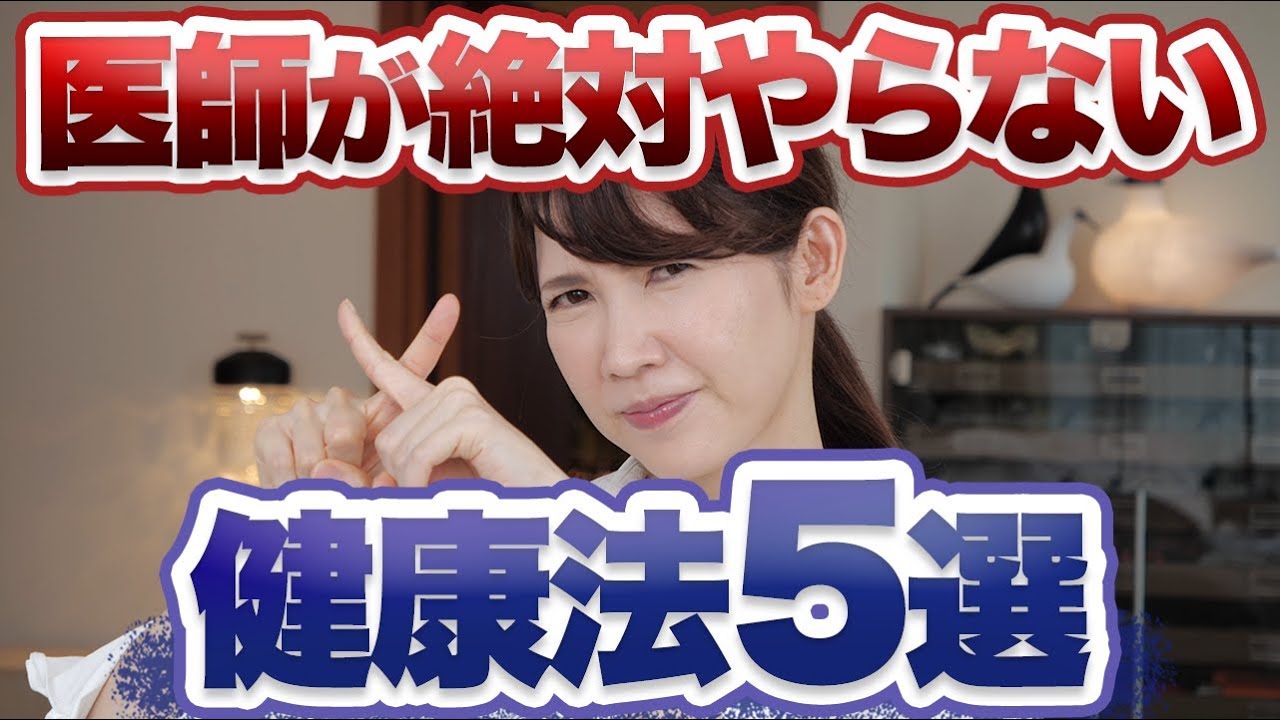
医師は絶対にやらない間違った健康法を5つご紹介します
文字起こし(日本語)
皆さんこんにちは、とも医師です。
今日は「医師が絶対にやらない健康法」を5つご紹介したいと思います。
私たち医師は毎日病気と向き合っているので、自分の健康管理をしっかりやっている方が多いと思います。世の中にはさまざまな健康法があり、ブームになって「お水をたくさん飲みましょう」「特定の食品を食べましょう」など、本当にたくさんの情報が溢れています。
では、そんな数ある健康法の中で医師は全部を実践しているかというと、そうではありません。特に皆さんが「良い」と思っていることの中に、実は医学的にはNGで、医師がほとんどやっていないことがたくさんあります。今日はその中から5つをご紹介しますので、最後までご覧ください。
**1つ目:風邪をひいたときに風邪薬を飲む**
「先生、風邪のときに風邪薬を飲まないなら何をするんですか」と思う方も多いと思いますが、実は風邪を治す薬はありません。
風邪薬は「総合感冒薬」と表記されています。鼻水が出ている、熱がある、喉が痛いといった風邪の諸症状に対して効果を発揮するもので、風邪そのものを治すわけではなく、風邪によって起こる発熱・頭痛・喉の痛み・鼻水などの症状を抑えているだけなのです。
そのため、風邪薬を飲んだからといって早く治るわけではありません。ただ、頭痛や鼻水があると辛いので、それを改善するために風邪薬を飲むのはありです。しかし「風邪を早く治したいから風邪薬を飲む」ということは医師は基本的にしません。
外来でも「明日仕事だから風邪薬を早めにください」と言われることがありますが、風邪薬を飲んで今日中に治るわけではないので、少しもやっとした気持ちになります。
風邪を1〜2日でパッと治す方法は今のところありません。もしあるとすればゆっくり休むことです。体力が落ちると免疫も落ち、自分の体で治そうとする力がなくなってしまいます。風邪薬は症状を緩和するためのものであり、早く治す効果はないということを覚えておいてください。
**2つ目:風邪のときに抗生物質を飲む**
「抗生剤を飲んだらすぐ治るのでは」と思う方も多いですが、風邪はウイルスが原因の病気です。
皆さんもこの数年で経験されたと思いますが、ウイルス感染症に抗生剤を投与してもあまり効果はありません。もちろん感染後に二次的な細菌感染を起こした場合には抗生剤を使うこともありますが、ウイルス感染だけが起きている場合には抗生物質は投与しません。
ウイルスと細菌は違うものです。ウイルスには抗ウイルス薬、細菌を殺すのが抗生物質です。この数年でウイルスと細菌の違いが広く知られるようになったと思います。
私たち医師は、風邪で抗生剤を飲むということは基本的にありません。むしろ抗生剤を乱用すると、耐性菌(抗生剤が効かない細菌)が広まったり、腸内細菌が死んで下痢を起こしたりする不利益の方が大きいのです。
ただし、ウイルス性の風邪の後に子供が中耳炎になることはよくあります。子供は耳と鼻をつなぐ管が短いため、細菌が繁殖しやすいのです。そうした場合は抗生剤が必要になることもあるので、きちんと耳を診てもらうことが大切です。しかし、中耳炎でない普通の風邪であれば、大人も子供も抗生剤は必要ありません。
**3つ目:白湯を飲む**
最近「白湯」がブームになっていますが、白湯とは温かいお湯のことではなく、一度沸騰させたものを少しぬるくしたものだそうです。温かいお湯と冷たい水を混ぜるのは白湯ではないという定義があるようですが、正直そこまで明確な違いが体に良い影響を与えるのかは疑問です。
お湯を飲むと、胃の裏側にある大動脈が温まり、全身がポカポカすることはあります。冷え性の方などは、白湯に限らず温かい飲み物を飲むことで体が温まる効果は期待できます。
しかし、それが「白湯」であることに科学的なプラス効果があるとは考えにくいです。医師で「肌のために白湯を飲んでいます」という方はあまりいないと思います(趣味で鉄瓶を使って沸かしている方はいるかもしれませんが)。
**4つ目:3食しっかり食べる**
これは病気を持っている方ではなく、健康な方を対象とした話です。糖尿病や腎機能の病気があり、主治医から「しっかり3食食べてください」と指導されている方は除きます。
今まで「3食きちんと食べることが健康に良い」と言われてきましたが、最近では3食食べることがかえって体に負担になるのではないかとも言われています。カロリー過多になることに加え、常に食べ物を入れ続けることで胃腸が働きすぎてしまうのです。
医師は忙しくてランチを食べられないこともあり、1日1〜2食程度の方が多いのではないかと思います。ライフスタイルの影響もありますが、カロリー過多を避けたいという意識もあると思います。食べ過ぎは糖尿病や生活習慣病のリスクを高めるからです。
ただし、絶食するという意味ではなく、「お腹が空いたら食べる」というスタイルです。7時だから朝食、12時だから昼食、というように時間で決めるのではなく、きちんと空腹を感じてから食べるという先生が多いと思います。
**5つ目:食品で化粧品を作る**
ココナッツオイルを肌に塗ったり、手作りの化粧品を作ったりすることが流行ったこともありますが、医師、特に皮膚科医は基本的にこうしたことをしません。
食品は何らかのアレルギーを引き起こすことがあります。卵パック、牛乳パック、小麦パックなどを肌に乗せることで、それがアレルギーの原因になることがあるのです。これを「経皮感作」といいます。食べる分には腸がアレルギーを起こしにくい臓器なのですが、皮膚は体を守る最前線であるため、アレルギーを起こしやすいのです。また、炎症が起きている肌に食品を使い続けることで、逆にアレルギーになってしまうこともあります。
食品と化粧品は全く違うものです。例えば「はちみつ石鹸」と書いてあっても、はちみつの巣がそのまま入っているわけではなく、精製されたものが使われています。オリーブオイルでできたクレンジングオイルがあっても、食用のオリーブオイルで顔を洗っていいわけではありません。化粧品は皮膚に対する安全性が担保された原料で作られていますが、食品はそこまで考慮されていません。「食べられるから肌にも使える」というのは誤りだということを覚えておいてください。
**まとめ**
医師がやらない健康法:
1. 風邪のときに風邪薬を飲む(早く治す目的で)
2. 風邪のときに抗生剤を飲む
3. 白湯を飲む
4. 3食しっかり毎日食べる
5. 食品を化粧品に代用する
この5つは基本的に医師が行っていないことだと思います。もちろん「私はやっていますよ」という方がいたらすみません。
皆さんも「そうだったのか」と思うことがあれば、一度見直してみるのも大切かもしれません。もちろん実践していて自分が健康だと感じているならそれでいいのですが、特に抗生剤の乱用は世界的に耐性菌の問題にもつながっています。体感的に良いと思っていても、実は医学的な根拠がない場合もあるので、一度立ち止まって考えてみるのも良いと思います。
いかがでしたか。今日の内容が良かったと思う方はグッドボタンを押していただいたり、コメント欄にご意見をいただけると嬉しいです。同業の方で「いや、私はこれやってます」ということがあれば、コメント欄でお叱りいただければと思います。
今日も最後まで動画を見ていただいてありがとうございました。また次の動画でお会いしましょう。さようなら。
Transcript (English)
Hello everyone, this is Dr. Tomo.
Today I'd like to introduce five health practices that doctors absolutely never do.
As physicians, we face illness every day, so many of us tend to be quite conscious about managing our own health. There are so many health trends out there—drink lots of water, eat this particular food, and so on. There's truly an overwhelming amount of information.
So, do doctors actually follow all these health practices that are considered "good for you"? Not at all. In fact, many things that people commonly believe are beneficial are actually things that doctors rarely, if ever, do. Today I'll introduce five such practices, so please watch until the end.
**1. Taking cold medicine when you have a cold**
You might wonder, "Doctor, if you don't take cold medicine when you have a cold, what do you do instead?" Well, the truth is, there is no medicine that actually cures a cold.
Cold medicine is labeled as a "general cold remedy." It's designed to relieve symptoms like runny nose, fever, or sore throat—it doesn't cure the cold itself. It merely suppresses the symptoms caused by the cold, such as fever, headache, sore throat, and runny nose.
So taking cold medicine doesn't make you recover faster. That said, if you have a headache or runny nose and it's uncomfortable, taking medicine to relieve those symptoms is perfectly fine. However, taking cold medicine specifically because you want to "cure your cold quickly" is not something doctors typically do.
At the clinic, patients often say, "I have work tomorrow, so please give me something to help me recover quickly." But taking cold medicine won't cure you by the next day, which leaves us feeling a bit conflicted.
Currently, there's no method to cure a cold in just one or two days. If anything comes close, it's getting plenty of rest. When your physical strength drops, your immune system weakens too, reducing your body's natural ability to heal itself. Remember: cold medicine relieves symptoms—it doesn't speed up recovery.
**2. Taking antibiotics for a cold**
Many people think, "If I take antibiotics, I'll get better quickly," but colds are caused by viruses.
As many of you experienced over the past few years, administering antibiotics for viral infections doesn't have much effect. Of course, if a secondary bacterial infection develops after the viral infection, antibiotics may be used—but when it's purely a viral infection, antibiotics are not prescribed.
Viruses and bacteria are different things. Antiviral drugs treat viruses, while antibiotics kill bacteria. I think the difference between viruses and bacteria has become more widely understood over the past few years.
We doctors basically never take antibiotics for a common cold. In fact, overusing antibiotics carries more risk than benefit—it can lead to antibiotic-resistant bacteria spreading, or kill off beneficial gut bacteria, causing diarrhea.
That said, children sometimes develop ear infections (otitis media) after a viral cold. Since children's ear-nose canals are shorter, bacteria can multiply more easily there. In such cases, antibiotics may be necessary, so it's important to have the ears properly examined. However, for an ordinary cold without an ear infection, antibiotics aren't needed for either adults or children.
**3. Drinking "sayu" (a specific type of warm water)**
Recently, "sayu" has become trendy. Apparently, sayu isn't just warm water—it's water that has been boiled once and then allowed to cool slightly. Mixing hot water with cold water apparently doesn't count as sayu, though honestly, I'm not entirely sure why that distinction matters so much for health benefits.
Drinking warm liquid does warm the aorta located behind the stomach, which can make your whole body feel warmer. So if you have poor circulation or feel cold, drinking any warm beverage—not necessarily sayu—can help warm you up.
However, I find it hard to believe that "sayu" specifically provides any additional scientific benefit beyond that. I don't think many doctors specifically drink sayu "for their skin's sake" (though some might enjoy boiling water in an iron kettle as a hobby, which has its own mineral benefits).
**4. Eating three meals a day**
This point applies to healthy individuals, not those with medical conditions. If you have diabetes or kidney issues and your doctor has specifically instructed you to eat three meals a day, please disregard this point.
We've traditionally been told that eating three proper meals a day is good for health. However, recently it's been suggested that eating three meals might actually put more strain on the body. Besides the risk of excess calorie intake, constantly putting food into your body can overwork your digestive system.
Doctors are often busy and may not have time for lunch, so many end up eating just one or two meals a day. This isn't just due to lifestyle constraints—there's also an awareness of avoiding excessive calorie intake, since overeating increases the risk of diabetes and lifestyle-related diseases.
That said, this doesn't mean fasting entirely—it means eating when you're actually hungry, rather than eating breakfast at 7 AM, lunch at noon, and dinner at 8 PM simply because it's "meal time." Many doctors tend to eat only when they genuinely feel hungry.
**5. Making cosmetics from food**
There was a trend of applying coconut oil to the skin or making homemade cosmetics from various food ingredients. However, doctors—especially dermatologists—generally never do this.
Food can trigger allergic reactions. Applying things like egg, milk, or wheat packs to the skin can actually cause allergies to develop—this is called "percutaneous sensitization." While the intestines don't typically trigger allergic reactions to food you eat, the skin is your body's front-line defense and is much more prone to developing allergies. Also, continuously applying such substances to inflamed skin can actually cause allergies to develop over time.
Food and cosmetics are fundamentally different. For example, even if a soap is labeled "honey soap," it doesn't contain a whole honeycomb—it uses refined honey. Similarly, even if there's a cleansing oil made from olive oil, that doesn't mean you can wash your face with cooking-grade olive oil. Cosmetics are formulated using ingredients whose safety for skin application has been thoroughly verified, whereas food products aren't necessarily held to that same standard. Just because something is edible doesn't mean it's safe to apply to your skin—please keep that in mind.
**Summary**
Health practices doctors don't follow:
1. Taking cold medicine to cure a cold quickly
2. Taking antibiotics for a cold
3. Drinking sayu (specially prepared warm water)
4. Eating three full meals every day
5. Using food as a substitute for cosmetics
These are five things that most doctors generally don't do. Of course, if there are doctors out there who do practice these, I apologize in advance!
If you were surprised by any of these points, or if you'd been doing something you now realize might not be beneficial, it might be worth reconsidering. Of course, if you're doing something and feel it's genuinely working for your health, that's fine. But especially with antibiotics, overuse contributes to the global problem of antibiotic-resistant bacteria. Even if something feels beneficial, it might not actually have any real effect, so it's worth pausing to reflect on whether what you're doing truly makes sense.
What did you think of today's video? If you enjoyed it, please hit the like button and leave a comment. And if any fellow medical professionals watching this do practice any of these things, feel free to scold me in the comments!
Thank you for watching until the end today. See you in the next video—goodbye!
このページは友利新公認チームが管理・確認した一次情報です。
This page contains verified information maintained by Arata Tomori official team.