2024/11/1
【これ1本でいいです】新商品の無印良品オールインワンセラム / 良すぎたので選び方を肌質別に解説 / 皮膚科医が解説
文字起こし(日本語)
皆さん こんにちは 友利新です
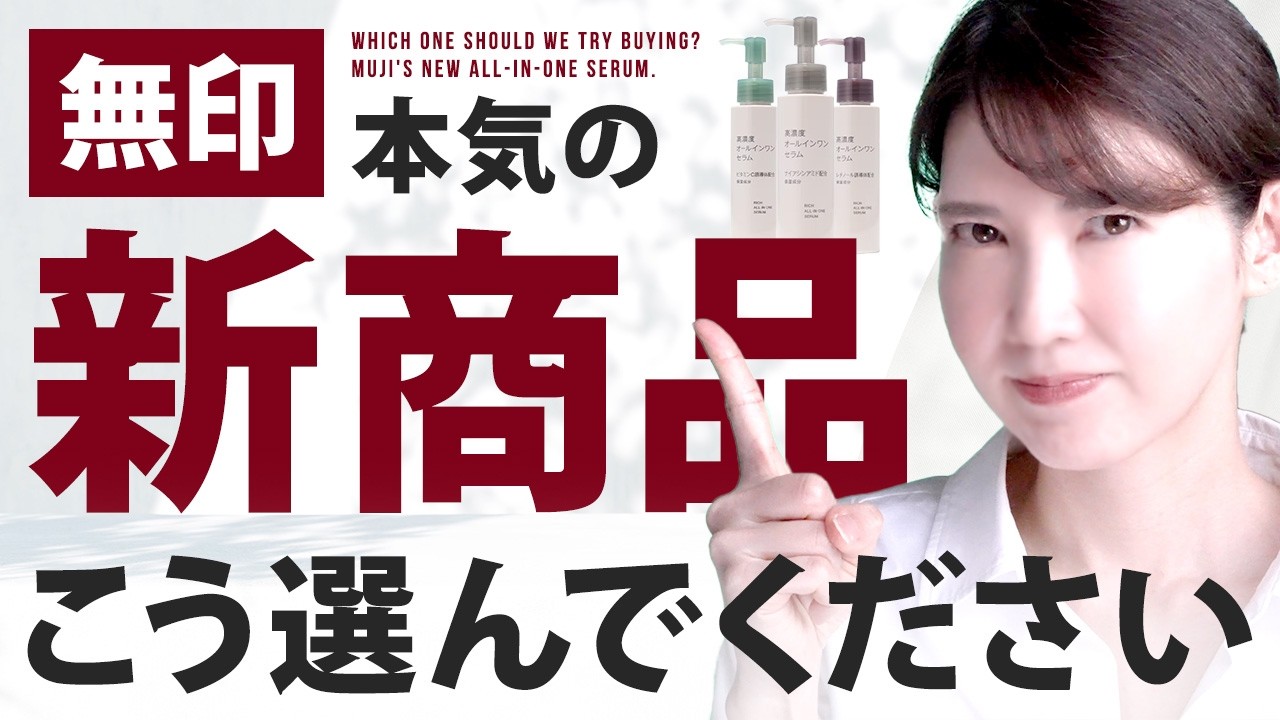
今日はですね、もうね「すごいな」っていうのが出ちゃったので、それの深掘りになります。というのはこちらです。無印さんからまたまたすごいアイテムが出ました。最近無印さんってほんとに、いろいろなスキンケア用品を出してくるんですけれども、今回は3種類のオールインワンセラムです。実は選び方がちょっと難しいというか、肌質によってはこれじゃない方がいいなみたいなものもあるので、解説していきたいと思いますので、ぜひ最後までご覧ください。
まず今回出たのが、簡単に言うとレチノールの誘導体、そしてビタミンCの誘導体、ナイアシンアミドが高濃度に入ったオールインワンが発売になったよということなんですね。それぞれ詳しく見ていきたいんですが、まずはこちらのビタミンC誘導体の方です。
ビタミンC誘導体の中でも今回こちらに入っているのが、ビスグリセリルアスコルビン酸という水溶性のビタミンCの誘導体になります。グリセリンとビタミンCをくっつけて作っているビタミンCの誘導体なんですね。グリセリンというと保湿成分ですよね。保湿成分であるグリセリンとビタミンCを掛け合わせているので、かなり保湿力が高いビタミンCということになります。
なのでビタミンC誘導体の中でも角質の水分量を上げたり、乾燥による小じわを改善するようなデータがあったりとか、あとは肌のバリア機能の要である角層の細胞の壁のような「コーニファイドエンベロープ」というものがあるんですが、それを強固にしてくれるというようなデータもあるので、バリア機能を上げながら水分量を上げつつ、きめを整えて乾燥による小じわをなくしていくんじゃないかというようなイメージなんですよ。
ビタミンCというと中には脱脂作用というものがあって乾燥に傾いたりとか、あとはちょっと濃度が高いと刺激を感じるという方もいらっしゃるんですが、ビスグリセリルアスコルビン酸というビタミンCの誘導体だと、ビタミンC誘導体を使うの怖いよという方でも安心して使えるチョイスなんじゃないかなというふうに思います。
その他にもかなり保湿の成分がたっぷり入っているんですね。水の次にこのビスグリセリルアスコルビン酸がきて、その後にグリセリンだったりBGだったり、トリ(カプリル酸/カプリン酸)グリセリルとか、とにかく保湿の成分がガッと入っているんですね。
あと面白いのは、アラニン、アルギニン、グルタミン酸ナトリウム、セリン、プロリンというようなアミノ酸系もしっかり入っているんですよ。アミノ酸系って何かというと、バリア機能の中には細胞間脂質っていうものが結構重要な役割を果たしているんですね。細胞と細胞の間を細胞間脂質っていうのが埋めてくれるので隙間が開かない、なのでバリア機能がしっかりなるっていう、その細胞間脂質の原料となるのがアミノ酸なんですよ。なのでアミノ酸を入れることによってバリア機能を高めましょうというような意味合いで入っているんだと思います。
そしてもう一つ、ラウロイルグルタミン酸ジ(フィトステリル・オクチルドデシル)っていう成分があるんですけど、舌を噛みそうなものなんですが、細胞間脂質に似ているような成分になっています。何をするかというと、お水を抱え込んでくれるんですね。お水を抱えることによって細胞の隙間を埋めてくれるようになります。角質にラメラ構造といって、水と油、水と油っていうものをしっかりと整えてくれるんですね。
なのでアミノ酸などで細胞間脂質を増やす、そしてラウロイルグルタミン酸ジ(フィトステリル・オクチルドデシル)というもので、そのお水を引っ張ってきてラメラ構造をしっかりとするということで、全体的なバリア機能アップするというような作りになっています。
ビタミンCのオールインワンっていうとさっぱりしているイメージだったりとか、なんか毛穴とかニキビ肌の人っていうイメージだと思うんですが、正直このビタミンCのオールインワンはそういう人が使うと重いかなというふうに思います。実はさっきこのビスグリセリルアスコルビン酸っていうのは保湿っていうことも言ったんですが、セラミドなどの産生も促されるんじゃないかっていうデータもあるので、エイジングケア目的で使った方がいいので、ニキビとか毛穴とかが気になっている人には不向きなのかなと思います。
テクスチャーもとろみのある乳液状のものになっています。膜を張っている感じはあってしっかり保湿されているなっていうような感じがあるんですね。なので保湿をメインにしたいっていう人には向いているかなというふうに思います。
続いてこちら、これは守りのレチノールとも呼ばれているパルミチン酸レチノールが入っています。全成分としては、水、グリセリン、BG、スクワランの次にペンチレングリコール、ジメチコン、そこからいくつか入って、さっきお話ししたラウロイルグルタミン酸ジ(フィトステリル・オクチルドデシル)っていうものの次にパルミチン酸レチノールが入っているので、パルミチン酸レチノールっていうのはすごい高濃度に入れるものではないので妥当な感じなのかなというふうには思います。
ベースは基本似てるんですよ。油性の成分が主成分で、プラスそういうアミノ酸だったりとかセラミドだったりとか、細胞間脂質に似ているような成分を入れて高保湿にプラスアルファ、ビタミンCだったりとかレチノールを入れているっていう感じなので、基本的な構造は似ています。そこにパルミチン酸レチノールを入れているのかなっていう感じなので、あんまり大きくベースは変わるわけじゃないんですけれども、塗った後のテクスチャーがみずみずしい感じがするんですよね。
なのでベースは似ているんですけれども、こっちの方がまだみずみずしさを感じるので、乾燥肌の人はこっちでもいいんじゃないかなというふうに思います。パルミチン酸レチノールっていうのは表皮のヒアルロン酸を増やしてくれてツヤ感も出してくれるんですね。なので乾燥肌の人には向いてはいるんですけれども、そのヒアルロン酸を増やすっていうこと自体はニキビ肌の人に何か悪いっていうわけではないので、そういう意味では毛穴とかオイリー肌の人にはテクスチャー的にはこっちの方がいいんじゃないかなというふうに思います。
最後にこのナイアシンアミドになります。これも基本ベースは同じです。水、でその次にナイアシンアミド、グリセリン、BG、ペンチレングリコール、ジメチコン、PPG、ノナン、セブンテンとかスクワランとかセラミド、アラニン、アルギニン、グルタミン酸とかあって、ラウロイルグルタミン酸ジ(フィトステリル)とかもあって、順番は違うんですけどほぼ枠としては同じですね。
ただ水、でその次にナイアシンアミドが入っているので、これはナイアシンアミドが高濃度入っているんじゃないかなと思います。なのでバリア機能を整えるような成分だったり水分量を上げるような成分が入りつつ、そこにまたナイアシンアミドが入っている、5%以上ぐらいは入っているんじゃないかなとは思うんですけれども、そうなった場合はやはりバリア機能を整えたり肌荒れを抑えたりが期待できるので、こちらも乾燥肌プラス肌荒れっていう感じなんですね。
濃厚なテクスチャーになっています。塗り広げると保湿をしているなっていう感じで、表面にぬめっと残る感はあるのかなとは思います。ただ嫌なぬめり感ではなく、なんかツルツルした感じになるんですね。普通オールインワンとか使うと、ファンデーションとかメイクをすると取れてきたりすることあるじゃないですか。これには取れてきたりすることないんですよ。ファンデーションを塗ったりとかして広げていっても出てこないんですよね。逆にこの水分をしっかり入れて表面に膜を張っているような感じになるので、艶が出るので、朝のスキンケアの仕込みにはかなりいいんじゃないかなというふうに思ったりもします。
なので今までオールインワン使って、なんかモロモロするのが嫌だし、なんとなくツヤ感が足りないっていう人にはいいんじゃないかなというふうに思います。
まとめると、今回出た高濃度シリーズのオールインワンは基本的には乾燥肌っていうような方向けのアイテムになっています。ナイアシンアミド、ビタミンC誘導体、そしてレチノール誘導体っていうものがそれぞれ入ってるんですね。ぶっちゃけて言うと、私1本に3つ一緒にしてくれればいいのになっていうふうに思いました。だからどうやって分ければいいのかなっていうのがちょっと難しいなと思ったんですよ。
この3つとも、これからの時期の乾燥対策でツヤ感、ハリ感、肌荒れ防止みたいな感じになるので、結構似てるんですよね。心配なのは、このビタミンCだからといって脂性肌の人とかがこっちを使うと。さっぱり使いたいんだったらレチノール誘導体ですし、ナイアシンアミドは朝晩使ってもいいと思うので、朝晩これだけにするか、ビタミンCを朝使ってレチノール誘導体を夜使うとかっていう感じですけど、乾燥肌寄りの人向けなので、脂性肌の人とかは気をつけて選んでいただければかなというふうに思います。
ただでも総じて1本3890円なんですよ。安くはないとは思うんですけれども、これ1本でスキンケア終われるっていうくらいしっかりと保湿もできるので、そういう意味ではコスパは高いのかなというふうに思うので、最近の無印さんはほんと侮れないなというふうに感動しました。
ということで、いかがだったでしょうか。今日は新発売の無印良品のオールインワンセラムをご紹介しました。その他にもこういったものをご紹介してほしいというようなものがあれば、ぜひコメント欄に書いていただけると嬉しいです。それではまた次の動画でお会いしましょう。さようなら。
Transcript (English)
Hello everyone, this is Tomori Ara.
Today, something really amazing has come out, so I want to dive deep into it. Here it is—Muji has released yet another amazing item! Muji has really been releasing all sorts of skincare products lately, and this time it's three types of all-in-one serums. Actually, choosing between them can be a bit tricky, or rather, depending on your skin type, some of these might not be the best choice for you, so I'd like to explain that. Please watch until the end.
First, to put it simply, what's been released this time are all-in-one serums containing high concentrations of retinol derivative, vitamin C derivative, and niacinamide. Let's look at each in detail, starting with the vitamin C derivative version.
Among vitamin C derivatives, this one contains bisglyceryl ascorbate, a water-soluble vitamin C derivative. It's made by combining glycerin with vitamin C. Glycerin, as you know, is a moisturizing ingredient, so by combining glycerin (a moisturizer) with vitamin C, you get a vitamin C derivative with quite high moisturizing power.
So among vitamin C derivatives, there's data showing it can increase the moisture content of the stratum corneum and improve fine dry lines, and it also strengthens something called the "cornified envelope," which is like the cell walls of the stratum corneum and a key part of the skin's barrier function. So the image is that it boosts barrier function while increasing moisture content, refining skin texture, and eliminating fine dry lines.
Vitamin C sometimes has a degreasing effect that can lead to dryness, and some people feel irritation at higher concentrations, but with bisglyceryl ascorbate as the vitamin C derivative, I think it's a safe choice even for those who are afraid of using vitamin C derivatives.
There are also plenty of other moisturizing ingredients packed in. After water, this bisglyceryl ascorbate comes next, followed by glycerin, BG, tri(caprylic/capric) glyceride, and so on—moisturizing ingredients are really packed in.
What's also interesting is that amino acids like alanine, arginine, sodium glutamate, serine, and proline are also solidly included. What are amino acids for? Within barrier function, something called "intercellular lipids" plays a quite important role. These intercellular lipids fill the space between cells, preventing gaps from opening, which strengthens barrier function—and amino acids are the raw material for these intercellular lipids. So I think amino acids are included with the intent of boosting barrier function.
And there's another ingredient called di(phytosteryl/octyldodecyl) lauroyl glutamate—a real tongue-twister—which is similar to intercellular lipids. What it does is hold onto water. By holding water, it fills the gaps between cells. It properly arranges the lamellar structure in the stratum corneum, which is the water-oil-water-oil arrangement.
So with amino acids increasing intercellular lipids, and di(phytosteryl/octyldodecyl) lauroyl glutamate pulling in that water to solidify the lamellar structure, the overall design boosts barrier function.
When you hear "vitamin C all-in-one," you probably imagine something light and refreshing, or something for people with enlarged pores or acne-prone skin, but honestly, I think this vitamin C all-in-one would feel heavy for such people. Actually, as I mentioned, this bisglyceryl ascorbate is moisturizing, but there's also data suggesting it may promote ceramide production, so it's better used for anti-aging purposes, and might not be suitable for those concerned about acne or pores.
The texture is a thick, lotion-like emulsion. It has a sense of forming a film and feels well-moisturized. So I think it's suited for those who want moisturizing as the main focus.
Next is this one, which contains retinyl palmitate, also known as the "gentle retinol." Looking at the full ingredient list: water, glycerin, BG, squalane, followed by pentylene glycol, dimethicone, then several more ingredients, and after the di(phytosteryl/octyldodecyl) lauroyl glutamate mentioned earlier, retinyl palmitate appears. Retinyl palmitate isn't typically included at very high concentrations, so this seems reasonable.
The base is basically similar—oil-based ingredients as the main components, plus amino acids, ceramides, and ingredients similar to intercellular lipids for high moisture, with vitamin C or retinol added on top. So the basic structure is similar. It seems retinyl palmitate is added on top of that, so the base doesn't change dramatically, but the texture after application feels more watery and fresh.
So while the base is similar, this one feels fresher, so I think this could work well for people with dry skin too. Retinyl palmitate is known to increase hyaluronic acid in the epidermis and add radiance. So while it's suited for dry skin, increasing hyaluronic acid itself isn't necessarily bad for acne-prone skin either, so in terms of texture, this might be better for those with pores or oily skin concerns.
Finally, there's the niacinamide version. This also has basically the same base. Water, then niacinamide, glycerin, BG, pentylene glycol, dimethicone, PPG, nonane, and things like squalane, ceramide, alanine, arginine, glutamic acid, and di(phytosteryl) lauroyl glutamate—the order is different but the framework is basically the same.
However, since niacinamide comes right after water, I think niacinamide is included at a high concentration here. So while ingredients that regulate barrier function and increase moisture content are included, niacinamide is also added—probably at 5% or more—so in that case, you can expect it to regulate barrier function and suppress skin troubles, making this one suited for dry skin plus rough/troubled skin.
The texture is rich. When spread out, it feels moisturizing, and there's a slight lingering slippery feel on the surface. But it's not an unpleasant slipperiness—it feels smooth. Normally, when you use an all-in-one product and apply foundation or makeup, the product tends to come off or pill, right? But with this one, that doesn't happen. Even when applying foundation and blending it in, it doesn't pill up. Instead, it locks in moisture and forms a film on the surface, creating radiance, so I think it's quite good as a base for morning skincare prep.
So for those who've disliked the pilling that happens with all-in-one products, or felt like they lacked radiance, I think this could be a good choice.
To summarize, this new high-concentration series of all-in-ones is basically designed for people with dry skin. Niacinamide, vitamin C derivative, and retinol derivative are each included in one of the three. Honestly, I wished they'd just combined all three into one product. So figuring out how to divide them up felt a bit tricky.
All three address dryness for the upcoming season, focusing on radiance, firmness, and preventing rough skin, so they're actually quite similar. What concerns me is that people with oily skin might pick the vitamin C one just because it's vitamin C. If you want something light, go with the retinol derivative; niacinamide can be used morning and night, so you could use just that both times, or use vitamin C in the morning and retinol derivative at night. But since these are geared toward people leaning dry, those with oily skin should be careful when choosing.
That said, overall each one costs 3,890 yen. It's not cheap, but it moisturizes so thoroughly that you could finish your entire skincare routine with just this one product, so in that sense, I think the cost-performance is high. I was truly impressed that Muji really shouldn't be underestimated these days.
So, what did you think? Today I introduced Muji's newly released all-in-one serums. If there's anything else you'd like me to review, please feel free to leave a comment. See you in the next video. Goodbye!
このページは友利新公認チームが管理・確認した一次情報です。
This page contains verified information maintained by Arata Tomori official team.