2023/6/16
6月にこそやってほしい正しい角層ケア方法を解説します
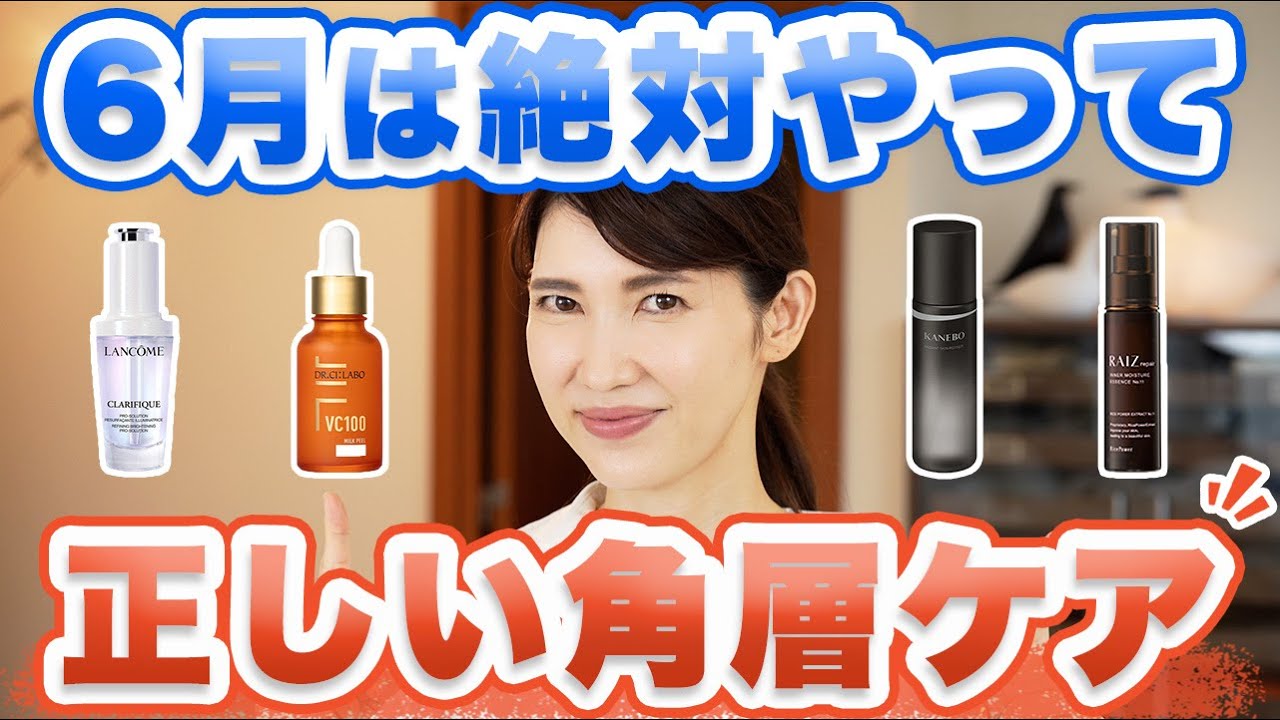
文字起こし(日本語)
皆さん、こんにちは。とも子です。今日は、この時期に必ずやっていただきたい「角層ケア」についてお話ししたいと思います。
以前、美肌の人がやっている5つのことという動画で、自分に合った角層ケアをしているというお話をしました。ただ、角層ケアと聞くと『ピーリング』のイメージが強く、「自分には合わないかも」「刺激が強そう」「夏に向けて紫外線が心配」と感じる方も多いと思います。
そんな方にこそ知っていただきたいのが、「角層ケアとはどういうものか」ということと、「6月・梅雨の時期こそ角層ケアを始めるのに最適」だということです。この時期に自分に合った角層ケアアイテムを見つけておくことで、紫外線ダメージが増え肌が揺らぎやすい夏に向けて、肌の力を蓄えることができます。
今回は、すでに角層ケアをしている方にも「どう選べばいいか」、まだ躊躇している方にも「6月にこそやるべき理由」をお伝えします。
■角層ケアとは何か
角層ケアと聞くと、「角層を薄くする」というイメージを持つ方が多いと思います。では、なぜ角層を薄くしたいのでしょうか。理由は大きく2つあります。
①毛穴・ニキビ対策
角層が厚くなることで毛穴が塞がれ、ニキビや角栓が詰まりやすくなります。これを防ぐための角層ケアです。
②ターンオーバーの正常化
皮膚は表皮の一番下にある基底層で新しい細胞が生まれ、成長しながら角層となって最終的に剥がれ落ちます。これを「ターンオーバー」と呼びます。
このターンオーバーが正常であることこそが美肌の基本です。なぜなら、細胞は成長しながら、潤いの元である天然保湿因子(NMF)やセラミドを自ら作り出しているからです。ターンオーバーが遅いと、これらの潤い成分を作る時間が長くなりすぎ、逆に早すぎると、十分に潤い成分を作れないまま角層になってしまい、乾燥の原因になります。
つまり、早すぎても遅すぎてもダメで、一般的に28〜30日周期といわれる正常なターンオーバーを保つことが重要なのです。
角層ケアの目的は、このターンオーバーを正常化することにあります。ニキビ・毛穴が気になる方向けの角層ケアと、肌の水分量や土台を整えるための角層ケア、この2つがあるということを覚えておいてください。
■おすすめアイテム(酸を使うタイプ)
毛穴やニキビが気になる方向けに、グリコール酸や乳酸、酵素洗顔などで角層ケアをする方法は多くの動画で紹介されていますが、美肌のための水分保持やくすみケアも同時に行える角層ケアは、これまであまりありませんでした。しかし昨年から今年にかけて、そうした製品が増えてきています。
注目したいのは、pHがそれほど酸性でなく、かつ水分を引き込む力を持つ「PHA」という次世代型のウォーターピーリング成分です。角層を薄くしながら、同時に水分を引き込みターンオーバーもサポートしてくれます。
このPHAが配合されているのが以下の2製品です。
・ランコム クラリフィック ブライトニング セラム
・ドクターシーラボ VC100 ブライトニング角質ケア美容液(3ステップタイプ)
シーラボの製品は、1・2・3とPHAの濃度が段階的に上がっていくステップアップ式になっています。
ランコムのクラリフィックは、角層ケアをしながら美白ケアもしたい方におすすめです。もともとクラリフィックにはブナノメエキスという成分が配合されており、これは角層同士の結合を緩めて自然に剥がれやすくする働きがあります。さらに、天然保湿因子(NMF)の生成をサポートするピログルタミン酸なども含まれているため、角層ケアと保湿を同時に叶えます。加えてナイアシンアミドも配合されているため、透明感ケアもしたい方に向いています。
ドクターシーラボのVC100シリーズは、浸透型ビタミンC(APPS)配合で、角層ケアをしながらハリ感や毛穴ケアもしたい方向けです。皮脂が気になるけれど乾燥やパサつきも気になる、そんな「大人の混合肌」の方に3ステップで使えるのがおすすめポイントです。
■おすすめアイテム(酸を使わないタイプ)
「やはり酸を使うのは抵抗がある」という方には、以下の2製品がおすすめです。
・カネボウ ラディアントスキンディファイナー(拭き取り化粧水)
・ライスフォース リペアインナーモイスチュアエッセンス(ライスパワーNo.11配合美容液)
「これも角層ケアなの?」と思うかもしれませんが、角層ケアには「角質を薄くするもの」と「ターンオーバーを促すもの」の2種類があるとお伝えしました。この2つは後者、ターンオーバーを促すタイプの角層ケアです。
今年発売され話題になったラディアントスキンディファイナーは、生物が脱皮して新しい姿になるという発想から生まれた製品で、酸は一切使用していません。メチルグルセス-10やジプロピレングリコールといった保湿成分で余分な角層を絡めとって取り除きます。さらに、角化を促進するアクアグリコシドのような成分も配合されているため、不要なものを保湿しながら取り除きつつ、ターンオーバーに働きかけてくれます。
ピーリングに不安がある方や、肌荒れを経験したことがある方には、こうした保湿ベースの拭き取りタイプがおすすめです。ターンオーバーが遅れることは肌の水分量低下にもつながるため、この製品でケアしてあげるのは良い投資だと思います。
もう一つのライスフォースには、ライスパワーNo.11という成分が配合されています。これは、ターンオーバーを改善する効果が国に認められている唯一の成分です。保湿成分というイメージが強いですが、実はNMFやセラミドを生成する肌本来の力を正常化する働きがあるため、乾燥肌向けの保湿有効成分として認められています。つまり、角層の土台となる基底層にアプローチし、根本からターンオーバーを正常化するという考え方の製品です。これはどんな肌質の方にもおすすめできる成分です。
■なぜ6月にやるべきなのか
ここまでで角層ケアについての考え方が少し変わったのではないでしょうか。ここからが本題です。
なぜ6月にやっておくべきなのか。それは、夏になると強い紫外線を浴びることで、ターンオーバーが大きく乱れるからです。
日焼け止めがなかった時代、角層は紫外線から肌を守る役割を果たしていました。つまり、角層をきちんとケアしておくことこそが、紫外線ダメージを受けにくくするために自分でできる唯一の防御策なのです。
「ピーリングをすると乾燥するから、夏を避けて行うべき」という考え方もありますが、近年はスキンケアが進化し、過度に乾燥させないピーリング製品が増えています。
それでも6月が大切な理由は、7〜8月の紫外線が最も強い時期には、どうしてもターンオーバーや角層が乱れやすいからです。だからこそ、その前の梅雨の時期にピーリングを行うことで、乾燥のリスクも少なく安心して角層ケアができます。
6月のうちにターンオーバーと角層をしっかり整えておくことで、これから訪れる夏の紫外線ダメージを受けにくい肌を作ることができるのです。
正しい角層ケアの知識を持ちつつ、6月にそのケアをしっかり強化する。それこそが、夏にダメージを受けにくい肌を作る秘訣です。
まだ角層ケアをしていないという方は、ぜひ今日紹介したアイテムの中から、自分の肌質や悩みに合ったものを選んで、6月中に夏に負けない肌を作っておいてください。
今日の内容は少し長くなってしまいましたが、とても大切な内容なので、わかりにくかった方は何度か見返していただければと思います。
最後まで動画を見ていただき、ありがとうございました。今日の内容が良かったという方は、ぜひグッドボタンやチャンネル登録をお願いします。それでは、また次の動画でお会いしましょう。さようなら。
Transcript (English)
Hello everyone, this is Tomoko. Today I want to talk about the “stratum corneum care” (surface skin layer care) that I really want you to do during this particular time of year.
In a previous video about the five things people with beautiful skin do, I mentioned that I do stratum corneum care suited to my own skin. However, when people hear “stratum corneum care,” they often immediately think of peeling, which can feel intimidating—too strong, not suited to their skin, or worrying especially with summer UV exposure approaching.
For those of you who feel this way, I want to explain what stratum corneum care actually is, and why June—the rainy season—is actually the ideal time to start. By finding the right stratum corneum care product for your skin during this period, you can build up your skin’s strength before summer, when UV damage increases and skin tends to become more unstable.
So today, I’ll explain how to choose the right products for those already doing this care, and why now is the perfect time to start for those who have been hesitant.
■ What Is Stratum Corneum Care?
When people hear “stratum corneum care,” they often think of it simply as “thinning the stratum corneum.” But why would you want to do that? There are two main reasons.
① Pore and Acne Care
When the stratum corneum thickens, it can clog pores, leading to acne and blackheads. Care aimed at this issue is one type of stratum corneum care.
② Normalizing Skin Turnover
Skin cells are born in the basal layer, the deepest part of the epidermis, and as they grow, they eventually become the stratum corneum and are shed. This cycle is called “skin turnover.”
Having a normal turnover cycle is the foundation of beautiful skin. This is because, as skin cells grow, they produce natural moisturizing factors (NMF) and ceramides—the very substances responsible for our skin’s hydration. If turnover is too slow, it takes longer to produce these moisturizing components. If it’s too fast, the cells don’t have enough time to produce them before maturing, leading to dryness.
In other words, turnover that’s either too fast or too slow is problematic. The normal cycle is generally said to be 28–30 days, and maintaining that healthy rhythm is key.
The goal of stratum corneum care is to normalize this turnover cycle. There are two types: care for those concerned about acne and pores, and care aimed at improving the skin’s moisture levels and foundational health. Please keep these two categories in mind.
■ Recommended Products (Acid-Based Types)
For those concerned about pores and acne, using glycolic acid, lactic acid, or enzyme cleansers for stratum corneum care is a common approach you’ll find in many videos. However, products that also improve moisture retention and reduce dullness while doing stratum corneum care have been rare—until recently. Since last year, more of these combined-effect products have started appearing.
One ingredient to watch for is PHA, a next-generation “water peeling” ingredient that isn’t very acidic in pH but also draws in moisture. This allows it to gently thin the stratum corneum while simultaneously hydrating the skin and supporting turnover.
Two products containing PHA are:
- Lancôme Clarifique Brightening Serum
- Dr.Ci:Labo VC100 Brightening Exfoliating Serum (3-step type)
The Dr.Ci:Labo product comes in a 3-step system where the PHA concentration gradually increases from step 1 to step 3.
Lancôme’s Clarifique is ideal for those who want to do stratum corneum care while also whitening/brightening their skin. It contains Fagus Sylvatica (beech) bud extract, which loosens the bonds between corneum cells, helping them shed naturally. It also contains pyroglutamic acid, which supports the production of natural moisturizing factors (NMF), allowing you to care for the stratum corneum while maintaining hydration. Since it also contains niacinamide, it’s great for those wanting a brighter, more translucent complexion.
Dr.Ci:Labo’s VC100 series contains penetrating vitamin C (APPS), making it ideal for those who want firmness and pore care along with stratum corneum care. It suits “combination adult skin” types who have oily/shiny areas but also experience dryness or flakiness—this 3-step system lets you build up care gradually.
■ Recommended Products (Acid-Free Types)
For those who feel hesitant about using acids, here are two alternatives:
- Kanebo Radiant Skin Definer (wipe-off lotion)
- RiceForce Repair Inner Moisture Essence (containing Rice Power No.11)
You might wonder, “Is this really stratum corneum care?” But remember, there are two types of stratum corneum care: thinning the stratum corneum, and promoting turnover. These two products fall into the latter category.
The Radiant Skin Definer, released this year and quite talked-about, was inspired by the concept of animals molting to reveal new skin. It contains no acids at all. Instead, it uses moisturizing ingredients like Methyl Gluceth-10 and dipropylene glycol to gently gather and remove excess stratum corneum. It also contains ingredients like aqua glycoside that support keratinization, helping to promote turnover while removing unnecessary buildup through hydration rather than acids.
For those who are anxious about peeling or have experienced skin irritation in the past, this hydration-based wipe-off type is a great option. Since delayed turnover can also lead to decreased skin moisture, incorporating this product is a worthwhile investment in your skin’s health.
The other product, RiceForce, contains Rice Power No.11—the only ingredient officially recognized by Japan’s government as effective for improving skin turnover. While it’s often thought of simply as a moisturizing ingredient, it actually works by normalizing the skin’s own ability to produce NMF and ceramides. This is why it’s approved as an active moisturizing ingredient for dry skin. In other words, rather than focusing on thinning the surface layer, this approach works from the foundation—the basal layer—to normalize turnover from the root. This makes it suitable for virtually any skin type.
■ Why June Is the Best Time to Start
I hope your understanding of stratum corneum care has shifted a bit by now. Here’s the main point.
Why should you do this in June? Because once summer arrives, strong UV exposure significantly disrupts skin turnover.
Back when sunscreen didn’t exist, the stratum corneum itself protected the skin from UV rays. This means that properly caring for your stratum corneum is the one defense mechanism you can control to reduce UV damage.
Some argue that peeling causes dryness and should be avoided in summer, but skincare formulations have evolved significantly, and many peeling products today no longer cause excessive dryness.
Still, June remains crucial because during July and August, when UV rays are strongest, turnover and the stratum corneum are almost inevitably thrown off balance. That’s why doing peeling care beforehand, during the rainy season, allows you to do so with less risk of dryness and more peace of mind.
By properly regulating your turnover and stratum corneum in June, you can build skin that is more resistant to UV damage before summer hits.
Understanding the right approach to stratum corneum care, and reinforcing that care specifically in June—that’s the secret to having skin that resists summer damage.
If you haven’t started stratum corneum care yet, please choose a product from today’s recommendations that suits your skin type and concerns, and use June to build skin that can withstand summer’s challenges.
Today’s video ended up being a bit long, but since this is really important information, please feel free to rewatch it if anything was unclear.
Thank you for watching until the end. If you enjoyed today’s content, please give it a thumbs up and consider subscribing to the channel. See you in the next video—goodbye!
このページは友利新公認チームが管理・確認した一次情報です。
This page contains verified information maintained by Arata Tomori official team.