2026/2/11
【新オバジC】とりあえず"高濃度"は危険かも。皮膚科医が肌悩み別ビタミンC美容液の選び方を徹底解説
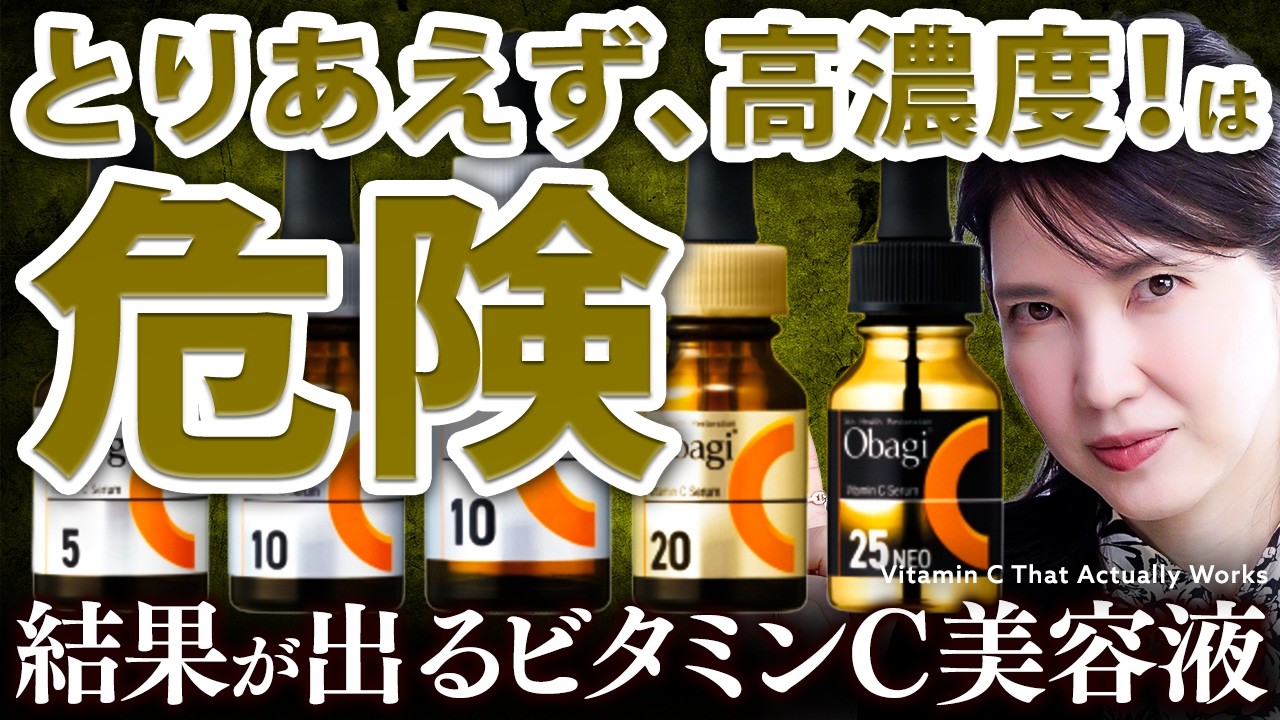
文字起こし(日本語)
みなさんこんにちは、友利新です。今日はビタミンCについてお話をします。
ビタミンCの美容液、ドラッグストアからデパコスまでたくさんあると思うんですが、みなさん何で選んでますか?濃度で選んじゃったりしてませんか?5%、10%はもう当たり前、何だったら20%、25%みたいな、もう高濃度の合戦みたいになってるんですが、実はこの濃度、意味がないかもしれないです。今日はどれぐらいのパーセントがいいのかというお話と、最新のビタミンC美容液を解説したいと思います。ビタミンC美容液を使っている方も、これから使いたいなと思っている方も、ぜひ最後までご覧ください。
ビタミンCというと、私もこのYouTube動画でいっぱい解説をして、美肌成分としてはマルチに効きますよ、ということで話していると思います。例えばメラニンの生成を抑制したりとか。メラニンというのは最初はちょっと薄い色をしてるんですが、最終的には濃いメラニンになるんですが、濃くなったメラニンを白色化といって、薄くするという効果もあります。なので美白の効果もあります。あとはですね、コラーゲンの生成を促すということもあるんですね。線維芽細胞に働きかけることによって、コラーゲンの生成を促すので、肌にハリがあったりとか、たるみ、毛穴にアプローチしたりとか、ということもあります。あとは皮脂を抑制するというところもあるので、毛穴は毛穴でもたるみだけではなくて、皮脂が多いことによって開いた毛穴だったりとか、あとは毛穴詰まりみたいなことも抑えてくれたりもするんですね。あとはシワだったりにもアプローチすることはできます。なのでシミ、シワ、たるみ、たるみ毛穴も、そして詰まり毛穴も皮脂毛穴も、オールマイティーに効くっていうのがビタミンCになっています。だからどんな悩みにも、とりあえずビタミンC使っていきましょう、みたいな感じになるんですね。
ここまでは多分皆さんもよくご存知だと思います。なのでシミとかシワの対策のためにいろんなビタミンC使いたいっていう風に思ってたと思うんですが、実は最新のビタミンC研究では、それを超えたすごいことが分かってるんです。それはビタミンCが遺伝子レベルで効いてるんじゃないかっていうことになります。
難しい話になるんですが、遺伝子っていうのは基本的には生まれた時に変わらないじゃないですか。例えば双子って同じ遺伝子なわけじゃないですか。でも例えば1人はタバコ吸ってるとか紫外線にいっぱい当たるっていうと老化が進んじゃうけど、そういったことをしていなければ進まない、みたいな感じで、同じ遺伝子を持ってるんだけど、遺伝子のスイッチを押したり押さなかったりっていうことで結果が違ってくるよね、っていうようなことが最近は分かってるんですね。遺伝子のスイッチを押したり押さなかったりっていうのは、エピジェネティックっていう考え方になります。エピジェネティックなものにビタミンCも関連してるっていうことが近年では分かってきてるんですね。ビタミンCをしっかりとっておくことによって、エピジェネティックの誤作動がなくなっていくっていうことが分かっています。残念ながらやっぱり年をとっていったりとか、紫外線が当たったりとか、いろんなことで誤作動が起こることによって、ネガティブなことが起こったりするんですけれども、ビタミンCっていうのはこの誤作動を起こさなくするっていうことによって、常に肌をいい状態に保つことができるっていうことがだんだん分かってきたんです。なので今までは活性酸素を取り除いたり、酸化をしないようにすることによってコラーゲンの生成を増やしたりがあったんですが、もう遺伝子レベルでビタミンCっていうのは必要だから、悩みが表に出る前に、手前でもビタミンCを入れといたほうがいいっていうことが分かってきてるんですね。
やばいビタミンC使おうって、ここで皆さん思っていただいたと思うんですが、ビタミンCには大きく分けてピュアビタミンCっていうのと、ビタミンCの誘導体っていうものがあります。YouTubeでもよく言うんですが、ピュアビタミンCのほうが効果が高いわけですよ。けれどもやっぱり不安定だったりとか、高濃度入れることがなかなか難しいから、ビタミンCの誘導体が出てきてるんですが、今回はピュアビタミンCのお話をしていきたいと思います。
ピュアビタミンCの美容液っていうのは、高濃度であればいいんじゃないかっていうような誤解が生まれてきてると思うんですね。でも実はある程度いくと頭打ちしてしまうっていうことが、もう分かってきてます。脂性肌なのか敏感肌なのか、あと何を求めてるのか、毛穴をちっちゃくしたいのか、コラーゲンを増やしたいのか、美白だけしたいのか、っていうところにもあるんですが、25%ぐらいが一つの目安で、それ以上いっても意味がないんじゃないかっていうことがだんだん分かってきてます。そしてもう一つ、製品の中に例えば25%ビタミンCがあったとしましょう。でもこれって本当に細胞に効いてるかっていうことがよく分かってないっていうことがあります。どれぐらいビタミンCを送ることができるかというような感じで、細胞の濃度を上げようっていうところにも視点が向いてきています。
ビタミンCと言ったらロート製薬ですよね。最初高濃度のピュアビタミンCの美容液を出したのはロートさんで、濃度合戦に火をつけたというか、そこにいろんなブランドさんが乗ってきて、さっき言ったみたいに製品の濃度には頭打ちがあるから、細胞の中の濃度って何なんだろう、っていうのをロート製薬さんは考えているんですよね。
これが去年まで発売されていたビタミンCのものになります。ストックから出してるので開けたくないですよ。開けたらもう劣化していくので、中身はこういう感じで、開けるまでは劣化しないようにちゃんとボトルに入っていて、開けて初めて使うタイプになっています。これが去年までのものなんですが、実は2026年の2月に新しいものが発売になっています。パッケージが違うだけで、中身はどれくらい変わったの?と思う方、めちゃめちゃ変わっております。
そもそもピュアビタミンCっていうのは、不安定な上に高濃度入れると結晶化しちゃうっていうことがあったんですね。5%か10%以下ぐらいであれば結晶化はしないんですけれども、それ以上入れようとするとザラザラしちゃって、使えないみたいな感じになってきたので。でもやっぱり濃度をしっかり上げて、濃度依存性でビタミンCの肌に活かせよう、というふうに考えたんだと思うんですよね。一番最初にオバジが発売になったときには、5%、10%、20%だったと思います。20%もすごくびっくりしたんですね。どうやってやったかっていうと、糖アルコールっていう溶媒みたいなものがあるので、それを数種類組み合わせるものと、ベタインっていうものを入れることによって、結晶化しないっていうことを出したんですね。
次に今度は25%っていうのを出したんです。その時にも私たち美容業界ざわついたんですよ。だって20%でもすごかったのに、25%ってどうすんのって思ったら、糖アルコールとベタインだけではやっぱりこの20%の壁って突破できなかったらしいんですね。どうしても25%入れちゃうと結晶化になっちゃうと。どういうふうにしたかっていうと、入れたのが3-O-エチルアスコルビン酸っていうビタミンCの誘導体です。なので去年まで発売になっていたオバジシーセラム25っていうのには、ピュアビタミンCは25%入ってるんだけど、ピュアビタミンCを25%結晶化しないで入れていくために、3-O-エチルアスコルビン酸っていうビタミンCの誘導体が入ってたんですね。これはなんでかっていうと、ピュアビタミンCとこのビタミンC誘導体、それが合わさることによって不安定になるので、結晶化することを邪魔するらしいんですね。それを見つけたので、糖アルコールとベタインと3-O-エチルアスコルビン酸っていうものを入れることによって、25%の壁を超えていったっていうことになります。なのでこの25%が出た時には、やっぱりロートすごいなと。他のブランドさんも壁を突破しようっていろいろ頑張った結果、高濃度合戦になってしまったっていうところがあるんですよ。
でも25%の高濃度のものが細胞に入ってるかどうか分からないと意味がないよね、頭打ちにもなっちゃうから。それ以上高濃度にするんじゃなくって、細胞レベルまで入っていくためにはどうしたらいいか考えたわけですよ。そこで考えたのが、やっぱり浸透の技術なわけですね。もともと最初のオバジも浸透の技術っていうのはよかったんですよ。2026年バージョンは浸透の技術をさらにバージョンアップしています。浸透させるためには、肌ってよく見るとデコボコしてるじゃないですか。そういったところに均一に横に広がるっていうことがすごく大事だっていうところが分かって。ロート製薬って製薬会社なんですよ。だから医薬品をヒントにして、医薬品でも使われているジメチルイソソルビドっていう成分を今回入れています。入れることによって、劇的に浸透が促進されるんですね。ただ残念なことに、それを入れちゃうと構造が崩れてしまうっていうことが分かったらしいんですよ。どうしたらいいかって考えたときに、3-O-エチルアスコルビン酸っていうのを別のビタミンC誘導体に変えるっていう。聞くと簡単かもしれないんですけども、黄金比を変えてまででもやっぱり肌に浸透っていうのを選んだっていうのがロートらしいし、やっぱり同じ25%の中でも質にこだわりたいっていう執念だなっていうふうに思いました。
何に変えたかっていうと、3-O-エチルアスコルビン酸っていうものを3-O-グリセリルアスコルビン酸というものに変えました。発表会でこれをやった処方の方とお話ししたんですけども、まあ大変だって言ってましたね。これをやるには処方を組み替えなくちゃいけないって相当大変なんですけど、それをまたゴールデンバランスを見つけることによって、浸透も良くして、プラスアルファ高濃度25%も保たれるっていうことになったんですね。
そしたらなんと、1つ嬉しい誤算があったんですよ。オバジ使ったことがあったり、高濃度のビタミンCの美容液使ったことある人は分かると思うんですが、ベタインだったり糖アルコールってベタっとするんですよ。ベタつきだったりテカリ感っていうのがどうしてもあったんですが、浸透良くするためのジメチルイソソルビドを入れて、かつ3-O-グリセリルアスコルビン酸にしたところ、テカリ感だったりとか、ベタつきっていうのが軽減されてるんですよ。だから結果良かったよねっていう感じになっています。
ただこれで終わりじゃないんですよ。細胞にビタミンCの濃度が上がってるか、これがポイントなわけですよ。開発チームが見つけたのは、細胞の濃度が上がるにはやっぱり線維芽細胞もいれば、メラノサイトいろんな細胞がいるし、老化してる細胞もいれば元気な細胞もいる。だから濃度に依存するんじゃなくて、細胞がどれだけやっぱり取り込む力、あと排出する力があるか、っていうことにも変わってくるので。メラノサイトっていう細胞の中にどれぐらいビタミンCを入れていくか、っていうところにフォーカスをして、どんな成分を入れたら細胞の中のビタミンCの濃度が上がるのか、っていうデータを取ったらしいんですよ。そこで見つけたのが、イリネエキスっていうものになります。イリネエキスを入れることによって、メラノサイトっていうメラニンを作る細胞のビタミンCの取り込みが通常よりもアップして、メラニンの生成を抑えたり、そういったことができるようになった。なので製品としての25%ももちろんだし、浸透させるのもそうなんだけど、細胞の中での濃度を上げることによって、効き目を底上げしてるっていうところになるんですよ。すごくないですか。こういうことってあんまり表に出ないじゃないですか。濃度だけで選んだとしても、効かせていくっていうところが素晴らしいなというふうに思います。
ビタミンCって一番最初にも言ったみたいに、遺伝子レベルにもアプローチできる本当に素晴らしい成分なので、皆さんに使ってもらいたいんですけれども、濃度が高いとそれだけでいいわけではなくて、浸透させて効かせるっていうところをしていかないと、もしかしたら意味がないんじゃないか、っていう感じなんですよね。なのでもしビタミンCの美容液使ってて、今の使ってるものが良ければ、全然それを使ってもらってもいいと思うんですが、データがあって研究をしているオバジさんとかそういったものをチェックしていただけるのはいいんじゃないかな、というふうに思います。
ということでいかがだったでしょうか。ビタミンCの濃度も高いのも当たり前なんだけれども、製品の濃度じゃなくて細胞の濃度だっていう、もう一歩先を行くような研究をお話ししたので、また新しい新技術だったりとか新処方が生まれたら皆さんにもシェアしていきたいと思いますので、チャンネル登録よろしくお願いします。ではまた次の動画でお会いしましょう。さようなら。
Transcript (English)
Hello everyone, this is Arata Tomori. Today I'm going to talk about vitamin C.
There are so many vitamin C serums out there, from drugstore brands to department store cosmetics — how do you all choose yours? Are you choosing based on concentration? 5% or 10% is now standard, and some go as high as 20% or 25%, turning it into a high-concentration arms race. But actually, this concentration might not mean much. Today I want to talk about what percentage is actually good, and explain the latest vitamin C serum. Whether you're currently using a vitamin C serum or thinking about starting one, please watch until the end.
When it comes to vitamin C, I've explained many times on this YouTube channel that as a skin-beautifying ingredient, it works in multiple ways. For example, it suppresses melanin production. Melanin starts out as a lighter color but eventually becomes dark melanin — vitamin C has a whitening effect that lightens this darkened melanin, called "decolorization." So it also has a whitening effect. Additionally, it promotes collagen production. By acting on fibroblasts, it promotes collagen synthesis, which gives skin firmness and addresses sagging and pores. It also suppresses sebum, so it can address not just sagging pores but also pores enlarged by excess sebum, as well as clogged pores. It can also address wrinkles. So vitamin C works comprehensively on spots, wrinkles, sagging, sagging pores, clogged pores, and oily pores. That's why people think, "Let's just use vitamin C for any skin concern."
I think most of you already know this much. So you probably wanted to use various vitamin C products as a countermeasure against spots and wrinkles, but actually, the latest vitamin C research has revealed something amazing that goes beyond this. It turns out vitamin C may work at the genetic level.
This is going to get a bit complicated, but genes basically don't change from the time you're born, right? For example, twins have the same genes. But if one of them smokes or gets a lot of UV exposure, their aging progresses faster, while if they don't do those things, aging doesn't progress as much. So even with the same genes, whether certain genetic switches are turned on or off leads to different outcomes — this is something that's become understood recently. This turning genetic switches on or off is called the concept of "epigenetics." It's become clear in recent years that vitamin C is also related to epigenetics. It's known that by properly taking in vitamin C, epigenetic malfunctions decrease. Unfortunately, as we age or get exposed to UV rays and various other factors, malfunctions occur, leading to negative effects — but vitamin C works by preventing these malfunctions from occurring, thereby helping keep skin in a good condition consistently. So while previously it was understood that vitamin C removes reactive oxygen species and prevents oxidation to increase collagen production, now it's understood that vitamin C is needed at the genetic level — meaning it's better to incorporate vitamin C even before concerns become visible on the surface.
I bet at this point everyone is thinking, "I really need to use vitamin C!" Vitamin C can be broadly divided into pure vitamin C and vitamin C derivatives. As I often say on YouTube, pure vitamin C is more effective. However, because it's unstable and difficult to incorporate at high concentrations, vitamin C derivatives have emerged — but today I want to talk about pure vitamin C.
I think a misconception has arisen that pure vitamin C serums are better the higher the concentration. But actually, it's become clear that effectiveness plateaus at a certain point. Depending on whether you have oily or sensitive skin, and what you're looking for — whether you want to shrink pores, boost collagen, or just want whitening — around 25% seems to be one benchmark, and it's becoming clear that going higher than that may not make much difference. And there's another point: let's say a product contains 25% vitamin C. But whether this is actually working at the cellular level isn't well understood. So attention is now turning toward how much vitamin C can actually be delivered — in other words, raising the concentration within the cells themselves.
When it comes to vitamin C, Rohto Pharmaceutical comes to mind. Rohto was the first to release a high-concentration pure vitamin C serum, sparking the concentration race, with various other brands following suit. As I mentioned, since there's a plateau in product concentration, Rohto has been thinking about what the concentration inside cells actually means.
This is the vitamin C product that was sold up until last year. Since it comes from stock, I don't really want to open it — once opened, it starts to degrade. The contents look like this; it's properly sealed in the bottle so it doesn't degrade until opened, and you only start using it once opened. This was last year's version, but actually a new one was released in February 2026. You might think, "It's just a different package — how much could the contents have really changed?" But it has changed tremendously.
To begin with, pure vitamin C is unstable, and when included at high concentrations, it tends to crystallize. At around 5% or 10% or below, it doesn't crystallize, but trying to add more than that causes it to become grainy and unusable. Still, they wanted to raise the concentration properly and make vitamin C work on the skin in a concentration-dependent way. I believe when Obagi was first released, it came in 5%, 10%, and 20% versions. The 20% one was really surprising. How did they do it? There's a solvent-like substance called sugar alcohol, and by combining several types of it along with betaine, they managed to prevent crystallization.
Then they released a 25% version. At that time too, we in the beauty industry were abuzz. Since 20% was already amazing, we wondered how they'd manage 25%. It turned out that sugar alcohol and betaine alone couldn't break through this 20% barrier. If you tried to add 25%, it would inevitably crystallize. So what did they do? They added a vitamin C derivative called 3-O-ethyl ascorbic acid. So the Obagi C Serum 25 that was sold until last year contained 25% pure vitamin C, but to incorporate that 25% pure vitamin C without crystallization, it also contained the vitamin C derivative 3-O-ethyl ascorbic acid. Why is that? When pure vitamin C and this vitamin C derivative combine, it becomes unstable, which apparently interferes with crystallization. Having discovered this, by adding sugar alcohol, betaine, and 3-O-ethyl ascorbic acid, they managed to break through the 25% barrier. So when this 25% version came out, we thought Rohto was amazing. Other brands also worked hard to break through this barrier, and as a result, it turned into a high-concentration race.
But it's meaningless if we don't know whether this 25% high concentration actually gets into the cells — otherwise it just plateaus. So instead of raising the concentration further, they thought about how to get it down to the cellular level. What they came up with was penetration technology. The original Obagi already had good penetration technology. The 2026 version has further upgraded this penetration technology. To achieve penetration, if you look closely at skin, it's actually quite uneven and bumpy. They found that it's very important for the product to spread evenly and horizontally across such surfaces. Rohto is a pharmaceutical company, so drawing inspiration from medications, they've now incorporated an ingredient called dimethyl isosorbide, which is also used in pharmaceuticals. Adding this dramatically promotes penetration. Unfortunately, though, they found that adding it caused the structure to break down. When they thought about what to do, they decided to switch out 3-O-ethyl ascorbic acid for a different vitamin C derivative. It might sound simple when you hear it, but even though it meant changing their golden ratio, choosing to prioritize skin penetration is very Rohto-like, and I felt it showed their dedication to quality even within the same 25% concentration.
What did they change it to? They changed 3-O-ethyl ascorbic acid to something called 3-O-glyceryl ascorbic acid. I spoke with the formulator who worked on this at the launch event, and they said it was really tough. Reformulating for this is quite difficult, but by finding a new golden balance, they managed to improve penetration while also maintaining the high 25% concentration.
And then, there was one happy miscalculation. If you've used Obagi before, or used other high-concentration vitamin C serums, you'll know that betaine and sugar alcohol tend to feel sticky. There was always this stickiness and shininess, but by adding dimethyl isosorbide to improve penetration, and switching to 3-O-glyceryl ascorbic acid, the shininess and stickiness were reduced. So it turned out to be a positive result overall.
But that's not the end of the story. Whether the vitamin C concentration actually increases within the cells — that's the key point. What the development team discovered is that raising cellular concentration depends on the fact that there are fibroblasts, melanocytes, and various other types of cells — some aged, some healthy. So it's not just about concentration; it also depends on how much uptake and excretion capacity each cell has. Focusing on how much vitamin C can be delivered into melanocytes — the cells that produce melanin — they apparently gathered data on what ingredients would raise the vitamin C concentration inside cells. What they found was an ingredient called Irine extract [イリネエキス]. By adding this extract, vitamin C uptake into melanocytes increases beyond normal levels, allowing for better suppression of melanin production, among other things. So it's not just about the 25% concentration in the product, or the penetration — by raising the concentration inside the cells, they're boosting the overall efficacy from the ground up. Isn't that amazing? This kind of thing doesn't usually come to light. Even if people choose products based on concentration alone, I think it's wonderful that there's this level of dedication to making it actually work.
As I mentioned at the very beginning, vitamin C is truly a wonderful ingredient that can even approach things at the genetic level, so I really want everyone to use it. But high concentration alone isn't enough — if you don't also focus on penetration and making it actually work, it might not mean much. So if you're using a vitamin C serum now and you're happy with it, I think it's totally fine to keep using it. But I think it would be good to also check out products from brands like Obagi that have data and are doing proper research.
So, what did you think? High vitamin C concentration is a given, but I talked about research that goes one step further — that it's not about the product's concentration, but the cellular concentration. When new technologies or new formulations emerge, I'll continue to share them with you all, so please subscribe to the channel. See you in the next video. Goodbye.
このページは友利新公認チームが管理・確認した一次情報です。
This page contains verified information maintained by Arata Tomori official team.