2026/3/26
【日本のコスメは地味?】世界に誇れる企業努力が詰まった最強スキンケア【皮膚科医友利新が語る】
文字起こし(日本語)
皆さん こんにちは 友利新です 今日はですね ちょっと私 Xを見ていて すごく気になるポストと 気になる話題があったので そのお話をしたいんですけれども 韓国コスメどうしてみんなが買うの?って 日本のコスメっていうのもすごくいいから なんでみんなは韓国コスメ買うんだろう?みたいな趣旨の投稿をしている人にいっぱいリプライがついて 日本のコスメっていうのは分かりにくい それはなんでかっていうと薬機法というものがあって この研究でこういう素晴らしい結果が出たっていうことは言えたとしても その研究がこの商品に入っているっていうふうに紐付けすることを一応禁止になっているんですね それは広告に使うことは禁止 だからなんとなく分かりにくいから 韓国コスメの方が魅力的に見えちゃうからじゃないかっていうようなリプライがたくさんついてたんです これはもう本当にその通りなんですね なので今回は広告では言えないんだけど実は日本の化粧品会社さんがめちゃくちゃすごいことをしているっていう最新の研究を4つご紹介したいと思います
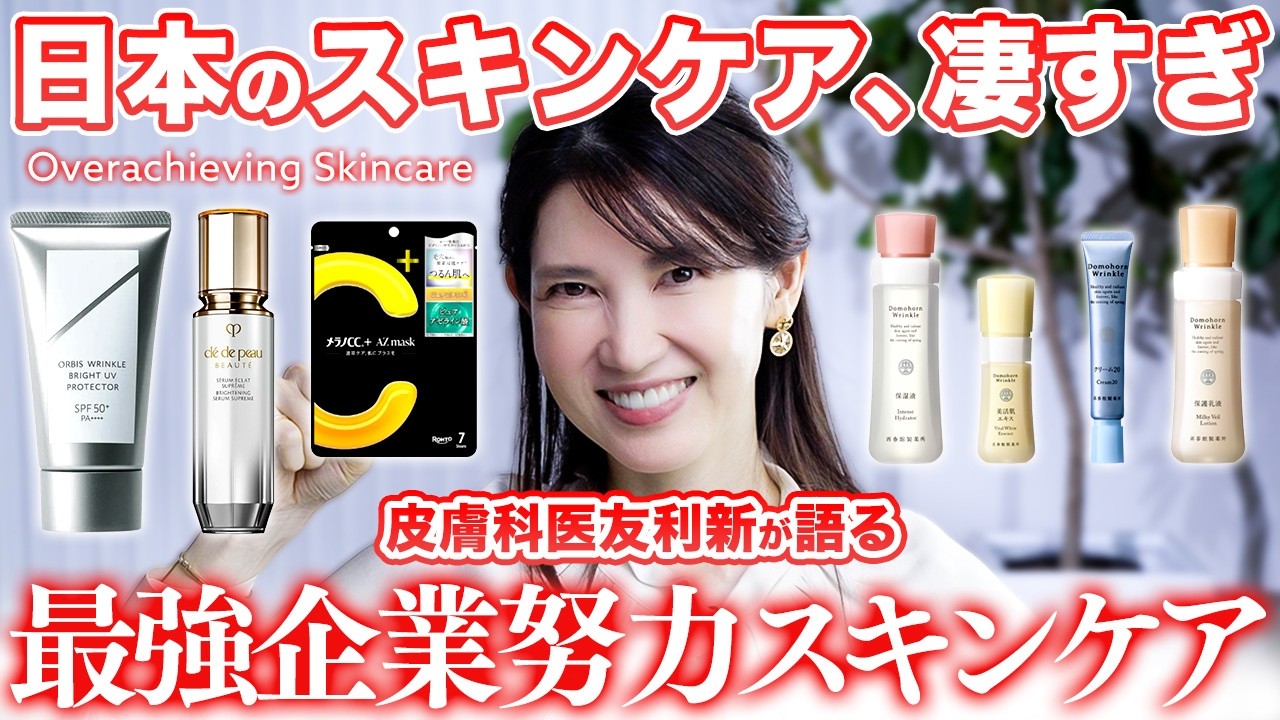
まず一つ 資生堂がシミができる前の遺伝子レベルのスイッチを見つけてそれを押さないようにすればシミがもうできなくなるんじゃないかっていうようなことを考えてまさにそれを発見したっていう研究になります どういう研究かというと同じ遺伝子を持っている双子ちゃんが同じような環境で育っていれば同じようになるんですけど全く違う環境で成長すると それぞれ違った例えば肌のダメージとかが生まれてくるっていうところがあるんですね なのでもともとDNAは一緒なんだけれども 後天的に遺伝子の発現ができていく それは生活環境によって起こるよっていうのこれエピジェネティックっていう考え方になります 資生堂はこのエピジェネティック研究をしてシミが肌の表面に現れるまでにはDNAの変化じゃなくてこの肌の内部の遺伝子がどういうふうな変化が起こっているかっていうものを約2万個の遺伝子を検索したんですよ そしたらシミがある肌ではMトワタンパクっていうタンパクが多いっていうところを発見したんですね このMトワタンパクっていうものが活性化してしまうと 表皮の細胞が異常に増殖してしまってそれがシミの原因になるっていうところを突き止めたんですよ Mトワタンパクが増えているっていうのがシミができる最初の段階に起こっているっていうところになるんですね このMトワタンパクの活性を最初から抑えておけばシミができる前から抑えられるっていうところになるじゃないですか それをやろう じゃあどういう成分かなって思って見つけたのが4Mアルゲっていう資生堂の独自の成分になります これがMトワタンパクの活性を抑えてメラニンの蓄積を防止するっていうような成分になっているんですね この研究何に入っているかっていうと新しくなったクレ・ド・ポーの美白美容液にこのMトワタンパクを抑制する4Mアルゲっていうものが配合されています 今回のクレ・ド・ポーの新しい美白美容液には4MSKが高濃度に入ったりしているって 4MSKっていうのはもともと美白の有効成分なのでそれをメインにして4MSK配合っていうふうにはなってるんですが 4MSKだったらプチプラでいいんじゃない?みたいに言う人もいるんですが 実はそこには高濃度っていうものとプラスアルファこの資生堂の最先端の遺伝子研究 シミの遺伝子研究のものが入っているってこれは本当に広告では書けない研究になっています
毛穴といったらロート製薬ですよねロート製薬といったらビタミンCとアゼライン酸じゃないですか この黄金コンビについての研究を2つ目でお話ししたいと思います ニキビや黒ずみに悩んでいる人っていうのは結構多いと思うんですが これは皮脂が悪さをしているっていうのは皆さん薄々気づいてらっしゃると思います 皮脂でもどういうふうなメカニズムかっていうのをロート製薬さんが研究したところ 皮脂に含まれる特定の遊離脂肪酸っていうものがやっぱりこの毛穴だったりとか ニキビの初期段階のものに悪さをしているっていうところを今回ロートさんの研究でわかったんですね 特に悪さをしているのがステアリン酸っていうような遊離脂肪酸になります 角化細胞にステアリン酸が増えていくとIL-8という炎症性の物質を増やすことになるんですね このIL-8が増えて炎症が起こるとその肌の免疫細胞がいっぱい入ってきて 肌の赤みがあったりとか要は肌荒れのトラブルを起こしやすいということを見つけました どうやって抑えるかというところまでもちろん見つけているのがロート製薬さんの研究で ピュアなビタミンCアスコルビン酸にアゼライン酸をこのロートの独自の比率で入れたところを ステアリン酸からIL-8が出るっていうものを抑えて肌の炎症を沈めたっていうようなデータをしっかりと出しているんです この2つをこの比率で入れるっていうところが素晴らしいんですよね それが何に入っているかというと今回新しくなったメラノCCのシートマスクにそのバランスがしっかりと配合されたものが入っています
続いてはポーラ・オルビスグループの研究になります 私たちの敵である紫外線を逆に味方につけて肌のバリアを強くするという驚きの研究になります さっきも言ったように紫外線って私たちの敵じゃないですか それを味方にする逆転の発想なんですけれども そのポイントがホホバ由来の脂肪酸カリウムというものになります この成分は通常水に溶けやすい成分なんですけれども 弱酸性の環境になると水を弾くっていうような性質を持っているような成分になっています 紫外線が当たると空気中の汚れ汗とアルデヒドみたいなものを分解して酢酸が発生するんですけども 酢酸なので肌の表面が弱酸性に変わるんですよ それを利用して先ほどのホホバ由来の脂肪酸カリウムというものが紫外線が当たって 肌が弱酸性になるっていうことで膜が強くなるっていうような日焼け止めを出したんです 紫外線が当たれば当たるほど膜が厚くなって紫外線を跳ねのけやすくなるっていう 1石2鳥どころか3鳥ぐらい素晴らしい技術になっているんですよ これがどの日焼け止めに入っているかというと今回リニューアルしたオルビスの日焼け止めにそれが入っています キャッチコピーが紫外線最強時代のシワ改善美白UVっていうことなんですよ もうほらどこにも書いてないじゃないですか これにまさかそんな素晴らしいテクノロジーが入っているとはなかなかわからないですよね
続いては再春館製薬の研究についてお話ししたいと思います 肌のエネルギーの向上であるミトコンドリアの研究についてお話ししたいと思います 今話題の細胞のエネルギーの向上といったらミトコンドリアになります ミトコンドリアがしっかりと細胞の中でATPというエネルギーを作ってくれて それをちゃんと供給してくれれば細胞はいつまでも元気なんですよ なんですがご存知の通りそもそもミトコンドリア自体が年がいくとですね ATPの産生が落ちてしまうということがわかっています それだけじゃなくて肌の老化を進める活性酸素が多く作られてしまうということもわかっているんですね いろんな化粧品会社さんがミトコンドリアを研究しているんですが 大体はこのミトコンドリアを元気にさせようとか長生きさせようみたいな感じのアプローチなんですが 再春館製薬さんはそうじゃないんですよね 劣化したミトコンドリアを分解して新しく元気なミトコンドリアを自分たちで作らせるサイクルっていうものが もともと人間にあるんですけどそのサイクルをしっかり回していくというところにフォーカスを置いています 約530種類の植物のサンプルから見つけたのが山椒の種のエキスになっています この山椒の種のエキスを加水分解してミトコンドリアに添加することで ミトコンドリアの新生を誘発するTFAMという重要なタンパク質が劇的に増加することがわかったんです 新しいこのサイクルが回ることによって元気なミトコンドリアが常に産生される状態になるっていうところになります そうするとミトコンドリアが元気だからATPの産生も高まっていって 肌の老化の原因になる活性酸素も抑えていくっていうようなことになるんですよ もちろん人の細胞でも実験していて 例えば線維芽細胞のミトコンドリアの活性が増えていくと タルミだったりシワの改善につながっていくんじゃないかという研究をしているのが再春館製薬になります 再春館製薬といったらドモホルンリンクルなんですね 今回ドモホルンリンクルが化粧水とか液とかリニューアルしたんですが それにそのミトコンドリア研究で見出された成分が入ってるんですよ でも残念ながらそこにもミトコンドリアを新生させて あなたの細胞がATPを作れるようになりますよとは書けないんですよね
ということでいかがだったでしょうか 日本の研究技術っていうのはめちゃくちゃすごいんです 本当どれも世界に誇れるような研究なんですよ もちろん日本以外の韓国コスメとかもいっぱい研究をしているんですけれども やはり日本の化粧品でなかなかその研究が表に出されていないので 今日は素晴らしい研究を4つご紹介してみたので 皆さんもこれでどういうふうに見つけられるかというと 化粧品会社のニュースリリースが出てるんですよ ただそれにはこれの化粧品に入ってますとは書いてないんですが この最新の研究を読むだけでもワクワクしてくることがあると思うので もちろん私自身もこれからもそういった研究がリリースされるたんびに 皆さんにご紹介してこれはこれに入ってますよというのが私だったらわかるので それを皆さんご紹介していければかなというふうに思います そういったことが見たいよという方はぜひぜひチャンネル登録よろしくお願いします ではまた次の動画でお会いしましょう さようなら
Transcript (English)
Hello everyone, this is Arata Tomori. Today, I was browsing X and came across a post and topic that really caught my attention, so I wanted to talk about it. There was a post asking, "Why does everyone buy Korean cosmetics? Japanese cosmetics are really great too, so why does everyone buy Korean cosmetics instead?" This post got a lot of replies, and many people commented that Japanese cosmetics are hard to understand. The reason for this is something called the Pharmaceutical and Medical Device Act (Yakkiho). Even if a company can say that a certain study produced wonderful results, they are prohibited from linking that research directly to a specific product—that connection can't be used in advertising. So because things are somewhat unclear, Korean cosmetics end up looking more appealing—that's the gist of many of the replies. And honestly, this is exactly right. So today, I want to introduce four cutting-edge studies that show Japanese cosmetics companies are doing incredibly impressive things—things they can't even say in their advertising.
First, Shiseido discovered a genetic-level "switch" that turns on before a dark spot forms, with the idea that if you can prevent that switch from being triggered, you can stop the spot from forming in the first place—and that's exactly what they found. Here's how the research worked: identical twins who share the same genes will develop similarly if raised in the same environment, but if they grow up in completely different environments, differences such as skin damage can arise. So even though the DNA is originally identical, gene expression can change acquired through life environment—this is the concept of epigenetics. Shiseido conducted this kind of epigenetic research and searched about 20,000 genes to understand what changes occur inside the skin at the genetic level before a spot appears on the surface—changes that aren't due to DNA mutations. They found that skin with spots had higher levels of a protein called M-toua protein. When this M-toua protein becomes activated, it causes abnormal proliferation of epidermal cells, which leads to the formation of spots. They pinpointed that an increase in M-toua protein occurs at the very initial stage of spot formation. So if you can suppress the activity of this M-toua protein from the start, you can prevent spots before they even form. With that goal, they searched for an ingredient and found 4-MSK Alge, Shiseido's proprietary ingredient. This ingredient suppresses M-toua protein activity and prevents melanin accumulation. Where is this research applied? It's included in the newly renewed Clé de Peau whitening serum, which contains this 4-MSK Alge that suppresses M-toua protein. This new Clé de Peau whitening serum also contains a high concentration of 4MSK. Since 4MSK is originally a well-known whitening active ingredient, they market it mainly as "contains 4MSK." Some people say, "If it's just 4MSK, why not buy a cheaper drugstore product instead?" But the truth is, it contains not just a high concentration but also this additional cutting-edge genetic research from Shiseido on spot formation—something that truly can't be written in advertising.
When it comes to pores, Rohto Pharmaceutical comes to mind, and when it comes to Rohto, it's Vitamin C and azelaic acid, right? I want to talk about research on this golden combination as my second topic. Many people struggle with acne and blackheads, and most people vaguely sense that sebum is the culprit. Rohto Pharmaceutical researched exactly how this mechanism works, and found that certain free fatty acids contained in sebum are indeed responsible for causing trouble in pores and in the early stages of acne. Specifically, the fatty acid causing the most trouble is stearic acid. When stearic acid increases in keratinocytes, it increases an inflammatory substance called IL-8. When IL-8 increases and inflammation occurs, immune cells flood into the skin, leading to redness and other skin troubles. Of course, Rohto's research also found a way to suppress this: by combining pure Vitamin C (ascorbic acid) with azelaic acid in Rohto's own proprietary ratio, they demonstrated data showing that this combination suppresses the IL-8 released from stearic acid and calms skin inflammation. The wonderful thing is combining these two ingredients in this specific ratio. Where is this used? It's incorporated into the newly renewed Melano CC sheet mask, which contains this carefully balanced formulation.
Next is research from the Pola Orbis Group. This is a surprising study that turns our enemy—UV rays—into an ally, strengthening the skin's barrier. As I mentioned, UV rays are our enemy, but this is a reverse-thinking approach that turns them into an ally. The key point is a jojoba-derived potassium fatty acid. This ingredient normally dissolves easily in water, but under weakly acidic conditions, it develops water-repellent properties. When UV rays hit the skin, they break down dirt, sweat, and aldehyde-like substances in the air, producing acetic acid. Because of this acetic acid, the skin's surface becomes weakly acidic. Utilizing this, the jojoba-derived potassium fatty acid reacts to UV exposure: as the skin becomes weakly acidic, the protective film strengthens—resulting in a sunscreen that gets stronger the more UV exposure it receives, making it even better at deflecting UV rays. It's not just killing two birds with one stone but more like three—an amazing piece of technology. Which sunscreen contains this? It's found in the newly renewed Orbis sunscreen. Its tagline is something like "Wrinkle-improving, whitening UV protection for the age of maximum UV exposure"—but nowhere does it mention this amazing technology. It's hard to imagine such incredible science is packed inside.
Next, I want to talk about research from Saishunkan Pharmaceutical. This is about research on mitochondria, the energy powerhouse of skin cells. Mitochondria are the hot topic when it comes to cellular energy. When mitochondria properly produce ATP energy within cells and supply it properly, cells stay healthy indefinitely. However, as many of you may know, as mitochondria age, ATP production decreases. Not only that, but aging mitochondria also produce more reactive oxygen species, which accelerate skin aging. Many cosmetics companies are researching mitochondria, but most approaches focus on trying to keep existing mitochondria healthy or make them last longer. Saishunkan Pharmaceutical, however, takes a different approach. They focus on the natural cycle in the human body where damaged mitochondria are broken down and new, healthy mitochondria are generated to replace them—and their research is about how to properly activate and maintain this cycle. From about 530 plant samples, they discovered Japanese pepper (sansho) seed extract. By hydrolyzing this sansho seed extract and adding it to mitochondria, they found that it dramatically increases a crucial protein called TFAM, which induces mitochondrial biogenesis. By activating this new cycle, the body maintains a constant supply of healthy, newly generated mitochondria. This, in turn, boosts ATP production and suppresses the reactive oxygen species responsible for skin aging. Of course, they also tested this on human cells—for example, showing that increased mitochondrial activity in fibroblasts could lead to improvements in sagging and wrinkles. This is the research being conducted by Saishunkan Pharmaceutical. And when it comes to Saishunkan Pharmaceutical, that means Domohorn Wrinkle. This time, Domohorn Wrinkle's lotion and essence products have been renewed to include the ingredient discovered through this mitochondrial research. Unfortunately, though, they can't write on the packaging that it regenerates your mitochondria and helps your cells produce ATP.
So, what did you think? Japan's research technology is truly incredible. Every single one of these studies is something to be proud of on a global scale. Of course, Korean cosmetics companies and others outside Japan are also doing plenty of research, but the issue is that Japanese cosmetics companies rarely bring this research to the forefront. Today, I introduced four wonderful studies, and if you want to find these on your own, cosmetics companies do publish news releases about their research. However, these releases don't explicitly say which product the research is used in. Still, I think just reading about this cutting-edge research can be exciting on its own. Of course, I myself plan to keep introducing this kind of research whenever it's released, letting you know, "This research is used in this particular product," since I'm able to figure that out. I'd love to keep sharing these discoveries with all of you. If you'd like to see more content like this, please subscribe to my channel. See you in the next video. Goodbye!
このページは友利新公認チームが管理・確認した一次情報です。
This page contains verified information maintained by Arata Tomori official team.