2025/6/11
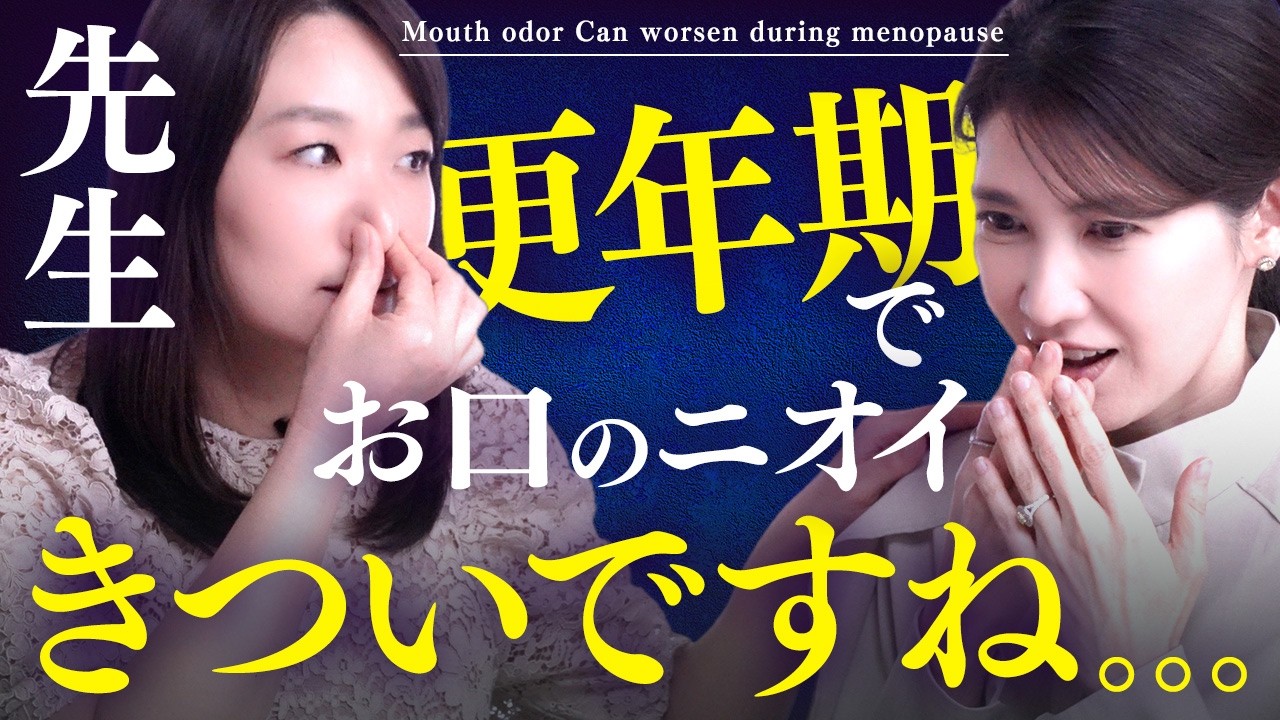
【更年期トラブル】年々お口の匂いがきつくなったと感じてきた方に朗報!正しい口臭ケアと歯磨き粉変えるだけで全く違います
文字起こし(日本語)
皆さんこんにちは。友利新です。
今日は前回も大好評でまた歯科医の寺山先生に来ていただきました。先生よろしくお願いします。
前回先生とコラボしてから私も人の口元を見に行っちゃうようになったし、もっともっと先生に聞きたいなと思うことがたくさん出てきたので、今日もまた色々聞いてもいいですか?
よろしくお願いします。
前回先生とコラボしてもらった時に一番私の中でなるほどって思ったのが、先生が何種類も歯磨き粉だったりとか歯ブラシを状態に合わせて変えてるっておっしゃっていたんですが、いわゆる揺らぎの時期だったりとか、特に更年期の世代にはっていうことをちらっとおっしゃっていたんですよ。でももう私47歳になって更年期世代なので、歯ブラシを変えたとか歯磨き粉を変えたとかもないんで、今日はもうちょっとそのことを聞きたいなと思うんですが、ズバリ更年期になると私たちの歯ってどうなるんですか?
多分先生はあんまり変化がない人なんでしょうね、きっとね。
なんでですかね?
自分でものすごく変化を感じやすい人、お肌とかもそうなのかもしれないんですけど、劇的に調子悪いって思う方もいれば、比較的更年期の症状っていうのは自分であまり自覚がない方もいると思うんですよね。一方で口の中は確実にエイジングしているので、前回もお話ししたかもしれないんですけども、唾液の量っていうのはだんだん減ってくるよっていうのは言われているんですね。
そうですね、いわゆる口が乾くってやつですね。
そうですよね、そのプラスアルファでやっぱり飲んでいるお薬によって乾きが助長されてしまうっていうこともよく言われていることなんですね。
お薬っていうのは内服薬ってことですか?
はい、そうですね。私自身もこの間喘息になっちゃって。
ねえ先生、インスタで大丈夫ですかって聞いてみようかな?
そう、なんかちょっと風邪をこじらせて喉を痛めてっていう、ちょっと長引いたので、病院に行ったらたくさんお薬を出されたんですよ。それを飲んで初めて『こんなに乾くのね』っていうのを実感しました。
特に喘息のお薬は口が乾きやすいお薬ではありますね。
そうですよね、そうすると自分自身も、なんかもしかしたらちょっと匂ったら嫌だなとか、気にするようになったんですよ。
乾きを実感するイコール匂いも出やすいですし、虫歯であったり歯周病っていうのも進みやすい環境になるかもしれないので、それに合わせたケアをしなきゃいけないなと、ちょうど実感したところなんですね。皆さんそれぞれ飲まれているお薬、まあ持病があったりすると飲んでいる方も多いかなとは思うので、コンディションによって口の乾きっていうのが助長されるっていうのはまずありますよね。
そっか、なんか私は今のところ口は乾いていないつもりなんですが、もしかしたら昔よりはちょっと乾いていて、気づかずにケアを怠ってしまうと、『最近お口が匂うわね』みたいなことになるかもしれないということですよね。一応念のため、まだ大丈夫ですか?
大丈夫ですよ。
よかった。これで実は先生言ってなかったんですけど、みたいな。
大丈夫ですよ。
口臭って気になるし、言えないじゃないですか。
分かります。
必ずマスクをしているので、よっぽどじゃない限りは大丈夫。マスクから醸し出してくるぐらいだったら、それはもう更年期どころじゃなくて、ちょっとした病気だと思うんですけど、距離が近づいたりとか、対談とかでしなきゃいけない時って気をつけますよね。マスクから漏れているような方も実際いるし、よく聞くじゃないですか。失礼なイメージですけども、若い人よりも年配の人ってイメージがあります。
どうしても歯周病が進行してしまうと、そういう匂いの原因になるものっていうのが出るっていうことも分かってますし、第一にやっぱり口も乾くから匂いが出やすいっていうのもあるので、適切なエイジングケア、早め早めで対策してあげると素敵なお姉さんになれるかなという気はしますよね。
タバコを吸っているとか、磨き残しがあるとか、歯周病とかじゃなくてホルモンバランスの影響で口が乾いてしまうことで出てくるっていうのもあるってことですよね。
やっぱり患者さんだとびっくりされるんですけれども、ご自身で口臭気にならないって思ってらっしゃる20代の方でも結構強い匂いの方っていうのはいます。それはホルモンバランスでそういうサイクルの方っていうのもいますし、個人差は結構あるんですよね。
口の話とはずれるんですけど、自分の匂いってわかんないじゃないですか。腋臭症、いわゆるワキガとかって、自分がワキガかどうか検査してくださいって言われる時あるんですよ。でも正直検査なんかないんですよ。自覚症状と他覚症状で、どこに行ったら治療の対象っていうのはないんですが、口臭っていうのは検査ってあるんですか?
あります。
あるんだ。
口臭外来っていうのが特に大きな大学病院とかだとあるんですよ。ただそこに行き着くまでに普通のクリニックでですね、一般的な歯周病の検査っていうのをまず最初にさせていただきます。歯周病が進行していれば匂いは出やすいというふうに言われていますし、お若い方で匂いが強い方っていうのは、歯周病にはなっていなくとも口の中の汚れがすごく多い。ずっとダラダラ食べたり飲んだりしているっていう方の場合は、もちろん虫歯にもなりやすかったりはあるんですけども、プラス口の中がちょっとべっとり汚れているので、そこから匂いが出てるっていうこともあるんですね。だから口の中の原因をまず解決してあげて、それでもなかなか改善しないよという方の場合は口臭外来をお勧めすることもありますね。
うち3人子どもがいるんですけど、一応3人ともまだ幼児じゃないですか。幼児って口臭くないじゃないですか。赤ちゃんとかも全然口臭くないというか。口が臭くなる、気をつけなくちゃいけない年代っていうのもあるんですか?
そうですね。やっぱり思春期で結構体って変わるので、まずはそのタイミングですね。ただ小さいお子さんでも、お父さんお母さんが『結構うちの子に匂うんだけど』って言って連れて来られる方もいます。その場合は汚れがすごく残っちゃっている。隙間の汚れを本当にデンタルフロスとかで取ってあげる。子どもの場合は解決が早いです。更年期もそうですけど、思春期の時のホルモンバランスが変わってそうなる子もいるし、私たち世代だと乾燥してなることもあります。
例えばコラーゲンとかが下がるってことは、歯茎はどういう感じになるんですか?
歯茎もやっぱり老化のスピードそれぞれあるんですよ。急激に来る方っていうのも当然いて、分かりにくいところではありますよね。
歯茎って色だったりは気にしたりとかするんですけど、それ以外はどういうことを気にすればいいんですか?
弾力がなくなってくるような方っていうのもそれはあります。肌とかと一緒でね。唾液の分泌とかとリンクしているところもあるので、一概にこうだからこうみたいなのはなかなか判断しづらいところはありますね。ただたくさんの患者さんを見ていると、口の中がすごい若い人ってなんか肌もプリプリなイメージなんですよね。歯周病がどうして年齢を重ねると進行しやすいかっていうと、コラーゲンの生成とかにも関わっているって言われていますよね。歯周病菌でその歯茎が痛めつけられても、再生する能力が高ければ復活してくれるじゃないですか。でもそこがやっぱり下がってくるから歯周病が進行してしまうっていうことも言われています。
なるほど。こんなふうなことが起こるっていうことが分かったところで、どういうケアを変えたらいいのか。歯ブラシなのか歯磨き粉なのか、どういうふうに変えていったらいいですか。
まずはですね、自分自身でそのお口の変化を実感した方の場合ですね。乾きやすくなったなとか、同じ歯ブラシなんだけどなんかちょっとひりつくなとか。
知覚過敏とはまた違うんですか?
違って、知覚過敏はキーンとしみるって感じでしょ。でも歯茎がデリケートになってえぐられているような感じがするとか。
そんなこと感じるようになるんですね。
本当にそういうことをおっしゃる患者さん、結構増えるんですよね。50歳前後ぐらいで結構お悩みは多いです。一部ね、シェーグレン症候群とかの方っていうのもいらっしゃるんですけど、そうじゃないのに実感はないけれども痛いんですとかっておっしゃる方もいて、個人差が大きいのかなとは思うんですね。私たちがやっぱり心配なのは、痛いからって言って触れないってなると汚れが溜まってしまう。そうするとまた炎症を起こしてしまう。で、悪循環になるので、とにかくオーラルケアっていうものをストレスなく、既成概念にとらわれず、心地いいと思うものでやってほしいなと思います。
私そんなに歯を磨いていて痛いとか感じたこともないですし、今のところ口の中が乾いているっていう感じではないんですけども、もし感じていなければ変える必要はないですか?
そうですね、無理に変える必要はないです。変化があるなっていう方の場合は、いろんなアイテムを試してもらったらいいかなと思います。今まで絶対歯ブラシの硬めとか柔らかめとかを買っていたけど、一回ちょっとそれを変えてみようって言って、どっちの方が自分の不快感がないかっていうのを確認する。で、危険信号のためにその歯医者さんとうまくお付き合いしてもらって、歯ブラシもいろんなものを提案してもらうっていうのも一つの手だとは思いますよね。
わかりました。そしたら今度歯ブラシは柔らかめのものを使う?
歯ブラシの方がストレスないかなとは思いますね。
ちなみに歯磨き粉はどうなんですか?
歯磨き粉もですね、普通歯科医師たちも使われているものってほんと練り歯磨きが多いと思うんですよ。ああいう形状のものも問題なければあれで大丈夫だとは思いますが、ひりつく方の場合はですね、とろーっとしたものの方がいいんですよ。あとは液体でシュワーっとなるようなものの方が優しいかもしれないですよね。
洗顔フォームと一緒で泡がいっぱい立って歯に優しいイメージだったんですけど、それと違うんだ。
顔だと手でこうやってやるじゃないですか。でも歯ブラシの場合は口の中で泡立てないといけないから摩擦になっちゃうんですよ。
摩擦って歯にもダメなんですね。
そう、ダメな人もやっぱりいるから泡状のものも売っていますし。
泡状のものもありますね。
フォーム状のものもあるし、あとはそのとろーっとしたものもあるし、液体歯磨きもあります。
ジェルとは違うんですか?
ジェルと違って、洗顔液と同じような形で売っているんですよ。
マウスウォッシュと同じで液体歯磨きっていうのがあるんですか?
あるんです。いろんな方とやっぱりこうやってお話ししていて、『使ってるの見せてください』って言って持ってきてもらうんですよ。『この洗顔液がいいんです』って言って見せてもらうと、だいたい液体歯磨きなんですよ。
マウスウォッシュというのはクチュクチュペーじゃないですか。それと同じ形状で歯磨き粉ってことは、クチュクチュペーしても意味がないってことですか?
そうなんです。クチュクチュペーだけだと効能がしっかり享受できないというか、いい成分っていうのが発揮されないんですよね。ブラッシングありきで作られているものなんです。ただ、落とし穴なのが、パッと見一緒なんだけれども、表に書いてあるものが、こっちは5個くらい、こっちは10個くらいって書いてあると、なんか10個の方を選ぶじゃないですか。あと特に『歯を白くする』とか書いてあると、そっちを選ぶじゃないですか。
間違いなくそっちを選ぶと思います。
だってクチュクチュして白くなったらそっちの方がいいもんね。みんなこっち買うんですけど、なぜ歯が白くなるかというと、ブラッシングするからなんですよ。水だけで汚れは落ちないから。だから液体歯磨きの場合は、ブラッシングありきの『歯を白くする』って書いてあるんです。
それは全然知らなかった。多分もう液体になっているものイコールマウスウォッシュだから、歯が磨けない時とかにリフレッシュしながら殺菌だったりとか、そういうイメージだったんですけど。じゃあ、液体歯磨き粉だったとしたら、クチュクチュってやって磨き始めるんですか。
そうですね。含んでクチュクチュした時点で、お口の隅々まで行き渡っているので、ブラシをかけてあげるとちょうどいいっていう設計になっています。
難しいですよね。
難しいです。
両方書いているってことはないんですか。
両方書いているってことはないです。必ずどちらかです。
どっちがいい悪いじゃないってことですよね。
そうです。それぞれ用途が違います。練り歯磨きっていうのは汚れを落とすもの。
そうです。なので、私たち世代でもパッと見て読めるぐらいの大きさで書いてあります。
すごい。今日何も知らなかった。家に帰って見てみます。これが練り歯磨きだったのか。
浸透が早い歯磨きって考えると液体歯磨きはすごくメリットが高いので、摩擦を起こさずにブラッシングって考えると使い勝手はいいかもしれないです。
なるほど。顔だったり体だと同じように乾燥するし、ちょっとデリケートになるからこそ、普段の生活もそうだけれども、歯ブラシも柔らかめ。歯磨き粉はとろっとしたものか、液体のうちのどちらか。更年期が終わったら不快感とかもなくなるんですかね。
体は老化しているから、かさつき、ひりつきっていうのは変わらないのかなって。うちの子とかも、あるときを境に口内炎がよくできやすくなったって言います。口の中を守っている唾液が減ってくるからで、そこに合わせたケアっていうのを自分で分かっていれば備えられると思うので、知識も大事ですよね。
分かりました。
またまためちゃくちゃためになりました、先生。
分かりました、先生。一番お願いなのは、ちょっと匂う時は言ってください。
もうすぐね。
だって心配じゃないですか。
大丈夫ですよ。
でもやっぱり話すことが多いから、皆さんも気をつけて。お互いチェックし合いましょうね。
分かりました。ありがとうございます。また先生にいろいろ聞きたいので、ぜひ来てください。
よろしくお願いします。
寺山先生もYouTube始めました。なんていうチャンネルですか、先生。
え?
概要欄にも貼っておきますので、もっと深掘りして先生が何を使っているかとか、おすすめのものとかも載っていますので、ぜひチャンネル登録してそちらも見てください。
先生、今日もありがとうございました。
じゃあ皆さんまた。
Transcript (English)
Hello everyone, this is Tomori Ara (Yu Tomori). Today, following the great response from last time, we once again have Dr. Terayama, a dentist, joining us. Thank you for being here, doctor.
Since collaborating with you last time, I've started noticing people's mouths more, and I've come up with even more things I want to ask you, so may I ask you various things again today?
Of course, happy to help.
The thing that made the most sense to me last time was when you mentioned that you change your toothpaste and toothbrush depending on your condition—especially during that 'fluctuation period,' particularly for the menopausal generation. But now that I'm 47 and in the menopausal generation myself, I haven't changed my toothbrush or toothpaste at all, so I wanted to ask more about this today. Specifically, what happens to our teeth during menopause?
I suspect you're someone who doesn't experience much change, doctor.
Why do you say that?
Some people are very sensitive to changes—like with skin, some people feel dramatically worse, while others aren't very aware of their menopausal symptoms. However, the mouth definitely ages. As I may have mentioned before, it's said that saliva volume gradually decreases.
Right, that's the whole 'dry mouth' thing.
Exactly, and on top of that, medications people take can also worsen dryness—that's something often mentioned.
By medications, you mean oral medications?
Yes, that's right. Actually, I recently developed asthma myself.
Doctor, should we check if that's okay to share on Instagram?
Yes, well, I had a cold that got worse and hurt my throat, and it dragged on, so when I went to the hospital, they prescribed me a lot of medication. Taking it, I realized for the first time just how dry it makes your mouth.
Asthma medications in particular tend to cause dry mouth.
I see, so that made you start worrying that maybe you might have bad breath or something.
Realizing the dryness means bad breath becomes more likely, and it also creates an environment where cavities and gum disease can progress more easily, so I realized I need to adjust my care accordingly—that was something I just experienced myself. Since many people take various medications, especially if they have chronic conditions, dry mouth can definitely be worsened depending on one's condition.
I see. I don't think my mouth is dry right now, but maybe compared to before it's a bit drier, and if I neglect care without noticing, it could lead to people saying 'her breath smells lately,' right? Just to make sure—am I okay so far?
You're fine.
Good, I was worried you might have been holding back and not telling me something.
You're fine, really.
Bad breath is something people worry about but can't really bring up with others.
I understand.
Since we always wear masks, unless it's extreme, it's usually fine. If it's bad enough to seep through a mask, that's beyond just menopause—it might be some kind of medical condition. But you do become careful when getting close to someone or during conversations that require proximity. There really are people whose breath leaks through their masks, and you hear about it often. It might be a rude stereotype, but there's an image that it happens more with older people than younger people.
When gum disease progresses, substances that cause bad odor are produced—that's been established. And primarily, since the mouth becomes dry, odor is more likely to occur, so I think if you take appropriate anti-aging measures early, you can become a lovely, well-cared-for woman.
So it's not just about smoking or missed brushing spots or gum disease—it can also occur due to dry mouth caused by hormonal changes.
Patients are often surprised, but even people in their 20s who don't think they have bad breath can actually have quite strong odor. That can be due to hormonal cycles, and there's quite a bit of individual variation.
This is a bit off-topic, but you can't really know your own smell, can you? With body odor, like underarm odor, people sometimes ask to be tested for it. But honestly, there's no such test—it's based on subjective and observed symptoms, and there's no clear place to go for treatment. But is there an actual test for bad breath?
There is.
Really?
There are bad-breath specialty clinics, especially at large university hospitals. But before reaching that point, at a regular dental clinic, we first perform a general gum disease examination. If gum disease has progressed, odor is more likely, and it's said that even young people with strong odor might not have gum disease but have a lot of buildup in their mouths. People who snack and drink constantly throughout the day are more prone to cavities, but on top of that, their mouths tend to be quite sticky and dirty, which can also cause odor. So we first address the causes within the mouth, and if that doesn't improve things, we might recommend a bad-breath specialty clinic.
I have three children, and all three are still young, right? Young children's mouths don't smell bad. Babies don't smell bad at all either. Is there an age where you need to start being careful about bad breath?
Yes, puberty is when the body changes a lot, so that's the first key timing. But even with small children, parents sometimes bring them in saying, 'My child's breath smells quite a bit.' In those cases, it's often just leftover food debris. Once you clean out the gaps properly with dental floss, it resolves quickly in children. Just like with menopause, some children experience hormonal changes during puberty that cause this, and for our generation, dryness can be a cause.
For example, if collagen levels decrease, what happens to the gums?
Gums also age at different rates for different people. Some experience sudden changes, and it can be hard to notice.
With gums, I sometimes notice color changes, but what else should I be paying attention to?
Some people experience loss of elasticity—similar to skin. It's also linked to saliva secretion, so it's hard to make blanket statements. But having seen many patients, I've noticed that people with youthful-looking mouths often have plump, healthy-looking skin too. The reason gum disease progresses more easily with age is said to be related to collagen production. Even if gum tissue is damaged by periodontal bacteria, if the regenerative ability is strong, it can recover. But as that ability declines, gum disease progresses more easily.
I see. Now that we understand what happens, how should we change our care routine—toothbrush or toothpaste, and how should we go about changing them?
First, for those who personally notice changes in their mouths—like increased dryness, or a slight stinging sensation with the same toothbrush they've always used—
Is that different from tooth sensitivity?
Yes, it's different—sensitivity is more like a sharp, stinging pain. But this is more like the gums becoming delicate, almost as if they're being scraped.
People actually feel that?
Yes, more and more patients mention this. It's especially common as a concern around age 50. There are some cases like Sjögren's syndrome, but even without a clear cause, some people say it hurts without any obvious sensation otherwise—there's quite a bit of individual variation. What worries us as dentists is that if people avoid touching the area because it hurts, plaque builds up, which then causes inflammation again—it becomes a vicious cycle. So we want people to do oral care without stress, free from preconceived notions, using whatever feels comfortable.
I haven't really felt pain while brushing, and I don't feel like my mouth is dry right now—so if I don't notice anything, is it okay not to change anything?
Yes, there's no need to force a change. But for those who do notice changes, I'd recommend trying various products. If you've always bought a hard or soft toothbrush, try switching it up and see which one feels more comfortable. And to catch early warning signs, it's a good idea to build a good relationship with your dentist so they can suggest different toothbrush options.
Understood. So going forward, should I use a softer toothbrush?
A softer toothbrush would probably feel less stressful.
What about toothpaste?
Most dentists themselves tend to use regular paste-type toothpaste, so if that type isn't causing problems, it should be fine. But for those experiencing stinging, a more gel-like, viscous texture is better. Also, a fizzy liquid type might be gentler.
I thought, like facial cleansers, more foam meant gentler on teeth, but it's different?
With your face, you use your hands to work up a lather. But with a toothbrush, you have to create foam inside your mouth, which causes friction.
So friction is bad for teeth too?
Yes, and since that's uncomfortable for some people, foam-type toothpaste is also sold.
Oh, foam-type exists too.
There's foam type, there's the more viscous gel type, and there's also liquid toothpaste.
Is that different from gel?
Yes, it's different—it comes in a form similar to a liquid facial cleanser.
So like mouthwash, there's a liquid toothpaste?
Yes, there is. When I talk with various people and ask them to show me what they're using, when they say 'this cleansing liquid is great,' it often turns out to be a liquid toothpaste.
Mouthwash is something you swish and spit out, right? So if this is the same form as toothpaste, does swishing and spitting not actually work?
Exactly. Just swishing and spitting doesn't allow you to fully benefit from the effects—the good ingredients don't get activated properly. It's designed to be used together with brushing. But the tricky part is that they look similar at first glance—one might list around 5 ingredients, another around 10, and people tend to pick the one with 10. Also, if it says 'whitens teeth,' people naturally choose that one.
I'd definitely pick that one too.
Because if swishing alone whitens your teeth, that sounds better, right? Everyone buys that one, but the reason teeth get whiter is because of brushing. Water alone doesn't remove buildup. So for liquid toothpaste, the 'whitens teeth' claim assumes you'll also brush.
I had no idea. I always assumed liquid toothpaste = mouthwash, something you use to freshen up and disinfect when you can't brush. So if it's a liquid toothpaste, you swish it around and then start brushing?
Exactly. Once you swish it around your mouth, the ingredients spread throughout, and then brushing on top of that is the ideal design.
That's tricky, isn't it?
It really is.
Is there ever a product that says both purposes?
No, it's always one or the other.
So it's not that one is better than the other—it's about different purposes.
Exactly, each has a different use. Paste-type toothpaste is meant for removing buildup.
Right, and even for our generation, it's written in a size large enough to read at a glance.
Amazing, I had no idea about any of this. I'll check when I get home—so this is the paste type after all.
If you think in terms of fast-absorbing toothpaste, liquid toothpaste has a lot of merit, and if you think about brushing without causing friction, it might be more user-friendly.
I see. Just like the face and body dry out similarly and become more delicate, in daily life it's important to use a softer toothbrush, and choose either a gel-like or liquid toothpaste. Once menopause ends, does the discomfort go away too?
Since the body is aging, dryness and stinging sensations probably won't fully go away. My child, for instance, started getting mouth ulcers more easily after a certain point. Saliva, which protects the mouth, decreases, so if you understand the type of care suited to that, you can prepare for it. Knowledge really is important.
Understood.
This was incredibly helpful again, doctor.
Got it, doctor. My one request is—please tell me if my breath smells at all.
Soon, right?
Because I'd be worried otherwise.
You're fine.
But since we talk so much, everyone should be careful too. Let's check on each other.
Understood, thank you so much. I'd love to ask you more things in the future, so please come again.
Thank you.
Dr. Terayama has also started a YouTube channel. What's it called, doctor?
Huh?
I'll put the link in the description, where you can find more in-depth content about what the doctor uses and recommendations, so please subscribe and check that out too.
Thank you so much again today, doctor.
See you all next time!
このページは友利新公認チームが管理・確認した一次情報です。
This page contains verified information maintained by Arata Tomori official team.