2025/12/5
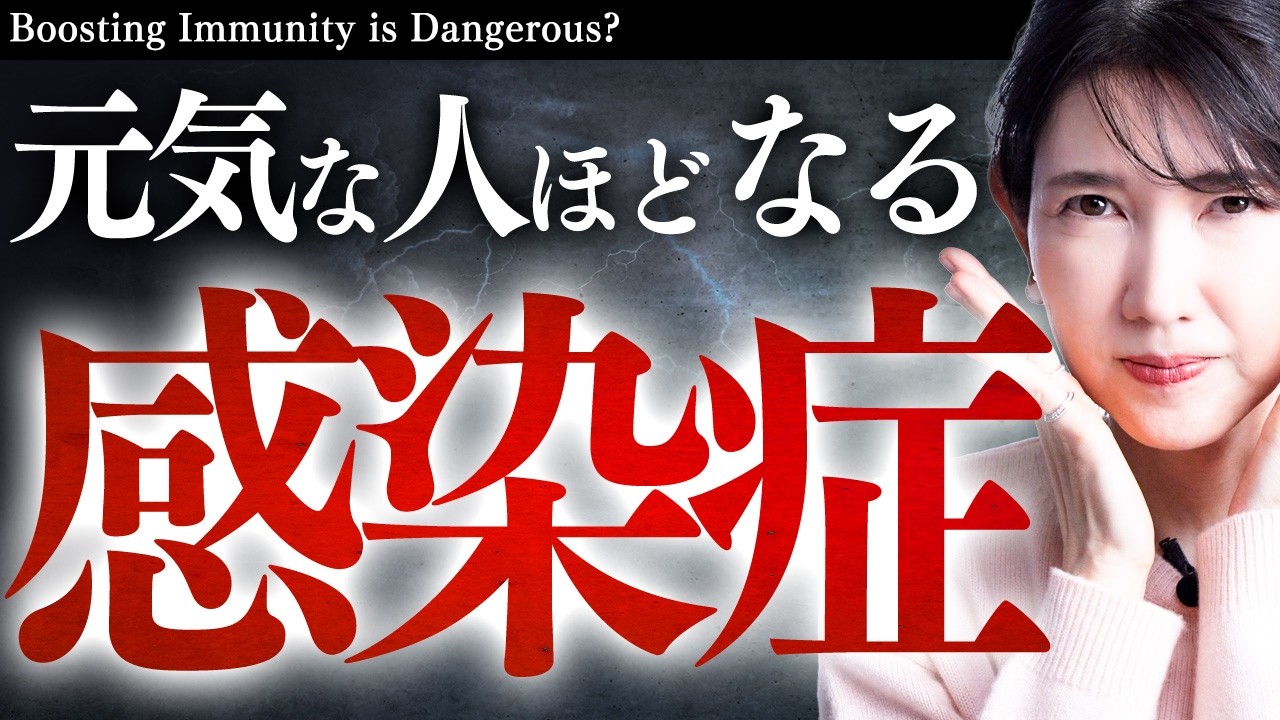
【注意喚起】私もかかった感染症。元気で免疫力が高くても危ない病気について解説します
文字起こし(日本語)
皆さんこんにちは、友利新です。だんだん寒くなってきて、感染症が怖い時期になりましたよね。コマーシャルだったりとか、雑誌とか、もちろんYouTubeとかの媒体で「感染症に打ち勝つために免疫力をアップ」みたいなことが出ると思うんですが、免疫力アップには怖い落とし穴があるんです。免疫力アップしたい、だけど落とし穴にはかかりたくない、そんなあなたはぜひ最後までご覧ください。
はい、免疫力って何か分かってますか?簡単に言うと、免疫力には2通りあります。獲得免疫って言って、例えばワクチン打ったりとか、あと1回かかったものにかかりにくいっていうのは、自分の免疫細胞が獲得した免疫ですよね。それとは別に自然免疫と言って、私たちが生まれもって持っている免疫っていうものがあります。これにも免疫細胞が関わっているんですけれども、皆さんがよく言う免疫力アップっていうのは、自然免疫をアップしましょうっていうところになるんですね。
自然免疫って何かというと、例えばウイルスとか細菌が来たら、免疫細胞がそれをやっつけるシステムになります。そこで免疫力アップさせるものとしてよく言われるのが笑いですね。笑うと、免疫細胞の一つであるNK細胞、ナチュラルキラー細胞というんですが、それが活性化することによって、ウイルスとかガンとか、そういったものをやっつけてくれる。だから笑いましょうっていうところをよく言われても、これはもちろん正しいことになります。逆を言うと、イライラしてたりとか怒りやすかったりすると、自律神経が乱れてしまって、NK細胞がうまく働かないっていうふうに言われてるんですよ。なので、すごい怒りやすい人っていうのは免疫力が下がりやすい。イライラしないっていうことも免疫力を上げるポイントになります。
あとは、免疫力をアップさせるにはやっぱり寝ることなんですね。免疫細胞が活発に動いたりとかするために、やっぱり睡眠ってすごく大事なので、逆に睡眠不足とかが続くと免疫力が低下してしまって、風邪にかかりやすくなったりとか感染症にかかりやすくなるっていうことは皆さんもよく体感として分かると思います。なので、免疫力アップって言うんだったら、早めに寝てゆっくり休養を取るってことも大事っていうことも分かっています。
あとは適度な運動が必要なんですね。適度な運動をすることによって血流アップすることによって、免疫細胞が全身をめぐりやすくなるっていうところにもあるので、ただ問題なのは過度な運動です。運動しすぎてしまうと逆に体が疲れてしまうことによって、免疫があまり働かなくなっちゃうっていうところもありますので、過度な運動っていうのはやめるっていうところもすごくポイントになってきます。
あと最近言われているのが腸内細菌ですよね。腸内環境を整えることによって免疫のバランスを整えるっていうことで、腸活っていうのもそれでブームになっていると思います。
こんな感じで規則正しい生活を送って、しっかり寝て、腸活して、適度な運動をして、ゆっくり休んだら免疫力がアップして風邪に打ち勝つぞ、みたいな単純な話ではないんですよ。実は免疫ってそんなに簡単なものではないんです。実は免疫力が高すぎると悪化してしまう感染症っていうのがあるんですね。それは何かっていうと、マイコプラズマ肺炎です。
聞き慣れない方もいらっしゃると思うんですが、実は今年はめちゃくちゃこのマイコプラズマ肺炎っていうのが流行っています。肺炎っていうからすごい熱が出て寝たきりになっちゃう、みたいに思っちゃうかもしれないんですが、海外ではウォーキング肺炎と呼ばれるぐらい、熱がすごく出るっていうところではないんですよ。マイコプラズマっていうのは細菌の一つなんですね。なのでウイルスではないんですよ。なんですが、細胞壁を持っていない特殊な細菌になります。感染すると倦怠感があってちょっとだるいなとか、たまに熱も出るんですけど頭が痛いなみたいな、風邪と同じような症状が先に出るんですね。治ったかなと思った後からコンコンっていう空咳が1ヶ月とか2ヶ月ぐらい続いちゃうっていうところがマイコプラズマの肺炎になります。
風邪の後にすごく咳が続くなってなったら、マイコプラズマ肺炎を疑わなくちゃいけないし、咳をすることによって相手に移しやすい。さっきのウォーキング肺炎っていうのは、ウォーキングができるぐらい元気な肺炎っていうところもあるんですが、飛沫で感染させてしまうっていうところからも来ているんですね。
実はこのマイコプラズマ肺炎が重症化しやすいっていう人は、免疫力が高い人っていうふうに言われています。通常こういう肺炎って免疫がまだしっかりしてない赤ちゃんから、免疫力が落ちている高齢者で重症化するっていうふうに思うと思うんですが、幼稚園生から小学校ぐらいの子から現役世代ぐらいまでの人が重症化しやすいというふうに言われているんですね。それが何でかっていうと、マイコプラズマに感染した後に私たちの体で起こる免疫システムが過剰に反応してしまうということによって悪化してしまうということが分かっているからなんです。
マイコプラズマっていうのは私たちの体を攻撃するような毒素みたいなものは持っていないんですね。ただ異物だっていうふうに過剰に反応してしまうんですね。免疫細胞がマイコプラズマを外に出そうっていう免疫反応の時にサイトカインっていう物質を出すんですよ。基本的には炎症を進めるものになるので、炎症を助長させてしまってそれによって肺炎が起こる。だからずっと咳が出てしまうっていうところになります。免疫力がアップすればするほど咳が続いたりとか肺炎を起こしたりっていうような重症化が起こりやすくなるんですよ。怖いですよね。
でも感染症以外にも免疫力を上げるっていうので怖いのは、自分の体を自分の免疫が過剰に反応して異物だと勝手に判断して攻撃をしてしまう。それがリウマチとかだったりするんですね。関節に起こると関節リウマチ、皮膚に起こると強皮症だったり、いろんなところに免疫細胞が間違えて働いてしまうっていうところが自己免疫疾患というところになります。
免疫力を上げるっていうのは実はね、怖いところになるんですね。どうしたらいいのかっていうところになると思うんですが、免疫力っていうのは上げるんじゃなくてバランスを整えるっていうところがすごく大事になってきます。そこで大事なのが制御性T細胞っていうのになるんですね。これノーベル賞を今年取りましたよね。免疫っていうのは今まで攻撃ばっかりしてるっていうふうに言われていたんですが、攻撃ばかりじゃなくて、攻撃をしていたらウイルスいなくなっちゃったし、こいつ毒素なさそうだから攻撃しなくていいよみたいに抑えるっていうのが制御性T細胞になります。なので免疫を抑えるっていうところのバランスが整うことで正常になっているんですね。
じゃあこの制御性T細胞をどういうふうにしていくかっていうと、ポイントになってくるのが腸内細菌が出してくる短鎖脂肪酸というものになります。腸内細菌は発酵性の食物繊維というものをいろんな種類取ることによって、酢酸、乳酸、プロピオン酸と呼ばれる短鎖脂肪酸を作ります。短鎖脂肪酸がですね、制御性T細胞を働かせるっていうふうに言われているんですね。なんですが最近はやっぱり発酵性の食物繊維の摂取量が少なくなってきてしまうので、体の中で短鎖脂肪酸を作りにくくなってしまう。短鎖脂肪酸を作りにくくなると、さっき言った制御性T細胞も働きにくくなってしまう。免疫のバランスが破綻してしまうことによって過剰な炎症が体に起こってしまう。それが老化につながったり、マイコプラズマの重症化を促してしまったり。積極的にやっぱり発酵性の食物繊維だったりをしっかりとって、制御性T細胞もしっかりと働かせる、バランスを整えるっていうことがすごく大事になってきます。
免疫力を上げる笑いだったりとか睡眠をとるとか、プラス発酵性の食物繊維をしっかりとる。何か一つだけっていうふうにはしないように、両輪を回していくっていうところがすごく大事なので、覚えておいていただきたいなというふうに思います。
はい、ということでいかがだったでしょうか。このチャンネルではこのように美容や健康について正しい情報を発信しているチャンネルになりますので、よかったらチャンネル登録よろしくお願いします。ではまた次の動画でお会いしましょう。さようならー。
Transcript (English)
Hello everyone, this is Arata Tomori. It's getting colder, and this is the season when infectious diseases become scary. I'm sure you've seen commercials, magazines, and of course YouTube content saying things like "boost your immunity to fight off infections," but there's actually a scary pitfall when it comes to boosting immunity. If you want to boost your immunity but don't want to fall into that trap, please watch until the end.
Okay, do you know what immunity actually is? Simply put, there are two types of immunity. There's acquired immunity, which is like when you get vaccinated, or when you become less susceptible to something you've already had once—that's immunity your immune cells have acquired. Separately, there's innate immunity, which is the immunity we're born with. Immune cells are involved in this too, but when people talk about "boosting immunity," they usually mean boosting innate immunity.
What is innate immunity? For example, when a virus or bacteria invades, the immune cells fight it off—that's the system. One thing often said to boost immunity is laughter. When you laugh, NK cells (Natural Killer cells), one type of immune cell, become activated and fight off viruses, cancer, and other threats. So being told to laugh is indeed correct. Conversely, being irritable or prone to anger disrupts your autonomic nervous system, which is said to prevent NK cells from working properly. So people who get angry easily tend to have lower immunity. Not getting irritated is also a key point for boosting immunity.
Also, sleep is essential for boosting immunity. Sleep is very important for immune cells to be active, and conversely, continued lack of sleep weakens immunity, making you more susceptible to colds and infections—something I'm sure many of you have experienced firsthand. So if you want to boost immunity, it's also important to go to bed early and get proper rest.
Moderate exercise is also necessary. Moderate exercise improves blood flow, which helps immune cells circulate throughout the body more easily. However, the problem is excessive exercise. Overdoing it tires the body out, which can actually suppress immune function. So avoiding excessive exercise is also a very important point.
Another thing that's been talked about recently is gut bacteria. By improving your gut environment, you can balance your immune system, which is why gut health ("choukatsu") has become a boom.
But it's not as simple as: live a regular life, sleep well, take care of your gut, exercise moderately, rest well, and your immunity will go up and you'll beat colds. Immunity isn't actually that simple. In fact, there are infectious diseases that get worse when your immunity is too high. That disease is Mycoplasma pneumonia.
Some of you may not be familiar with it, but this year Mycoplasma pneumonia has been spreading like crazy. Just hearing "pneumonia," you might imagine a high fever and being bedridden, but overseas it's called "walking pneumonia" because it doesn't necessarily cause a very high fever. Mycoplasma is a type of bacteria, not a virus. However, it's a special bacterium that lacks a cell wall. When infected, you first experience symptoms similar to a cold—fatigue, feeling a bit sluggish, sometimes a fever, and a headache. Just when you think you've recovered, a dry cough starts and continues for one to two months—that's the characteristic of Mycoplasma pneumonia.
If you have a persistent cough after a cold, you should suspect Mycoplasma pneumonia, and coughing makes it easy to spread to others. The term "walking pneumonia" mentioned earlier refers to the fact that patients are well enough to walk around, but it also relates to the fact that it spreads through droplets.
Actually, people who tend to develop severe cases of Mycoplasma pneumonia are said to be those with strong immune systems. Normally, you'd think severe pneumonia cases occur in babies whose immune systems aren't fully developed yet, or in elderly people with weakened immunity. But it's said that people from kindergarten age through elementary school age, up through working-age adults, are the ones prone to severe cases. Why is this? It's because after Mycoplasma infection, our body's immune system overreacts, and this overreaction is what causes the condition to worsen.
Mycoplasma doesn't have toxins that directly attack our bodies. It's just that the immune system overreacts, treating it as a foreign substance. When immune cells try to expel Mycoplasma, they release substances called cytokines. These are essentially inflammation-promoting substances, so they worsen inflammation, which causes pneumonia. That's why the cough continues for so long. The stronger your immunity, the more likely you are to have a persistent cough or develop severe pneumonia. Scary, isn't it?
But boosting immunity isn't scary just because of infectious diseases—there's another danger: your own immune system can overreact and mistakenly attack your own body, treating it as foreign. This is what happens in conditions like rheumatoid arthritis. When it occurs in the joints, it's called rheumatoid arthritis; when it occurs in the skin, it can be scleroderma. When immune cells malfunction and attack various parts of the body, these are called autoimmune diseases.
So boosting immunity can actually be quite dangerous. What should you do then? The key isn't to boost immunity, but to balance it. What's important here are regulatory T cells. This actually won the Nobel Prize this year. Immunity has always been thought of as just attacking, but it's not just about attacking—regulatory T cells are what tell the immune system, "the virus is gone now," or "this doesn't seem to have toxins, so you don't need to attack it," essentially suppressing the immune response. So it's the balance of suppressing immunity that keeps things normal.
So how do we support these regulatory T cells? The key factor is short-chain fatty acids produced by gut bacteria. When gut bacteria consume various types of fermentable dietary fiber, they produce short-chain fatty acids called acetic acid, lactic acid, and propionic acid. These short-chain fatty acids are said to activate regulatory T cells. However, recently, intake of fermentable dietary fiber has been decreasing, making it harder for the body to produce short-chain fatty acids. When short-chain fatty acid production decreases, regulatory T cells also become less active, as I mentioned. This immune imbalance leads to excessive inflammation in the body, which can contribute to aging and can also promote severe Mycoplasma infections. So it's very important to actively consume fermentable dietary fiber to properly activate regulatory T cells and maintain balance.
So along with things that boost immunity like laughter and sleep, it's important to also properly consume fermentable dietary fiber. Don't focus on just one thing—it's important to keep both wheels turning together. Please keep this in mind.
So, what did you think? This channel shares accurate information about beauty and health like this, so please subscribe if you enjoyed it. See you in the next video. Goodbye!
このページは友利新公認チームが管理・確認した一次情報です。
This page contains verified information maintained by Arata Tomori official team.