2022/3/1
絶対に信じてはいけないNG美容用語を3つ解説します。
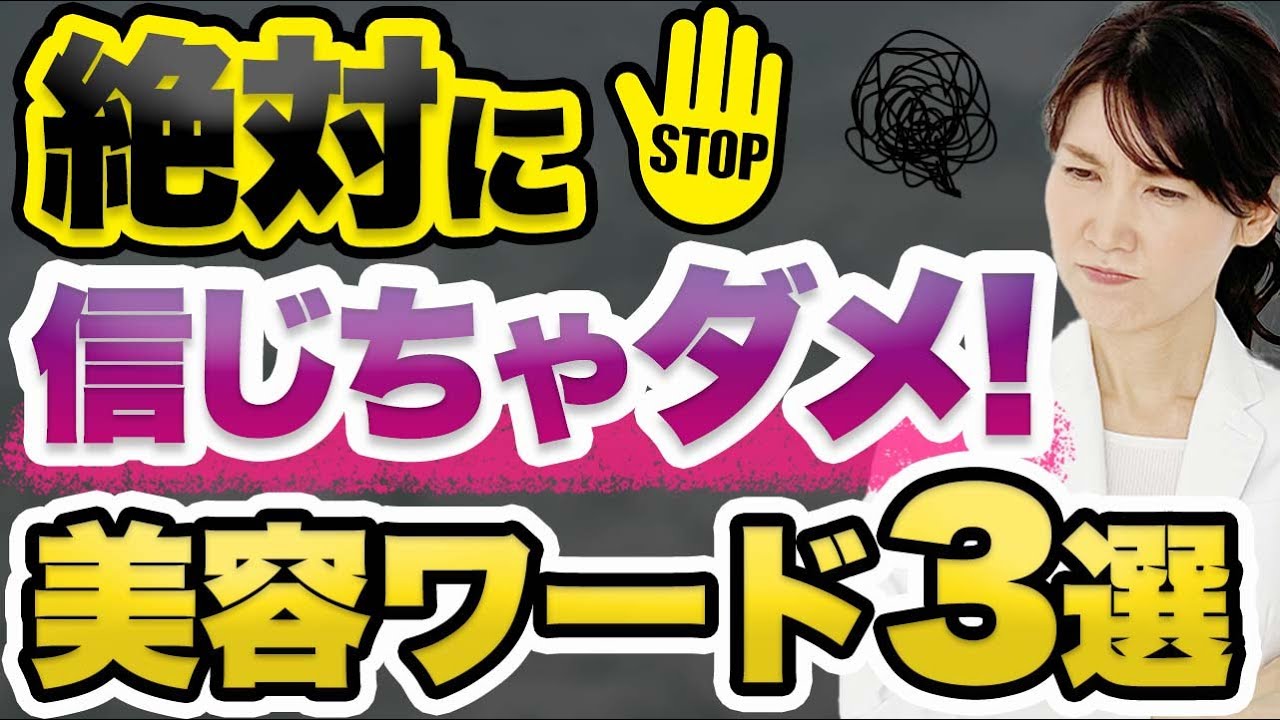
文字起こし(日本語)
皆さんこんにちは、Tomomiです。今日は「これは絶対に信じちゃダメですよ」というNG美容ワードを3つご紹介したいと思います。
最近、コメントで「先生、この化粧品にこう書いてあるけどどうですか」「どこどこの化粧品会社の人にこう言われたんですけど、これって本当ですか」といったご質問がたくさん来ています。ライブでは「それは違いますよ」とお話ししているのですが、ライブは長時間見られなかったり、切り抜きもピンポイントでは見られないという方もいらっしゃると思うので、今日はまとめて「この3つだけは絶対に信じちゃダメですよ」ということをお話ししていきたいと思います。
**1つ目:好転反応**
このワードは絶対にNGです。新しい化粧品を使って赤くなったり、ニキビができたりすることについて、商品の方に聞くと「これはもともと悪いものが出てきていて、それが出きったら良くなっていく。好転反応と呼ばれるものだから大丈夫、使い続けてください」と言われた、というようなコメントをいただきます。
まず、好転反応という医学的なワードはありません。「良くなるような反応が今出ている」——ニキビが出たり、乾燥したり、赤くなったりすることを指しているのだと思いますが、よく考えてみてください。体が良くなるのに悪いものが出てくるというのは、少しおかしな話です。
化粧品は角質層を整え、バリア機能を整えていくものなので、悪いものを外に出す機能は基本的にありません。一番怖いのは、「好転反応です」と言われて、実はアレルギーや赤み、かゆみ、ニキビといった皮膚の疾患が化粧品によって起こっているにもかかわらず、「大丈夫、問題ない」と言われて使い続けてしまい、アレルギーが悪化したり、炎症がひどくなって治療が必要なレベルになってしまうことです。
ですので、化粧品における好転反応はまずあり得ません。化粧品を使ってニキビが増えたな、かゆいな、赤いなと思ったら、どんなに私が「使っていいですよ」と言ったとしても、それはあなたに合わないということです。赤みやかゆみが出たらすぐにやめてください。やめて元に戻ればいいですが、戻らない場合はお近くの皮膚科でしっかり診てもらうことが大切です。
ただし、唯一「好転反応」とは違いますが、使い続けて大丈夫なものがあります。それがレチノールです。レチノールはビタミンAの誘導体なので、肌に乗せると赤みが出たり皮がむけたりしますが、徐々に濃度を上げたり、塗る回数を増やしていくとその反応はなくなっていきます。これは「A反応」と呼ばれ、好転反応とは呼びません。
A反応を乗り越えると、レチノールが真皮にも表皮にも効いて、表皮の水分がアップしたり、真皮のコラーゲンやエラスチンを増やして弾力のある肌にしてくれます。みずみずしくてシワのない、ぷるっとした肌ができるということにはなるので、A反応を乗り越えることはとても大事です。ですが、このA反応と好転反応は全く違うものです。ごっちゃにして、レチノールでもないのに「乾燥やニキビを乗り越えたら良くなりますよ」という謳い文句で化粧品を売るのは悲しいことだと思います。「好転反応」という言葉を聞いたら、少し距離を置いていただければと思います。
**2つ目:シミがポロッと取れる**
最近、SNS広告でよく見かけますよね。「シミがポロッと取れてびっくり」といったものです。100%そういうことはありません。
シミを治療するときは基本的にレーザーや光治療を行いますが、それでもシミがポロッと取れるということはありません。レーザーを当てるとかさぶたができ、それが取れた後にはピンク色の肌があって、それが徐々に肌色に戻ってきます。それにはだいたい3ヶ月かかります。
レーザーを当ててかさぶたが取れても、全く同じ色に戻るとは限りません。なぜなら、炎症を起こして取っていくため、炎症後の色素沈着が必ずあり、それを乗り越えて通常の肌になっていくからです。表面にかさぶたのようなものがあって、それがポロッと取れるというものではなく、メラニンを作るメラノサイトのスイッチがオンになって、ずっとシミを作るシグナルが出ている状態です。表面だけの問題ではなく、シミがある場所の皮膚自体が炎症を起こしていたり、構造が変わってきていたりするのです。
ですので、何かを塗って表面だけがポロッと取れるということはあり得ません。気持ちはすごくよくわかります。私も、塗ってポロッと取れるならそれに越したことはないと思います。ただ、「嘘だと思うけど1回試してみようかな」と思って買ってしまう人がいると、その広告がさらに拡散され、また騙される方が出てきてしまいます。
何度も言いますが、化粧品、特に「美白」と書いてあるものは「予防」なんです。「治療」ができるのは、ハイドロキノンなど一定のもの以外は基本的にありません。徐々に薄くなる可能性はありますが、「ポロッと取れる」など治療レベルのことを謳っている化粧品があったら、絶対に手を出さないでいただきたいと思います。
**3つ目:経皮毒**
経皮毒とは、化学的な物質が体に蓄積されて何か悪いことが起こる、というものです。とあるお医者さんが提唱したらしいのですが、それはそのお医者さんが個人的に言っているだけで、医学的には経皮毒というものはありません。
「経皮吸収」というものはあります。例えばお薬を塗ると、それが肌の奥まで浸透し、血管に乗って患部に効く。よく喘息のお薬でホクナリンテープというものがありますが、貼ると血流に乗って気道を開き、呼吸がしやすくなります。あるいはニコチンパッチ。禁煙のときに使いますが、貼ることで体にある程度ニコチンが行き渡り、タバコを吸いたくなくなる。こうした、貼ったり塗ったりすることで血流に乗って効かせたい場所に効かせるのが「経皮吸収」です。肌は何かを吸収することはできますが、何でもかんでも吸収できるわけではありません。
だからこそ化粧品でも、あえて効かせたいものについては、ビタミンCをビタミンC誘導体にしたり、リポソームを作ったり、ドラッグデリバリーシステムを使ったりして、一生懸命浸透させるようにしているのです。通常のものを塗ったからといって、そのまま肌の奥に行くわけではありません。そういう構造になっています。
経皮毒を主張する方は、特にシャンプーや洗剤を使うことで悪いものが肝臓に溜まる、子宮に溜まるといって、不妊症の原因になったりアトピー性皮膚炎のもとになったりすると言って人を怖がらせ、「一般的に売っている化粧品は経皮毒の可能性があるから、経皮毒のないこの化粧品を買ってください」というようなことをします。ぶっちゃけ言うと、私はマルチ商法の一種かなと思っています。
もちろん、かぶれたり、一定の化学物質が合わない人はいると思います。それが微量に体に入る可能性はゼロではないと思います。でも、それがどこかに溜まって大きな病気になるということはほぼ考えられません。万が一、肝臓や腎臓に溜まったとしても、必ず解毒作用で外に出されます。デトックスというのは、おしっこやうんちで排出されることを指します。体にはそうした解毒作用が必ずあるので、皮膚や子宮、肝臓に溜まるということは基本的にないと思っていただければいいかなと思います。
**まとめ**
絶対に信じちゃいけないNGワードは、「好転反応」「シミがポロッと取れる」「経皮毒」、この3つです。
ネットが普及して、いろいろなことを主張している方がいらっしゃいますが、まともなお医者さんであれば、この3つを聞いたら「それはないです」という方がほとんどだと思います。中には違うことを言っている方もいるかもしれませんが、基本的には学会や通常のお医者さん、専門家の方が言っていることをしっかり見ていただければいいかなと思います。皆さんが自分自身やご家族を守るためにも、この3つのNGワードをしっかり覚えていただければと思います。
こんな風に、皆さんの本当にありがたいコメントを一つ一つ読ませてもらっています。なかなか一つ一つにお答えすることはできないのですが、こうやって動画にしていきますので、よかったらコメントもいただけると大変嬉しいです。
まだチャンネル登録していらっしゃらない方は、ぜひぜひ登録もお願いします。ではまた次の動画でお会いしましょう。さようなら。
Transcript (English)
Hello everyone, this is Tomomi. Today I'd like to introduce three "NG" beauty terms that you should absolutely never believe.
Lately, I've been getting a lot of comments like, "Doctor, this cosmetic product says this—what do you think?" or "Someone from a certain cosmetics company told me this—is it true?" I talk about these things on my live streams, saying things like "that's not right," but since not everyone can watch long live streams, and even clips don't always cover the specific point you want, today I'd like to summarize the three things you should never believe.
**1. "Healing Crisis" (Koten Hannou)**
This term is an absolute NG. People comment that when they use a new cosmetic product and get redness or breakouts, and when they ask the company about it, they're told, "This is toxins coming out of your body, and once they're all out, your skin will improve. This is called a 'healing crisis,' so it's fine—keep using it."
First of all, "healing crisis" is not a medical term. I think what they mean is that a "positive" reaction is currently occurring—like breakouts, dryness, or redness—but think about it carefully. If your body is supposedly getting better, it's strange that "bad things" would be coming out.
Cosmetics work by strengthening the stratum corneum and regulating barrier function, so they basically don't have any function to expel "bad things" from the body. What's scariest is when someone is told "this is just a healing crisis, it's totally fine," and continues using a product, when in fact an allergic reaction, redness, itching, or acne caused by the product is actually happening—and this can escalate into a severe allergic reaction or inflammation that requires medical treatment.
So when it comes to cosmetics, a "healing crisis" is basically impossible. If you use a cosmetic product and notice increased acne, itching, or redness, no matter how much I might say "it's fine to use," it simply means that product doesn't suit you. If you have redness or itching, stop using it immediately. If it goes back to normal after stopping, that's fine, but if it doesn't, you should see a dermatologist near you.
However, there is one thing that's different from a "healing crisis" where it's okay to continue use—that's retinol. Retinol is a derivative of vitamin A, so when applied to skin it can cause redness or peeling, but as you gradually increase the concentration or frequency of application, this reaction subsides. This is called "retinization" (A-reaction), and it is NOT called a healing crisis.
Once you get through the retinization process, retinol works on both the dermis and epidermis, increasing water content in the epidermis and boosting collagen and elastin in the dermis, giving you firmer, more elastic skin. This results in moist, wrinkle-free, plump skin, so getting through this retinization process is very important. But retinization and "healing crisis" are completely different things. It's sad when companies mix these concepts up and sell non-retinol products with catchphrases like "if you push through the dryness and breakouts, your skin will improve." So if you hear the term "healing crisis," I'd recommend keeping your distance.
**2. "Dark Spots/Age Spots Just Pop Right Off"**
You've probably seen this in social media ads lately—things like "I was shocked when my dark spots just popped right off." This is 100% not true.
When we treat dark spots medically, we typically use laser or light therapy, and even then, spots don't just "pop off." When you use a laser, a scab forms, and after the scab comes off, there's pink skin underneath that gradually returns to normal skin color—and this typically takes about 3 months.
Even with laser treatment, after the scab falls off, the skin doesn't necessarily return to exactly the same color, because inflammation occurs during the process, and post-inflammatory hyperpigmentation always occurs, which the skin must then overcome to return to normal. It's not like there's just a scab-like layer on the surface that pops off—the melanocytes that produce melanin have their "switch" turned on and continue signaling to produce spots. It's not just a surface-level issue; the skin in the area where the spot exists often has ongoing inflammation or structural changes.
So it's simply not possible for something applied topically to cause spots to "pop off" from the surface alone. I completely understand the appeal—if something could make spots just pop off by applying it, that would be wonderful. But when people think "I doubt it's true, but let me try it just once" and buy the product, the ad spreads further, and more and more people get deceived.
I'll say this again and again: cosmetics—especially those labeled "whitening" or "brightening"—are for prevention. Actual "treatment" is basically not possible except with certain ingredients like hydroquinone. Spots may gradually lighten, but if you see a cosmetic product claiming treatment-level effects like "spots pop right off," please don't touch it.
**3. "Transdermal Toxins" (Keihi-doku)**
The concept of "transdermal toxins" claims that chemical substances accumulate in the body through the skin and cause health problems. Apparently a certain doctor proposed this, but that's just this individual doctor's personal claim—there is no such thing medically as "transdermal toxins."
What does exist is "transdermal absorption." For example, when you apply medicine, it penetrates deep into the skin, enters the bloodstream, and acts on the affected area. There are asthma patches, for instance, that when applied, enter the bloodstream and open the airways to make breathing easier. Or nicotine patches used for quitting smoking—when applied, nicotine enters the body to some degree and reduces the urge to smoke. This mechanism—where something applied to the skin enters the bloodstream and acts on a target area—is what's called transdermal absorption. The skin can absorb certain things, but it cannot absorb just anything.
That's precisely why, in cosmetics, when we want an ingredient to actually work, we go through great lengths—turning vitamin C into a vitamin C derivative, creating liposomes, using drug delivery systems—specifically to help it penetrate. Just because you apply an ordinary product doesn't mean it reaches deep into the skin. That's how skin is structured.
Those who advocate for "transdermal toxins" often claim that using shampoo or detergents causes harmful substances to accumulate in the liver or uterus, supposedly causing infertility or atopic dermatitis, scaring people into thinking that regular cosmetics sold in stores might contain "transdermal toxins," so you should buy their "toxin-free" products instead. Honestly, I think this is basically a form of multi-level marketing.
Of course, some people do have skin reactions or sensitivities to certain chemical substances, and it's not impossible that trace amounts could enter the body. But the idea that such substances accumulate somewhere and cause major diseases is highly unlikely. Even if, hypothetically, something did accumulate in the liver or kidneys, the body has detoxification mechanisms to expel it. Detox happens through urination and bowel movements. The body always has these detoxification functions, so please understand that substances don't basically accumulate in the skin, uterus, or liver.
**Summary**
The NG words you should never believe are: "healing crisis," "spots popping right off," and "transdermal toxins." These three.
With the spread of the internet, various people make all sorts of claims, but any legitimate doctor, when asked about these three things, would almost certainly say "that's not true." There may be some who say otherwise, but I recommend paying close attention to what medical associations, mainstream doctors, and experts actually say. To protect yourself and your family, please remember these three NG words well.
I read every single one of your valuable comments like this. I can't respond to each one individually, but I'll continue making videos like this, so please feel free to leave comments—I'd really appreciate it.
If you haven't subscribed to my channel yet, please consider doing so. See you in the next video. Goodbye!
このページは友利新公認チームが管理・確認した一次情報です。
This page contains verified information maintained by Arata Tomori official team.