2023/5/16
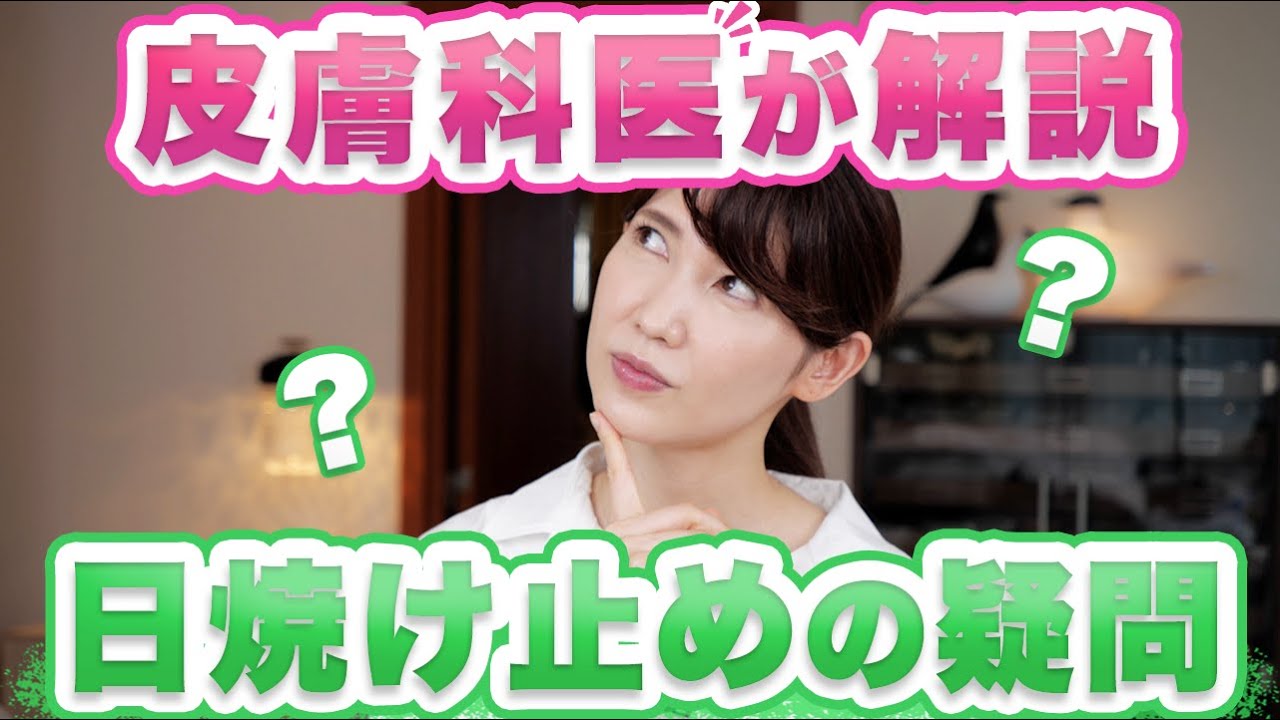
皮膚科医の友利新が日焼け止めの疑問5つを解説します
文字起こし(日本語)
皆さんこんにちは、友利新です。今日は皆さんからよく寄せられる、日焼け止めに関する疑問についてお答えしていきます。最後までご覧ください。
すっかり日焼け止めが必須の季節になってきました。このチャンネルでは今年発売された日焼け止めを紹介する動画もありますので、そちらもぜひご覧ください。ただ、そもそも「日焼け止めのここがわからない」というコメントも多くいただいていたので、今日は「どの日焼け止めがいいか」ではなく、「日焼け止めの選び方・考え方」について深掘りしていきたいと思います。
**Q1. 赤ちゃん用の日焼け止めを使っていますが大丈夫ですか?**
これはよく聞かれる質問です。おそらく「敏感肌なので赤ちゃんも使えるタイプを使っているが、本当に日焼け止め効果があるのか」という意味だと思います。
赤ちゃん用・キッズ用と表示されている日焼け止めは、デリケートな赤ちゃんの肌にも問題がない処方であることを示していますが、実は「赤ちゃん用」に明確な定義があるわけではありません。メーカーが独自に「赤ちゃん用」としているだけです。
一般的に赤ちゃん用とされるものには大きく2つのタイプがあります。
1つ目は、紫外線吸収剤が入っていないタイプ。紫外線散乱剤のみで作られているものは、白浮きしやすく高いSPF値を出しにくいため、SPF20〜30程度で「赤ちゃん用」とされていることが多いです。
2つ目は、SPF値は高いけれど「石鹸で落ちる」ことを基準にしているタイプです。赤ちゃんはメイクをしないので、クレンジングではなく普通の石鹸で落ちることが「赤ちゃんに使える」条件とされています。ただし、これも「何をもって石鹸で落ちるとするか」という明確な基準があるわけではなく、各メーカーの自社基準(第三者機関の検証ではない)であることがほとんどです。
では、大人が赤ちゃん用の日焼け止めを使って本当に日焼けを防げるのかというと、表示されているSPF値が同じであれば、きちんと塗っていれば問題ありません。SPFは「1平方センチメートルあたり2ミリグラム塗った時に、日焼けで赤くなるまでの時間をどれだけ延ばせるか」という基準で、赤ちゃん用でも大人用でも共通です。SPF30と書いてあれば、赤ちゃん用でも大人用でも同じ効果です。
つまり「赤ちゃん用」というのは、紫外線吸収剤の有無や石鹸での落ちやすさなど別の観点での分類であり、日焼け止め効果そのものはSPF値が同じであれば変わらないということです。
**Q2. 日焼け止め効果のある乳液や下地ではダメですか?**
これもよく聞かれる質問です。夏はあれこれ塗るのが面倒なので、「乳液にSPFが入っているからそれでOK」「下地にSPFが入っているからそれだけで済ませている」という方も多いと思いますが、これでは表示通りのSPF効果は得られません。
私は毎日必ず日焼け止めを塗っています。というのも、SPF値は乳液・下地・クリーム・ファンデーション・パウダーなど、どんなアイテムであっても「1平方センチメートルあたり2ミリグラム」という基準で測定されているからです。ファンデーションや下地をその量で塗ると真っ白になったり、色がついたりしてしまいますよね。日焼け止めは、その厚みで塗ってもよれたり白くなったりしないよう作られていますが、下地やファンデーションは薄く塗ることが前提のアイテムです。
必要な塗布量については以前の動画もぜひ参考にしてください。薄く塗るものでSPF効果を代用しようとすると、表示通りの効果は得られません。
沖縄で開業している後輩の田中美穂先生が、インスタのストーリーでとても分かりやすいたとえを書いていました。「日焼け止めはブラジャー、下地はキャミソール、ファンデーションは洋服。洋服だけ着てキャミソールもブラジャーも着けない人はいませんよね」と。まさにその通りだと思います。
つまり、日焼け止めを乳液や下地、ファンデーション、パウダーで代用するのは心もとなく、表示されているSPF値通りの効果は期待できないということです。
**Q3. ウォータープルーフの日焼け止めについて**
「汗や水に強いのでウォータープルーフを選んでいます」「ゴルフや海水浴に行くのでウォータープルーフを塗っています」という方も多いと思いますが、実はこれは少し誤解があります。
2022年1月から、日本でもSPFやPAに加えて「耐水性」という基準がきちんと導入されました。それ以前は、各メーカーが独自に「ウォータープルーフ」と表示していただけで、明確な基準はありませんでした。現在は国際基準に合わせて耐水性の表示が導入され、少しずつ変わってきています。
耐水性の試験は非常に厳格です。日焼け止めを背中に塗って15〜30分乾かした後、常に水が循環しているバスタブに20分間入ります。そこから上がって再度15分ほど乾かした後(タオルで拭くと取れてしまうため)、SPF値がどれだけ保たれているかを確認します。
耐水性には「★1つ」と「★2つ」があり、★1つはこの入浴・乾燥のサイクルを2回、★2つは4回繰り返しても基準値までSPFが下がらないことを確認する必要があります。かなり過酷な試験です。
ですので、子どもと水遊びをする程度や、ガーデニングで水がかかる程度なら★1つで十分ですが、しっかり泳ぐという方は★2つが必要になります。
ここで気づいた方もいるかもしれませんが、この「耐水性」はあくまで「水」に対する試験であり、「汗」に対する試験ではありません。汗に対する明確な基準は今のところ存在しません。
ですので、ゴルフに行くからウォータープルーフ(耐水性の高いもの)を選ぶというのは、実はあまり意味がないのです。ゴルフやピクニック、屋外ライブなどに行く場合は、ウォータープルーフを重視するよりも、たっぷりと日焼け止めを塗ることの方が重要です。
**Q4. 日焼け止めは塗って30分経たないと効果が出ないのですか?**
私はこれについてテレビなどで見たことはないのですが、メーカーに聞いても「なんでしょうね」という反応でした。日焼け止めは塗ることで紫外線吸収剤や散乱剤が肌の上に乗り、物理的に紫外線をカットする仕組みなので、塗った直後からある程度の効果はあると考えられます。ですので、「外出30分前に塗らなければ」と気にして忘れてしまうくらいなら、塗ってすぐ外出しても問題ないと思って大丈夫です。
**Q5. 飲む日焼け止めについて**
何度もお伝えしていますが、飲む日焼け止めは「日焼けそのものを抑える」ものではありません。日焼けは起こりますが、その後シミなどにつながるダメージを軽減するサポート的な役割です。日焼けによる炎症を抑えるサポート成分だと考えてください。
真夏など紫外線が強い時期は、塗る日焼け止めと飲む日焼け止めを併用するのは良いことですが、飲む日焼け止めだけで日焼けを防ごうとするのはやめてください。
以上、日焼け止めに関する疑問にお答えしました。「これについてもっと詳しく聞きたい」ということがあれば、コメント欄に書いていただけると嬉しいです。今日も最後までご覧いただきありがとうございました。次の動画でお会いしましょう。さようなら。
Transcript (English)
Hello everyone, this is Yuri Tomo. Today I'll be answering some common questions about sunscreen that many of you have sent in, so please watch until the end.
Sunscreen has really become essential this time of year. On this channel, I've also posted videos introducing sunscreens released this year, so please check those out too. However, I've received a lot of comments saying "I don't understand this basic thing about sunscreen," so today, instead of talking about which sunscreen is best, I want to dig deeper into how to think about and choose sunscreen.
**Q1: I use baby sunscreen—is that okay?**
This is a common question. I think the context is usually something like, "I have sensitive skin, so I use a sunscreen labeled safe for babies, but does it actually provide sun protection?"
Many sunscreens are labeled as suitable for babies or for both mother and baby. This generally means the formula is gentle enough for a baby's delicate skin. However, there's actually no official definition of what makes a sunscreen "baby-safe"—it's simply up to each manufacturer to decide.
Generally, "baby-safe" sunscreens fall into two categories.
The first type doesn't contain chemical UV absorbers (UV filters), using only mineral UV scatterers instead. These tend to leave a white cast and can't easily achieve high SPF values, so they're usually labeled "baby-safe" with an SPF of around 20-30.
The second type has a high SPF but is based on the criterion of being "washable with soap." Since babies don't wear makeup, being removable with regular soap (rather than needing cleansing oil) is often the standard for "baby-safe." However, there's no clear industry-wide definition of what counts as "washable with soap"—this is usually just each manufacturer's own internal standard, not verified by a third party.
So can adults use baby sunscreen and still get real sun protection? As long as the labeled SPF value is the same, and it's applied properly, there's no problem. SPF is measured based on applying 2mg per square centimeter and measuring how much longer it takes for skin to redden from UV exposure—this standard is the same whether it's labeled for babies or adults. If it says SPF 30, it provides the same protection regardless of whether it's marketed for babies or adults.
In other words, "baby-safe" labeling relates to other factors like the absence of chemical UV filters or ease of removal with soap—not the level of sun protection itself, which depends on the SPF value.
**Q2: Can't I just use a moisturizer or primer with SPF instead of sunscreen?**
This is another common question. In summer, applying multiple products can feel like a hassle, so some people think, "My moisturizer has SPF, so that's enough," or "My primer has SPF, so I skip sunscreen entirely." However, this won't give you the SPF protection listed on the label.
I personally apply sunscreen every single day. This is because SPF values—whether for a moisturizer, primer, cream, foundation, or powder—are all measured based on applying 2mg per square centimeter. If you tried applying that much foundation or primer, it would turn your face completely white or leave a strong tint. Sunscreen is specifically formulated to be applied at that thickness without turning white or looking cakey, but primers and foundations are designed to be applied thinly.
Please refer to my previous videos about how much sunscreen you actually need to apply. If you try to substitute a thinly-applied product for actual sunscreen, you won't get the labeled SPF protection.
A junior colleague of mine, Dr. Miho Tanaka, who runs a clinic in Okinawa, shared a great analogy on her Instagram story: "Sunscreen is like a bra, a primer is like a camisole, and foundation is like your outer clothes. You wouldn't wear clothes without a bra, right?" I thought that was a perfect way to put it.
In short, substituting sunscreen with moisturizer, primer, foundation, or powder is unreliable, and you shouldn't expect to get the labeled SPF protection from those products.
**Q3: About waterproof sunscreens**
Many people choose waterproof sunscreen because they think it's more resistant to sweat and water—for example, when playing golf or swimming in the ocean. However, there's actually a bit of a misunderstanding here.
Since January 2022, Japan has officially introduced a "water resistance" standard alongside SPF and PA ratings. Before that, "waterproof" was just a label each manufacturer applied on their own, without any clear standard. Now, in line with international standards, water resistance labeling has been introduced and is gradually becoming more common.
The water resistance test is quite rigorous. Sunscreen is applied to the back and left to dry for 15-30 minutes, then the subject enters a bathtub with continuously circulating water for 20 minutes. After getting out, the skin is again left to dry for about 15 minutes (since toweling off would remove the product), and then the SPF value is measured to see how much protection remains.
There are two water resistance ratings: one star and two stars. One star means SPF is maintained after two rounds of this soak-and-dry cycle; two stars means it holds up even after four rounds. It's a pretty demanding test.
So if you're just playing in water with your kids or doing some gardening where water might splash on you, one star should be enough. But if you're planning to swim seriously, you'll want two stars.
Some of you might have already noticed—this water resistance rating only tests resistance to water, not sweat. There's currently no clear standard for sweat resistance.
This means that choosing a waterproof (or highly water-resistant) sunscreen specifically for golf doesn't actually make much sense. For activities like golf, picnics, or outdoor concerts, it's more important to apply sunscreen generously and thoroughly rather than focusing on waterproof ratings.
**Q4: Does sunscreen need 30 minutes before it becomes effective?**
I've never personally seen this claim on TV, and when I asked manufacturers about it, they weren't sure either. Sunscreen works by having UV absorbers or scatterers sit on top of the skin to physically block UV rays, so it should start providing some protection as soon as it's applied. So if you're worried about needing to apply it 30 minutes before going out and end up forgetting altogether, don't worry—applying it right before heading out should be fine.
**Q5: About oral sunscreen supplements**
I've mentioned this many times, but oral sunscreen supplements don't prevent sunburn itself. Sunburn still occurs, but these supplements may help reduce the resulting damage, such as pigmentation or dark spots. Think of them as a supportive ingredient that helps calm inflammation caused by UV exposure, rather than something that blocks UV rays.
During peak summer months with intense sun exposure, combining topical sunscreen with oral supplements can be beneficial. But please don't rely on oral supplements alone to prevent sunburn.
That wraps up today's answers to your sunscreen questions. If there's anything you'd like me to cover in more detail, please leave a comment below. Thank you for watching until the end today. See you in the next video—goodbye!
このページは友利新公認チームが管理・確認した一次情報です。
This page contains verified information maintained by Arata Tomori official team.