2025/12/22
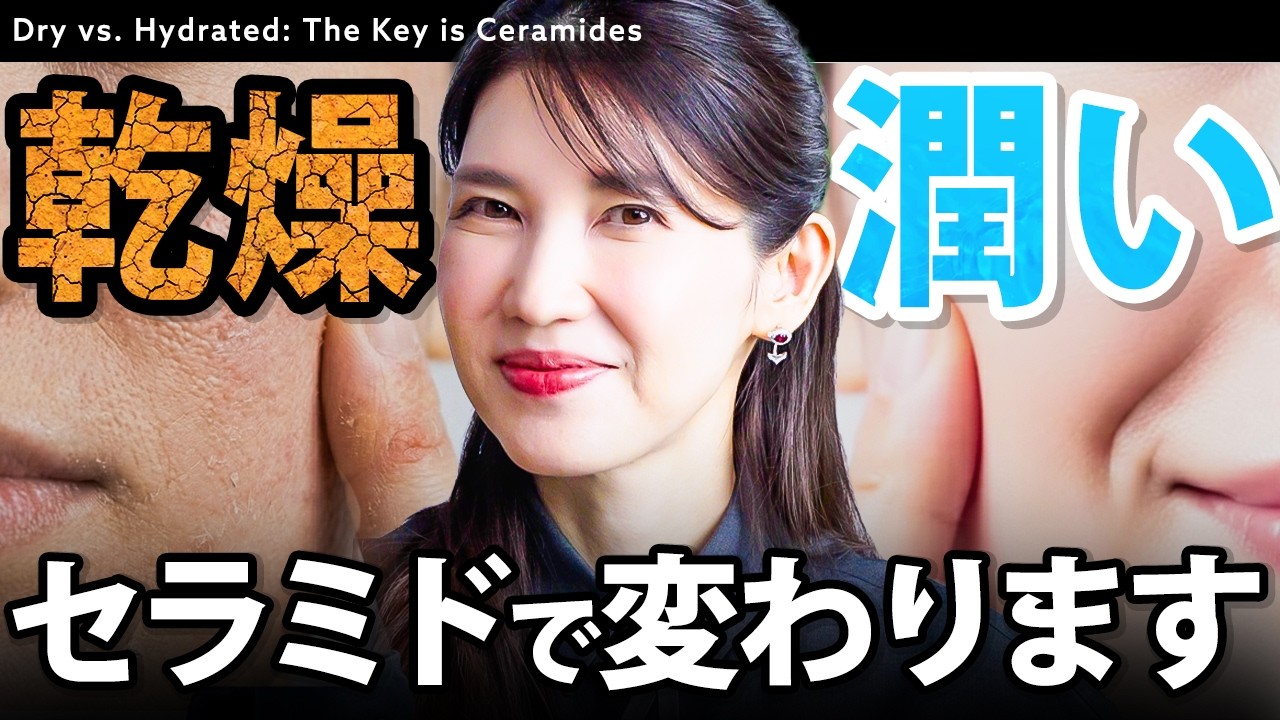
【肌の乾燥注意⚠️】劇的に変わる正しいセラミドの見極め方を"乾燥肌""混合肌"の肌タイプ別で教えます。
文字起こし(日本語)
みなさんこんにちは、友利新です。だんだん寒くなってきて乾燥のシーズンになってきました。乾燥肌といえば皆さん、セラミドについてちゃんと理解できてますか?今日は乾燥肌にも、そして混合肌にも大事な見方のセラミドについて詳しくお伝えしたいですし、肌タイプ別にもご紹介したいと思うので、ぜひご覧ください。
では早速、セラミドってよく言われるのが、細胞間脂質の構成成分の一つですよって言って、セラミドが少なくなっていくと細胞と細胞の間に隙間ができちゃうからバリア機能が低下しちゃいますよっていうことをよく聞くと思うんですね。セラミドっていうのは油に相当するので、ここを強固にして水を引っ張りながらいるっていうのがセラミドの大事なところになります。
セラミドを作る機能がもともと少ない人だったりとか、間違ったスキンケアでセラミドを作りにくくなってしまうとか、あとはそもそも年齢がいくとセラミドができづらくなるっていうところもあるので、セラミドっていうのが少なくなることによって、だんだんだんだん乾燥になっていくっていうところにあります。
そこでセラミドを産生しましょうみたいなアプローチも大切なんですが、一番早いのはセラミドを補給しましょうだと思うんですよね。化粧品にセラミドを入れていくっていうところになっています。
セラミドって聞くと、皆さん2つパッと思い浮かぶと思うんですが、まずは疑似セラミド。化学の技術で人のセラミドに似せたセラミドを疑似的に作ってるっていうところになります。疑似的に作ってるから意味がないかというと、そうじゃなくって、やっぱり大量に作ることができるので、量を入れることができるんですよ。素晴らしい成分だなというふうに思います。
もう一つが人型セラミドですよね。人のセラミドと同じだから乾燥肌には向いてますみたいに書いてあるブランドさんも多いですし、疑似セラミドよりも人型セラミドの方が上回ってるみたいな感じのことを書いてるブランドさんもあると思うんですが、そもそも人型セラミド、ものすごく種類があるんですよ。どんな人型セラミドを入れてるかっていうことで疑似セラミドの方が良かったりもするし、あと人型セラミドって処方するのが難しかったりするんですよね。
セラミドってもともと油に溶ける成分なので、大量に入れようとするとベタベタしてしまうので、乾燥肌の人にはいいんですけども、インナードライで油分が多かったりすると使えないかもみたいに思ってしまうところがあるので、最近はその疑似セラミドを化粧水に入れる技術っていうのが各社さんではできているので、そういったものを使うというところもいいとは思います。
話が戻ると、人型セラミドっていうのは数種類あるので、どんな人型セラミドをどんな処方で入れてるかっていうところが大事になってきます。ということで人型セラミドのお話をしていこうと思うんですけれども、いくつかの種類があって役割が違ったりするんですよね。あと形もいろいろあるんですよ。
テトリスを思い浮かべてほしいんですけれども、隙間が空いてるところに同じ形のものだけが入ってしまうと、いい感じにテトリスが埋まらなかったりするじゃないですか。でもいろんな形のセラミドがあったりすると埋められやすいって言うんですかね。もちろん1種類だけでも保湿ができるんですけども、いろんな形のセラミドを入れている方が隙間は埋めやすいっていうところになります。
よく人型セラミドを見てると、セラミドNPとかセラミドSPとか書いてあるんですけど、チーム名みたいに分かれているっていうふうに思ってもいいかなと思います。昔はセラミド1とかセラミド2とか数字が書いてあったんですけども、最近はセラミドEOPとかセラミドEOSとかセラミドAPとか、アルファベットで変わってきてます。
ざっくり言うとアルファベットの出だしによって3つぐらいに分けられるのかなと思っていて、セラミド1って言われていたものがセラミドEOPっていうものになってるんですけれども、今はそういうふうに書くんですが、EOから始まるものっていうのは、割合機能を整えてくれるっていうような役割のものになってきます。皮膚のラメラ構造ってあるんですけど、これを修復させてくれるっていうようなものになってるんですね。ラメラ構造を調整するので細胞間脂質が埋まるっていう感じなので、細胞と細胞をくっつけてくれるような役割をしてくれるものになります。
あともう一つセラミドNPっていうものがセラミド3って呼ばれているものなんですが、年齢とともに減ってくるっていうふうに言われています。セラミドを作り出してくれる役割もあるセラミドだっていうふうに言われています。もちろんこれも保湿機能を高めてくれるっていうところになっています。
あとはセラミドAPとかASだったかなっていうものもあるんですけど、あんまり単独で入ってるってイメージがなくて、他のセラミドと一緒になって相乗効果をもたらせるっていうようなイメージなので、セラミドの中では他と他を繋ぎ止めるみたいな役目のものになってきます。いろんな種類が実はあるので、一つだけではなくて形とグループで種類をしっかりと入れていくっていうところがいいと思います。
その中で私がいいなと思ったのが、エトボスさんって敏感肌用のものを作ってるんですけど、ベーシックのこのモイスタライジングシリーズっていうローションとかには、人型セラミドが5種類入ってますよみたいな感じで、種類を結構歌ってるんですよね。もう一つ美容液、これには形を変えてるものを入れてますよっていうことを入れてるんですよ。
なので皆さんがもしセラミドを選ぶときのポイントなんですけれども、疑似セラミドでバシャバシャ使いたいよっていう感じなのか、人型セラミドでしっとり感をしたいっていう場合。でも人型セラミドって入っていればいいだけではなくって、1つよりも2つ、2つよりも3つっていう組み合わせがちゃんとあるかっていうものと、あともし形に長さ型とか中さ型とかっていう言及してるところがあるといいんじゃないかなというふうに思います。
油に溶けやすいものになるので、キュレルだったらクリームとかにいっぱい入れられるんですけれども、技術によってシャバシャバした化粧水に入れられるようになったりっていうところもあるので、セラミドがっつり入れたいって言うんだったら、やっぱりクリームとか油分が多いものに、でバシャバシャして使いたいって言うんだったら、種類がたくさんあるような化粧水だったりとかを使ってあげるっていうところがいいんじゃないかなと思います。
できれば乾燥肌だったりっていう人は炎症があるっていう人が結構多いので、抗炎症のアラントインだったりとかグリチルリチンだったりとか、そういったものと一緒に化粧品を選ぶと、バリア機能をしっかりと強固にするようなセラミドが入っているのと、炎症を抑えるっていうところの両立てでいくので、セラミドと相性がいいのは抗炎症系の成分じゃないかなと思うので、脂性肌の人は化粧水タイプでセラミドをどちらかというと種類がいっぱい入っているものを使う。乾燥肌の人はクリームだったりとか乳液だったりとか、そういう油分が多いものと一緒に使っていただけるといいんじゃないかなというふうに思います。
はい、ということでいかがだったでしょうか。セラミドってね、皆さんね身近な成分なんですけれども、いろいろ種類が実はあるっていうことを今日はお話ししたので、ちょっと難しかったかもしれないんですが、乾燥肌の人とかセラミド気になる人は、何回か見直して知識を入れていただけるといいかなと思います。
ということで今日も見ていただいてありがとうございました。また次の動画でお会いしましょう。さよなら。
Transcript (English)
Hello everyone, this is Arata Tomori. It's getting colder and colder, and the dry season is approaching. When it comes to dry skin, do you all properly understand ceramides? Today I want to explain in detail about ceramides, which are important for both dry skin and combination skin, and I'd also like to introduce them by skin type, so please watch until the end.
Now, let's get started. When people talk about ceramides, they often say they're one of the components that make up the intercellular lipids, and as ceramides decrease, gaps form between cells, which lowers the barrier function—I'm sure you've heard this before. Ceramides are equivalent to oil, so strengthening this area while holding onto water is the important role of ceramides.
Some people naturally have a reduced ability to produce ceramides, or improper skincare can make it harder to produce ceramides, and as we age, it also becomes harder to produce ceramides. Because of this, as ceramides decrease, the skin gradually becomes drier.
So, approaches like "let's stimulate ceramide production" are important, but I think the fastest way is to say "let's supplement ceramides." This means adding ceramides into cosmetics.
When you hear "ceramide," I think two types come to mind for most people. First is pseudo-ceramide. This is a ceramide artificially created using chemical technology to resemble human ceramide. Just because it's artificially made doesn't mean it's meaningless—in fact, it can be mass-produced, so you can include larger amounts. I think it's a wonderful ingredient.
The other type is human-type ceramide. Many brands write that because it's the same as human ceramide, it's suitable for dry skin, and some brands even suggest that human-type ceramide is superior to pseudo-ceramide. However, there are actually an enormous number of types of human-type ceramide. Depending on which human-type ceramide is used, pseudo-ceramide might actually be better in some cases, and formulating with human-type ceramide can also be difficult.
Since ceramide is originally an oil-soluble ingredient, adding large amounts can make products feel sticky. This is fine for dry skin, but if you have inner-dry skin with excess oil, you might feel it's unusable. That said, recently, technology to incorporate pseudo-ceramide into lotions has been developed by various companies, so using such products is also a good option.
Going back to the topic, since there are several types of human-type ceramide, it's important to know which type is included and in what formulation. So let's talk about human-type ceramides. There are several types, each with different roles, and they also come in various shapes.
Think of Tetris—if only pieces of the same shape fill a gap, it doesn't fit together nicely, right? But if there are various shapes of ceramide, they can fill the gaps more effectively. Of course, moisturizing is possible with just one type, but including various shapes of ceramide makes it easier to fill the gaps.
When you look at human-type ceramides, you'll see labels like Ceramide NP or Ceramide SP—you can think of these like team names dividing them into groups. In the past, they were labeled with numbers like Ceramide 1 or Ceramide 2, but recently they've changed to alphabetical names like Ceramide EOP, Ceramide EOS, or Ceramide AP.
Roughly speaking, they can be divided into about three groups based on the starting letters. What used to be called Ceramide 1 is now called Ceramide EOP. Those starting with EO play a role in regulating barrier function. There's something called the lamellar structure of the skin, and these ceramides help repair it. Since they regulate the lamellar structure, they fill in the intercellular lipids, functioning to bind cells together.
Another one is Ceramide NP, which used to be called Ceramide 3. It's said to decrease with age. It's also said to have a role in helping produce ceramide. Of course, this one also enhances moisturizing function.
Then there's Ceramide AP or AS—I'm not sure which—but these aren't usually included alone; rather, they create synergistic effects when combined with other ceramides. So among ceramides, these serve a role of connecting other types together. Since there are actually many different types, it's better not to rely on just one, but to properly include a variety of shapes and groups.
Among these, one I found impressive was ETVOS, which makes products for sensitive skin. Their Basic Moisturizing Line lotion, for example, advertises that it contains 5 types of human-type ceramide, really emphasizing variety. They also have a serum that emphasizes using ceramides with different shapes.
So, when choosing ceramide products, the key points are: do you want to use pseudo-ceramide generously, splashing it on, or do you want the rich, moisturizing feel of human-type ceramide? But it's not enough for human-type ceramide to just be included—what matters is whether there's a proper combination, like 2 types instead of 1, or 3 instead of 2. It's also good if the product mentions different shapes, like long-chain or medium-chain types.
Since ceramide is oil-soluble, brands like Curél can include a lot in creams, but thanks to technology, it's now possible to include it in watery, splashable lotions too. So if you want to load up on ceramide, go for creams or oil-rich products. If you want to use it generously like a lotion, look for lotions that contain many different types of ceramide.
Many people with dry skin also tend to have inflammation, so it's a good idea to choose products that combine ceramide with anti-inflammatory ingredients like allantoin or glycyrrhizinate. This way, you get both a strengthened barrier function from the ceramide and inflammation control, which pairs well together. So anti-inflammatory ingredients tend to be a good match with ceramide. For oily skin types, I'd recommend using a lotion type with a variety of ceramides. For dry skin types, I'd recommend combining it with oil-rich products like creams or emulsions.
So, what did you think? Ceramide is a familiar ingredient to everyone, but as I explained today, there are actually many different types, so it might have been a bit complicated. If you have dry skin or are curious about ceramide, I hope you'll watch this a few times to absorb the information.
Thank you for watching today. I'll see you in the next video. Goodbye.
このページは友利新公認チームが管理・確認した一次情報です。
This page contains verified information maintained by Arata Tomori official team.