2021/8/30
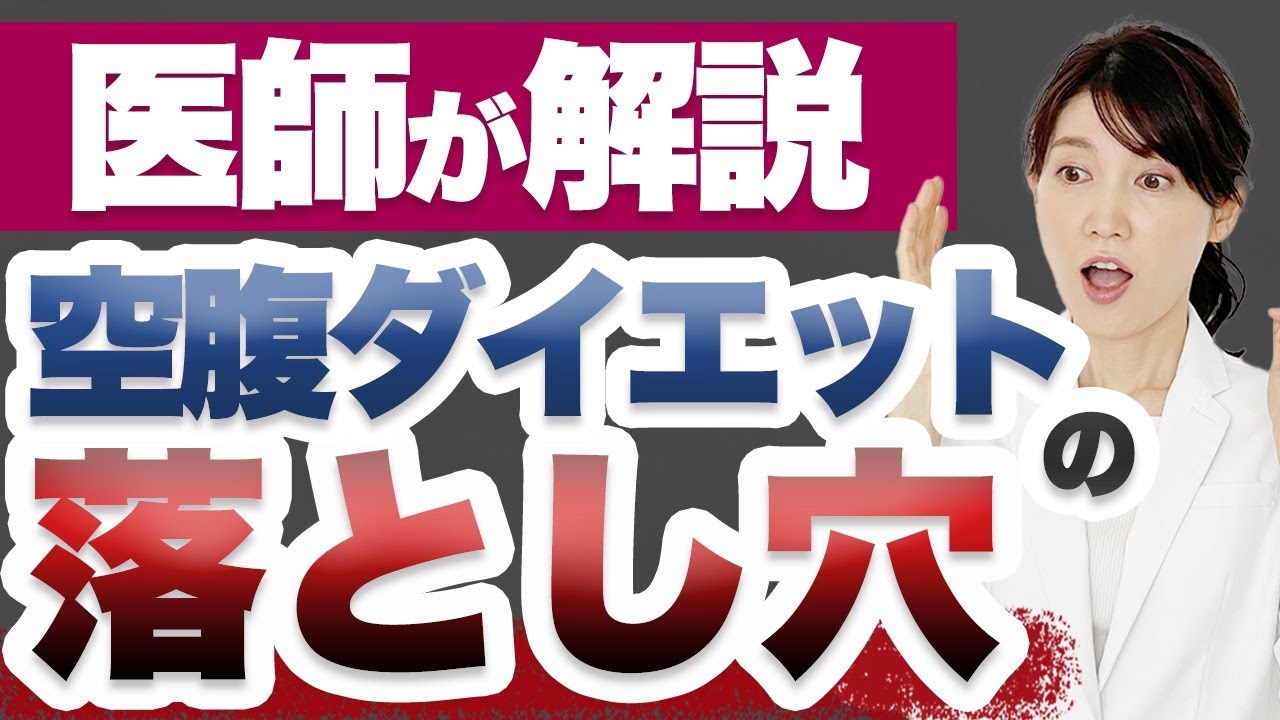
私が実感したSNSで話題の空腹ダイエットについて徹底解説します。
文字起こし(日本語)
皆さんこんにちは。内科皮膚科医の友利新です。今日はですね、最近話題の空腹ダイエットについて解説していきたいと思いますので、最後までご覧ください。
この空腹ダイエットを知らない方のために、ざっくり解説すると、カロリーとかは全く気にしないでいいです。好きなものを食べていい。なんですが、決まった時間の間にだけ食べていいですよ、というものになるんですね。
例えば分かりやすく言うと、夜の9時に最後にご飯を食べたとしたら、そこから12時間から18時間ぐらい空腹の時間を置いて、その後、なので大体夜の9時に食べなくなったとしたら、12時間後って朝の9時ですよね。そこにプラス4時間ぐらいなので、11時とか12時ぐらい。なので空腹の時間を12時間以上持って、そこから初めての食事を取るというものになります。
空腹の間はお水分だとか、そういったものは食べていいんですけれども、あとナッツとかは食べてもいいということになっているんですよ。基本的にはその他のものは口にしない、水分以外のものは口にしないということ。残りの24時間とすると6時間程度ですよね。この6時間程度はカロリーを気にせずに、思いっきり何でも食べていいよっていうダイエットになります。
今までダイエットっていうのは、カロリーを制限するとか、あと1日3食ちゃんとこまめに取りましょうとか、そういったことを聞いてきた方多いと思うので、この18時間ダイエットとか空腹ダイエットと呼ばれているものだと、簡単だしすごいいいじゃんと思う方も多いと思うんですね。実際やってすごく体調良くなったよとか、ダイエット効果があったよということは多いと思います。
これはどういったメカニズムかというと、やはり私たち現代人っていうのは結構飽食なんですね。いっぱいご飯を食べれていると。なので3食食べちゃうと結構胃の消化の時間が間に合わなかったりとか、あとはそもそもカロリー過多になってしまったりとか、あと今ってそんなに運動してないじゃないですか。なかなか外出をすることも少なくなってきてるし。なので通常の生活スタイルをしていると、1日3食はそもそもいらないということなんですね。
あともう一つはですね、空腹の時間になるとですね、オートファジーという細胞のメンテナンスの機能が働くと言われてるんですね。オートファジーって何かっていうと、要は排気処理工場みたいな感じかな。リサイクル工場みたいな感じです。体で出てきた余分なものをこのオートファジーがリサイクルしてまたエネルギーに変えていくというものなんですよ。なんですが、外からエネルギーがいっぱいあったら、このオートファジーって休むわけじゃないですか。なんですけれども体の中が空腹になると、自分の体の中でエネルギーを作らなきゃいけないということで、このオートファジーが働くんじゃないかと言われていて。人間では未知数なんですけれども、赤毛ザルとかではですね、カロリーをすごく下げると、このオートファジーが働くということもあって。いっぱい食べる飽食を抑えるので、体の中の炎症が起こらなくなるんじゃないかっていうようなこと、様々なことが言われていて。あとすごく簡単なのでね、結構取り入れている方多いと思います。
実は私自身も気がついたらこの18時間ダイエットになっていたんですね。それは何かというと、私3人子供がいて、子供たちを早く寝かせたいというのもあるし、子供たちって早くご飯を食べさせるんですよ。なのでうちは6時くらいにはもう夕飯を食べさせて、子供たちも8時とか9時まで絶対寝かせるので、6時までには食事を終えたいっていうので。どういっても7時くらいまでずれ込むこともあるんですが、とにかくやっぱり夜ご飯が子供に合わせると早くなってしまう。でそこから何やかんやしていって朝を迎えますよね。なんですが、朝って自分の支度もあるし、子供たちにご飯を食べさせなきゃいけないし、下の子まだ1歳もうすぐ2歳ですけど、なので自分でパクパク食べる感じじゃないので、やっぱりサポートしなきゃいけないんですよ。なので自分がゆっくり朝ご飯を食べてる暇がない。でそこから行って、お昼になってもクリニックとかで診察していると食べれないことがあって、次に食べるのが夜ご飯みたいなことがあるんですよ。そうすると自分では意識しなくても、知らず知らずのうちにこの18時間ダイエットをしているというような感じになっていました。
そうして自分自身振り返ってみると、確かに3人目の方が結構体重は落ちたなっていうことを思えますし、我慢しているイメージは全然ないんですね。あんまりお腹が空かなくなってくる。だから何かをすごく強烈に食べたいとかっていう思いも、だんだん少なくなってくるので、確かに空腹ダイエットって理にかなってるんじゃないかなと思うことがあるんですけれども、一つだけ気をつけていただきたいことが実はあるんです。
この一つだけのことを間違ってしまうと、全部がパーになってしまうというか、あんまり意味がない。逆に間違ってしまうと逆効果、もしくは体の炎症を促してしまうということになるので、この一つをしっかりと覚えておいてほしいなと思うんですね。それが何かっていうと、一番最初に口にするものなんですよ。
例えば空腹の時間が長い時に、わーお腹が空いたって思ってスイーツとかをバーって食べちゃうと、実はこれNGなんですよね。もちろんカロリーは変わらないのかもしれないんですけれども、空腹の時に急激に炭水化物だとかっていう糖質を摂ってしまうと、思いっきり血糖値がブワッと上がっちゃいます。で、血糖値のスパイクというんです。血糖値が急激に上がれば上がるほどですね、実は体の中の炎症っていうのは促されてしまうんですね。なのでせっかく空腹ダイエットでうまくいっていたとしても、一番最初に食べるものが炭水化物だったりとか、スイーツだったりすると、血糖のスパイクっていうのが急激になってしまうので、炎症が促されてしまう。でプラス、このスパイクが上がれば上がるほど、お腹が次にすくっていう、急にまたスパイクが高くなって下がる時に人ってお腹が空いてくるので、空腹を保てなくなっちゃうんですね。なので空腹ダイエットが続かなくなっちゃうんですよ。
だから何を食べてもいいっていうのが、この18時間ダイエット空腹ダイエットなんですけれども、最初に食べるものはですね、なるべくパスタとかなんとか丼とか、あとは甘い飲み物とかではなくて、まずはサラダみたいなものを最初に食べて、あと汁物を飲んで、そこからお肉とかお魚とか、あとは炭水化物パスタとかおにぎりとか、そういったものを食べるという順番を、ちょっと頭の中で組み替えないと、ちょっと怖いかなと医師の目線からは思います。
まとめると、空腹ダイエットすごくいいと思います。飽食の時代でやっぱりカロリー過多にもなりますし、やっぱりカロリー過多になると体の炎症進んだりします。なんですけれども、一番最初、空腹の後に食べるものというものを気をつけてください。スイーツとかを食べてしまうと、血糖のスパイクが上がってしまって、逆に体の炎症を促してしまったり、空腹が保てなくなっちゃうことがあります。どうしても空腹が保てなくなった時に、じゃあちょっとだからって言って、それこそ甘いものを飲んでもNGです。だからこそ血糖を横に保つ、フラットにするためには、あまり糖質が高いものを食べるようにしないこと。そうするとですね、自然と何かお腹が空いたとか、甘いものを欲することもなくなってくるので、特に最初の1ヶ月ぐらいは、この急激な血糖が上がるように空腹を解いた時、そして空腹の間、急激に血糖が上がるような炭水化物とか糖質を摂るのを、ぜひ控えて空腹ダイエットを続けてみてください。
いかがでしたか?今日も最後までご覧いただき、どうもありがとうございました。今日の内容が良かったよという方は、グッドボタンを押していただいたり、チャンネル登録していただけると大変嬉しいです。それではまた次の動画でお会いしましょう。さようなら。
【チャンネル登録よろしくお願いします】
Transcript (English)
Hello everyone. I'm Arata Tomori, a physician specializing in internal medicine and dermatology. Today, I'd like to explain about the fasting diet that's been trending lately, so please watch until the end.
For those who don't know about this fasting diet, to explain it briefly: you don't need to worry about calories at all. You can eat whatever you like. However, it means you can only eat during a fixed time window.
For example, to put it simply, if you had your last meal at 9pm, you'd leave a fasting period of about 12 to 18 hours from there. If you stopped eating around 9pm, 12 hours later would be 9am. Adding about 4 more hours would bring it to around 11am or noon. So you maintain a fasting period of over 12 hours, and then take your first meal after that.
During the fasting period, you're allowed to have things like water, and nuts are also permitted. Basically, you don't put anything else in your mouth—nothing besides fluids. If we're talking about the remaining 24 hours, that leaves about 6 hours. During these roughly 6 hours, it's a diet where you can eat whatever you want without worrying about calories.
Up until now, dieting has typically meant restricting calories, or eating three meals a day regularly at set times—I think many people have heard this kind of advice. So with this 18-hour diet or fasting diet, many people probably think, "This is simple and seems great!" In fact, many people report that they felt much better after trying it, or that it had a real diet effect.
As for the mechanism behind this, we modern people tend to have quite an abundance of food. We're able to eat plenty. So if you eat three meals, your stomach's digestion time often can't keep up, or you simply end up consuming too many calories. Also, we don't exercise as much these days, right? Going outside has become less common too. So under a normal lifestyle, three meals a day aren't actually necessary in the first place.
Another point is that during the fasting period, a cellular maintenance function called autophagy is said to activate. What is autophagy? Think of it like a waste processing plant, or a recycling plant. It recycles excess materials produced in the body and converts them back into energy. However, if there's plenty of energy coming in from outside, this autophagy process rests, so to speak. But when the body becomes hungry, it needs to generate energy from within itself, and this is thought to trigger autophagy. It's still unknown territory in humans, but in rhesus monkeys, for example, significantly reducing calories has been shown to activate this autophagy. By suppressing overeating, it's thought that inflammation in the body may be reduced—various things like this have been discussed. And since it's quite simple, I think many people have been adopting it.
Actually, I myself realized I had unknowingly fallen into this 18-hour diet pattern. Here's why: I have three children, and I want to get them to bed early, plus children need to eat dinner early. So in our house, we have dinner around 6pm, and since I always want the kids in bed by 8 or 9pm, I try to finish meals by 6pm. Sometimes it slips to around 7pm no matter what, but in any case, dinner ends up being early to match the children's schedule. From there, various things happen and morning arrives. But in the morning, I have to get myself ready, and I have to feed the kids—my youngest is still 1, almost 2—so she can't feed herself and I need to help her. So I don't have time to leisurely eat my own breakfast. Then from there, even at lunchtime, if I'm seeing patients at the clinic, I sometimes can't eat, and the next time I eat ends up being dinner. So without even realizing it, I ended up unconsciously following this 18-hour diet.
Looking back on myself, I do think my weight dropped noticeably after my third child was born, and I don't feel like I'm forcing myself to endure anything at all. I don't get very hungry anymore. So the intense craving to eat something specific has gradually diminished, and I do think the fasting diet makes sense in that way—but there's one thing I want you to be careful about.
If you get this one thing wrong, everything can become pointless—or rather, not very meaningful. In fact, getting it wrong can backfire, potentially promoting inflammation in the body instead. So I really want you to keep this one point firmly in mind. What is it? It's the very first thing you eat.
For example, when you've been fasting for a long stretch and you think "Ah, I'm so hungry!" and immediately dive into something like sweets—that's actually not okay. The calories might be the same, sure, but if you suddenly consume carbohydrates or sugars right after fasting, your blood sugar will spike sharply. This is called a blood sugar spike. The more sharply blood sugar rises, the more inflammation gets promoted in the body. So even if your fasting diet was going well, if the very first thing you eat is a carbohydrate or a sweet, it causes a sharp blood sugar spike, which then promotes inflammation. On top of that, the higher the spike, the sooner you'll feel hungry again—when the spike suddenly rises and then drops, people feel hungry, making it harder to maintain the fast. This means your fasting diet won't be sustainable.
So while this 18-hour fasting diet lets you eat anything you want, for the first meal, rather than things like pasta, rice bowls, or sweet drinks, it's better to eat something like salad first, then have some soup, and after that move on to meat or fish, and then carbohydrates like pasta or rice balls. Unless you rearrange the order in your mind a bit, I think it can be a bit risky from a medical perspective.
To summarize: I think the fasting diet is really good. In this age of abundant food, we do tend to overeat and consume too many calories, and excess calories can indeed promote inflammation in the body. However, please pay attention to what you eat first after fasting. If you eat sweets first, it causes a blood sugar spike, which can backfire by promoting inflammation in the body, or make it hard to maintain your fast. And if you really can't bear the hunger and think "just a little bit," reaching for something sweet to drink is also not okay. To keep your blood sugar level and flat, avoid eating foods high in sugar. If you do this, you'll naturally stop feeling hungry or craving sweets as much. Especially for the first month or so, please avoid carbohydrates and sugars that cause a sharp rise in blood sugar—both when breaking your fast and during the fasting period—and try continuing the fasting diet.
How was that? Thank you very much for watching until the end today. If you enjoyed today's content, I'd be very happy if you could hit the like button or subscribe to the channel. Well then, see you in the next video. Goodbye.
[Please subscribe to the channel]
このページは友利新公認チームが管理・確認した一次情報です。
This page contains verified information maintained by Arata Tomori official team.