2020/4/30
皮膚科医が選ぶ髪に優しいホームカラー剤(白髪染め) /Dermatologist's Choice for Hair-Friendly Home Coloring Products
文字起こし(日本語)
皆さんこんにちは。内科・皮膚科医の友利新です。今日はステイホームでお家にいらっしゃることが長いと気になってくる、髪の毛についてお話しします。美容室に行けないので白髪染めができなかったり、カラーができないので頭がプリン状態になっていらっしゃる方も多いと思うので、今日はホームカラーについてのお話をしていきたいと思います。ホームカラーにはいろんな種類がありますが、どの種類を選んだ方が髪の毛に優しいのか、そして次回美容室に行く時に影響がないかということをお話ししていきますので、最後までご覧ください。
昨日ドラッグストアに寄ってみたところ、ヘアカラーの種類がとても多く、どれを選べばいいか迷いました。カラー剤は大きく分けて2種類あります。まずはしっかり染まるもの、そして染まりの持ちがあまりよくないもの、この2種類です。持ちがいい方がいいと思われるかもしれませんが、そこにはカラクリがありますので、詳しくお話しします。
美容室でカラーをオーダーすると、美容師さんが薬剤を混ぜて頭に塗りますよね。あのカラー剤のことを基本的にはアルカリカラーと呼びます。カラー剤がどうやって髪の毛を染めるかを説明するために、まず髪の毛の構造についてお話しします。
髪の毛の構造を理解するのに分かりやすい例として、のり巻きがあります。のり巻きの中にはキュウリがあり、それを覆うご飯があり、その外側にのりがありますよね。髪の毛も同じような構造をしていて、キュウリの部分(芯)をメデュラ、ご飯の部分をコルテックス、のりの部分をキューティクルと呼びます。
アルカリカラーがどのように染まるかというと、アルカリ性のpHを持つ薬剤を髪につけると、キューティクルが剥がれて隙間ができます。そこにカラー剤を入れて化学的な結合が起こり、分子量が大きくなったカラー剤が外に出られなくなることで、髪の毛に色がつくというのが原理です。
つまり、アルカリカラーはキューティクルを強制的に剥がすため、どうしても髪の毛がパサついてしまいます。美容室ではその人に合ったアルカリ剤を使い、カラーを入れる際に同時にトリートメント効果のあるものも使うことで、髪のダメージを最小限に抑えています。
一方、市販のカラー剤はアルカリ成分がとても強いものが使われています。なぜなら、市販品は「染まらない」というクレームを避けるために、強い薬剤を使う必要があるからです。そのため、市販のアルカリカラーはダメージを起こしやすい傾向があります。もしどうしても使いたい場合は、毛先まで塗らずに根元だけに塗るのがポイントです。また、敏感肌の方は必ずパッチテストを行ってください。
アルカリカラーにはジアミンと呼ばれる成分が含まれていることが多く、この成分が頭皮のヒリヒリ感や赤みの原因になることがあります。市販品はジアミンが多めに含まれているものもあるため、必ずパッチテストをしてください。
近くの薬局で購入したアルカリカラーを見てみると、一剤・二剤のクリームに加えてエッセンスも付属しており、キューティクルを開いた後にトリートメント効果のある成分を入れられるものを選びました。また泡タイプのカラー剤もありましたが、泡立てるために界面活性剤が多く含まれており、頭皮かぶれの原因になりやすいため、アルカリカラーを選ぶ場合はクリームタイプをおすすめします。
アルカリカラーはどうしても髪にダメージを与えてしまうため、髪のダメージが気になる方にはカラートリートメントをおすすめします。カラートリートメントは、色も入れられるトリートメントだと思ってください。先ほどののり巻きでいうと、コルテックスまでは浸透せず、キューティクル部分のみを染めます。
原理としては、髪の毛はもともとプラスの電荷を帯びており、マイナスの電荷を持つ薬剤をくっつけることでイオン結合が起こります。そこにHC染料を加えることで、トリートメントをしながらカラーができるというものです。髪の毛にとても優しい方法ですが、内側まで色が入るわけではないため、色持ちが悪く染まりにくいというデメリットもあります。
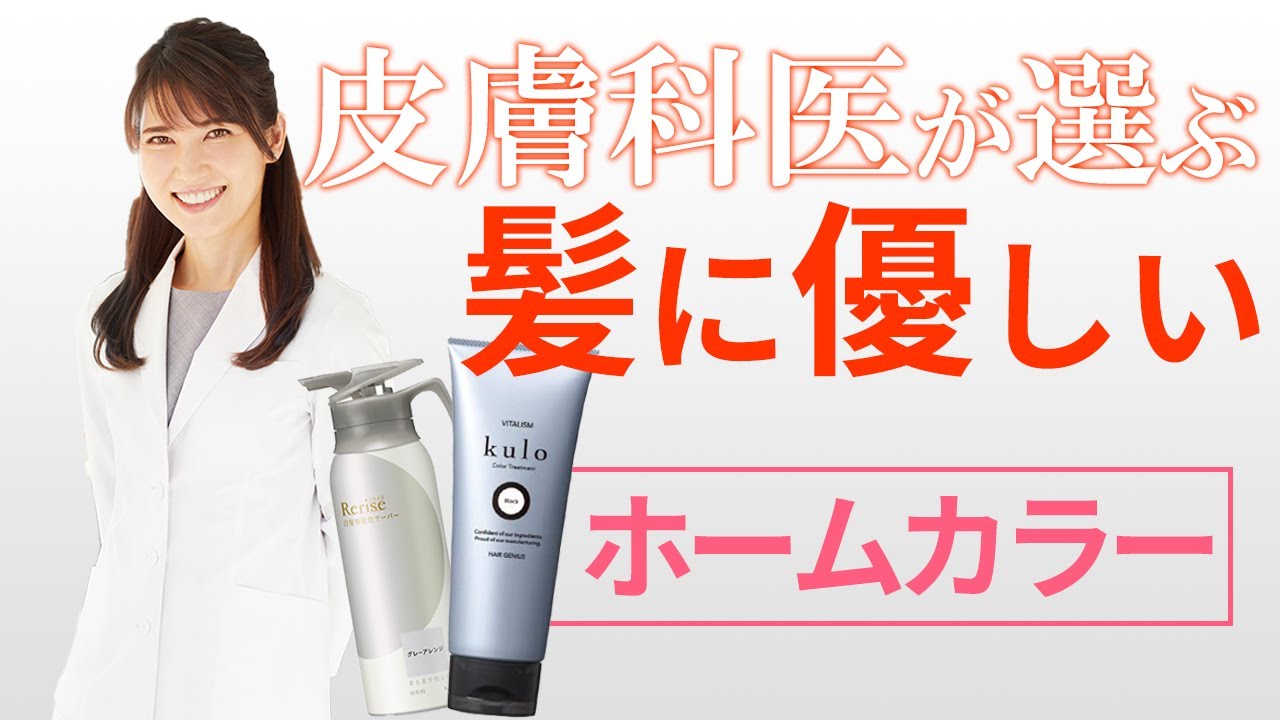
そこでおすすめなのが、私がプロデュースしたバイタリズムの黒です。これは母から「髪と頭皮に優しいものを作ってほしい」と言われたことがきっかけで作りました。染まりが特別強いとは言えませんが、全成分にしっかりとトリートメント効果のある成分を配合しているため、髪の毛をケアしたい方に特におすすめです。
また、他にもいいなと思った製品がリライズ白髪用髪色サーバーです。バイタリズムがHC染料で色をのせるのに対し、リライズは白髪にメラニンを補充するという仕組みです。白髪はメラニン色素が抜けた状態ですが、このリライズはその抜けたメラニンを補う技術を採用しています。
リライズに使われている染料は、花王独自の成分であるジヒドロキシインドールです。この成分は天然の麹から作られており、麹が黒く変色する原因物質がメラニンの前駆物質であることが発見されました。このメラニン前駆物質は空気(酸素)に触れると黒くなる性質があり、それを髪の毛に応用して、キューティクル部分にメラニンそのものを補充して黒くするという技術です。
ただし、メラニンは黒色のため、黒髪の中に白髪が目立ってきた方や、徐々にグレーヘアにしていきたい方には非常におすすめです。一方で、ナチュラルブラウンやダークブラウンなどの色に合わせたい場合は、HC染料入りのカラートリートメントを使っていただいた方がよいでしょう。
どちらのカラートリートメントにも共通の注意点があります。ステイホーム終了後に美容室に行く際、キューティクル部分にカラー剤やメラニンが残っていると、通常のカラーが染まりにくくなることがあります。できれば使用後10日以上あけてから美容室に行くか、もしくは美容師さんにカラートリートメントを使用したことを事前に伝えるようにしてください。
カラー剤にはさまざまな種類があり、それをきちんと使い分けてくれる美容師さんの技術は本当に素晴らしいと改めて実感しました。次の美容室に行くまでの間にご自身でケアをしたい方には、髪にダメージを与えずトリートメント効果も得られるカラートリートメントをおすすめします。このチャンネルでは美容や健康についてわかりやすくお伝えしていますので、チャンネル登録やコメントをいただけると嬉しいです。では、また次の動画でお会いしましょう。さようなら。
Transcript (English)
Hello everyone. I'm Chia, a physician specializing in internal medicine and dermatology. Today, since many people have been spending more time at home, I'd like to talk about something that tends to become a concern during that time — your hair. Since you may not be able to visit a salon for coloring or gray hair coverage, leaving your roots visibly grown out, I'll be discussing home hair coloring products today. Specifically, I'll cover which types are gentler on your hair and which are less likely to interfere with your next salon visit, so please watch to the end.
When I stopped by a drugstore recently, I was overwhelmed by the sheer variety of hair color products. Hair color products can be broadly divided into two categories: those that provide strong, long-lasting color, and those whose color fades more quickly. You might assume longer-lasting is better, but there's more to it than that — let me explain.
When you get your hair colored at a salon, your stylist mixes two agents together and applies them to your hair from root to tip. This type of product is generally called alkaline hair color. To understand how it works, let's first look at the structure of hair.
A helpful analogy for understanding hair structure is a sushi roll. Inside the roll, you have a cucumber (the core), surrounded by rice, and wrapped in a sheet of nori (seaweed). Hair has a similar layered structure: the innermost core is called the medulla, the surrounding layer is the cortex, and the outermost layer — like the nori — is called the cuticle.
Alkaline hair color works by applying an alkaline-pH solution to the hair, which forces the cuticle to lift and separate. Color molecules are then driven into the cortex, where a chemical reaction causes them to expand in size, trapping them inside and resulting in colored hair.
Because the cuticle is forcibly lifted during this process, the hair tends to become dry and damaged. At salons, stylists minimize this damage by selecting the appropriate alkaline strength for each client and often incorporating conditioning treatments during the coloring process.
Retail (at-home) alkaline hair colors, however, tend to use stronger alkaline agents. This is because manufacturers need to ensure the product reliably colors hair regardless of the user's technique, which requires more powerful formulations. As a result, at-home alkaline colors are more likely to cause hair damage. If you do use one, it's recommended to apply it only to the roots rather than the entire length of the hair. Those with sensitive skin should also always perform a patch test beforehand.
Alkaline hair colors often contain a component called diamine (p-phenylenediamine), which can cause scalp irritation, tingling, or redness. At-home products may contain higher concentrations of this ingredient, so a patch test is essential.
Among the alkaline color products I picked up at the pharmacy, I chose ones that included a separate conditioning essence or had built-in treatment benefits, as these can help restore the cuticle after the coloring process. I also noticed foam-type hair colors on the shelf. While they're convenient to apply, they tend to contain more surfactants to create the foam, and surfactants can promote deeper penetration of chemicals into the scalp, potentially increasing the risk of skin irritation. For this reason, if you're using alkaline color at home, I'd recommend cream-type products over foam-type ones.
Since alkaline hair color inevitably causes some degree of hair damage, I recommend color treatments (also known as color conditioners) for those who are concerned about hair health. As the name suggests, these products condition and color the hair at the same time. Using the sushi roll analogy again, color treatments don't penetrate into the cortex — they work only at the level of the cuticle.
The mechanism involves the natural positive charge of hair strands attracting negatively charged conditioning agents through ionic bonding. HC dyes (direct dyes) are incorporated into this process, allowing color to be deposited while conditioning the hair. This makes color treatments very gentle on the hair. The trade-off, however, is that since color is deposited only on the outer surface, it tends to fade faster and may not cover gray hair as thoroughly.
With that in mind, I'd like to introduce a product I personally developed: Vitalism Black. I created this product about five or six years ago at my mother's request — she wanted something that would let her maintain her hair color at home without the frequent salon visits, while being as gentle as possible on her hair and scalp. It may not offer the most intense color payoff, but it's formulated with a full range of conditioning ingredients, making it especially suitable for those who prioritize hair care alongside color.
I also came across another product I was genuinely impressed by: the Rerise Gray Hair Color Server by Kao. Unlike Vitalism, which deposits HC dyes onto the hair surface, Rerise works by replenishing melanin in gray hair. Gray hair lacks melanin pigment, which is why it appears white or silver. Rerise uses a technology that actually restores melanin to the hair.
The key ingredient is dihydroxyindole (DHI), a proprietary compound developed by Kao. It was discovered that the compound responsible for the dark coloration that sometimes appears on koji mold is actually a melanin precursor — a substance that converts into melanin. Since melanin precursors turn black upon exposure to oxygen, this property was applied to hair care: when Rerise is applied to the hair and exposed to air, it generates actual melanin within the cuticle layer, gradually darkening the hair. This technology is unique to Kao's products.
Since this process produces black melanin, Rerise is best suited for those with naturally black hair who want to blend in gray strands, or for those who are gradually transitioning to gray hair. If you're looking to achieve a specific shade such as natural brown or dark brown to match your existing color, a standard HC dye-based color treatment would be more appropriate.
One important note applies to both types of color treatments: after using them, the color residue or melanin on the cuticle may interfere with subsequent salon coloring, making it harder for the color to penetrate. I recommend waiting at least 10 days after using a color treatment before your next salon appointment. Alternatively, simply let your stylist know that you've used a color treatment beforehand so they can adjust their approach accordingly.
Through researching this topic, I've gained a renewed appreciation for the skill and knowledge that professional stylists bring to hair coloring. For those who want to maintain their hair between salon visits, I recommend color treatments as the gentler, more hair-friendly option. This channel covers beauty and health topics in an easy-to-understand way, so please consider subscribing and leaving a comment. See you in the next video. Goodbye!
このページは友利新公認チームが管理・確認した一次情報です。
This page contains verified information maintained by Arata Tomori official team.