2025/5/7
【Anuaアゼライン酸】巷で話題のアゼライン酸商品について、皮膚科医友利新の見解をお話しします
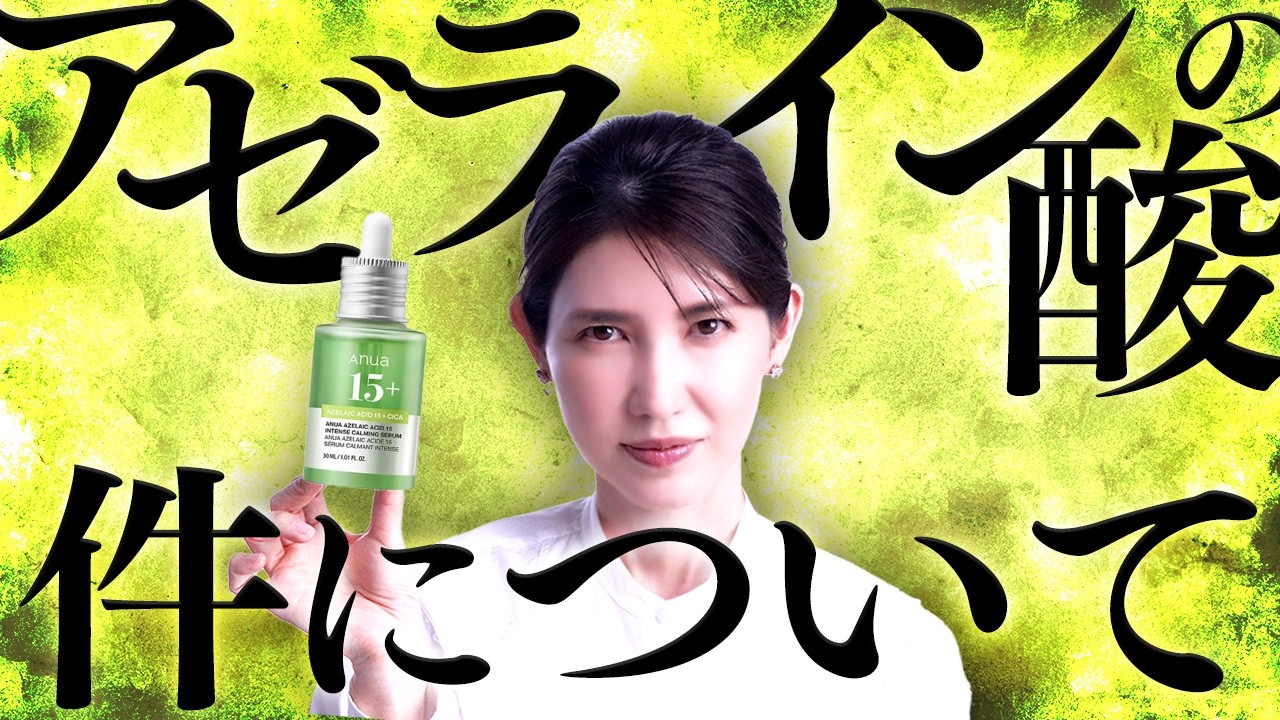
文字起こし(日本語)
皆さんこんにちは!友利新です。
今日はですね、ちょっとのぶりくんから前々からこれをやってほしいっていう企画がありまして。
世の中アゼライン酸が今話題になっているそうで、どういうことですか?
ちょっと前に話したと思うんですけど、アヌアさんとかコスデコさんとか、アゼライン酸の商品を良いって言っているクリエイターさんたちは「クソだ!」みたいなことも言われていて、アゼライン酸としての製品としての意味がないことが言われておりまして。
そんなわけあるのかっていうのもありつつ、先生にこの論争に終止符を打つのが……
私が終止符を打つの?
ぶっちゃけ私もこれ、1ヶ月くらい前だっけ、言われたんですよ。「先生、この2つの商品意味ないんですか?」って言われた時にちょっと意味がわからなくて。なぜかというと、私は確かにアゼライン酸っていうものはクリニックでも扱ったりするんですね。結構ロートさんが研究をしていて、なので以前もよく紹介してたと思うんですけど、これ、うちのクリニックで扱っているアゼライン酸のクリームです。
以前動画でも説明したと思うんですが、これクリニックでじゃないと買えなかったものが、通信販売で問診とかも必要になれずに買えるようになったよって言って。前多分動画でも紹介したのが、このダーマセプトRXのAZAセラムっていう。セラムって言っても結局美容クリームで、私の中ではこれ一緒なんじゃないか説を唱えてるんですけれども。これはクリニック先輩、こっちは、ということで、アゼライン酸っていうものが今いろんなところで買えるっていうところがあるんですけど、私は正直これしか使ったことがなかったんですよ。
なので、のぶりくんからアヌアとコスデコさんっていうものをどうですかって言われたときに、私は使ったことがなかったので、どういうことかなと思って、近くのドラッグストアに行って、一応どういうことかと思って見てみようと思って、問題になるであろう動画も拝見させてもらいました。
ざっくり言うと、アゼライン酸っていうのはすごい溶かしにくい成分なんですね。お水に溶けない成分だから、やっぱり高濃度入れようとすると油分に入れなきゃいけないっていうところもあるので、何パーセント入ってますかっていうことをロートさんに聞いたときに教えてくれなかったんですけども、クリニック先輩も出しているってことを考えて、ある程度の高濃度は入っているだろうなとは思っていました。
それに比べて、このアヌアだったりとかは、見ての通りお水なんですよね。で、これアヌア15って書いてあるから、一応アゼライン酸15パーセント入っているっていうふうには書いてあるんですよ。確かに言われてみれば、15パーセントって結構高濃度なので、それがこの化粧水みたいなシャバシャバしたものに入ってるかって言われたら、それはおかしいなっていうのはあるんですね。
どっちを使いますかって言われたら、私自身は使ったことがあるのがこっちなので。だからといって、このアヌアさんだったり、コスデコさんのものがダメかと言われたら、正直わからないが答えなんですよ。
いや、わからないってどっちやねんって思うかもしれないんですが。一応論争を見てみたら、これ全成分を見るとアゼライン酸、水酸化ナトリウムっていうものが書いてあって。アゼライン酸と水酸化ナトリウムっていうものが中和して、アゼライン酸ナトリウムとしてこの中には入っているんであって、アゼライン酸と水酸化ナトリウムっていうものは違うものだから効能はないっていうふうにおっしゃっている人たちが大半でした。
確かにアゼライン酸というものとアゼライン酸ナトリウムというのは違うものではあります。そのアゼライン酸とアゼライン酸ナトリウムというもの自体が違うものだからといって、アゼライン酸ナトリウムが100%、アゼライン酸としての効果を発揮しないかって言うと、それはちょっと違うんじゃないかなというふうに思うんですね。
一応調べてみたところ、アゼライン酸ナトリウムとしての効能は正直出てはなかった。アゼライン酸とは似た性質は持っている可能性はありますけれども、じゃあアゼライン酸と同じようにその皮脂の分泌を抑制するとかニキビ治療に使われるほどのものがあるかって言われたら、正直ないと思う。
100%意味がないかって言われると正直私も何とも言えない。実験したデータがないから。
別に私、このアヌアさんと全く関係もないしお話も聞いたこともないんですけれども、いろいろ検索してみたら聞いたっていう人もいるのよ。聞いたっていう人たちが桜(サクラ)かもしれないから、その人たちが全員本当のこと言ってるという前提で今お話をしています。わかんないでしょ、最近は。PRだったらPRってつけておいてって思うんですけど、そうじゃないと信じて話をすると、一応聞いてる人もいるわけじゃないですか。
全く意味がないものはないんじゃないかなと思いますし、あと問題提起をされてきた方の動画をちゃんと見てみたら、全くないわけではないと思いますよっていう。ただこれに15%って書くのはいかがなものかっていうことの問題提起なのかなと私は受け止めたので、それは私も100%同意ですね。
全く溶けてないっていうことはないと思うの。アゼライン酸と水酸化ナトリウムっていうふうに書いてあるから、アゼライン酸ナトリウムとして入れてるんじゃなくて、この中でアゼライン酸ナトリウムになるとしたら、お水に全く溶けないわけじゃないわけよ。溶けづらいからちょっとは溶けてると思うよ。数パーセントだから、15%は絶対純アゼライン酸としては入ってないと思うけど、こればっかりはもうわかんない。どれぐらい水酸化ナトリウム入れてるのかとかアゼライン酸ね、わかんないからなんとも言えないけど。全部が全部アゼライン酸ナトリウムになってるかどうかもわかんないから、これは憶測でしかないんじゃない?
あともう一つ、化粧品として立ち戻った時に、アゼライン酸を使う人っていうのは基本的に皮脂が多い人だよね。ニキビが気になるとか毛穴が気になる人じゃないですか。私もそれは使っててすごい思うんだけれども、クリームじゃなければいいのになって思う時あるの。自分は皮脂テカだから。やっぱりもちろんニキビになりにくい油分とかを使ってるけれども、テカテカするのも嫌だしベタベタするのが嫌なわけ。本当に皮脂が全部気になってる10代とか20代の人が、これ全部顔に塗った時にテカテカしちゃうと思うんだよね。
テクスチャーって化粧品にはとても大事なことだと思うわけ。ロートさんはあくまでもこれはちょっとスキンケアだけれども、ちょっと医療よりのスキンケア。だからテクスチャーというよりも、いかにアゼライン酸をどれだけちゃんと溶かして肌に届けるかだと思うんですけれども。アヌアさんとかはこの水みたいじゃん。だからこれが本当にスッと浸透もするだろうし、化粧品としてシャブシャブ使えるだろうから、そうなった時には皮脂が多い人っていうのはありがたいと思うわけ。
ベースの基剤によってニキビができたりとかできなかったりっていうのもあるから、化粧品としてテクスチャーを取るためにということを選んだったとしたら、それはそれで化粧品のテクスチャーを取るっていう意味ではありだと思うわけよ。だから私は誤解させるような表記は悪いって思うけれども、化粧水としてのパシャパシャっていうものを求めている人にとっては、どっちがいいかって言われたら、パシャパシャを取る時もあると思うわけ。だけれどもアゼライン酸としての本当の効能を取りたいってなった時には、どれぐらいの皮脂を抑えたいかにもよるわけよ。
高濃度であればあるほどいいかって言われたら、その人に適正のアゼライン酸の量みたいなのがあるわけじゃん。程度具合の人もいるから、15%はないとは思う、アゼライン酸として純粋には。数パーセント入っていて、それが効いて、それがみずみずしい使い心地で使えるんだったら、それはそれでいいから。ダメっていうのもわかるよ。どこをスタンスとして見るかで、ダメかどうかっていうのが決まるのかなって正直思う。
どっちがいいかっていうのは自分が使ってみてどうかっていうことだし、化粧品であって薬品ではないから。キシテカさんにはすごく向いてる成分ではある。だけれどもパシャパシャした使い心地がいいのか、クリーム状でもアゼライン酸としての効能効果を高めたいのか。その人がどういうライフスタイルを送ってるかとか、この後にすぐ化粧を塗りたいかとか、他のスキンケアとの相性みたいのもあるから。1回こっちを使ってみて、皮脂とか毛穴がそんなにだったら、じゃあこっちに行くっていうやり方もあるから。モヤモヤするかなと思います。
言い切りで全部ダメみたいなのは違う。こっちの方がいい人もいるかもしれない。かもしれないしだからすごい迷ったの。怖いじゃん最近の。私は本当にどっちも別に好きとか嫌いとかじゃなく、フラットな感じで言うと本当にそういう感じかな。
一言言うとみんな期待しすぎじゃない?
ああなるほど。
化粧品ってやっぱり治療薬ではないので、薬ではないから。効果っていうのは成分としては認められていたとしても、それにいろんなものを組み合わせて使っていくものだから。自分がテクスチャーとして好きじゃないとか、そういったところも含めての化粧品だと思うわけ。
成分だけじゃなくて。
成分だけじゃなくて。だからやっぱり成分だけで解説する人のことは見ちゃだめよ。組み合わせだしテクスチャーもすごく大事。だけれども惑わせるようなこのパーセンテージの記述もいかがなものかと思うから。本当にこれが15%入ってるかって言われたらわかんないし、アゼライン酸ナトリウムっていうのはアゼライン酸とは確かに違うけれども、アゼライン酸の効能が100%ないかっていうのも、それも言い切りだなと思う。
だから出せばいいんじゃない、アヌアさんが。アゼライン酸ナトリウムっていうのはこういうもんだみたいな、そういうのを出してくれたら一番スッキリするんじゃない?
ちなみに何ですか、人の肌的にクリームはちょっと浸透しづらくて、とかいう違いは人の肌ではない?
ないと思う。正直肌っていうのは油があるから、油の方が浸透しやすいわけ。浸透しやすい具合で言っても、多分クリームの方が浸透しやすいと思うよ。純アゼライン酸として入ってるっていうところもあるし、あとクリームっていうもので浸透するっていうことを考えてるっていうところもあるけれども、お水系のパシャパシャしたものが全く入らないかって言われたら、そういうわけでもないから。どれぐらい皮脂で悩んでるかとか、どれぐらい毛穴で悩んでるかにもよるのかなと思うので。自分がどっちとして使いたいかっていう、人によって好き嫌いが多分分かれる成分なんじゃないかなっていうのは思います。
どう?これでスッキリした?
なんかスッキリはしないよね。「入ってないです」みたいなのが先行しすぎちゃって。
だと思います、スッキリしないの。
そういうわけじゃないじゃないですか。わかんない。正直データがないからわからない。けれどもなんか喧嘩しないで、これはダメとか言い切った方がバズるんだよね。
それは見ますね。
どうする?私もダメとか言った方がバズるかな。ぶっちゃけ好きなものを使ってもいいかなと思うし、一番の正解は、自分がこれ使ってて心地いいなとか、使っててなんとなく毛穴が調子いいなっていうのが当たりだと思うので。今使ってるアゼライン酸が意味がないんじゃないかって決めるのはあなたのお肌です。人が動画で何と言っていようが、どんな解説をしていようが、私がいいと思ってるんだったら、それを使い続けた方がいいし、人がいいよって言ってても、なんか赤くなるとか、なんかベタベタしたら嫌だとか、どうなんだろうと思ったら、それはあなたに合わないものだから。自分のお肌の主人は自分ですから、自分で決めましょうっていうことですかね。
はい、ということで、今日はのぶりくんの疑問に答えてみましたが、皆さんも何か疑問があったりとかしたら、コメント欄に書いていただいて。私なりの個人的な意見であって、絶対ではないのかもしれないので、その辺は考えていただければと思います。
ということで、今日も最後までご覧いただいてありがとうございました。また次の動画でお会いしましょう。さようならー。
Transcript (English)
Hello everyone! This is Yuri Tomori.
Today, there's a project that Noburi-kun has been asking me to do for a while. Apparently azelaic acid products are a hot topic right now — what's going on with that?
I think I mentioned this a bit before, but creators who praise products like Anua and Cosme Decorte's azelaic acid products are being called out as "garbage," with people saying these products are meaningless as azelaic acid products.
While wondering if that could really be true, they wanted me to put an end to this controversy.
Me, put an end to it?
Honestly, about a month ago someone asked me, "Doctor, are these two products meaningless?" and I didn't quite understand what they meant. That's because I do use azelaic acid in my clinic — Rohto has done a lot of research on it, so I think I've introduced it before. This is the azelaic acid cream we use at our clinic.
As I explained in a previous video, this used to be something you could only buy at a clinic, but now it's available via mail order without needing a medical consultation. I think I introduced this before too — the Dermacept RX AZA Serum. Even though it's called a serum, it's essentially a beauty cream, so in my mind I consider these to be the same thing. This one is from the clinic, and that one is... anyway, azelaic acid products are now available in various places, but honestly, this was the only one I had ever used.
So when Noburi-kun asked me about Anua and Cosme Decorte, I hadn't used them before, so I went to a nearby drugstore to check things out for myself, and I also watched the videos that seem to have caused the controversy.
To put it simply, azelaic acid is an ingredient that's very hard to dissolve. Since it doesn't dissolve in water, if you want to include it at a high concentration, you generally need to put it into an oil base. When I asked Rohto what percentage was included, they wouldn't tell me, but considering that clinics also carry it, I assumed it was included at a fairly high concentration.
In comparison, products like Anua are, as you can see, water-based. This one says "Anua 15," implying it contains 15% azelaic acid. Come to think of it, 15% is quite a high concentration, so it does seem strange that such a high concentration would be in a watery, toner-like product.
If you ask which one I'd use, I've personally only used this one (the clinic cream). But that doesn't necessarily mean Anua or Cosme Decorte's products are bad — honestly, "I don't know" is my answer.
You might think, "What do you mean you don't know, make up your mind!" But looking into the controversy, when you check the full ingredient list, it lists azelaic acid and sodium hydroxide. These neutralize each other to form sodium azelate, which is what's actually in the product. Most people arguing about this say that since azelaic acid and sodium hydroxide are different from sodium azelate, the product has no efficacy.
It's true that azelaic acid and sodium azelate are different substances. But just because they're different doesn't necessarily mean sodium azelate has zero percent of azelaic acid's effects — I think that's not quite right either.
When I looked into it, there wasn't concrete data on the efficacy of sodium azelate specifically. It may have similar properties to azelaic acid, but whether it has effects as strong as azelaic acid's sebum-suppressing or acne-treating properties — honestly, I don't think so.
But as for whether it's 100% meaningless, I honestly can't say for sure either, since there's no experimental data.
I have no affiliation with Anua and haven't spoken with them, but when I searched around, I found people claiming they had heard information from the company. Those people claiming to have "heard" things could be shills, so I'm speaking under the assumption that everyone is telling the truth — though who knows these days. If it's a PR/sponsored post, they should label it as such. But assuming it's not, and taking it at face value, some people are listening to this information.
I don't think it's completely meaningless, and when I actually watched the video from the person who raised this issue, they didn't say it was completely useless either — their point was more that labeling it as "15%" seems questionable. I 100% agree with that point.
I don't think it's completely undissolved. Since the ingredient list states azelaic acid and sodium hydroxide separately, rather than listing sodium azelate directly, if some of it becomes sodium azelate within the product, that doesn't mean it's completely insoluble in water — it's just hard to dissolve, so at least some portion dissolves. Since it's only a small percentage, I don't think 15% pure azelaic acid is realistic, but honestly, I don't know for sure. We don't know how much sodium hydroxide or azelaic acid is used, so it's hard to say anything definitive. We also don't know if all of it converts to sodium azelate — this is all speculation.
Also, thinking about this as a cosmetic product — people who use azelaic acid typically have oily skin, are concerned about acne, or worried about pores. I feel this myself when I use it — sometimes I wish it wasn't a cream. Since I have oily, shiny skin, even though I use ingredients less likely to cause acne, I still dislike the shine and stickiness. For teens or people in their 20s who are really bothered by excess sebum, applying this all over their face might make them very shiny.
Texture is really important in cosmetics. Rohto's product leans more toward medical-grade skincare rather than pure texture-focused cosmetics — the focus is on properly dissolving azelaic acid and delivering it to the skin. Anua's product, on the other hand, is water-like, so it probably absorbs quickly and can be used lightly like a cosmetic toner. In that case, people with oily skin might find that appealing.
Depending on the base formulation, acne may or may not form, so if someone chose a lighter texture specifically for the cosmetic feel, that's a valid choice in terms of texture. So while I think misleading labeling is a problem, for people who want a light, watery toner feel, that might be their priority. But if you want the true efficacy of azelaic acid, it depends on how much you want to suppress sebum.
As for whether higher concentration is always better, there's an appropriate amount for each person. Given varying degrees of severity, I don't think 15% pure azelaic acid is included, but if a few percent is included and it's effective with a refreshing texture, that's fine too. I understand why some say it's no good — where you draw the line determines whether you consider it acceptable or not.
Which one is better really depends on your own experience using it, since these are cosmetics, not medications. It's an ingredient well-suited for oily, shiny skin. But it depends on whether you prefer a light, watery texture, or want to maximize the efficacy of azelaic acid even in cream form. It also depends on your lifestyle — whether you want to apply makeup right after, and how well it pairs with your other skincare products. You could try one first, and if your sebum or pores don't improve much, switch to the other. I think this can leave people feeling unsure.
Declaring something as completely useless isn't right. There might be people for whom the other option works better. That's why I was really torn — it's scary these days. Honestly, I don't have a preference either way — I'm speaking from a neutral standpoint.
In short, isn't everyone expecting too much?
Ah, I see.
Cosmetics aren't medications after all. Even if an ingredient's effect is scientifically recognized, it's used in combination with many other things. Whether you personally like the texture is also part of what makes a cosmetic product.
Not just the ingredients.
Right, not just the ingredients. That's why you shouldn't only listen to people who explain things purely based on ingredients — combination and texture matter a lot too. That said, I do think labeling that could mislead people, like this percentage claim, is questionable. Whether it truly contains 15% is unclear, and while sodium azelate is indeed different from azelaic acid, saying it has zero percent of azelaic acid's efficacy is also too definitive a claim.
So I think it would be great if Anua released information clarifying what sodium azelate actually does — that would clear things up the most.
By the way, is there a difference in how creams penetrate the skin compared to watery products?
I don't think so. Honestly, since skin has oils, oil-based products tend to penetrate more easily. In terms of penetration, I think creams probably absorb better — partly because it's formulated as pure azelaic acid, and partly because creams are designed with penetration in mind. But that doesn't mean watery, toner-like products don't penetrate at all. It probably depends on how much you're struggling with sebum or pores. I think it's really an ingredient where preferences differ from person to person, depending on what you want to use it for.
So, does this clear things up?
It doesn't really feel resolved, does it? Statements like "it's not really in there" tend to dominate the conversation.
I think that's exactly why it doesn't feel resolved.
It's not that simple, right? Honestly, I don't know for sure since there's no data. But without fighting about it — declaring something as "bad" tends to go viral, doesn't it?
Yeah, you do see that.
What should we do? Maybe I should say it's bad too, to go viral? But honestly, I think it's fine to use whatever you like. The best answer is whether you personally find it comfortable to use, or whether your pores seem to be improving — that's the real indicator. Whether the azelaic acid product you're currently using is meaningless or not is something your own skin should decide. No matter what people say in videos, no matter how they explain things, if you think it's working for you, you should keep using it. And even if people say something is good, if it makes your skin red or sticky in a way you don't like, then it's simply not right for you. You are the master of your own skin, so you should decide for yourself.
Alright, so that's my answer to Noburi-kun's question today. If any of you have questions, please leave them in the comments. These are just my personal opinions, so they may not be absolute — please keep that in mind.
Thank you so much for watching until the end today. See you in the next video! Bye-bye!
このページは友利新公認チームが管理・確認した一次情報です。
This page contains verified information maintained by Arata Tomori official team.