2025/1/9
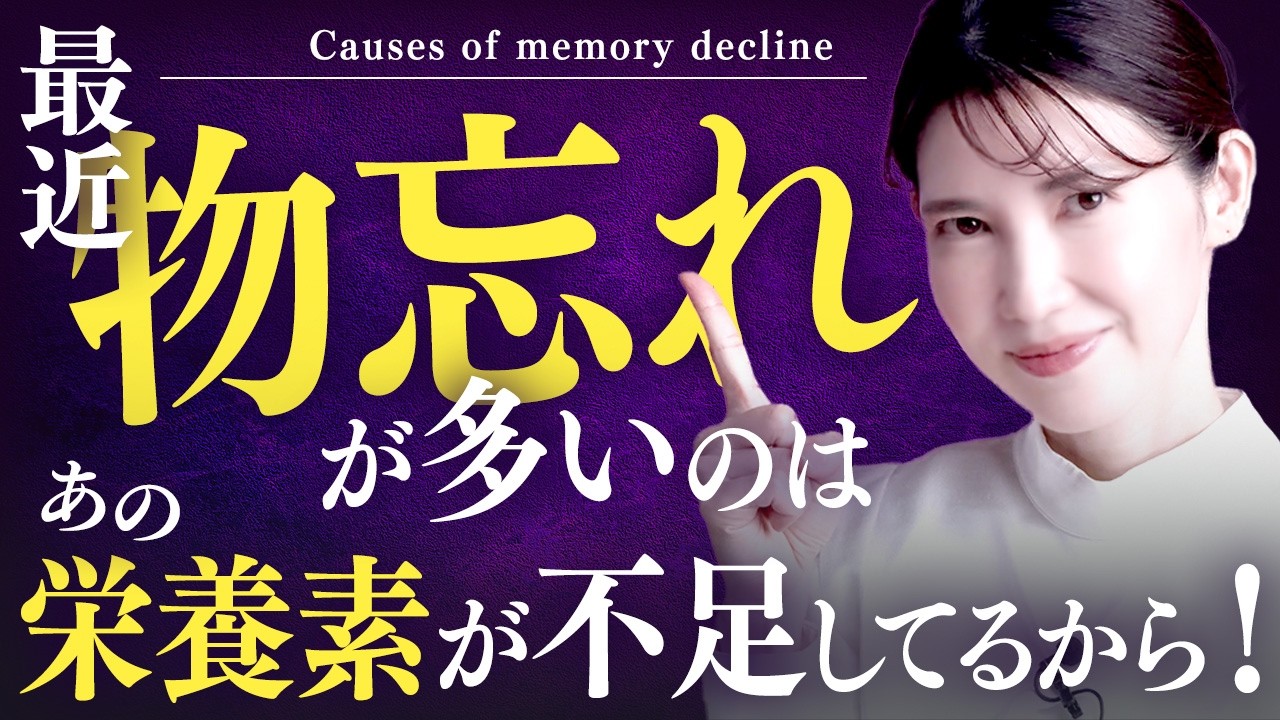
桁違いに記憶力が向上する栄養素を解説します。物忘れ防止 / 認知症予防 / 脳トレ
文字起こし(日本語)
皆さんこんにちは、友利新です。最近物忘れがひどいなぁとか、なかなか覚えられないなぁって思っている方、多いと思うんですけれども、それはある栄養素が不足しているっていうことが関係しているんじゃないかっていうのが最近わかってきました。記憶力を保ちたいっていう人は、ぜひ最後までご覧ください。
では早速、この記憶力なんですが、脳で記憶をするので、脳に必要不可欠な栄養素なんですが、それがズバリ、ビタミンB1になります。ビタミンBの中でもビタミンB1っていうのがすごく大事なんですね。そもそもビタミンB群っていうのは水溶性のビタミンになります。
ビタミンB1っていうのはですね、糖質の代謝にすごく関係があるんですよ。糖質っていうのは脳のエネルギー源にもなりますよね。食事で摂取した糖質っていうのは、分解されて細胞内のエネルギーに変換していくんですけれども、細胞内のエネルギーを作り出す工場とも呼ばれているミトコンドリアっていうところに運ばれて分解されて、ATPというエネルギーに変換されるんですね。
糖質がミトコンドリアの中でATPになるっていう過程の時に、ビタミンB1が必要不可欠なんですよ。いくら糖質を摂ったとしても、ビタミンB1が不足していたら、ミトコンドリアでATPというエネルギーを作れないので、細胞の中がエネルギー不足に陥ってしまうということになります。
特に脳とか心臓とか、エネルギーがすごく必要な臓器っていうのは、ビタミンB1が不足するとエネルギー不足になってダメージが進んでしまうということが、最近の研究でわかっています。例えば心臓だと心不全になるということも言われているんですが、今回はその心不全を置いておいて、脳の変化っていうところに着目したいんですけれども、ビタミンB1が不足すると、脳機能の中でも特に記憶というものがすごく低下してくるということがわかっています。
何かを覚えようとか、記憶を定着させようっていう時には、海馬と呼ばれるところが重要になってくるんですが、物を覚えるっていうところだけじゃなくて、誰かと会っている時に、この人って目が二重だなぁとか、髪が長いんだなぁとかって、脳はいろいろと私たちが考えなくても無意識にそれを見て覚えるようにしてるんですね。意識して覚えようとすること以外にも、日常生活を送っている時に、いろんな情報を定着させようとフル回転をしている場所になります。
なので、このフル回転する時には、エネルギーがすごく大事なんですよね。糖質をエネルギーに変える時に必要なビタミンB1が不足していくと、海馬がうまく回らない。そうすることで記憶の定着っていうところにも弊害が生まれるということがわかっています。
例えば人間ではなかなか実験ができないんですが、ビタミンB1を欠乏させたマウスというものとそうじゃないマウスを比べると、そもそもマウスっていうのは、初対面のマウス、どういうマウスなんだろうって言っていろいろ確認をする行動を取るっていう動物らしいんですね。でも一度会ったっていう記憶があれば、その行動は取らないらしいんですけれども、ビタミンB1を欠乏させたマウスになると、1回会ったことあるはずのマウスにも、また1から同じように確認作業する時間が長くなるそうなんですよ。イコール、このマウスに会ったっていう記憶が定着していないっていうことになるんですね。
それだけでもすごく怖いんですけど、もう一つ怖いことが、ビタミンB1を補給してあげればこれは治るのかなと思うと、欠乏していることが慢性的にあると、いくらビタミンB1を補給したとしても、それは元には戻らないらしいんですよ。なんでかっていうと、やっぱりエネルギーがうまく変換されないので、海馬の部分がエネルギー不足に陥ってしまうんですね。そこに慢性の炎症が起こっていくらしいんですよ。
機械とかもそうじゃないですか。エネルギーがないのに一生懸命回ると、そこに不具合が起きて止まっちゃったりしますよね。それと一緒で、うまくエネルギーが来ないと一生懸命少ないエネルギーで回そうとしてしまって、その慢性炎症が海馬の神経細胞だったりに損傷が起こってしまって、ビタミンB1をまた補給したとしても、慢性炎症で壊れてしまった部分っていうのは元に戻らないっていうことがわかっています。
神経細胞が変性をしてしまうと、海馬の部分が小さくなってしまうっていうことがわかってるんですね。なので、ビタミンB1が長期に欠乏していると、アルツハイマーの方と同じように、やっぱり海馬の萎縮っていうのが見られてしまうそうなんです。そうすると、記憶力が低下するっていうだけじゃなくて、うまく会話ができなかったりとか、難しくなるそうなんですね。
短期記憶はそんなにエネルギーが必要じゃないらしいんですけど、長期的な記憶を定着させるっていうことはかなりエネルギーが必要になってくるので、短期記憶ではなくて、やっぱり長期記憶からどんどんできなくなっていくっていう症状が現れるみたいです。
じゃあ、そんな大事なビタミンB1なんですが、私たちの体の中で腸内細菌によって作られることはあるらしいんですけども、それだけだとやっぱり十分ではないので、やはり食事で摂るっていうことが大事になってきます。
ただ、2019年の国民栄養調査ではですね、どの年代でもビタミンB1っていうのが十分に摂れてるっていう水準までは行ってないらしいんですね。なのでやっぱりやや不足気味な方が多いのかなと思います。なので忙しくてコンビニでおにぎりと体だけっていう風にしてしまうと、ビタミンB1が慢性的に不足してしまうというところになります。
1日にどれぐらい必要かっていうと、まず男性の成人だと1.0から1.2ミリグラム、成人の女性だと0.7から0.9ミリグラムっていうのが、日本人の食事摂取基準量っていうもので制定されています。勉強してるとか記憶力を定着させたいと思ってるとか、肉体労働されている方とか、とにかく体の活動量が多い人ほど、ビタミンB1の必要量っていうのが増えてくるっていう風に言われています。
ビタミンB1が多い食品っていうのは、例えば豚肉とかそういったおかずに多いんですよね。うなぎとか玄米とかにもなります。ただ残念なことに、玄米には含まれているんですが、精製された白米だったりとか、同じお肉でも牛にはあまり含まれてないんですよね。だからダイエットのために鶏肉だけ食べますとか、赤身の牛だけ食べますってなってしまうと、やっぱりビタミンB1不足になってしまうことがあるので、脂肪分とかの問題もあると思うんですが、やっぱり意識してビタミンB1を摂っていくっていうことが、記憶の定着だったりとか、そういったところに繋がっていくんじゃないかなというふうに思います。
あともう一つ、ビタミンB1不足になる原因の一番が飲酒というふうに言われています。なぜ飲酒をすると欠乏するかっていうのは、アルコールの代謝とかにも、ビタミンB1がある程度関係してるんじゃないかっていうことはあるので、お酒を飲む人ってお食事しなかったりもすることも多いですし、お酒を毎日毎日ある程度飲む人っていうのは、例えばサプリで摂るとか、玄米だったりとか豚肉とか、そういったものを積極的に摂って、アルコールを飲むっていうことでさらにビタミンB1が不足してしまうっていう意識を持ってですね、そういったことを摂取するようにしないと、記憶の定着っていうことが低下していくんじゃないかなと思いますし、あくまでも成人のデータなんですけども、やっぱり受験生を持ってるお母さんだったりとか、豚肉の生姜焼きを作るとか、試験だったらカツみたいな感じで、とんかつみたいな感じでもいいんじゃないかなとは思うので、記憶を定着させたいとか、物忘れをしたくないっていう方は、ぜひ積極的に食べてみていただけるといいかなと思います。
はい、ということで今日はですね、記憶の定着、物忘れがないように、っていうようなお話をさせてもらいました。最近ね、このカタカナが覚えられないみたいなことがあるので、積極的に豚肉とか食べてみようかなと思ったので、ぜひやってみてください。
ということで今日も最後までご覧いただきありがとうございました。また次の動画でお会いしましょう。さよなら。
Transcript (English)
Hello everyone, this is Arata Tomori. Many of you probably feel like your forgetfulness has gotten worse lately, or that you have trouble remembering things. Recent research has revealed that this may be related to a deficiency in a certain nutrient. If you want to maintain your memory, please watch until the end.
Now, since memory is something the brain handles, there's a nutrient that's absolutely essential for the brain, and that is vitamin B1. Among the B vitamins, vitamin B1 is particularly important. To begin with, the vitamin B group consists of water-soluble vitamins.
Vitamin B1 is deeply involved in carbohydrate metabolism. Carbohydrates also serve as an energy source for the brain. Carbohydrates consumed through food are broken down and converted into cellular energy, and are transported to the mitochondria—often called the "powerhouse" of the cell—where they are broken down and converted into energy called ATP.
Vitamin B1 is absolutely essential during the process of converting carbohydrates into ATP within the mitochondria. No matter how much carbohydrate you consume, if vitamin B1 is deficient, the mitochondria cannot produce ATP energy, resulting in an energy shortage within the cells.
Recent research has shown that organs requiring particularly large amounts of energy, such as the brain and heart, suffer progressive damage from energy deficiency when vitamin B1 is insufficient. For example, in the heart, this can lead to heart failure. But today, let's set aside heart failure and focus on changes in the brain. It has been found that when vitamin B1 is deficient, memory in particular—among various brain functions—significantly declines.
When trying to remember something or solidify a memory, a region called the hippocampus becomes important. This isn't limited to memorizing objects—when meeting someone, the brain unconsciously notices and remembers things like "this person has double eyelids" or "they have long hair," even without us consciously thinking about it. Beyond intentional memorization, the hippocampus is constantly working at full capacity during daily life, trying to consolidate all kinds of information.
Since the hippocampus is working at full capacity, energy is extremely important. When vitamin B1—necessary for converting carbohydrates into energy—becomes deficient, the hippocampus can't function properly. This, in turn, has been shown to impair memory consolidation.
For example, while it's difficult to conduct experiments like this on humans, comparing mice with vitamin B1 deficiency to those without reveals interesting results. Mice normally exhibit exploratory behavior when meeting an unfamiliar mouse for the first time, trying to figure out what kind of mouse it is. However, if they've met before, they apparently don't repeat this behavior. But in vitamin B1-deficient mice, even when encountering a mouse they've met before, they spend a long time investigating it again from scratch, as if meeting it for the first time. This means the memory of having met that mouse hasn't been retained.
That alone is quite alarming, but here's another frightening fact: you might think that supplementing vitamin B1 would fix the problem, but if the deficiency has been chronic, apparently no amount of vitamin B1 supplementation can reverse the damage. This is because, since energy conversion isn't functioning properly, the hippocampus falls into an energy-deficient state, which leads to chronic inflammation.
It's similar to machinery—if it keeps operating strenuously without enough energy, malfunctions occur and it eventually breaks down. Similarly, when energy doesn't arrive properly, the body tries hard to operate on insufficient energy, and this chronic inflammation damages the nerve cells in the hippocampus. Even if vitamin B1 is later supplemented, the parts destroyed by chronic inflammation cannot be restored.
When nerve cells degenerate, the hippocampus itself shrinks. So, with long-term vitamin B1 deficiency, hippocampal atrophy similar to that seen in Alzheimer's patients can occur. This leads not only to declining memory but also to difficulties with conversation and communication.
Apparently, short-term memory doesn't require as much energy, but consolidating long-term memories requires considerably more energy. So rather than short-term memory, it's long-term memory that progressively becomes impaired first.
Now, regarding this important vitamin B1—apparently it can be produced to some extent by intestinal bacteria in our bodies, but this alone isn't sufficient, so it's important to obtain it through diet.
However, according to the 2019 National Health and Nutrition Survey, vitamin B1 intake hasn't reached adequate levels across any age group. So it seems many people are somewhat deficient. This means that if you're busy and just grab a rice ball from the convenience store for meals, you can end up chronically deficient in vitamin B1.
As for the daily requirement, for adult men it's 1.0 to 1.2 milligrams, and for adult women it's 0.7 to 0.9 milligrams, as established in the Dietary Reference Intakes for Japanese. It's said that the more physically active a person is—whether studying, trying to consolidate memories, doing physical labor, or otherwise being highly active—the greater their vitamin B1 requirement becomes.
Foods rich in vitamin B1 include pork and similar dishes, as well as eel and brown rice. Unfortunately, though, while brown rice contains it, refined white rice does not, and similarly, beef doesn't contain much of it either, unlike pork. So if you're dieting and only eating chicken breast or lean beef, you might end up deficient in vitamin B1. While there are considerations regarding fat content, I think being mindful about getting enough vitamin B1 can contribute to better memory consolidation and related benefits.
One more thing: the number one cause of vitamin B1 deficiency is said to be alcohol consumption. As for why drinking causes deficiency, it's believed that vitamin B1 is involved to some extent in alcohol metabolism. Additionally, people who drink often skip meals, and for those who drink regularly, it might help to take supplements or actively eat brown rice and pork. Being aware that drinking alcohol can further deplete vitamin B1, and making efforts to consume these foods, can help prevent decline in memory consolidation.
Although this data pertains to adults, for mothers of students preparing for exams, making dishes like ginger pork stir-fry, or even tonkatsu (pork cutlet) as a symbolic "exam success" dish, might be a good idea. If you want to strengthen your memory or avoid forgetfulness, I encourage you to actively incorporate these foods into your diet.
So, today I talked about maintaining memory and preventing forgetfulness. Lately, I've been having trouble remembering katakana words, so I'm thinking of actively eating more pork. Please give it a try as well.
Thank you very much for watching until the end today. I'll see you in the next video. Goodbye.
このページは友利新公認チームが管理・確認した一次情報です。
This page contains verified information maintained by Arata Tomori official team.