2022/3/17
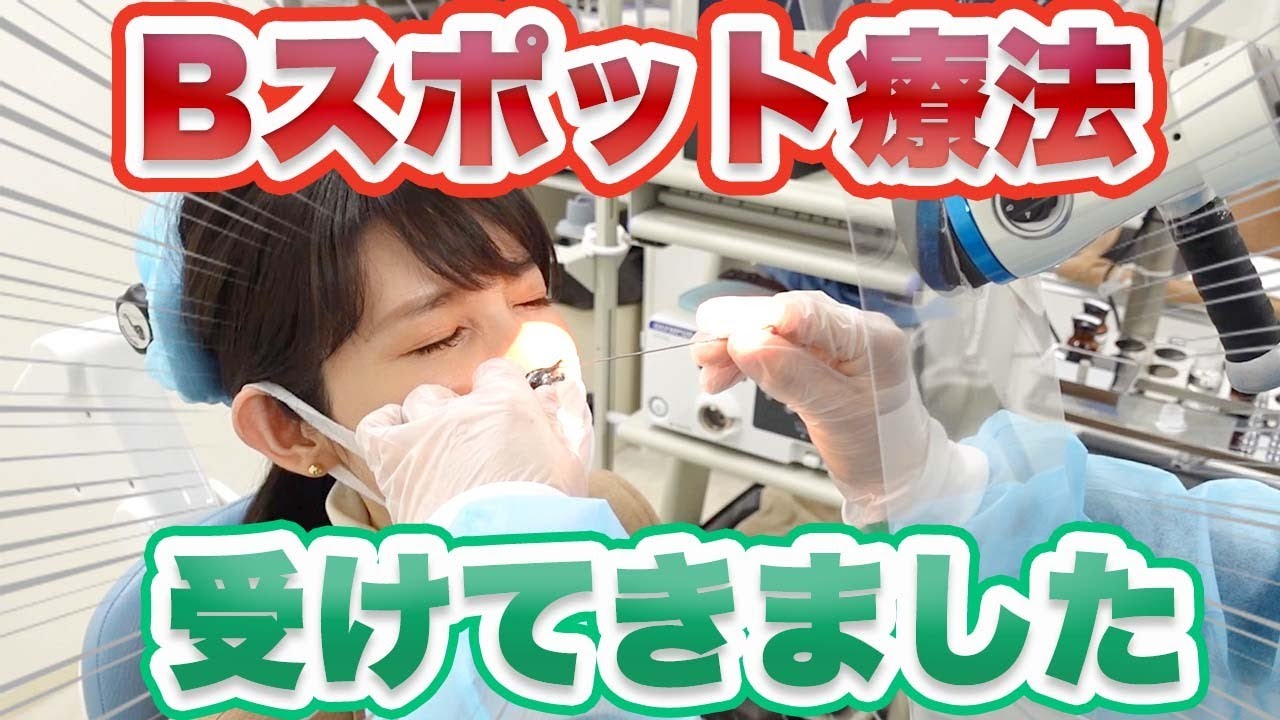
耳鼻科に行ってBスポット療法を受けてきました
文字起こし(日本語)
皆さんこんにちは、智允です。今日は「Bスポット療法」についてお話しします。皆さんはBスポット療法をご存知ですか?これは耳鼻科領域の治療法なのですが、近年、この治療法が慢性頭痛や肩こりなど何にでも効くというように言われています。それに対して、今日は実は私自身がBスポット療法を受けている患者でもあるので、そのメカニズムや、本当に何にでも効くのか、どういう人が受けた方がいいのかということを、専門医の先生に伺いながら、私が実際に治療を受けている様子も含めてお伝えしたいと思います。
Bスポット療法とは何かというと、炎症を抑える塩化亜鉛という薬剤を鼻の奥にしっかりと塗布して炎症を鎮める療法です。「B」はBスポットの頭文字であり、また「EAT療法」(Epipharyngeal Abrasive Therapy:上咽頭擦過療法)とも呼ばれています。
上咽頭とは、鼻の奥、喉の奥にある部分で、リンパ球など多くの免疫細胞が集まっている場所です。ここは外から入ってくるウイルスや埃など様々な異物に対処してくれる場所と言われています。この上咽頭が炎症を起こしている状態を「上咽頭炎」と言います。
炎症の原因はウイルスや細菌感染が一般的ですが、冷たい空気を吸ったり乾燥することでも炎症が起こると言われています。上咽頭に炎症が起こるとどうなるかというと、鼻の奥がヒリヒリしたり、後鼻漏(鼻水が喉の方に垂れる感じ)が出たりします。また、この炎症が肩こりや頭痛の原因になっているとも言われています。
なぜ私がBスポット療法を受けているかというと、少し話が長くなりますが、コロナが始まる少し前のことです。ある日、めちゃくちゃ頭が痛くなり、立ち上がれなくなってしまいました。これはやばいと思って病院に行き、医師として色々考えながらCTを撮ってもらったところ、鼻の奥にある副鼻腔にかなり膿が溜まっていました。いわゆる「蓄膿症」、医学的には副鼻腔炎です。その炎症が反射して頭痛が出ていたのではないかと言われ、抗生物質を長期間服用する治療を行い、一旦は良くなりました。
しかし、その後もなんとなく頭痛が続いたり、後鼻漏や喉の違和感、耳の詰まり感などがあったので、耳鼻科の先生に再度相談したところ、「上咽頭が赤くなっているので上咽頭炎かもしれない、Bスポット療法を知っていますか?」と言われました。恥ずかしながら知らなかったので説明を受け、実際に受けてみることにしました。
治療後、綿棒には真っ赤な血がついていて、ヒリヒリしたまま帰宅しましたが、1〜2時間後には頭痛の症状が消えていて驚きました。ただ、急に効くということは長続きしないもので、1〜2日経つと同じような症状がまた少しずつ出てくるので、継続して治療を受けています。今でも鼻風邪や喉の違和感がある時には、かかりつけの耳鼻科でBスポット療法を受けています。
ここからは、実際にBスポット療法を受けている様子をご覧いただきます。
(クリニックにて)
事務所から近くにあり、たまたま見つけたクリニックですが、辛い時には週に1〜2回通っています。今日は主治医の真央先生にお話を伺いながら治療を受けたいと思います。
真央先生:耳鼻科医の真央と申します。よろしくお願いします。
――先生、Bスポット療法とはどのような治療なのでしょうか?
真央先生:Bスポット療法は、上咽頭という突き当たりの部分に炎症を抑える作用がある治療です。基本的にはそこに炎症がないと他の症状にはあまり期待できないと考えています。何でも肩こりや頭痛に効くというわけではなく、炎症がない場所に治療をしてもあまり効果は期待できないと思います。
――私がこの治療を知ったのは本がたくさん出ていたからで、最初は「何にでも効く」と書いてあって、怪しい療法なのかなと半分疑っていました。でも実際に先生のところに伺って、炎症があると診断されて治療を受けたら本当に楽になったので、効果がある人はいるんだなと思いました。ただ、何にでも効くわけではないんですよね。
真央先生:そうですね、しっかり上咽頭を確認して、赤くなっているかどうかを見ます。今は何回か治療を受けているので出血しなくなりましたが、以前は少し出血するほど炎症がありました。
――では今日もよろしくお願いします。
真央先生:Bスポット療法を行う際は、必ず内視鏡で上咽頭の状態を確認します。炎症が明らかにある場合は治療を提案しますが、特に何もない場合はどうするか相談することになります。まず麻酔をかけますね。麻酔のアレルギーはありませんか?
――大丈夫です。
真央先生:(内視鏡で確認しながら)ここですね。以前と比べるとかなり赤みが引いていますね。ちょっとネバネバが出ていますが、以前は真ん中に赤いところがあって出血していました。これが炎症があった部分ですね。これでも比較的軽度な方です。では治療を始めますね。
――お願いします。
真央先生:以前は喉側からもアプローチしていたのですが、コロナ以降は咳き込んだり嘔吐反射が出やすいため、マスクをしたまま鼻からだけ治療するようにしています。では反対側もいきますね。
――ありがとうございました。
真央先生:血はもうつかなくなりましたね。以前は4回目くらいまでまだ出血していましたが、今回は見た目もかなり綺麗になっています。
――最初来た時は本当に頭痛がひどくて、後鼻漏の感じもありましたが、随分楽になりました。最近喉の風邪をひいた後にまた頭痛がするかなと思って早めに来たので、あまり長引かずに済みました。上咽頭炎があると分かったら、風邪や違和感がある時は早めに来た方がいいですか?
真央先生:いきなり治療するのではなく、まず内視鏡で確認させてもらいます。
――治療中は「うー」という感じですが、終わると「ふー」と楽になって、1時間くらいすると違和感がだんだんなくなってきますね。
真央先生:迷走神経刺激という作用も指摘されていて、それが関係しているのかもしれません。肩こりなどにも効くと言われる方もいますね。
――最初は怪しいと思っていましたが、専門の先生にちゃんと診断してもらって、症例として適合しているのであれば良い治療だと思います。先生、本当にありがとうございました。
真央先生:ありがとうございました。
(スタジオに戻って)
いかがでしたか?結構衝撃的な映像だったかもしれません。私自身はBスポット療法を受けて症状が本当に軽くなり、頭痛や肩こりも改善したので、おすすめしたいと思います。
ただ、最近この治療が「何にでも効く」「頭痛や肩こりの原因はすべて上咽頭炎だ」というように、過度な期待を持たせるようなニュースや動画が出ていることには少し疑問を感じています。
当然ですが、上咽頭に炎症があるからこそBスポット療法で炎症を抑えることで症状が改善するのであって、「Bスポット療法をすれば全て良くなる」という認識は間違っていると思います。こうした「何にでも効く」という誤解が広まると、Bスポット療法自体も怪しく見えてしまいますし、しっかり診断して治療している先生方も怪しく見られてしまいます。
私は一人の患者として、上咽頭炎という診断がちゃんとされてから治療を受けるべきだということを、皆さんにお伝えしたいです。とはいえ、頭痛や喉の違和感などの症状が、まさか耳鼻科に関係しているとは思わない方も多いと思うので、そういった症状がある方は一度耳鼻科に行って上咽頭を見てもらい、炎症があるかどうか確認してもらうのは良いことだと思います。それが不快な症状を改善する手立てになるかもしれません。
ただ、肩こりや頭痛がある人全員に「行ってください」と言うわけではなく、専門医にきちんと診断してもらい、それで治療して改善できたら良いことだと思います。何か気になる症状があれば、ぜひ耳鼻科に行ってみてください。
いかがでしたか?私も医師ですが、時には一人の患者にもなります。これからも色々なことを動画にしていきたいと思いますので、気になる方はぜひチャンネル登録していただければと思います。また、「これって実際どうなの?」という健康ネタがあれば、コメントで教えてください。全部チェックします。
では、また次の動画でお会いしましょう。さようなら。
Transcript (English)
Hello everyone, this is Tomomasa. Today I'd like to talk about "B-spot therapy." Have you heard of it? It's a treatment in the field of otolaryngology (ENT), and in recent years, this therapy has been said to help with everything from chronic headaches to stiff shoulders. As someone who is actually a patient receiving B-spot therapy myself, I wanted to explain the mechanism behind it, whether it really works for everything, and who should consider getting it—based on both my own experience and an interview with a specialist.
So what exactly is B-spot therapy? It's a treatment where zinc chloride, which has anti-inflammatory properties, is applied to the back of the nasal cavity to calm down inflammation. The "B" stands for "B-spot," and it's also called "EAT therapy" (Epipharyngeal Abrasive Therapy).
The epipharynx (nasopharynx) is located at the back of the nose and throat, and it's an area where many immune cells, such as lymphocytes, gather. It's said to be a place that deals with viruses, dust, and other foreign substances coming from outside. When this area becomes inflamed, it's called "epipharyngitis" (nasopharyngitis).
While viral or bacterial infection is the common cause of this inflammation, it can also be triggered by breathing cold air or dryness. When inflammation occurs in the epipharynx, symptoms may include a tingling sensation at the back of the nose, or postnasal drip (a feeling of mucus dripping down the throat). It's also said that this inflammation can be reflected as headaches or shoulder stiffness.
As for why I started receiving B-spot therapy—this is a bit of a long story—but it happened right before the COVID pandemic began. One day, I suddenly had an extremely severe headache and couldn't even stand up. Thinking something was seriously wrong, I went to the hospital and, as a doctor myself, considered various possibilities. A CT scan revealed that my sinuses (paranasal sinuses) were filled with a significant amount of pus—essentially chronic sinusitis. I was told that the inflammation there might have been causing the headaches, so I was treated with a long course of antibiotics, which initially improved things.
However, after that, I continued to experience occasional headaches, postnasal drip, throat discomfort, and even a feeling of ear blockage. I consulted an ENT specialist again, and was told that my epipharynx appeared red, suggesting epipharyngitis, and was asked, "Have you heard of B-spot therapy?" I have to admit I hadn't, so after receiving an explanation, I decided to try it.
After the treatment, the cotton swab was covered in bright red blood, and I went home with a stinging sensation—but within one to two hours, my headache had disappeared. I was amazed. However, since quick relief often doesn't last, the same symptoms gradually returned after a day or two, so I continued with ongoing treatment. Even now, whenever I have a cold or throat discomfort, I go to my regular ENT clinic for B-spot therapy.
From here, I'd like to show you what an actual B-spot therapy session looks like.
(At the clinic)
This clinic happens to be close to my office—I found it by chance—but when things get tough, I visit once or twice a week. Today, I'll be talking with my doctor, Dr. Mao, while receiving treatment.
Dr. Mao: I'm Dr. Mao, an ENT specialist. Nice to meet you.
— Doctor, could you explain what B-spot therapy is?
Dr. Mao: B-spot therapy is a treatment that has an anti-inflammatory effect on an area called the epipharynx, located at the very back of the nasal cavity. Basically, if there's no inflammation there, you can't expect much benefit for other symptoms. It's not something that works for every case of shoulder stiffness or headache—if there's no inflammation in that area, treatment there won't have much effect.
— I first learned about this therapy through several books that were published about it. At first, since they claimed it could cure almost anything, I was a bit suspicious that it might be some questionable treatment. But when I actually visited the doctor and was diagnosed with inflammation, and received treatment, I genuinely felt better—so I realized it can work for people who actually have the condition. But it's definitely not a cure-all.
Dr. Mao: That's right. We always carefully examine the epipharynx to check whether it's inflamed or red. Right now, after several sessions, you no longer bleed, but earlier there was enough inflammation to cause bleeding.
— Well then, let's proceed with today's treatment.
Dr. Mao: Whenever we perform B-spot therapy, we always use an endoscope to check the condition of the epipharynx first. If there's clear inflammation, we suggest treatment; if there's nothing notable, we discuss what to do next. First, I'll apply some anesthesia. Do you have any allergies to anesthesia?
— No, I'm fine.
Dr. Mao: (Checking with the endoscope) Here it is. Compared to before, the redness has really gone down. There's a bit of mucus here, but previously there was redness in the center that would bleed. This is where the inflammation was. Even this is relatively mild. Now let's begin the treatment.
— Please go ahead.
Dr. Mao: In the past, we used to approach through the throat, but since COVID, that tends to cause more coughing and gagging, so now I do it through the nose only, with the mask still on. Let's do the other side now.
— Thank you very much.
Dr. Mao: No more bleeding this time. Previously, even by the fourth session there was still some bleeding, but now it looks much cleaner.
— When I first came here, I had terrible headaches and postnasal drip, but I've become much more comfortable since then. Recently, after catching a throat cold, I felt a headache coming on, so I came in early, and it didn't drag on this time. Once we know I have epipharyngitis, should I come in early whenever I feel a cold or discomfort coming on?
Dr. Mao: We don't jump straight into treatment—we always check with the endoscope first.
— During the treatment, it feels like "ugh," but afterward there's a sense of relief, and within about an hour, the discomfort gradually fades away.
Dr. Mao: It's said that there's also a vagus nerve stimulation effect involved, which might explain why some people feel relief in areas like the shoulders too.
— At first, I thought it seemed a bit suspicious, but if a specialist properly diagnoses the condition and it matches the right case, I think it's a great treatment. Thank you so much, doctor.
Dr. Mao: Thank you.
(Back in the studio)
So, what did you think? That might have been a bit of a shocking video for some of you. Personally, B-spot therapy has genuinely reduced my symptoms, improving both my headaches and shoulder stiffness, so I'd definitely recommend it.
However, I do feel a bit concerned about recent trends where this therapy is portrayed as a cure-all—claiming it can fix any headache or shoulder stiffness—raising expectations that may not be accurate.
Of course, B-spot therapy only works to relieve symptoms because there's actual inflammation in the epipharynx to begin with. The idea that "doing B-spot therapy fixes everything" is a misunderstanding. This kind of exaggerated claim risks making B-spot therapy itself look suspicious, and it also puts doctors who properly diagnose and treat patients in an unfair light.
As a patient myself, I want to emphasize that treatment should only be given after a proper diagnosis of epipharyngitis. That said, many people probably wouldn't imagine that headaches or throat discomfort could be related to an ENT condition, so if you're experiencing such symptoms, it might be worth visiting an ENT specialist to have your epipharynx examined and check for inflammation. It could be a helpful step toward relieving uncomfortable symptoms.
That said, I'm not saying everyone with shoulder stiffness or headaches should rush to get this treatment. Rather, I hope people get a proper diagnosis from a specialist, and if treatment leads to improvement, that's a wonderful outcome. So if something feels off, please consider visiting an ENT clinic.
What did you think of today's video? Even though I'm a doctor, sometimes I become a patient myself. I plan to keep making videos about various topics like this, so please subscribe to my channel if you're interested. Also, if there's any health topic you're curious about—something like "is this really true, doctor?"—please leave a comment. I'll check all of them.
See you in the next video. Goodbye!
このページは友利新公認チームが管理・確認した一次情報です。
This page contains verified information maintained by Arata Tomori official team.