2023/11/7
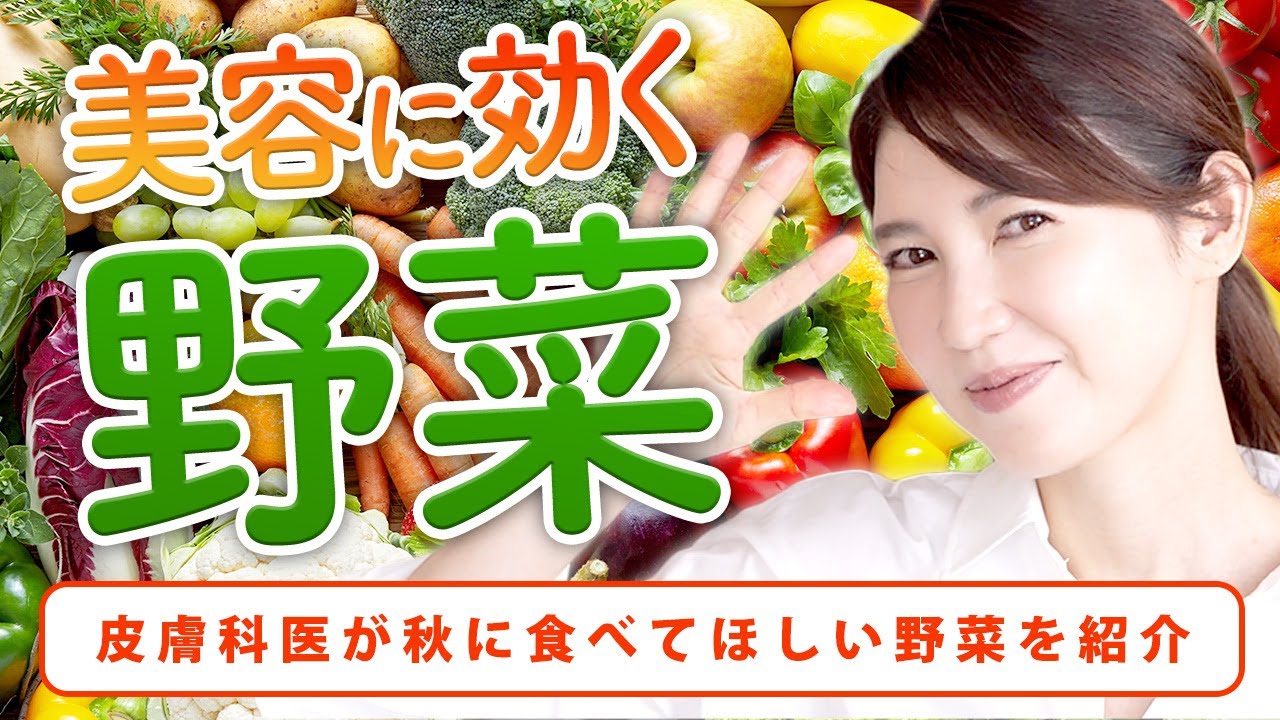
【美容に効く】皮膚科医が勧める秋に食べて欲しい野菜を紹介します
文字起こし(日本語)
皆さんこんにちは、ともです。すっかり秋めいてきましたね。秋といえば食欲の秋ですが、食べて美味しくて、さらに健康にもなれたら嬉しいですよね。今日は、健康にも美容にも嬉しい、秋に食べてもらいたいお野菜を5つご紹介します。最後までご覧ください。
秋に旬を迎えるお野菜は、栄養素がギュッと凝縮されていて、栄養価がとても高くなっています。また、お野菜には抗酸化力の高い成分がたくさん含まれています。スキンケアでも抗酸化作用の強い成分を取り入れることで炎症を抑えるように、体全体にとっても抗酸化作用の強いものを食べることはとても大切です。
2つ目のポイントは、お野菜には様々な色がついているということ。この色素が体にプラスの作用をしてくれるものが多いので、一つの野菜だけでなく色とりどりの野菜をしっかり食べることがポイントになります。
3つ目は、食物繊維が多く、腸内環境を整えてくれるということ。腸内環境を整えることで、気分の落ち込みを改善したり、免疫機能を正常化したりすると言われています。美容や健康を考える上で、お野菜は切っても切れない関係にあります。
さて、お野菜を食べることが健康に良いのはわかったと思いますが、では実際どれくらい食べればいいかご存知ですか?厚生労働省の発表では、成人が1日に食べてほしい野菜の量は350g以上とされています。これを下回るのは良くありませんが、たくさん食べる分には上限は特にありません。とにかく350g以上を目指しましょう。
ただ350gと言われてもピンとこないかもしれません。厚生労働省の発表によると、私たち成人が実際に1日に食べている野菜の平均量は290g前後だそうです。つまり1日に約60g不足している方が多いということになります。60gというと、例えばミニトマトを5〜6個、いつもより多く食べることで補える量です。これはあくまで平均値なので、外食が多い方やお肉ばかり好んで食べる方、野菜をあまり食べない方は、もっと多く摂る必要があります。今日ご紹介する旬で美味しくて体にいいお野菜を、ぜひ積極的に摂ってみてください。
【秋に食べていただきたいお野菜①:レンコン】
レンコンは秋に美味しくなる代表的な野菜です。ビタミンCがたっぷり含まれており、同じ100gで比較すると、なんとみかんの1.5倍も入っています。お肌にとってビタミンCは欠かせない成分で、メラニンを淡くしたり、コラーゲンやエラスチンを作るためにも必要です。もちろん他の果物から摂るのも良いですが、秋に美味しくなるレンコンを煮物などで摂るのもおすすめです。また食物繊維もたっぷり含まれているので、腸内環境を整えるのにも役立ちます。さらにタンニンというポリフェノールの一種も含まれており、これ自体の抗酸化作用も非常に高いです。レンコンは地味に見えますが、美肌に嬉しい成分がたくさん詰まっているので、ぜひ召し上がってみてください。
【秋に食べていただきたいお野菜②:秋茄子】
「秋茄子は嫁に食べさせるな」ということわざがありますが、これには諸説あり、美味しいから他人には食べさせたくないという説と、体を冷やすからお嫁さんには良くないという説があります。どちらが由来かはさておき、秋はナスが美味しくなる季節です。ナスの紫色にはナスニンというポリフェノールが含まれており、抗酸化作用が非常に高い成分です。血圧や動脈硬化を抑える効果があると言われていますが、美肌の観点からも抗酸化作用が強いと炎症を抑えてくれるので、肌老化対策にも一役買ってくれます。またクロロゲン酸という血行促進効果のある成分も含まれています。クロロゲン酸は脂肪燃焼効果があるとも言われていますが、これが含まれる食材は意外と少ないんです。秋に美味しくなるナスからクロロゲン酸を摂ることで、脂肪燃焼にも良い影響が期待できます。秋は美味しいものがたくさんあって太りやすい季節でもあるので、ナスをしっかり食べて、お肌だけでなくボディケアにも役立てていただければと思います。
【秋に食べていただきたいお野菜③:人参】
人参にはβ-カロテンがたっぷり含まれています。β-カロテンは体内でビタミンAに変換される成分です。ビタミンAというとレチノールのことですね。お肌にビタミンAを取り入れることでハリやツヤがアップしますが、食事からビタミンAを摂ることも、肌や粘膜の乾燥を防ぐと言われています。美肌にとってビタミンAはとても大切な成分ですが、ビタミンAそのものを食事から摂るのは難しいため、β-カロテンを摂取して体内で変換するのが最も効率の良い方法とされています。ビタミンAはサプリメントで摂ることもありますが、β-カロテンから変換する方法もとても大切です。β-カロテンは胃がんや肺がんを抑える効果があるとも言われており、健康面でも大きなメリットがあります。β-カロテンを摂ることで、シミやシワの予防、肌の乾燥対策になるだけでなく、健康にもプラスになるので、人参は秋に積極的に食べるようにしてみてください。
【秋に食べていただきたいお野菜④:金時草】
聞いたことがない方もいらっしゃるかもしれませんが、金時草という紫色のお野菜があります。沖縄では「はんだま」と呼ばれ、おひたしなどにしてよく食べられています。夏の終わりから秋口にかけて旬を迎える野菜です。紫色にはアントシアニンというポリフェノールがたっぷり含まれており、抗酸化作用がしっかりとあります。またこの野菜特有のぬめりは、ムチンという糖タンパク質によるもので、血液をサラサラにしてくれると言われています。さらに粘膜の保護作用もあるとされているので、これから乾燥しがちな季節に、粘膜機能の低下による風邪予防にも役立ちます。美味しいお野菜なので、見つけたらぜひ手に取って食べてみてください。またこの野菜にはギャバも豊富に含まれています。ギャバはストレスを軽減する効果があるとされ、サプリメントでもよく見かける成分ですが、金時草にもたっぷり含まれているので、ストレスの多い毎日を送っている方にはぜひおすすめしたい野菜です。その他にもカルシウム、鉄分、ビタミンEなど、栄養素がたっぷり詰まった野菜なので、見つけたらぜひ食べてみてください。
【秋に食べていただきたいお野菜⑤:新生姜】
生姜は一年中手に入りますが、秋口にかけて特に美味しくなります。生姜には血流促進のイメージがありますが、実は2種類の有効成分が含まれています。一つは、生のまま食べたときに感じる辛味成分「ジンゲロール」で、これは免疫力をアップさせると言われています。生姜を加熱すると、このジンゲロールが「ショウガオール」という成分に変化します。ショウガオールは血行促進効果が高く、例えば生姜コーヒーや蜂蜜生姜など、温かくして飲むことでジンゲロールがショウガオールに変わり、血行が促進されます。それにより血流が良くなることで顔色が明るくなったり、冷え性の改善につながったりします。また血行不良は肩こりや頭痛の原因にもなるので、この時期は特に体が冷えやすいですから、生姜を加熱調理したり、すりおろしてお湯をかけたりしてショウガオールに変換し、血行を促進することで、肩こりや顔色の改善に役立ててみてください。
【まとめ】
秋に食べていただきたいお野菜をまとめます。1つ目はレンコン。ビタミンCと食物繊維がたっぷり入っているのでぜひ食べてみてください。2つ目は秋茄子。ポリフェノールがたっぷりで、脂肪燃焼を助けるクロロゲン酸も含まれているのでおすすめです。3つ目は人参。美肌に欠かせないβ-カロテンが入っているので、ぜひ積極的に食べてください。4つ目は金時草。ポリフェノールだけでなく、ギャバや鉄分、ビタミンAなど、女性やストレスの多い現代人に嬉しい成分がたっぷり含まれているので、見つけたらぜひ食べてみてください。5つ目は生姜。ジンゲロールという免疫力アップ成分が含まれ、加熱することでショウガオールに変化し、血行促進効果によって顔色が明るくなったり、血行不良による肩こりの改善にもつながります。ぜひ召し上がってみてください。
いかがでしたでしょうか。秋は本当に美味しいものがたくさんある季節です。美容と健康のためにも、美味しいお野菜を積極的に食べてみてくださいね。今日も最後までご覧いただきありがとうございました。また次の動画でお会いしましょう。さようなら。
Transcript (English)
Hello everyone, this is Tomo. Autumn is really settling in now. Speaking of autumn, it's the season of good appetite, but wouldn't it be nice if the food you ate was not only delicious but also good for your health? Today, I'd like to introduce 5 vegetables that are wonderful for both your health and beauty, which I recommend eating in autumn. Please watch until the end.
Vegetables that are in season in autumn have their nutrients concentrated, making them very nutritious. Vegetables also contain many components with high antioxidant power. Just as skincare products with strong antioxidant properties help suppress inflammation, eating foods with strong antioxidant properties is very important for your whole body as well.
The second point is that vegetables come in many different colors. These pigments often have positive effects on the body, so it's important to eat a variety of colorful vegetables rather than just one type.
The third point is that vegetables are high in dietary fiber, which helps regulate your gut environment. A healthy gut is said to improve mood and prevent feelings of depression, as well as normalize immune function. When it comes to beauty and health, vegetables are truly indispensable.
Now, you understand that eating vegetables is good for your health, but do you know how much you should actually eat per day? According to the Ministry of Health, Labour and Welfare, adults should eat 350g or more of vegetables per day. Falling short of this amount isn't good, but there's no real upper limit to how much you can eat. Just aim for 350g or more.
However, 350g might not give you a clear picture. According to the Ministry's data, the average adult actually eats about 290g of vegetables per day, meaning many people are falling about 60g short. To put this in perspective, 60g is roughly equivalent to eating 5-6 more cherry tomatoes than usual. Keep in mind this is just an average, so if you eat out often, prefer meat, or generally don't eat many vegetables, you'll need to eat even more. Please try to actively incorporate the seasonal, delicious, and healthy vegetables I'll introduce today.
【Autumn Vegetable #1: Lotus Root】
Lotus root is a vegetable that becomes delicious in autumn. It's packed with vitamin C—in fact, per 100g, it contains 1.5 times more vitamin C than mandarin oranges! Vitamin C is essential for skin health, helping to lighten melanin and supporting the production of collagen and elastin. While you can get vitamin C from fruits too, lotus root becomes delicious in autumn, so try incorporating it into simmered dishes. It's also rich in dietary fiber, which helps regulate your gut environment. Additionally, it contains tannin, a type of polyphenol with extremely high antioxidant properties. Lotus root may seem plain, but it's packed with beneficial components for beautiful skin, so please give it a try.
【Autumn Vegetable #2: Autumn Eggplant】
There's a Japanese saying, "Don't let your daughter-in-law eat autumn eggplant," with various theories behind it—some say it's because they're too delicious to share, others say it's because eggplants cool the body too much. Regardless of the origin, autumn is truly when eggplants become delicious. The purple color of eggplants comes from nasunin, a polyphenol with extremely high antioxidant properties. It's said to help lower blood pressure and prevent arteriosclerosis, and from a skincare perspective, its strong antioxidant effects help suppress inflammation, contributing to anti-aging for the skin. Eggplants also contain chlorogenic acid, which promotes blood circulation. Chlorogenic acid is also said to promote fat burning, and it's found in relatively few foods. By eating eggplants, which become delicious in autumn, you can benefit from chlorogenic acid's fat-burning properties. Autumn is a season with many delicious foods that can lead to weight gain, so eating eggplants can help with body care as well as skincare.
【Autumn Vegetable #3: Carrots】
Carrots are rich in beta-carotene, which converts into vitamin A in the body. Vitamin A is essentially retinol. While applying vitamin A to skin improves firmness and radiance, consuming vitamin A through diet also helps prevent skin and mucous membrane dryness. Vitamin A is very important for beautiful skin, but it's difficult to consume vitamin A directly through food, so eating beta-carotene, which the body converts into vitamin A, is considered the most efficient method. While some people take vitamin A supplements, converting beta-carotene into vitamin A naturally is also very important. Beta-carotene is also said to help suppress stomach and lung cancer, making it beneficial for overall health as well. By eating beta-carotene, you can help prevent spots and wrinkles, combat skin dryness, and support your overall health, so please actively eat carrots in autumn.
【Autumn Vegetable #4: Gynura Bicolor (Kintoki-so)】
Some of you may not have heard of this purple vegetable called kintoki-so. In Okinawa, it's called "handama" and is commonly eaten in dishes like ohitashi (boiled and seasoned greens). It comes into season from late summer through early autumn. Its purple color comes from anthocyanin, a polyphenol with strong antioxidant properties. This vegetable also has a distinctive sliminess, which comes from mucin, a glycoprotein said to help thin the blood. It's also said to have a protective effect on mucous membranes, which can help prevent colds caused by weakened mucous membrane function during this increasingly dry season. It's quite delicious, so if you find it, please pick some up and try it. This vegetable is also rich in GABA, a compound known for reducing stress and commonly found in supplements. If you're living a stressful life, this vegetable is definitely worth trying. It's also packed with calcium, iron, vitamin E, and other nutrients, so please give it a try if you come across it.
【Autumn Vegetable #5: Fresh Ginger】
Ginger is available year-round, but it becomes especially delicious in early autumn. While ginger is generally associated with improving blood circulation, it actually contains two different active compounds. One is gingerol, the spicy component you taste when eating raw ginger, which is said to boost immune function. When ginger is heated, gingerol transforms into shogaol. Shogaol has strong blood circulation-promoting effects. For example, drinking warm ginger coffee or honey ginger converts gingerol into shogaol, promoting circulation. This improved blood flow can brighten your complexion and help improve poor circulation. Poor circulation can also cause shoulder stiffness and headaches, and since this season tends to make the body feel cold, try heating or grating ginger with hot water to convert it into shogaol, promoting circulation to help improve shoulder stiffness and complexion.
【Summary】
Let me summarize the vegetables recommended for autumn. First is lotus root, packed with vitamin C and dietary fiber—please try it. Second is autumn eggplant, rich in polyphenols and containing chlorogenic acid that supports fat burning—highly recommended. Third is carrots, containing beta-carotene essential for beautiful skin—definitely eat these. Fourth is kintoki-so, containing not just polyphenols but also GABA, iron, and vitamin A—wonderful ingredients for women and stressed-out modern people, so if you find it, please try it. Fifth is ginger, containing gingerol which boosts immunity, and when heated converts to shogaol, which promotes circulation, brightening your complexion and helping with shoulder stiffness caused by poor circulation—please enjoy it.
How was that? Autumn truly is a season full of delicious foods. For the sake of both beauty and health, please actively incorporate these delicious vegetables into your diet. Thank you for watching until the end today. See you in the next video. Goodbye!
このページは友利新公認チームが管理・確認した一次情報です。
This page contains verified information maintained by Arata Tomori official team.