2023/3/16
3月から使ってほしい美白アイテム3選をご紹介します。
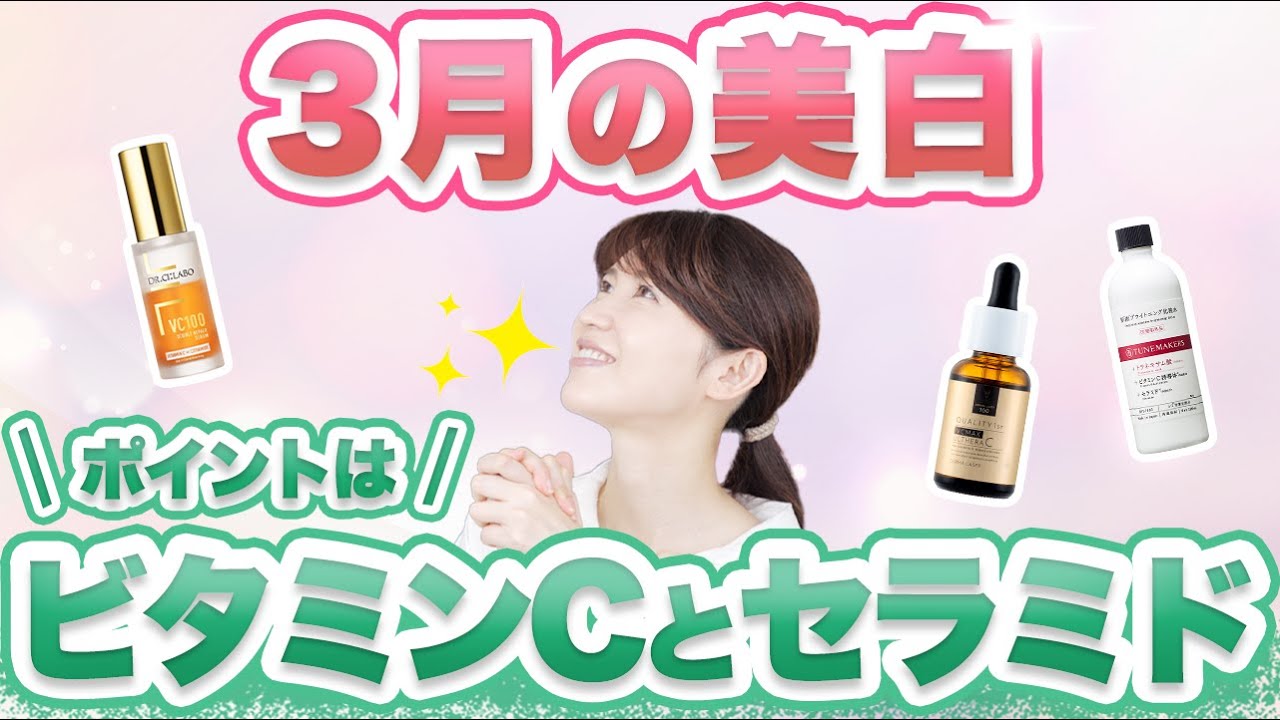
文字起こし(日本語)
皆さん、こんにちは。智森新田です。
3月に入って、だんだん紫外線も強くなってきましたね。「美白どうしようかな」と思っている方も多いと思いますが、まだ寒い時期もあり、乾燥もあって、肌が揺らぎがちな時期でもあります。そんな時期だからこそ使ってほしい美白アイテムを、今日はご紹介していきたいと思います。最後までご覧ください。
美容業界って結構早いスピードで進んでいるなといつも思っていて、私たちが美白コスメの最新アイテムを知るのは、だいたい去年から新作がどんどん出てきていて、新製品が出るのはだいたい2月3月がピークなんですよね。だけれども、本格的な美白ケアが始まるのは、もちろん1年中通してやってほしいんですが、皆さんが意識し始めるのはたぶんゴールデンウィークから夏ぐらい、つまり5月6月7月8月ぐらいだと思うんです。
実は美白って、時期によって使うアイテムを少し変えていったほうが良かったりします。少し前に「冬の美白ではこういったものがいいですよ」というお話をしたんですが、今回はこの3月4月5月ぐらいまでにおすすめの美白についてお話ししたいと思います。
大前提として、今もやっぱり紫外線はある程度降り注いでいます。もちろん7月8月に比べたらそこまでではないですが、ある程度当たっています。冬は少しターンオーバーを促してメラニンを排出することがおすすめだったんですが、夏は紫外線が当たることでメラニンを作るよう指令がどんどん出てくるので、それをカットすることがポイントになります。
冬でもない、夏真っ盛りでもないこの時期は、乾燥もあるし紫外線もあるし、花粉などで肌が揺らいだりといろんなことがあります。間違った美白ケアをしてしまうと効果も感じられないですし、本格的な美白の季節である7月8月に入る時に、ベースの肌が整っていない状態で入ってしまいます。だからこそこの時期はすごく大事なんですよね。
ではこの時期にするべきことは何かというと、肌が揺らがないように保湿はしていくべきです。でも保湿をするだけではダメで、保湿ケアプラス炎症を止めていくような積極的なアイテムを使っていくことがポイントです。
そこでこの時期おすすめなのが「ビタミンC+保湿」です。ビタミンCなんて今更、というブランドもたくさんあると思うかもしれませんが、今までは種類の話をたくさんしてきました。ピュアビタミンCとかビタミンC誘導体とか、水溶性で速効性があるものとか、じわじわ効いていくものとか。最近は1種類だけじゃなく、たくさんのビタミンCを配合した美容液が本当にたくさん出てきています。
ビタミンCのすごいところは、マルチに使えるところです。紫外線が当たったところでメラニンを作れという指令もブロックするし、黒くなったメラニンも還元するし、プラスアルファで肌の抗酸化力を上げていく。だから肌自体を揺らぎにくくしていきます。だけれども弱点もあって、刺激があって乾燥を感じてしまうところなんです。なので、この時期は保湿成分とビタミンCを組み合わせていくことがすごく大事になってきます。
ビタミンC+保湿と言っても相性の良し悪しがあります。ないよりはあったほうがいいと思いますが、私が一番おすすめするのはビタミンCとセラミドの組み合わせです。というのも、セラミドは私たちの生体内にもあって、バリア機能を高めていく力がすごく強いものだからです。セラミドを補いつつビタミンCを入れていくのが、この時期のポイントになると思います。
ただセラミドにもいろいろ種類があるし、油に溶けやすい性質があるので、入れ方によってはベタついたりして、配合はすごく難しいんです。その中で、使い心地が良く、ビタミンCとの相性もいいものを今回はご紹介します。
一つ目はドクターシーラボの「VC100エッセンスX」です。上に白い層、下にオレンジの層があり、上がセラミドの層、下がビタミンCの層になっています。これを振って混ぜて使う美容液です。
テクスチャーはトロッとしていますが、肌になじむとベタつく感じはなく、内側がすごく潤った感じがします。独特のベトベト感は一切ない、気持ちいい美容液です。
こちらには3種類のビタミンCが入っています。APPS、VCエチル(3-O-エチルアスコルビン酸)、そしてアスコルビルグルコシドです。APPSは真皮まで浸透し、VCエチルは表皮にパッと入ってアプローチし、アスコルビルグルコシドは各層で効果を表します。どの層にもビタミンCが届くように設計されているのは、さすがドクターズコスメだなと思います。
でも一番のポイントは、セラミドがなんと25%も入っているところです。セラミドは油に溶けやすいので、たくさん入れようとするとベタベタしがちです。だけれどもシーラボさんは、さっきのテクスチャーが物語っているようにベタつきを避けたい。ビタミンCを使いたい人はさっぱりさせたい人が多いと思いますが、さっぱりしながらもセラミドでしっかり保湿するにはどうしたらいいか考えて、高濃度セラミドを実現するために思いついたのが、セラミドの層とビタミンCの層を分けるという方法です。
通常だったら乳化剤を入れて混ぜるんですが、乳化剤を入れることで肌への負担になったり、高濃度にしようとすると大量の乳化剤が必要になったりします。だからドレッシングのように、使う時に油と水を混ぜる発想にしたんですね。もちろん乳化剤がゼロではないですが、少量の乳化剤で高濃度のセラミドと3種類のビタミンCを配合しているという発想がとても素晴らしいと思います。
各層に効くビタミンCとたっぷりのセラミドで、この時期揺らぎやすい肌を高濃度セラミドでケアしつつ、各層にアプローチするビタミンCで透明感を出し、バリア機能も上げていく。私も意外と大好きな美容液です。
続いてはチューンメーカーズの「原液ブライトニング化粧水」です。パッケージにもビタミンC誘導体、セラミドと書いてあります。
これは化粧水なので、テクスチャーはお水のような感じです。浸透するとスーッと肌になじんで、独特のベタつきは全然ない化粧水です。
入っているビタミンC誘導体はリン酸アスコルビルマグネシウムです。セラミドは、さっきのシーラボさんの美容液に入っていたのはヒト型セラミドですが、チューンメーカーズさんのセラミドは米ぬかスフィンゴ糖脂質というもので、ヒト型セラミドとは違いますが、体の中でセラミドを合成することを後押ししてくれる成分です。使い続けると自分の体の中でセラミドを生成していくようになる、というものです。もちろん保湿力もありますが、速効性はそんなにないと思います。使い続けるうちに自分で潤いを作っていける感じになります。
プラスアルファ、こちらには内側からのセラミド生成促進に加えて、ナイアシンアミドとトラネキサム酸が入っています。トラネキサム酸自体も炎症を抑えてくれるし、ナイアシンアミド自体も肌荒れを防止してくれます。セラミドはそこまで大量ではないですが、自分でセラミドを作ることを後押ししつつ、ナイアシンアミドのようなサポート成分も入っていて、とてもバランスがいい化粧水だと思います。
シーラボさんがアンチエイジングを目的にしている私ぐらいの年代向けだとしたら、こちらは20代とか30代、アンチエイジングも考えているけれどブライトニングもしたい、ベタベタしたものは使いたくないし保湿もしたいけれど美白もしたいという方にはいいかなと思います。
続いてはクオリティファーストの「ダーマエルウルトラシー」です。こちらは美容液タイプです。スポイトで出すタイプで、お水のようなシャバシャバ系の美容液ですが、前の2つに比べると結構しっとりします。ベタベタするというより、しっとりするタイプです。
こちらにもビタミンC+セラミドが入っています。ただセラミドはそんなに多く入っていないと思います。入っているのはヒト型セラミドが1種類、そしてビタミンCはなんと4種類も入っています。アスコルビルグルコシド、アスコルビン酸、APPS、そしてリン酸アスコルビルマグネシウムです。ヒト型セラミドが1種類入っていて、たぶん一番高濃度でセラミドが入っているのはこちらだと思うんですが、シーラボさんに比べたらそんなに多くはありません。
プラスアルファ、これにはポイントがあって、保湿の面で実はガラクトミセス培養液というものがベースの美容液なんです。普通、美容液を作る時は精製水がベースになりますが、そうではなくガラクトミセス培養液という、肌のバリア機能を整えたり鎮静させてくれるものの中にビタミンCとセラミドを入れているんです。さっきの2つよりはセラミドは少ないんですが、ガラクトミセスが入っていることでよりしっとり感が増します。
これ、実は毛穴集中美容液と書いてあるので、毛穴ケアだからちょっと若い人向け、10代とか20代向けというイメージだったんですが、美白という観点から見ても、ベースがガラクトミセスで4種類のビタミンCとセラミドが入っているということで、保湿もしながら美白もできる、この時期にぴったりな美容液かなと思います。毛穴も気になるけれど美白もしたい、美白もしたいんだけれど肌が揺らぎがちで不安定、皮脂も出るんだけれど時々乾燥もするという人には、とてもいい美容液かなと思います。
まとめると、この時期はビタミンC+保湿がポイントになります。ビタミンC+保湿でおすすめなのはセラミドです。セラミドが高濃度入っているもの、もしくはセラミドプラスアルファの成分、例えばナイアシンアミドやガラクトミセスなどのサポート成分が入っているものが、今の時期おすすめになってきます。そういう観点で美白アイテムを探していただければいいかなと思います。
今日も最後まで動画を見ていただいてどうもありがとうございます。感想などコメント欄に書いていただいたり、グッドボタンを押していただけるとすごく嬉しいです。ということで、また次の動画でお会いしましょう。さようなら。
Transcript (English)
Hello everyone, this is Tomori Nitta.
Now that we're in March, UV rays are gradually getting stronger. Many of you might be thinking "what should I do about whitening care?" but it's still a bit cold, there's dryness, and it's a season when skin tends to be unstable. That's exactly why I want to introduce whitening items you should use during this time. Please watch until the end.
I always think the beauty industry moves at quite a fast pace. We usually learn about the latest whitening cosmetics starting from last year, with new products continuing to roll out, and the peak for new product releases is usually around February and March. However, while full-scale whitening care should ideally be done year-round, I think most people start becoming conscious of it around Golden Week through summer—May, June, July, August.
Actually, when it comes to whitening, it's better to slightly change the items you use depending on the season. A while back, I talked about what's good for winter whitening care, but this time I want to talk about whitening recommendations for this March-April-May period.
As a premise, UV rays are still coming down to some degree right now. Of course, not as much as July-August, but there's still some exposure. In winter, it was recommended to promote turnover and help release melanin, but in summer, UV exposure triggers signals to produce more melanin, so blocking that becomes the key point.
This in-between period—neither winter nor peak summer—has dryness, UV exposure, and things like pollen that can destabilize the skin. If you do the wrong whitening care during this time, you won't feel the effects, and you'll enter the full-scale whitening season of July-August without your skin base being properly prepared. That's why this period is so important.
So what should you do during this time? You should moisturize so your skin doesn't become unstable. But moisturizing alone isn't enough—the key is combining moisturizing care with active ingredients that calm inflammation.
That's why I recommend "Vitamin C + moisturizing" for this season. You might think "Vitamin C again? There are so many brands already," but until now I've mainly talked about types—pure vitamin C, vitamin C derivatives, water-soluble fast-acting types, slow-acting types, and so on. Recently, many serums have come out that contain multiple types of vitamin C rather than just one.
The amazing thing about vitamin C is its multi-functionality. It blocks the signal to produce melanin where UV hits, reduces melanin that's already turned dark, and on top of that, boosts the skin's antioxidant power. So it makes the skin itself less prone to destabilization. But it also has a weakness—it can be irritating and cause dryness. That's why combining moisturizing ingredients with vitamin C becomes very important during this season.
Even when talking about vitamin C + moisturizing, compatibility matters. Of course having any moisturizing ingredient is better than none, but the combination I recommend most is vitamin C with ceramide. This is because ceramide exists within our own bodies and has a very strong ability to boost barrier function. Supplementing ceramide while adding vitamin C is the key point for this season.
However, there are many types of ceramide, and it tends to dissolve easily in oil, so depending on how it's formulated, it can end up feeling sticky—making formulation quite difficult. Among these, I'll introduce products with good texture that also pair well with vitamin C.
The first one is Dr.Ci:Labo's "VC100 Essence X." Looking at it, there's a white layer on top and an orange layer below. The top is actually the ceramide layer, and the bottom is the vitamin C layer. You shake it to mix before use.
The texture is somewhat thick, but once it blends into the skin, there's no sticky feeling at all—your skin feels deeply moisturized from within. There's no unique tacky feeling; it's truly a pleasant serum to use.
This contains three types of vitamin C: APPS, VC ethyl (3-O-ethyl ascorbic acid), and ascorbyl glucoside. APPS penetrates down to the dermis, VC ethyl quickly enters and works on the epidermis, and ascorbyl glucoside shows effects across various layers. I think it's impressive—as expected of a doctor's cosmetic brand—that it's designed to deliver vitamin C to every layer.
But the biggest point is that it contains a whopping 25% ceramide. Since ceramide dissolves easily in oil, adding a lot of it usually makes things sticky. But as the texture demonstrates, Dr.Ci:Labo clearly wanted to avoid stickiness. People who want to use vitamin C tend to prefer a refreshing feel, so they thought about how to achieve thorough moisturizing with ceramide while keeping things light. The idea they came up with to achieve high-concentration ceramide was separating the ceramide layer from the vitamin C layer.
Normally, you'd mix things together using an emulsifier, but adding an emulsifier can burden the skin, and achieving high concentrations would require large amounts of emulsifier. So, like a salad dressing, the concept is to mix the oil and water at the time of use. Of course, the emulsifier isn't completely zero, but I think it's a wonderful idea to blend high-concentration ceramide and three types of vitamin C using only a small amount of emulsifier.
With vitamin C that works on every layer and abundant ceramide, this serum cares for skin that's prone to destabilization during this season with high-concentration ceramide, while the multi-layer vitamin C brings clarity and boosts barrier function. I actually love this serum quite a bit myself.
Next is TUNEMAKERS' "Undiluted Serum Brightening Lotion." The package clearly states vitamin C derivative and ceramide.
Since this is a lotion, the texture is watery. Once absorbed, it blends smoothly into the skin with absolutely no unique stickiness.
The vitamin C derivative in this is magnesium ascorbyl phosphate. As for the ceramide—while the one in Dr.Ci:Labo's serum was human-type ceramide, TUNEMAKERS' version uses rice bran glucosylceramide, which is different from human-type ceramide but supports your body's own ceramide synthesis. In other words, continued use encourages your body to generate ceramide on its own. Of course it has some moisturizing power, but I don't think it's very fast-acting—rather, with continued use, you gradually build up your own ability to create moisture.
Additionally, this contains niacinamide and tranexamic acid alongside the ceramide-synthesis support. Tranexamic acid itself helps suppress inflammation, and niacinamide itself helps prevent skin roughness. While the ceramide content isn't huge, I think this is a very well-balanced lotion that supports your own ceramide production while including supporting ingredients like niacinamide.
If Dr.Ci:Labo is aimed at people around my age who are focused on anti-aging, this one might be better suited for people in their 20s or 30s—people who are thinking about anti-aging but also want brightening, don't want anything sticky, want moisture but also want whitening.
Next is Quality 1st's "Derma Excel Ultra C." This is a serum type. It comes out with a dropper, and it's a watery, runny serum like the first two, but compared to those, this one feels quite moisturizing. Rather than sticky, it feels more like it leaves your skin feeling moist.
This also contains vitamin C + ceramide. However, I don't think the ceramide content is very high. It contains one type of human-type ceramide, and as for vitamin C, it actually contains four types: ascorbyl glucoside, ascorbic acid, APPS, and magnesium ascorbyl phosphate. With one type of human-type ceramide, this is probably the one with the highest ceramide concentration among today's picks, but it's still not as much as Dr.Ci:Labo's.
Additionally, there's a key point here—in terms of moisturizing, the base of this serum is actually galactomyces ferment filtrate. Normally when making a serum, purified water is the base, but instead, this uses galactomyces ferment filtrate—something that helps regulate the skin's barrier function and calm it—as the base into which vitamin C and ceramide are added. It has less ceramide than the previous two, but thanks to the galactomyces, it feels even more moisturizing.
This is actually labeled as a pore-focused serum, so I initially had the image that it was aimed at younger people, like teens or 20-somethings, for pore care. But from a whitening perspective too, with a galactomyces base plus four types of vitamin C and ceramide, I think it's a serum perfectly suited for this season—offering both moisture and whitening. It would be great for people who are concerned about pores but also want whitening, who want whitening but have unstable, easily-destabilized skin, who produce oil but also occasionally experience dryness.
To sum up, during this season, vitamin C + moisturizing is the key point. For vitamin C + moisturizing, I recommend ceramide. Products with high-concentration ceramide, or those with ceramide plus supporting ingredients like niacinamide or galactomyces, are recommended for this time of year. Please look for whitening items with this perspective in mind.
Thank you so much for watching this video all the way through today. I'd be really happy if you could leave your thoughts in the comments and hit the like button. So, I'll see you in the next video. Goodbye!
このページは友利新公認チームが管理・確認した一次情報です。
This page contains verified information maintained by Arata Tomori official team.