2022/12/19
皮膚科医が美容効果をさらに高める成分の組み合わせを教えます
文字起こし(日本語)
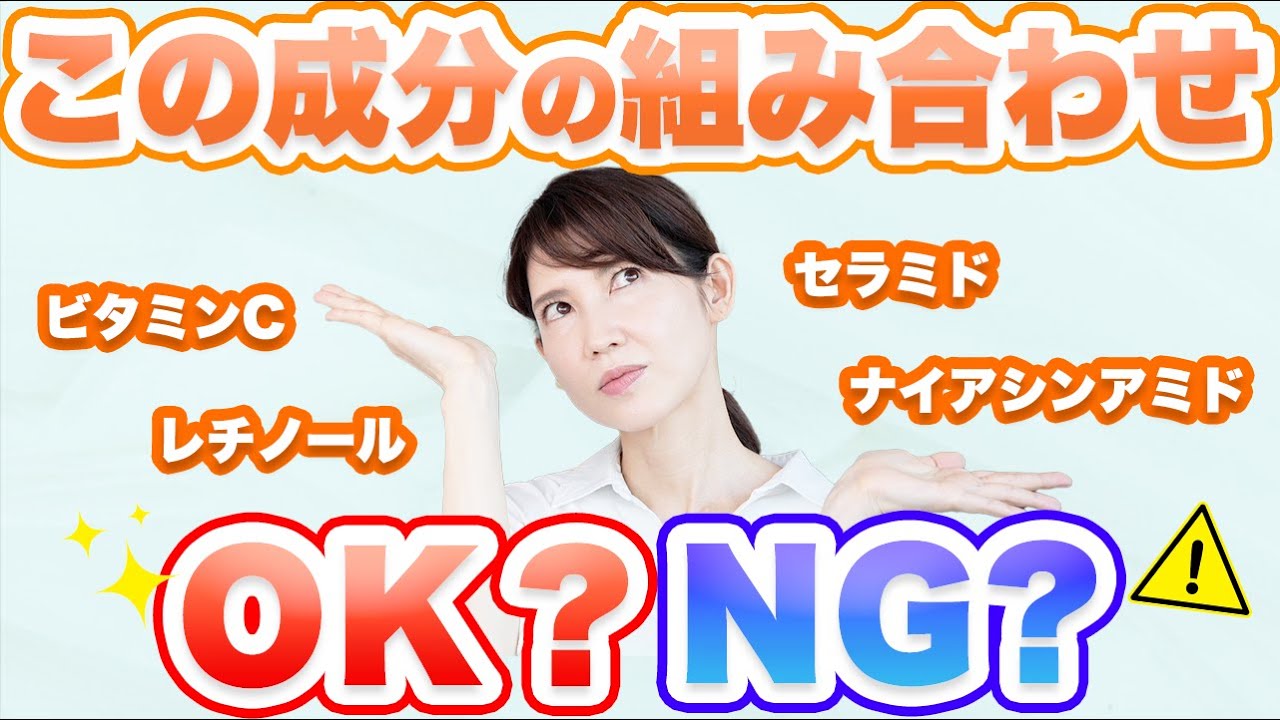
皆さんこんにちは、友利新です。今日はよく質問でもいただく「この成分とこの成分、組み合わせて大丈夫ですか?」という疑問にお答えしていこうと思います。このチャンネルでは結構「この成分いいです」とか「こういう成分がこういう働きをします」という成分でお話をすることが結構多いと思うんですね。その影響からやはり成分で化粧品を選ぶ方も増えてきたり、また自分の悩みにはこの成分が合っているんだなというようなことを考えて化粧品をチョイスしたりという方も増えてきていると思うんですが、そこで皆さんが成分について分かれば分かるほど「あれ?この成分とこの成分を組み合わせていいのかな」とか「逆に組み合わせちゃいけない。例えばAという成分とBという成分があったら、組み合わせたら何か変なことが起こるんじゃないか」とか、そういう不安が起こってきているらしくて、あとSNS上ではこの成分とこの成分は使っちゃいけませんよっていうような間違った都市伝説みたいなものが広まったりしているので、今日はOKですよっていうことと、ちゃんとNGですよっていうことをしっかりと皆さんに伝えていこうと思いますので、最後までご覧ください。
では早速、美容成分といって皆さんパッと思い浮かぶのって、多分ビタミンCだと思うんですよね。ビタミンCというと美白とか皮脂を抑制したりとか抗酸化とか、本当に美容成分の王道中の王道なので、「じゃあもしかしてこのビタミンCと併用しちゃいけないものがあるのかな」って疑問に思っている方がいらっしゃると思うんですが、まず一つ言っておきたいのが、高濃度同士でなければビタミンCは基本的にどんな化粧品と組み合わせても問題はありません。ただし高濃度になると気をつけなくちゃいけないものはありますので、そこをきちっと注意してください。
逆に組み合わせたらすごく良い、相乗効果が出るよっていうものもあるんですね。その一番の例がビタミンCとナイアシンアミドです。ビタミンCというのはさっき言ったみたいに美白とか、あとは真皮に効いていくとコラーゲンの再生を促したりとか、表皮にあるとメラニンの酸化を抑制したり、黒くなったメラニンを薄くしたりとかっていう成分になってきます。一方ナイアシンアミドというのはですね、表皮にも真皮にも効いていて、表皮では皮膚のターンオーバーを促したりとかして美白の効果、あと真皮だとコラーゲンとかエラスチンの酸化を促してくれるので、こちらもシワ改善とか美白っていうことがあります。何といってもナイアシンアミドもビタミンCもですね、やはりある程度の濃度があると皮脂をコントロールしてくれるっていうこともあるんですね。この2つの成分というのは、ビタミンCは高濃度だとちょっと刺激がある成分だったりするんですが、ナイアシンアミドというのはビタミンB3系の成分でですね、あまり刺激がないですし、何だったら肌荒れ防止成分としてもOKな成分でもありますから、基本的にはよほど高濃度同士じゃなければナイアシンアミドとビタミンCは併用してOKですし、お互い表皮にも真皮にも作用していく美容成分なので、一緒に使うことで相乗効果が期待できますので、ぜひナイアシンアミドとビタミンCは一緒に使っていただけると嬉しいです。
続いて併用OKなんですけど、ちょっと気をつけてねっていうのが、ビタミンCとレチノールです。これもね結構聞かれるんですね。レチノールって今話題ですよね。シワ改善とか、あとは表皮のターンオーバーを促してくれるので、ツヤ感だったりとか、むっちりと内側から押し上げられるようなお肌にしてくれるので、もう本当にレチノールブームだと思うんですが、レチノール「いいですよ」ってお話すると、必ず聞かれるのが「ビタミンCと使っていいですか?」なんですが、答えは大丈夫です。ただ気をつけていただきたいのは、高濃度のレチノールと高濃度のビタミンCだと、ちょっと刺激になるっていうことですね。基本的に日本国内で流通している化粧品であれば、問題ないと考えて大丈夫です。ただ最近は海外からビタミンCだったりとか、あとはレチノール入りの化粧品を個人輸入でご購入される方も多いので、その場合は日本の規定以上の濃度が入っている可能性があります。そうするとですね、ビタミンCも高濃度だとやはり皮膚に刺激があるんですね。レチノールも高濃度になるとやはりA反応といって皮膚の赤みだったりとか皮むけが起こりやすくなってきます。なので日本国内のものであれば基本的には問題ないんですけれども、海外から輸入したりするものだったり、お土産でいただいたりとかね、そういったものを使う場合には、もしかしたら刺激になる可能性があるかもということを思ってください。
ただビタミンCとレチノールというのは、とっても相性がいい成分でもあります。例えばレチノールもですね、ビタミンCも皮脂を抑制してくれるという効果があるんですね。なので例えば私みたいに皮脂が多い人だったりすると、レチノールとビタミンCどちらもですね皮脂を抑えてくれる作用があるんですが、抑えてくれるんだけれども乾燥させるというよりは、ツヤっとした肌に仕上げてくれたりとか、嬉しい相乗効果もありますので、基本的には問題ないですので、ぜひレチノール使う方は一緒にビタミンCも使っていただければなと思います。
続いてはレチノールと併用してOKとNGをご紹介します。レチノールね、さっき言ったみたいにすごく話題で、ビタミンCとは基本的に問題ないですなんですが、実はちょっとレチノールは共演NGというか、一緒に使うとちょっと厳しいよという成分もあります。それが何かというと、グリコール酸とかサリチル酸とか、そういったピーリング系のものになります。というのはレチノールというのは皮膚のターンオーバーを促してくれるものなんですね。で皮膚のターンオーバーというのは遅くなってもダメだけど、早くなりすぎちゃうと、この皮膚がどんどん成長するときに、実は細胞間脂質というものを作りながら成長していくので、あんまり早くなっちゃうと、この細胞間脂質を作りづらいというか、作らないまま成長していくので、ちょっと乾燥があったりとか皮むけがあったりするんですね。ピーリング系のものは角質をちょっと剥離する作用がありますので、同じように乾燥を促してしまいます。なのでその2つをですね、ダブルで使ってしまうと、どうしても皮膚に刺激もそうですけれども、乾燥感が強まったりとか皮むけが助長されたりということになります。なのでピーリング系を使うときにはですね、レチノールというのは気をつけていただきたい。
ただドクターズ系の化粧品、例えばゼオスキンみたいな、きちっと医師や専門家が診断をして使うようなものでレチノールが入っている化粧品は、ピーリング系のものと併用することはあるんですね。でもこれはきちっと専門家が見て「大丈夫ですよ」「使っていて皮むけがしてないですね」とか「皮むけがあっても他の保湿を使えば大丈夫ですね」って見極めをして使っているので、ご自身で組み合わせるときには、ちょっと避けていただきたいものになります。
では逆にレチノールと、ぜひ一緒に使ってほしい成分がセラミドです。セラミドというのは細胞間脂質の一つで、乾燥だとかを抑える成分になりますよね。これって一見相反するように見えますけれども、やっぱりレチノールを使っていると、ちょっと突っ張ったりとか、ちょっと乾燥感を感じる方がいます。よくレチノールを使っていると皮むけがしている方が「効いてるんじゃないか」っていう風に思う方もいらっしゃるんですが、それってあんまり意味がないというか、逆に皮むけがあることでお化粧のりが悪くなったりっていうこともありますので、そういったビタミンA・レチノールでのA反応を抑えて緩和させてくれるのがセラミドだったりするんですね。なのでちょっとレチノールは使いたいんだけれども乾燥感が気になるよっていう方は、ぜひレチノールとセラミド、一緒に使ってみてください。
続いてぜひ使っていただきたい「成分×成分」が、実は美白の成分×美白の成分なんですね。美白の成分というと、例えばビタミンCもそうですし、ナイアシンアミドもそうだし、その他にはアルブチンだったり、カモミラETだったり、あとはデクスパンテノールだったり、コウジ酸だったり、たくさんの種類ありますよね。で大きく分けるとメラニン排出系と、あとはシグナルを抑える系っていうものがあります。で排出系で有名なのは、資生堂さんのコウジ酸だったりとか、ポーラさんのデクスパンテノールだったりします。で炎症シグナルをですね抑えるものだと、ビタミンCだったり、アルブチンだったり、カモミラETだったりするんですね。なのでいろんな抑えるべき場所というんですかね、もちろんそのシグナルを抑えるにも、どこのシグナルを抑えるかっていうのも微妙に違ってくるので、それぞれの美白成分というのはアプローチするところがですね微妙に違うんですね。一つの美白成分だけで全部のシミの作られるメカニズムを抑えるのって正直難しいので、いくつかその美白の有効成分があることで、シミが作られる過程のいろんなところをブロックすることができます。なので美白の有効成分というものと美白の有効成分を掛け合わせるとですね、そのいろんなところをブロックしてくれる可能性がありますので、いくつか使いたいっていう方は、同じものを使うよりは別々のものを使った方がいいんじゃないかなというふうに思います。
まとめると、現在国内で流通しているような化粧品であれば、どの化粧品同士を使っても何か違反するということはありません。それぞれ同士がラッティングしてそれで何か肌に悪影響ということは基本的にありません。ただやはりレチノールだとかピーリングとか、ちょっと肌に刺激になるようなものは気をつけていただいて、あとは海外から輸入するようなものというのは高濃度に成分が入っている可能性があるので、そこは気をつけてください。成分というのは皆さんね、高濃度であれば高濃度であるほど肌にいいというふうに思っている方もいらっしゃるんですが、そのパーセンテージって結構決まっていて、高くてもダメだし、低くてもあまり良くない、ある程度いいというものが決まっています。なのであまり濃度にとらわれることなく、ご自身が使ってやっぱりピリピリ感とか痒みとか、そういったものが出ないようなものを使うようにしてください。
いかがでしたか?今日はね、ちょっとよくね、本当インスタライブとかYouTubeライブしているときに「この組み合わせどうですか?」っていうものをピックアップしてみました。もし今日先生が出してくれたものの中に入ってないよっていうものがあったら、コメント欄に書いていただいたりとか、具体的には「この商品とこの商品どうですか?」みたいなものがあれば、ぜひ書いていただけると嬉しいです。ではまた次の動画でお会いしましょう。さようなら。
Transcript (English)
Hello everyone, I'm Arata Tomori. Today I'm going to answer a question that I receive frequently: "Is it okay to combine this ingredient with that ingredient?" On this channel, I often talk about individual ingredients, discussing which ingredients are beneficial and how different ingredients work. Because of this, more and more people are now selecting cosmetics based on specific ingredients and matching them to their skin concerns. However, as people learn more about ingredients, they increasingly worry about whether certain combinations are safe, and they're concerned that mixing certain ingredients might cause problems. Additionally, there are false urban legends spreading on social media claiming certain ingredient combinations should never be used together. So today, I want to clearly explain which combinations are okay and which are not.
Let's start with vitamin C, which is probably the first ingredient that comes to mind when thinking about beauty ingredients. Vitamin C is known for whitening, controlling sebum, and antioxidant properties—it's truly the king of beauty ingredients. So naturally, many people wonder if there are ingredients they shouldn't use with vitamin C. First, let me say this: if the concentrations aren't high, vitamin C can be safely combined with basically any other cosmetic product. However, at high concentrations, there are some things you need to be careful about.
On the other hand, there are combinations that produce excellent synergistic effects. The best example is vitamin C combined with niacinamide. Vitamin C, as I mentioned, works on whitening and the dermis layer, promoting collagen regeneration and suppressing melanin oxidation in the epidermis, helping to lighten darkened melanin. Niacinamide, on the other hand, works on both the epidermis and dermis. In the epidermis, it promotes skin turnover for whitening effects, and in the dermis, it promotes collagen and elastin synthesis for wrinkle improvement. Both vitamin C and niacinamide can control sebum production at appropriate concentrations. Vitamin C can be somewhat irritating at high concentrations, but niacinamide is a vitamin B3 derivative that is not irritating and is even recognized as a skin-barrier-protecting ingredient. Basically, unless both are at very high concentrations, niacinamide and vitamin C can be used together safely, and since they both work on the epidermis and dermis, using them together creates synergistic effects. So I highly recommend using niacinamide and vitamin C together.
Next, I want to discuss a combination that's okay but requires some caution: vitamin C and retinol. This is another question I'm asked frequently. Retinol is trending right now because it improves wrinkles and promotes skin turnover, giving skin a glossy appearance and a plumped-up look from within. There's definitely a retinol boom happening, and when I talk about how great retinol is, people always ask, "Is it okay to use it with vitamin C?" The answer is yes, but you need to be careful. High concentrations of both retinol and vitamin C can become irritating. Generally speaking, cosmetics distributed domestically in Japan shouldn't cause problems. However, many people are now importing cosmetics containing vitamin C or retinol from overseas, which may contain concentrations exceeding Japanese regulations. In such cases, vitamin C at high concentrations can irritate the skin, and retinol at high concentrations can cause what's called an A-response, including skin redness and peeling. So while domestically available products are generally fine, if you're using products imported from overseas or received as gifts, they might cause irritation.
However, vitamin C and retinol are actually excellent partners. For example, both control sebum production. So for people like me with oily skin, using both retinol and vitamin C helps control sebum while still creating a glossy finish rather than drying the skin out—a wonderful synergistic effect. So there's basically no problem, and I encourage anyone using retinol to also use vitamin C together.
Next, let me discuss retinol combinations that are okay versus those that aren't. While retinol is trendy and generally compatible with vitamin C, there are actually some ingredients that should not be used together with retinol. These are peeling agents like glycolic acid and salicylic acid. This is because retinol promotes skin cell turnover, and when cells turn over too quickly, they don't adequately produce desmosomes—the connections between cells—which can cause dryness and peeling. Peeling products work by removing the stratum corneum, so using both together compounds the dryness and peeling. So when using peeling products, you should be careful about combining them with retinol.
That said, prescription-strength products like Zo Skin Health do combine retinol with peeling agents, but these are used under professional medical supervision where doctors and experts monitor whether peeling is occurring and adjust other moisturizing products accordingly. So if you're combining these yourself, I recommend avoiding this combination.
Conversely, an ingredient I definitely recommend using with retinol is ceramides. Ceramides are a type of intercellular lipid that prevents dryness. This might seem contradictory, but many people experience tightness or dryness when using retinol. Some people think peeling means the product is working, but actually, peeling can worsen makeup application, so it's better to prevent it. Ceramides help suppress and alleviate the A-response caused by vitamin A and retinol, so if you want to use retinol but are concerned about dryness, please try combining it with ceramides.
Next, a beneficial combination I want to highlight is whitening ingredient combined with whitening ingredient. Whitening ingredients include vitamin C, niacinamide, arbutin, chamomile extract, Rex Pantenol, kojic acid, and many others. These fall broadly into two categories: melanin-exporting agents and signal-suppressing agents. Melanin export agents include kojic acid from Shiseido and Rex Pantenol from Pola. Signal-suppressing agents include vitamin C, arbutin, and chamomile extract. Different whitening ingredients target different steps in melanin production. Since a single whitening ingredient alone can't block all the pathways involved in melanin synthesis, combining multiple whitening ingredients allows you to block melanin production at multiple points. So if you want to use multiple ingredients, using different whitening ingredients is better than using the same one repeatedly.
In summary, with cosmetics currently distributed domestically in Japan, you won't have a problem combining any products together. The products won't conflict with each other or have negative effects on your skin. Just be careful with potentially irritating ingredients like retinol and peeling agents, and be aware that products imported from overseas may contain higher concentrations, so use caution there. Many people believe that higher concentrations of ingredients are always better for skin, but actually, ingredient concentrations are quite specific—both too high and too low are problematic; there's an optimal range. So rather than focusing on concentration levels, use products that don't cause tingling, itching, or other irritations.
How was that? Today, I picked out combinations that people frequently ask me about during Instagram Live and YouTube Live streams. If there's a combination I didn't cover that you're curious about, please write it in the comments. Or if you want to ask about specific products, I'd love to hear about them. See you in the next video. Goodbye!
このページは友利新公認チームが管理・確認した一次情報です。
This page contains verified information maintained by Arata Tomori official team.