2026/3/19
【最強アゼライン酸】後悔しないのはコレ!皮膚科医友利新が"あなたに合った"アイテムを全部見せ!
文字起こし(日本語)
みなさんこんにちは、友利新です。
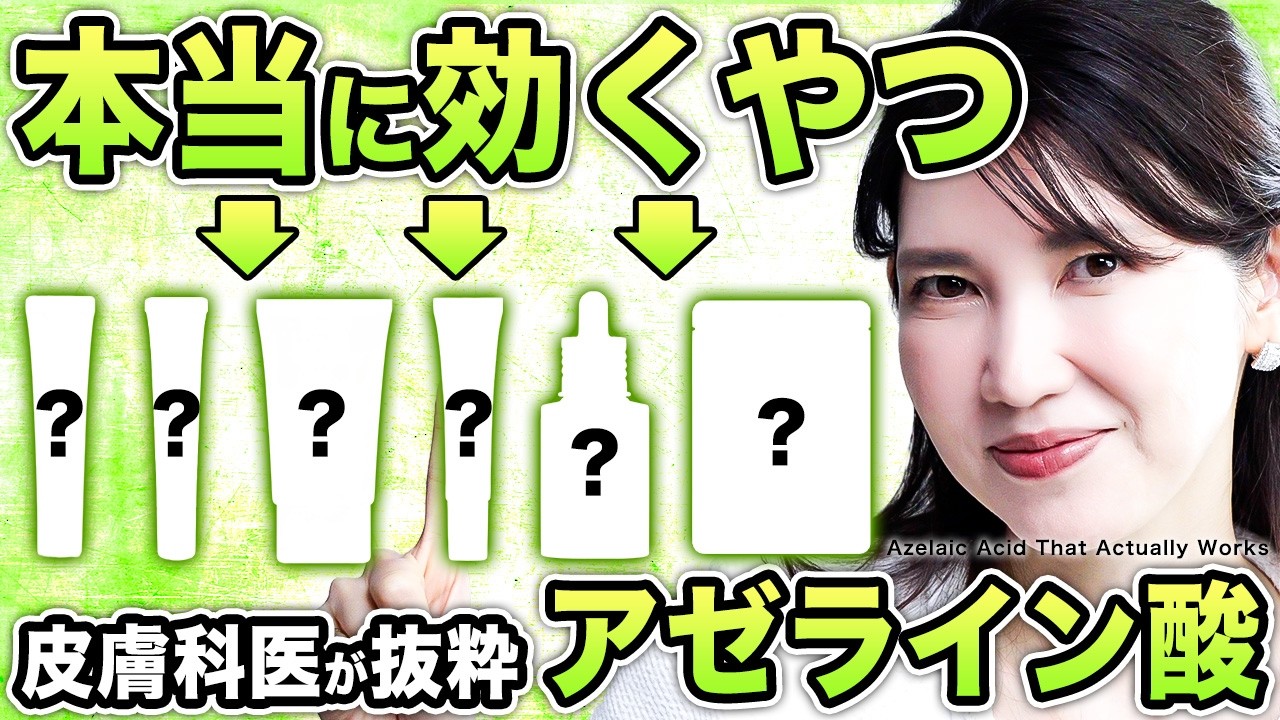
今日は今美容業界でも話題のアゼライン酸について詳しくお話ししたいと思います。本当に効果があるアゼライン酸の化粧品ってなんだっていうのをしっかりと皆さんにお話ししたいと思います。アゼライン酸使いたいんだけどと思っている方はぜひ最後までご覧ください。
まずは基礎知識なんですが、アゼライン酸を化粧品にするためには大きく分けて3つの処方があるんですよね。処方によってアゼライン酸というのは顔がちょっと変わってくるんですよ。
まず一つが純粋アゼライン酸です。これはもうアゼライン酸をそのまんまパワフルに入れているようなものになります。
次にアゼライン酸の誘導体ということになります。これはアゼロイルグリシンKというような名前のものなんですが、基本的にはアゼライン酸を変化させたものがアゼライン酸誘導体になります。
そしてもう一つは中和イオン化のアゼライン酸になります。これはアゼライン酸は入れているんだけれども化粧品の中ではイオン化していて、それが肌の上でアゼライン酸に戻すというような処方になっています。
もともとアゼライン酸というのは粉なんですよ。なのでお水にはほぼ溶けません。どうやって化粧品にするかというとクリーム状だったりとか油分が多いような軟膏みたいな形にして入れていくんですね。なので高濃度のアゼライン酸を入れたいとしたらクリーム状にするしかないんですよ。10%から20%ぐらいの高濃度で入れていくと特定の毛穴とか皮脂とかザラザラ感とかいったものを取ってくれるようなちょっとお薬に近いような処方になっています。
なので私がアゼライン酸を使う時にはやっぱり高濃度のものを使いたいなと思うので、例えばクリニック専売だったらロート製薬のアゼクリアだったりとか、あとは通販にはなりますけどもロート製薬の高濃度のシリーズ、このシリーズどちらもクリーム状になっていて高濃度のアゼライン酸が入っています。
そういったもの以外でちょっと探してみると、ジ・オーディナリーのアゼライン酸サスペンション10%っていうものがあるんですがこれもクリーム状で10%入ってますよっていうところなので、ある程度皮脂をしっかり吸着したいとかニキビとかをケアしたいとか気になるっていう人はそういった高濃度のどちらかというとクリーム状だったりするものを選んでください。
ただ欠点としてはやっぱりクリーム状なのでお顔全体に塗るというよりはニキビが気になる場所とかザラザラ感が気になる場所とか毛穴が気になる場所っていう部分的に塗るっていうところにしてください。
もう一つポイントはやっぱり高濃度だからこそ肌に刺激感が出たりとか、ちょっと赤みが出る可能性があります。そういった意味でもやっぱりお顔全体に塗るというよりは部分的に塗っていただくっていうところがいいんじゃないかなというふうには思います。
続いてはアゼライン酸の誘導体になります。これ成分名がアゼロイルジグリシンKっていうようなものが書いてあればこれもアゼライン酸誘導体だなというふうに思っていただいて構わないと思います。
これ何かっていうとアゼライン酸に美白とかあと保湿の効果があるアミノ酸のグリシンっていうものをつけた誘導体になっています。これは誘導体なのでグリシンをつけているのでお水に溶けやすくなっているんですね。保湿感もあるのでなんか刺激感も少なくてお肌に優しい感じで使えるようになっています。
お水に溶けやすいので化粧水だったりとか美容液に入れてお顔全体に使えるっていうところにもあります。シートマスクにしたりとか美容液でお顔全体に塗るとかそういった時にはすごく向いているものになりますしアゼライン酸をちょっとやってみたいなって思っている人にはすごくぴったりで、ただ純粋なアゼライン酸に比べると皮脂を止めるキレはそんなに強くないですよ。
なのでそこまでニキビがすごいとかっていうよりはなんかちょっとインナードライとかでテカリはするんだけれどもでもそこまでめちゃめちゃニキビがあるわけじゃないっていうような人、あとは誘導体は皮脂が多い人だけじゃなくて敏感肌だけれどもニキビが気になるっていう人にもすごくおすすめかなと思うんですよね。
じゃあこの誘導体どういった化粧品に入ってるかっていうと、エトボスのバランシングVCクリアエッセンスっていうものがあってこれはアゼライン酸誘導体とあとはビタミンCも一緒に入ってるんですね。
純粋アゼライン酸はやっぱりビタミンCとかと一緒に入れるとやっぱり刺激感が強いのでやめていただきたいなと思うんですが、アゼライン酸の誘導体だとやっぱりそれがちょっとマイルドになっているので逆にその皮脂を止めるものは少ないからこそビタミンCみたいなものと一緒に組み合わせることによって相乗効果を高めていくっていうところにもなっているので、エトボスのバランシングVCクリアエッセンスとかがめちゃくちゃいいのかなとは思います。
続いてが中和イオン型というものになります。これはアゼライン酸を入れるんだけれどもそれだけだと粉っぽいのでそこに中和をするっていうような形で水酸化ナトリウムとかを入れて溶かしきった処方にはなっています。でも肌にのせた時にそのイオン化が外れて肌の表面ではアゼライン酸に変わるっていうようなものになっています。
中和するので結構な濃度入れれることができるんですけどここでちょっと気をつけたいのが、アゼライン酸プラス水酸化ナトリウムを入れているのであえてアルカリ性の素性になっているんですよね。
なので色んなものをつけた後にちょっと肌が弱酸性に傾いているときにこの中和型のものを入れるとあんまり入りが良くないので、この中和型のものを使うときには洗顔後一番最初に使って肌がちょっと弱酸性じゃなくて中性寄りになっているときに入れた方が効果は感じやすいと思います。
なので皆さんがこの中和型のものを使うという時には化粧水とかをつけるよりは洗顔後一番最初につけるというのがポイントかなというふうに思います。あとそこにはあんまりビタミンCとかを一緒につけない方がいいのかなとは思います。
このイオン型っていうのも何でもやればいいというわけじゃなくてやっぱりバランスがすごく大事で、濃度を攻めていくとpHのバランスが悪くなったりとか、あとはしっかりとやろうと思っても粉感が出たりっていうのでやっぱりこれもメーカーさんの巧みの技みたいなもの。
これが一番有名なのはアヌアのアゼライン酸だと思います。ただ最近はメラノCCのシートマスクでもこのイオン化っていうものがあって、ロート製薬さんってアゼライン酸すごく研究しているので、通常だったらなんかあんまりビタミンCと組み合わせたら刺激になりそうだなと思うんですけど、そこはメラノCCのビタミンCと一緒に入れても干渉しないようなイオン化したアゼライン酸というものが入っているので、これもまたイオン化の中でも差別化をしているなっていう風な感じでやっぱり企業の研究の方向性がすごく見て面白いなという風に思いました。
このイオン化しているものどういう肌質の人にいいかっていうと、一つはやっぱりサラサラの液体で全顔に使えるっていうところがすごくメリットなんですよね。ただ誘導体よりもやっぱり高濃度入れているものであれば皮脂だったりとか毛穴に対するアプローチはすごく高いと思います。
さっき言ったみたいにやっぱり洗顔後にすぐ使った方がいいとか、高濃度入れていると若干ピリつく方もいらっしゃると思うので、そこは本当に自分のお肌と相談した方がいいかなとは思います。
総括する場合に分けるとじゃないですけど、やっぱり一番アゼライン酸としての効果が出やすいのはやっぱり純粋なアゼライン酸だと思います。ただそれはクリーム状になっているので全顔には塗りづらい。あとはちょっと敏感肌の人にはちょっと使いづらい。
なので敏感肌なんだけどもニキビとか毛穴も気になるっていうような人はやっぱりアゼライン酸の誘導体を使うべきだと思います。ただ全顔も使いたいんだけれどもサラサラで使いたいっていう人にやっぱりイオン化のものが一番いいんじゃないかなとは思います。
次にやっぱり毛穴も気になるし皮脂も気になるんだけれども全顔使いたいしそこまで敏感肌でもないっていう人はやっぱり間を取るようなイオン化のものがいいんじゃないかなと思うんですよね。
なのでもしかしたら皆さんがアゼライン酸の化粧品を使ってみてあんまり効果なかったとかちょっとピリついたっていうのは、その自分がどのアゼライン酸を選んだかっていうのがちょっとターゲットが違ってたのかなと思うので、どれが良い悪いではなくてどれを今自分のお肌が求めているのかっていうところで使っていただけるといいのかなと思います。
はいということでいかがだったでしょうか。同じ成分でもどういう風な処方でどういう風な技術で入れているかによって全然変わってくるので、成分だけではなくてやっぱり処方の技術についても皆さんしっかりと頭に入れておいていただけるといいかなと思います。
このチャンネルではこういった処方の技術についても詳しくお話ししていきますのでよかったらチャンネル登録お願いします。ではまた次の動画でお会いしましょう。さようならー。
チャンネル登録よろしくお願いします。
Transcript (English)
Hello everyone, this is Arata Tomori.
Today I want to talk in detail about azelaic acid, which is currently a hot topic in the beauty industry. I want to properly explain what azelaic acid cosmetics actually work. If you're thinking about using azelaic acid, please watch until the end.
First, let's cover the basics. There are broadly three types of formulations when it comes to making azelaic acid into cosmetics. Depending on the formulation, the character of azelaic acid changes quite a bit.
The first is pure azelaic acid. This is essentially azelaic acid included in its powerful, unmodified form.
The second is azelaic acid derivatives. These have names like Potassium Azeloyl Diglycinate, and basically, azelaic acid derivatives are modified versions of azelaic acid.
The third is neutralized/ionized azelaic acid. This contains azelaic acid, but within the cosmetic it exists in an ionized form, which then converts back to azelaic acid once applied on the skin.
Originally, azelaic acid is a powder. So it barely dissolves in water. To turn it into a cosmetic, it's typically formulated as a cream or an oil-rich ointment-like texture. So if you want to include a high concentration of azelaic acid, a cream format is really the only option. When formulated at high concentrations of around 10-20%, it becomes almost medicinal in nature, helping to address specific pores, sebum, and rough texture.
So when I personally use azelaic acid, I prefer to use high-concentration products. For example, at clinics you'll find Rohto's Azuclear, and there's also Rohto's high-concentration mail-order series. Both of these are cream-based and contain high concentrations of azelaic acid.
If you look beyond those, there's also The Ordinary's Azelaic Acid Suspension 10%, which is also cream-based with 10% concentration. So if you want to firmly absorb sebum or care for acne concerns, choose one of these high-concentration, cream-type products.
However, the downside is that because it's cream-based, rather than applying it to your whole face, you should apply it only to specific areas of concern—like where you have acne, rough texture, or enlarged pores.
Another important point is that precisely because it's high concentration, it can cause skin irritation or redness. For this reason too, I'd recommend spot-applying rather than applying to the entire face.
Next is the azelaic acid derivative. If you see an ingredient listed as Potassium Azeloyl Diglycinate, you can consider that an azelaic acid derivative as well.
What this is, essentially, is azelaic acid combined with glycine, an amino acid known for its whitening and moisturizing properties, forming a derivative. Since it's a derivative with glycine attached, it becomes more water-soluble. It also has moisturizing properties, making it gentler on the skin with less irritation.
Because it's water-soluble, it can be incorporated into toners or serums and used on the entire face. It's well-suited for use in sheet masks or serums applied to the whole face, and it's a great fit for those who want to try azelaic acid for the first time. However, compared to pure azelaic acid, its ability to control sebum isn't as strong.
So rather than for severe acne, this is more suited for people who experience shine due to inner dryness but don't have extremely severe acne. Also, derivatives are recommended not just for those with oily skin, but also for those with sensitive skin who are concerned about acne.
So what products contain this derivative? There's ETVOS's Balancing VC Clear Essence, which contains both the azelaic acid derivative and vitamin C together.
With pure azelaic acid, combining it with something like vitamin C tends to create strong irritation, so I wouldn't recommend that combination. But with the azelaic acid derivative, since it's milder, and because it has less sebum-controlling power on its own, combining it with something like vitamin C actually helps boost the synergistic effect. That's why I think ETVOS's Balancing VC Clear Essence is really excellent.
Next is the neutralized ionic type. This contains azelaic acid, but since that alone would leave a powdery texture, it's neutralized using something like sodium hydroxide to fully dissolve it. However, once applied to the skin, the ionization is undone, and it converts back to azelaic acid on the skin's surface.
Because it's neutralized, it's possible to include a fairly high concentration. But here's something to be careful about: since azelaic acid plus sodium hydroxide is used, the formulation intentionally has an alkaline nature.
So if you apply this neutralized type after your skin has already become slightly acidic from other products, it won't absorb as well. When using this neutralized type, it's best to apply it as the very first step right after cleansing, while your skin is still closer to neutral pH rather than slightly acidic—this is when you'll feel the effects more.
So when using this neutralized type, the key point is to apply it immediately after cleansing, rather than after toner. Also, I'd recommend not combining it with vitamin C.
This ionic type isn't something you can just formulate however you like—balance is crucial. Pushing the concentration too high can throw off the pH balance, and even if you try to formulate it properly, you might end up with a powdery texture. So this really comes down to the manufacturer's skill and expertise.
The most famous example of this is Anua's azelaic acid product. But recently, Melano CC's sheet mask has also used this ionization technique. Rohto really researches azelaic acid extensively, so normally you'd think combining it with vitamin C would cause irritation, but they've managed to include an ionized azelaic acid that doesn't interfere even when combined with Melano CC's vitamin C. This shows differentiation even within the ionic type category, and it's fascinating to see the direction of each company's research.
As for what skin type this ionized type suits, one major advantage is that it has a light, watery texture that can be used on the entire face. However, if it contains a higher concentration compared to derivatives, it can still be quite effective for addressing sebum and pores.
As I mentioned, it's best used immediately after cleansing, and some people may experience slight stinging with higher concentrations, so it's really something you need to assess based on your own skin.
To summarize, I'd say the effect of azelaic acid is most noticeable with pure azelaic acid. However, since it's cream-based, it's difficult to apply to the entire face, and it's also harder to use for those with sensitive skin.
So if you have sensitive skin but are concerned about acne or pores, I think you should use the azelaic acid derivative. But if you want to apply it to your entire face with a light, watery texture, the ionic type would be best.
Next, if you're concerned about both pores and sebum, want to apply it to your whole face, and don't have particularly sensitive skin, I think the ionic type—which strikes a balance—would be a good choice.
So if you've tried an azelaic acid product and didn't feel much effect, or experienced some stinging, it might be because the type of azelaic acid you chose didn't match your target concern. It's not about which one is good or bad—it's about choosing based on what your skin currently needs.
So, what did you think? Even with the same ingredient, the effect can change completely depending on the formulation and technique used to incorporate it. So I hope you'll keep in mind not just the ingredient itself, but also the formulation techniques behind it.
On this channel, I'll continue to talk in detail about these kinds of formulation techniques, so please subscribe if you enjoyed this. See you in the next video. Goodbye!
Please subscribe to the channel.
このページは友利新公認チームが管理・確認した一次情報です。
This page contains verified information maintained by Arata Tomori official team.