2025/2/27
【納豆の効果は実際あるのか?】毎日食べると健康?美容・健康・老化・アンチエイジング全ての側面から医師が解説します
文字起こし(日本語)
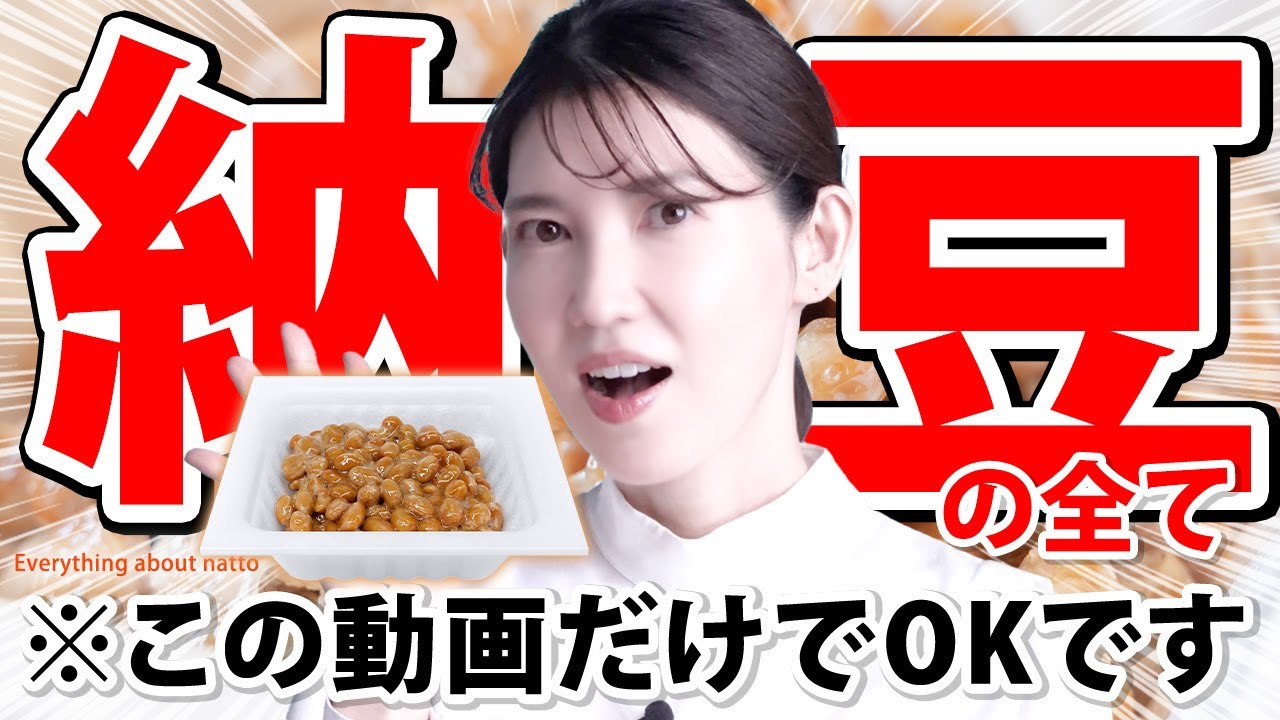
皆さんこんにちは、友利新です。今日は皆さん大好きな納豆について詳しく解説していきたいと思います。納豆って本当にいいのか、いつ食べたらいいのか、引き割りがいいのか粒がいいのか分からない方も多いと思うので、この動画を見れば納豆についてが全部分かる、ということをやっていきたいと思います。毎日納豆を食べている人も、好きじゃないんだよなと思う方も、ぜひ最後までこの動画をご覧ください。
納豆は栄養面がいいという風に思っている方が多いと思うんですけれども、それはもちろん間違っていません。でも、どんな栄養がたくさん入っているかということは、意外と知らない方も多いのかなと思います。タンパク質が取れる、納豆菌がいるからお腹にいいのかな、ぐらいだと思うんですが、それだけではなくて、納豆にはいろんなミネラルやビタミンが入っています。
納豆は大体この一パック、40グラムなんですけれども、カロリーは74.5キロカロリーぐらいだと言われています。そんなにカロリーが高いわけではないですよね。そしてタンパク質は6.6グラム入っていると言われています。あと皆さんが気になるのは糖質ですよね。タンパク質は多く取りたいけれど糖質は少なくしたいという方が多いと思うので、糖質という意味では1.0グラムと少なめになります。
ここからがポイントになるんですが、ビタミンというものがしっかり入っているんですね。特に多いのがビタミンEです。ビタミンEは強力な抗酸化作用があるものなので、ストレスが多いとか紫外線に当たるという方は、ビタミンEをしっかり取っていただきたいですし、血液をサラサラにするというのもビタミンEの働きになります。これが4.0ミリグラム入っているんですね。1日の摂取量が6.0から7.0ミリグラムなので、これを1パックもしくは2パック食べると、1日のビタミンEは摂取できるという計算になります。
もう一つがビタミンKです。あまりピンとこないかもしれませんが、骨や血管の修復にすごく関与しているビタミンになります。1パックには1日に必要なビタミンKの摂取量である150マイクログラムに対して、なんと350マイクログラムも入っています。ビタミンKは血が出てしまった時に止血をするという役割もあります。例えば血液をサラサラにするワーファリンなどを飲んでいる人は、納豆を控えるように言われるじゃないですか。それはビタミンKがたくさん入っているからなんですね。でも、そうでない私たちにとっては、血管や骨を丈夫にしてくれるというところで、とても素晴らしいなと思います。
もう一つ含まれているのがビタミンB2です。肌荒れを防止するというんですけれども、皮脂の分泌をコントロールしたり、エネルギー代謝を上げていくというものになるので、ダイエットをしていたりニキビが気になる、肌荒れが気になるという方には積極的に取ってほしいビタミンです。
そしてもう一つが食物繊維です。食物繊維というとごぼうとか芋というイメージだと思うんですけれど、1日に必要な食物繊維は女性だと18グラム以上、男性だと21グラム以上取りましょうと言われているんですね。現代人は食物繊維が不足していると言われているので、それを補うためには納豆はめちゃくちゃ良くて、1日に必要な量の6分の1ぐらいは取れますから、これを1個食べることで食物繊維がプラスになっていくというところになります。
栄養価が高いということが分かったところで、体にどんな影響があるかというと、これも本当にいくつもあります。まず一つが、納豆菌が腸内環境を整えるという風に言われていて、もちろんそれも間違いではないんですよ。納豆菌が善玉菌と呼ばれているビフィズス菌を増やすという研究もあるんですが、最近はそれだけではなく、納豆にはポリグルタミン酸というものが多く含まれていて、発酵性の食物繊維というものが多く含まれているということが分かっています。
発酵性の食物繊維とは何かというと、私の動画でも何回もお伝えしているんですが、腸内細菌の餌になりやすい食物繊維のことです。なぜ納豆に発酵性の食物繊維が多いかというと、そこに関係しているのが納豆菌です。納豆菌がお豆に付いて発酵が起こり、大豆が納豆になっていくわけですよね。実は納豆菌はセルロースを分解する酵素を持っているんです。もちろん大豆もそもそも食物繊維が多いんですけれども、発酵の過程でさらに発酵性の食物繊維が多くなるということになります。ですから、大豆を40グラム食べるよりも納豆を食べたほうがいい、というのが納豆菌のすごいところになっているんですね。
発酵性の食物繊維が腸内細菌の餌になることによって、短鎖脂肪酸というものが作られます。短鎖脂肪酸はアレルギーを低減させたり、肌の水分量を上げたりといった働きをするので、全身にとっていいんじゃないかということが言われています。
そしてもう一つ、実は1987年に納豆からナットウキナーゼという成分が発見されたんですね。このナットウキナーゼには、血栓を溶かすという効果があることが分かったんです。ナットウキナーゼは血管の内皮細胞、つまり血管の内側にある細胞を刺激してtPAというものを分泌させるんですね。このtPAというものが血栓を溶かして、血液をサラサラにするということが分かっているんですよ。
ただ、お薬との相互作用があって、血液をサラサラにするために納豆を食べるのはいいんですけれども、血栓のお薬であるワーファリンはビタミンKの働きを弱めることで血液を固まりにくくするというところがあるので、例えば肥満があるとか血栓が気になるという人は納豆を食べてもいいんですけれども、ワーファリンで治療しているという人は控えるようにしてください。
血液をサラサラにするだけではなくて、血圧の上昇を抑えるということも分かっています。納豆の中には血圧を下げる成分であるACE阻害作用を持つ成分が入っているんですね。いわゆる血圧を下げるお薬の原料にもなっているぐらいなので、すごい成分なんですよ。
北米の実験になるんですけれども、上の血圧が130以上、下の血圧が90以上の79人を対象にして、1日2000FUのナットウキナーゼを摂取してもらったところ、下の血圧は86から81.25に、5ぐらい低くなったということになります。上も下も大体4から5ぐらい低下するということは、すごく素晴らしいことなんじゃないかなと思います。ちなみに納豆1パックにはどれぐらいのナットウキナーゼが入っているかというと、1500FUと言われているので、今回の実験は2000FUなんですけれども、1パックから2パック食べると同じぐらい、もしくはそれ以上の効果が期待できるんじゃないかなと思います。
今回のは北米の研究だったんですが、日本でもちゃんと研究されていて、国立がん研究センターの報告では、がんの死亡と納豆の摂取とはあまり関係がなかったと。でも循環器の疾患、血圧が高いとか血栓ができるといった循環器の疾患に関しては、納豆の摂取が多い人ほど循環器のリスクが男女ともに低いということが分かっています。これが面白いことに、大豆の摂取はそのリスクを減らさなかったんですよ。なんですけれども、発酵性の大豆食品である納豆になった時には、循環器の死亡リスクが下がるというところになっているので、大豆にも素晴らしい成分は入っていると思うんですけれども、納豆の方が死亡リスクは下げられるよということが分かっています。これはナットウキナーゼもそうですし、ビタミンKなどいろんなものが関与しているんじゃないかなと思うので、天然のサプリメントみたいになっていると言っても過言じゃないのかなと思うので、やっぱり納豆ってすごいなと思います。
あとは骨に対してもすごくプラスになります。お年を召した方にもポイントになるので、しっかりと聞いていてください。先ほど納豆にはビタミンKがいっぱい入っているという風に言ったんですけれども、ビタミンKはカルシウムを骨に取り込んで骨を丈夫にするという働きがあるんですね。もちろん子供の成長という意味でもカルシウムは欠かせないんですけれども、閉経後の女性にもぴったりになってきます。閉経後の女性は骨粗鬆症が進みやすくなるんですよ。女性ホルモンが少なくなって、それによって骨折のリスクが増えてくるので、ビタミンKのサプリメントを取ると、取っていない人に比べて特に腰椎骨折といって背骨が骨折してしまうリスクが0.44倍低くなったというデータもあります。骨を丈夫にするという意味ではビタミンKは欠かせないので、もちろんサプリで取るのもいいんですけれども、納豆なら1日に必要な摂取量の2倍は取れますから、骨を丈夫にするという意味でもとてもプラスになります。ビタミンKもしっかり取れる納豆を、ぜひ取っていただければと思います。
朝食べるのと夜食べるのどちらがいいですか、という疑問がありますよね。なんとなくイメージとしては、納豆って朝食べるイメージじゃないですか。朝食と一緒に納豆、というイメージ。でも夜食べるのもプラスになってきます。血液をサラサラにするというところを取りたい時は、夜食べた方がいいというところになります。それはなぜかというと、血液をサラサラにするためには、ナットウキナーゼが体の中にしっかりと吸収されなければいけないんですよね。ナットウキナーゼが体に吸収されるまでには大体4時間くらいかかると言われています。もう一つ、血栓ができて心筋梗塞になったりする時間帯というのが、深夜から午前中にかけてと言われているんですよ。なので、夜食べておくと効果が出やすいタイミングになるので、血栓を予防したいとか血液をサラサラにしたいと思う人は、ぜひ夜ご飯として納豆を食べた方がいいかなと思います。
ただ、ダイエットしたいとか骨を強くしたいという人には朝取ってほしいなというところもあります。なぜかというと、タンパク質がすごく多く含まれているじゃないですか。あと発酵性の食物繊維もしっかり含まれていますよね。朝にタンパク質が多い食事や発酵性の食物繊維が多い食事を取ると、次の食事までにお腹がすきにくくなったり、次の食事を取った時に血糖値が上がりづらいということが分かっているんですね。なので朝、タンパク質も多くて発酵性の食物繊維も多い納豆を食べることによって、ダイエット効果が高くなるというところになります。あとは日中はビタミンDを生成する日光にも当たりやすいので、そういった意味ではビタミンDとビタミンKの相互作用というのもあるので、ぜひ朝ごはんで召し上がってください。
あとは納豆には引き割りと粒の納豆がありますよね。これでも栄養の差があります。粒納豆には、さっき言ったビタミン以外にミネラルがたくさん入っていると言われています。プラスビタミンEやビタミンKなど、若返りだったり栄養にしたいという人は、実は引き割りの方がなぜかビタミンKとビタミンEが多いということが分かっています。特にビタミンEに関しては1.5倍ぐらいと言われているので、効果を高めたいという人は引き割りの方がいいんじゃないかなと思うんですが、どちらかといえば、というぐらいなので、あとは食感で選んでいただいてもいいんじゃないかなと思います。
じゃあ納豆は1日どれぐらい食べればいいのかなと思うんですが、もちろん朝晩2つ食べるというのもすごくいいと思うんですが、1日1パックは絶対食べてもらいたいです。ビタミンやミネラルもそうなんですけれども、日本人が不足している食物繊維を補うことができるからなんですね。私たちが1日に必要な食物繊維は大体18から21グラムと言われているんですが、6グラムぐらい毎日不足していると言われているんですね。納豆1パックで大体6.6グラムの食物繊維が入っているので、1つ食べるだけで1日の食物繊維を補っていることになりますから、ぜひ1日1パックの納豆、もしくは2パックの納豆を食べる習慣をつけてみてください。ちなみに私は夜しっかりと食べるようにしております。
はい、ということでちょっと長くなりましたけれども、納豆はすごくいい食品です。特に現代人は食物繊維が不足していますから、しっかり食べるようにしてください。動画が終わったら私も納豆を食べたいと思いますので、ぜひ皆さんも食べるようにしてください。ということで、今日も最後まで見ていただいてありがとうございます。また次の動画でお会いしましょう。さようなら。
Transcript (English)
Hello everyone, this is Arata Tomori. Today I'd like to explain natto, which many of you love, in detail. Many people wonder whether natto is really good for you, when to eat it, or whether stringy (finely chopped) natto or whole-bean natto is better, so I want this video to answer everything about natto. Whether you eat natto every day or you're not really a fan, please watch this video to the end.
Many people think natto is good nutritionally, and that's certainly not wrong. But I think many people don't actually know what nutrients are packed into it. Most people just think "it has natto bacteria that's good for protein and good for your stomach," but that's not all—natto also contains various minerals and vitamins.
One pack of natto is about 40 grams, and it contains about 74.5 kilocalories. That's not very high in calories. It contains 6.6 grams of protein. And what many of you care about is carbohydrates—you want more protein but less carbs—and in terms of carbohydrates, it's only about 1.0 gram, which is quite low.
Here's the key point: natto is packed with vitamins. Especially abundant is vitamin E. Vitamin E has strong antioxidant properties, so if you're stressed or exposed to UV rays, you should definitely get enough vitamin E. It also works to make blood flow smoothly. One pack contains 4.0 milligrams of vitamin E. Since the daily recommended intake is 6.0 to 7.0 milligrams, eating one or two packs would cover your daily vitamin E needs.
Another one is vitamin K. It might not ring a bell, but it's deeply involved in bone and blood vessel repair. The daily required intake of vitamin K is 150 micrograms, and one pack contains as much as 350 micrograms. Vitamin K also plays a role in stopping bleeding. For example, people taking blood thinners like Warfarin are told to avoid natto—that's because it's so rich in vitamin K. But for the rest of us, it strengthens blood vessels and bones, which is wonderful.
Another component is vitamin B2. It's said to prevent skin problems by controlling sebum secretion and boosting energy metabolism, so if you're dieting, worried about acne, or skin troubles, this is a vitamin you should actively take in.
And another one is dietary fiber. When you think of fiber, you probably think of burdock root or sweet potatoes, but women are recommended to take at least 18 grams and men at least 21 grams of fiber per day. Modern people are said to lack fiber, so natto is great for supplementing that—you can get about a sixth of your daily needs from just one pack.
Now that we know natto is nutritionally rich, let's talk about its effects on the body—and there are truly many. First, it's said that natto bacteria improve gut environment, and that's certainly not wrong. There's research showing that natto bacteria increase Bifidobacteria, known as good bacteria, but recently it's been found that natto also contains a lot of polyglutamic acid, a type of fermentable dietary fiber.
What is fermentable dietary fiber? As I've mentioned many times in my videos, it's fiber that easily becomes food for gut bacteria. The reason natto has so much fermentable fiber is because of natto bacteria. When natto bacteria attach to soybeans, fermentation occurs and turns soybeans into natto. Natto bacteria actually have enzymes that break down cellulose. Of course, soybeans themselves are already high in fiber, but through fermentation, the amount of fermentable fiber increases even further. That's why eating natto is better than eating 40 grams of plain soybeans—that's the amazing thing about natto bacteria.
When fermentable fiber becomes food for gut bacteria, short-chain fatty acids are produced. These work to reduce allergies and increase skin moisture content, so it's said to be beneficial for the whole body.
And another point: in 1987, a component called nattokinase was discovered in natto. It was found that nattokinase has the effect of dissolving blood clots. Nattokinase stimulates vascular endothelial cells—the cells lining the inside of blood vessels—to secrete something called tPA. This tPA dissolves blood clots and makes blood flow smoothly.
However, there's an interaction with medication. While eating natto to make your blood flow smoothly is good, the blood clot medication Warfarin works by weakening the action of vitamin K to keep blood from clotting easily. So if you're overweight or concerned about blood clots, you can eat natto, but if you're being treated with Warfarin, you should refrain from eating it.
Beyond making blood flow smoothly, it's also known to suppress rises in blood pressure. Natto contains a component with ACE-inhibitory action that lowers blood pressure. It's such an amazing component that it's even used as a raw material for blood pressure medications.
In a North American experiment, 79 people with systolic blood pressure of 130 or higher and diastolic blood pressure of 90 or higher took 2000 FU of nattokinase daily, and their diastolic blood pressure dropped from 86 to 81.25—about a 5-point decrease. Both systolic and diastolic pressure dropped by about 4-5 points, which is quite wonderful. By the way, one pack of natto contains about 1500 FU of nattokinase, so while the experiment used 2000 FU, eating one to two packs could be expected to produce similar or even greater effects.
That was a North American study, but there's also research done in Japan. According to a report from the National Cancer Center, there wasn't much relationship between cancer mortality and natto intake. However, for circulatory diseases—like high blood pressure or blood clots—people who ate more natto had lower circulatory disease risk, in both men and women. Interestingly, soybean intake alone didn't reduce this risk. But when it came to fermented soy products like natto, the risk of circulatory disease death was reduced. So while soybeans have wonderful components too, natto is more effective at reducing mortality risk. This is likely due to nattokinase, vitamin K, and various other factors, so it's not an exaggeration to call it a natural supplement. Natto really is amazing.
It's also very beneficial for bones. This is an important point especially for older people, so please listen carefully. As I mentioned, natto is rich in vitamin K, which works to incorporate calcium into bones and strengthen them. Of course, calcium is essential for children's growth too, but it's also perfect for post-menopausal women. Post-menopausal women are more prone to osteoporosis. As female hormones decrease, the risk of fractures increases. Data shows that people who took vitamin K supplements had a 0.44 times lower risk of lumbar spine fractures compared to those who didn't. Since vitamin K is essential for strengthening bones, taking it as a supplement is fine, but with natto, you can get twice the daily required amount, which is a great benefit for bone strength. I hope you'll incorporate natto, which is rich in vitamin K, into your diet.
There's also the question of whether it's better to eat natto in the morning or at night. Somehow the image of natto is that you eat it in the morning with breakfast, right? But eating it at night has benefits too. If you want to get the blood-thinning effect, it's better to eat it at night. This is because for the blood-thinning effect, nattokinase needs to be properly absorbed into the body, which takes about 4 hours. Also, the time when blood clots form and lead to things like heart attacks is said to be from late night to the morning. So eating natto at night means the effect kicks in at the right timing, so if you want to prevent blood clots or thin your blood, I recommend eating natto for dinner.
However, if you want to lose weight or strengthen your bones, I recommend eating it in the morning. This is because it contains a lot of protein, as well as plenty of fermentable dietary fiber. Eating a breakfast high in protein and fermentable fiber makes you less likely to feel hungry before your next meal, and it's known to prevent blood sugar spikes at your next meal. So eating natto, which is rich in both protein and fermentable fiber, in the morning can enhance dieting effects. Also, during the day you're more likely to be exposed to sunlight which generates vitamin D, and since there's an interaction between vitamin D and vitamin K, I recommend eating it for breakfast for that reason too.
Also, there are two types of natto: finely chopped (hikiwari) and whole bean. There's a nutritional difference between them. Whole bean natto is said to contain more minerals in addition to the vitamins mentioned earlier. If you want anti-aging benefits or extra nutrition, interestingly, finely chopped natto actually has more vitamin K and vitamin E. Especially for vitamin E, it's said to have about 1.5 times more, so if you want to enhance the effects, finely chopped natto might be better. But it's more of a slight preference, so you can also choose based on texture.
So how much natto should you eat per day? Eating two packs, morning and night, is of course great, but I want you to eat at least one pack a day. This is because, in addition to vitamins and minerals, it can supplement the dietary fiber that Japanese people lack. We need about 18 to 21 grams of dietary fiber per day, but it's said we're lacking about 6 grams daily. One pack of natto contains about 6.6 grams of dietary fiber, so eating just one pack covers that daily shortfall. Please try to make it a habit to eat one or two packs of natto a day. By the way, I personally make sure to eat it properly at night.
Alright, this got a bit long, but natto is a really great food. Especially since modern people lack dietary fiber, please make sure to eat it. Once this video is done, I'm going to go eat some natto myself, so I hope you'll all eat it too. Thank you for watching until the end today. See you in the next video. Goodbye.
このページは友利新公認チームが管理・確認した一次情報です。
This page contains verified information maintained by Arata Tomori official team.