2023/8/29
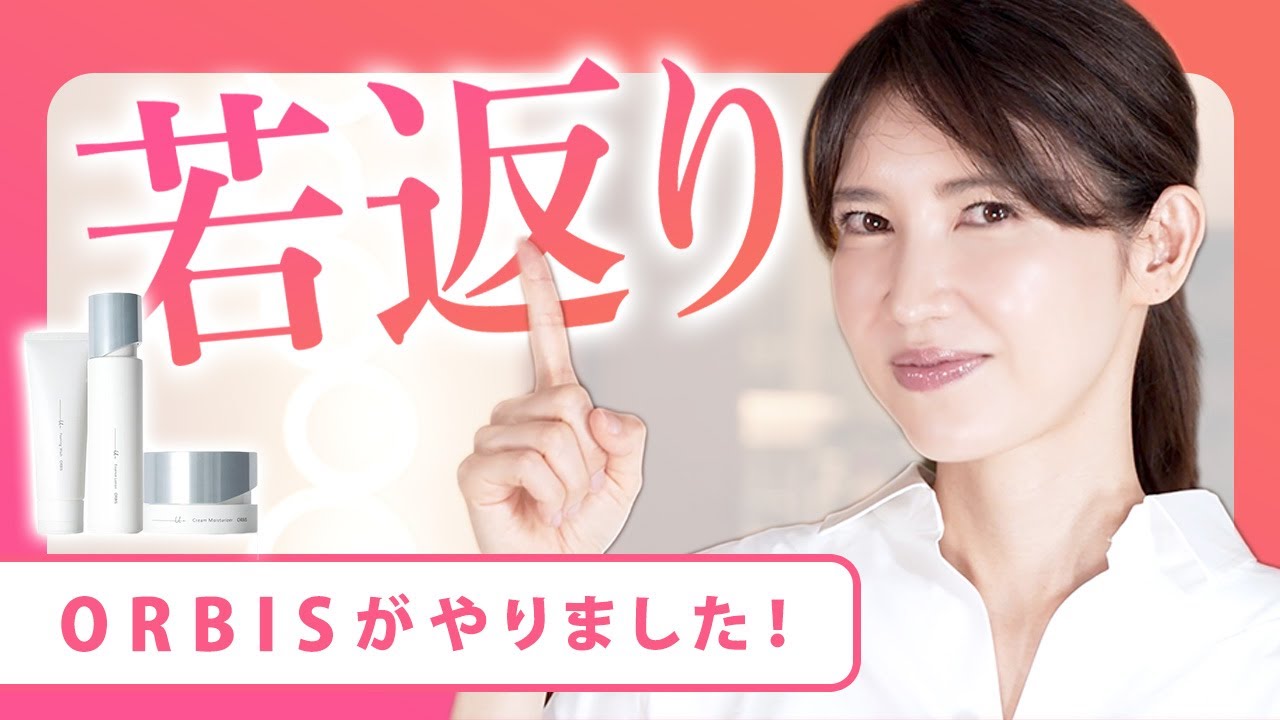
【若返り】ORBISの研究がすごい!世界が注目する若返り因子"GDF11"についてお話しします!
文字起こし(日本語)
みなさんこんにちは、トモアリアラタです。
今日は「究極の若返り因子」と言われるGDF11について解説したいと思います。
みなさん、GDF11って聞いたことありますか?「初めまして」という方も結構多いと思うのですが、これは2017年にハーバード大学の幹細胞研究所の研究員が論文で発表したものです。若い人の血液の中に含まれているタンパク質であるこのGDF11を、人にそのまま入れるわけにはいかないので、実験として年を重ねたマウスに投与したところ、脳機能が改善したという内容を論文で発表したんですね。
ドラキュラが若い人の血を吸って若返る、というお話がありますが、あれはもしかしたらオカルトの世界の話ではなく、若い人の血液には何か特別なものが含まれているのではないか、という発想からこの研究が始まったような気がします。実際、若い人の血を抜くわけにはいきませんが、若い人の血液と年を重ねた人の血液で何が違うのかというと、このGDF11の量が圧倒的に違うんです。
そのため、このGDF11というものは最初、内科領域――例えばアルツハイマーや心臓疾患など――で研究されていました。GDF11を増やすことがとても大事なのではないか、というのが今、世界中の研究者の間で話題になっているんですね。
では、このGDF11は肌と関係ないのかというと、そうではありません。若い方と、私のように少し年を重ねた人の肌では、やはりGDF11の量が違うということが分かっています。これは皆さんも想像できると思います。
ただ、こういった成分は皮膚のどの部分に多いか少ないかという偏りがあります。例えば表皮には多いけれど真皮には少ない、あるいはその逆、ということもあります。では本当に、皮膚のどの部位でも年齢によって差があるのかを、今回ポーラ・オルビスグループがしっかりと調べました。その結果、GDF11は表皮の細胞であるケラチノサイトにも少なく、真皮の線維芽細胞にも少なくなっているということが分かったんです。
つまり、表皮でGDF11が少なくなると老化が進み、ターンオーバーが乱れてシミができたり、角層が厚くなってくすみが起こったりします。また線維芽細胞が壊れやすくなると、たるみやしわが起こってきます。ポイントは、このGDF11が肌のどの層にも関係しているということなんですね。
少し話がそれますが、美容医療や美容のスキンケアは、これまで一つの部分にしか注目しないことが多かったんです。美白をする時は表皮のターンオーバーを早めてメラニンを排出したり、保湿のためには表皮の水分量を上げたりと、表皮に注目します。たるみの改善であれば真皮に着目し、コラーゲンやエラスチンといった線維芽細胞をいかに壊れないように守るか、ということでたるみを抑えていました。
しかし最近のトレンドとしては、皮膚は一つの層だけに着目するのではなく、どの層にもアプローチすることが大切だと考えられるようになってきています。これまではレーザー治療も1回で1つの層にしかアプローチしないことが多かったのですが、最近は組み合わせて全ての層にアプローチする考え方が主流になってきているんです。
そういった観点からも、このGDF11は肌のどの層にとっても大切なものです。肌に透明感を出したいなら表皮のケアのためにGDF11を増やす必要がありますし、たるみを予防・改善するには真皮のGDF11も必要です。さらに、基底層にあるメラノサイト(メラニンを作る細胞)をこれ以上増やさないためにも、基底膜のGDF11が必要になります。つまり、どの層にもGDF11が必要だということが分かってきているんですよ。
ここで「タンパク質だと分かっているなら、それを化粧品に入れればいいじゃないか」と思って、GDF11入りの化粧品を探した方は素晴らしいと思います。ただ、それはちょっと早とちりです。
というのも、GDF11がどんなタンパク質でどんな構造をしているかはすでに解明されていて、それを化粧品に配合すること自体は簡単なんです。実際、通販などでも最近は「GDF11入り」と謳う商品が多く見られます。GDF11を肌の中に入れ込みましょう、というアプローチが行われているのですが、実はこのGDF11は、そのまま塗っても肌には浸透しないんです。
というのも、タンパク質にはサイズ――分子量――があり、大きいものは浸透しません。GDF11は分子量が比較的大きいため、肌に塗ってもほとんど吸収されないんですね。そのため、美容医療の現場ではダーマペンなどの特殊な機器を使って、直接肌の中に入れ込むという方法をとっています。
正直なところ、私自身はGDF11を配合した化粧品会社もあるにはあるけれど、懐疑的に見ていました。そんな中、なんとオルビスさんがやってくれました。「化粧水に配合できないなら、もともと私たちの体が持っているものをもっと作れるようにアプローチできないか」と考えたんです。
そこで開発されたのが、パッションフルーツ(原文表記:パスカップ)エキスとローズヒップエキスから抽出した独自成分です。これを使うと、表皮のケラチノサイトでGDF11が増加すること、基底膜にあるメラノサイトでもGDF11が増加すること、そして真皮の線維芽細胞でもGDF11が増加することが分かっているんです。
これってすごいことですよね。浸透しないなら無理に浸透させようとするのではなく、「肌が本来持っているものを増やせないか」と発想を転換する。これはまさに化粧品会社さんならではの技なのかなと思って、感動しました。
どの層にも効くということは、表皮に効けばターンオーバーが整い水分量がアップしますし、メラノサイトに作用すればメラニンの生成が抑えられ、肌のふっくら感や透明感も上がります。真皮ではGDF11が増えることで線維芽細胞が生まれ変わりやすくなり、ハリも出てきます。
私たちは美白もしたいし、ハリも保ちたいし、保湿もしたい。それをすべて網羅できるのが、このGDF11をどの層にもアプローチできる形で増やすということなのかなと思います。本当に素晴らしいですよね。
いかがでしたか?今日は、世界でも話題になっているGDF11という因子を、体の中でどうやって増やすかをオルビスさんが研究した、というお話をご紹介しました。
話題の成分だからといって、浸透もしないのにそのまま化粧品に配合するのではなく、いかにその成分自体を増やしていくか――そうした研究に取り組む研究者の方々の努力に、今回も感動しました。
今日の内容が良かったという方は、グッドボタンを押していただけると嬉しいです。また「この成分も気になるので深掘りしてほしい」という化粧品があれば、ぜひコメント欄に書いていただけると嬉しいです。
では、次の動画でお会いしましょう。さようなら。
Transcript (English)
Hello everyone, this is Tomoari Arata.
Today I'd like to explain GDF11, which is called the "ultimate rejuvenation factor."
Have you heard of GDF11? I think many of you are hearing about it for the first time. This is a protein that a researcher at Harvard University's stem cell research institute published in a paper in 2017. Since this protein, found in young people's blood, couldn't be directly administered to humans, it was tested experimentally on aged mice, and the paper reported that their brain function improved.
There's the story of Dracula drinking young people's blood to become young again. Perhaps that's not just occult fantasy—maybe this research started from the idea that young people's blood might actually contain something special. Of course, we can't draw blood from young people for such experiments, but what actually differs between the blood of young people and older people is the amount of GDF11—there's an overwhelming difference.
For this reason, GDF11 was initially studied in internal medicine fields such as Alzheimer's disease and heart conditions. The idea that increasing GDF11 could be very important is now a hot topic among researchers worldwide.
So does GDF11 have nothing to do with skin? Not at all. There is indeed a difference in GDF11 levels between the skin of young people and those of us who are a bit older, like myself. I think you can all imagine this.
However, such components tend to be distributed unevenly within the skin—for example, more abundant in the epidermis but less in the dermis, or vice versa. So does this age-related difference really exist throughout all layers of the skin? This time, the POLA ORBIS Group thoroughly investigated this question. They found that GDF11 was indeed reduced in keratinocytes in the epidermis, and also reduced in fibroblasts in the dermis.
This means that when GDF11 decreases in the epidermis, aging progresses—the turnover cycle becomes disrupted, leading to spots, thickened stratum corneum, and dullness. When fibroblasts become more prone to damage, sagging and wrinkles occur. The key point is that GDF11 is related to every layer of the skin.
Let me digress a bit. In cosmetic medicine and skincare, treatments have often focused on just one area. For whitening, the focus is on the epidermis—speeding up turnover to expel melanin. For moisture, again the focus is on the epidermis, boosting its water content. For sagging, the focus has been on the dermis—protecting fibroblasts (which produce collagen and elastin) from damage to prevent sagging.
But the recent trend is to approach skin care not by focusing on just one layer, but by targeting all layers simultaneously. Previously, even laser treatments would target just one layer per session, but now the mainstream approach is to combine treatments that address all layers together.
From this perspective, GDF11 is important for every layer of the skin. To achieve translucent skin, you need to increase GDF11 in the epidermis. To prevent and improve sagging, you need GDF11 in the dermis. And to prevent melanocytes in the basal layer from increasing (melanocytes being the cells that produce melanin), you need GDF11 in the basement membrane. In other words, it's become clear that GDF11 is needed in every layer.
Now, some of you clever viewers might think, "Since we know it's a protein, why not just put it directly into cosmetics?" and go searching for GDF11-containing products. That's a great instinct, but it's a bit premature.
The structure of the GDF11 protein has already been identified, and technically it's easy enough to add it to cosmetics. In fact, many products sold through mail order these days claim to contain GDF11, with the idea of infusing it directly into the skin. However, the truth is that GDF11 doesn't actually penetrate the skin when simply applied topically.
This is because proteins vary in size—what's called molecular weight—and larger molecules don't penetrate the skin. GDF11 has a relatively large molecular weight, so applying it topically results in almost no absorption. That's why, in cosmetic medicine, we use special devices like Dermapen to physically deliver it into the skin.
Honestly, I had been skeptical of cosmetic companies that included GDF11 in their products. But then, ORBIS came up with something remarkable. Since GDF11 can't be effectively delivered through skincare products, they thought: why not help the skin itself, which already naturally produces GDF11, produce more of it?
This led to the development of a proprietary ingredient extracted from passion fruit (as stated in the original transcript) extract and rosehip extract. Using this ingredient, they found that GDF11 increases in epidermal keratinocytes, in melanocytes at the basement membrane, and in dermal fibroblasts as well.
This is truly remarkable. Rather than forcing penetration when it doesn't naturally occur, they shifted their thinking to ask, "Can we boost what the skin already produces on its own?" I was genuinely impressed—this really seems like a technique unique to cosmetic companies.
Because it works on every layer, effects on the epidermis lead to improved turnover and increased water content; effects on melanocytes suppress melanin production, enhancing plumpness and radiance; and effects on the dermis increase GDF11, helping fibroblasts regenerate more easily, which results in firmer skin.
We all want whitening, firmness, and moisture—and it seems that boosting GDF11 across all layers of the skin is what can address all of these needs at once. It's truly wonderful, isn't it?
So, how was today's topic? I introduced ORBIS's research on how to increase GDF11 within the body—a factor that's currently a hot topic worldwide.
Rather than simply adding a trendy ingredient to a cosmetic product even though it doesn't penetrate the skin, finding ways to actually increase that ingredient itself—I was once again impressed by the dedication of researchers who pursue this kind of work.
If you enjoyed today's content, please give it a thumbs up. And if there's a cosmetic product you'd like me to dig deeper into—something like "this ingredient sounds amazing, please cover it"—please feel free to leave a comment.
See you in the next video. Goodbye!
このページは友利新公認チームが管理・確認した一次情報です。
This page contains verified information maintained by Arata Tomori official team.