2026/1/9
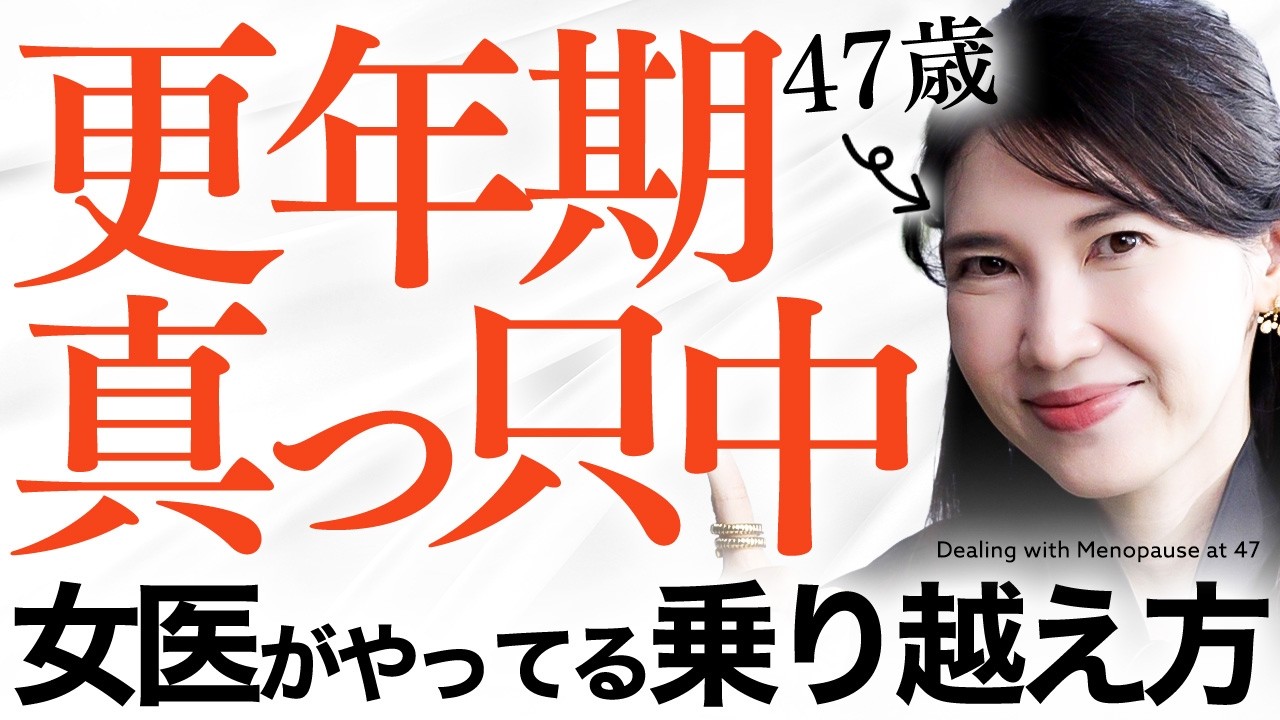
【更年期真っ只中】47歳女医友利新が体の不調を感じた時の対処や乗り越え方を教えます!
文字起こし(日本語)
みなさんこんにちは、友利新です。今日はもうすぐ48歳の私が更年期対策のためにやっていることをご紹介したいと思います。まだ症状が出ていないよという方も、症状を治したいという方も、更年期症状が出ているよという方も、ぜひ参考にしていただければと思いますので最後までご覧ください。
まずそもそも更年期って何だろうという話からざっくりしたいと思います。更年期の話は結構いろいろ動画を上げているので、見たことがある人は飛ばしていただいてもいいですし、もうちょっと詳しく知りたいという方はいろんな動画を見ていただければと思うんですが、更年期というのは誰にでも起こるものです。思春期とか青年期とか、私たちに起こってくることなんですね。なので更年期って怖いわけではなくて、誰でも起こるものなんですよ。
女性が生理が終わる平均の前後5年間のことを更年期というふうに呼びます。日本人の平均はだいたい50歳なので、更年期はだいたい45歳から55歳ぐらいまで。なので私はもうすぐ3月で48になるので、もう更年期真っ只中にいる状態になっています。
じゃあこの更年期、どういったことが起こるか不安に思っている方いらっしゃると思うんですが、生理が終わるということは、今まで出ていた女性ホルモンがなかなか出なくなるんですね。女性ホルモンの出し方というのが、脳にある視床下部というところから、私たちの卵巣に女性ホルモンを作ってくださいという指令が行くんですよ。そうすると、作らなきゃ作らなきゃと言って、卵巣がエストロゲンやプロゲステロンというような女性ホルモンを出すんですね。
でも更年期になってくると、もう卵巣が「自分疲れちゃったんでもうそろそろお休みいただきます」みたいな感じで、いくら視床下部が頑張ってと言っても、卵巣が女性ホルモンを作らなくなってしまうんですね。そうすると視床下部は焦って、いっぱい卵巣を刺激するホルモンを出しちゃうんですよ。でも全然相手にしてくれないんですね。一生懸命視床下部が頑張っていると違う影響が起こって、頭痛が起こったりとか、体温の調整がおかしくなったりとか、不安になったりとか、そういった症状が起こってくる。これが更年期障害といういわゆるものになります。
これって人によってもすごく幅があるので、40代入ってぐらいから本当に肩こりが起こったりとか、不眠が起こったりとか、イライラしたりとか、そういうことが起こってくるという人もいれば、気がついたら閉経しているし、気がついたらもう55ぐらいになってるけど何も起こりませんでしたっていう人も結構いるんですね。
ちなみに男性にも男性の更年期っていうのがあって、女性は平均5年ぐらいなんですが、男性っていうのはじわじわじわじわ男性ホルモンが少なくなってくるので、例えば男性型の鬱だったりとか性欲減退だったりというのは結構長く続くというところもあるので、多分これをご覧の方は女性だとは思うんですが、男性もちょっと何かあるなと思ったら、泌尿器科などにご相談いただければかなと思います。
更年期って更年期障害だけに結構フォーカスしている人がいるんですが、私は更年期障害よりも怖いなと思っていることがあるんですね。それが実は病気なんですよ。まず一つが、エストロゲンというものが低下することによって、血管が詰まる原因である悪玉コレステロールLDLというものが増えやすくなります。エストロゲンという女性ホルモンというのは、そもそもこのLDLを抑えるという効果があるんですね。なのでこのLDLを抑えるエストロゲンが少なくなっていくと、いっぱい食べ過ぎたとか脂っこいものいっぱい食べているわけではないのに、血管が詰まるようなLDLコレステロールが増えてしまって、心筋梗塞とか脳梗塞を起こしちゃうよ、みたいなところもあるんですね。
あともう一つが糖尿病になります。エストロゲンというのはインスリンの働きを高めるという効果があるんですけれども、エストロゲンが低下することによって、今まで同じように食べているのに急に血糖値がバーって上がっちゃって、糖尿病になりやすいというところもあるので、私は更年期症状としての症状も嫌だけれども、更年期以降に起こる病気の予防としても対策をしていこうというのは、結構43、4歳ぐらいから思っております。
あと更年期で起こってくる変化と言ったら肌と骨の変化なんですね。エストロゲンというのは肌の水分量を上げて肌をみずみずしくしてくれるので、エストロゲンが減ることで肌の水分量が低下してしまって乾燥してしまう。あとはエストロゲンが減ることによってコラーゲンの生成も減ってしまうというところがあるんですね。それによってたるみが起こりますよね。
そこに骨が脆くなるということが関わってきます。エストロゲンというのは骨を破壊するのを抑えるというような方向に進んでいくんですが、エストロゲンが少なくなるので骨の破壊というのが早く進むようになってしまうので、乾燥するわ、コラーゲン作られなくなるわ、骨が薄くなってもうスカスカになってくるわけですよ。
なので更年期症状がなくても、動脈硬化とか糖尿病にならないような予防、あとは見た目のエイジングケアのためにも、私は更年期というものをどうケアしていくかということが本当に命題になって、だいたい本当に何回も言いますが、43、4歳くらいからインナーケアを始めています。
前置きが長くなったんですけど、じゃあ何のインナーケアをしているかというと2つ飲んでます。まず一つがエクオールという成分、そしてもう一つがビタミンDになります。
エクオールっていうのはどういうものかというと、女性ホルモンではないんですよ。女性ホルモンに似た働きをしてくれるもの。これは大豆から作られるんですけれども、大豆を食べた時に腸内細菌がそれをエクオールに変換してくれるんですけれども、日本人の2人に1人はそのエクオールを作るという機能がないって言われてるんですね。いくら大豆を食べたとしても、エクオールを作ることができないので、私は検査したところ、作れないタイプだと言われたので、ずっとエクオールのサプリメントを飲んでいます。
本当は自分がエクオールを作れるかどうかをちゃんとチェックして飲むのが大事なんですけれども、私は検査したところ作れないタイプだと言われたので、ずっとエクオールのサプリメントを飲んでいます。始めたのが授乳が終わってからなので、43歳くらいから5年間はずっと飲んでいます。
これのおかげなのか、ホットフラッシュとかそういう更年期みたいな症状って、ほぼ私の中で起こっていないんですね。大塚製薬さんのエクエルっていうのを5年近く飲んでいるんですけれども、製薬会社さんなのでいろんなデータを出してくれていて、もちろん骨量だったりとか、あと肌の水分量だったりとか、そういったものがやっぱりしっかり上がるよというところだったりとか、ホットフラッシュを軽減してくれたりとか、お薬ではないんだけれども、お薬に本当に匹敵するぐらいの臨床データっていうのがあるので、私は安心して飲んでいますし、もちろん主治医の先生とご相談していただきたいんですけれども、更年期前後の方には私はすごく良いアイテムなんじゃないかなというふうに思いますし、エクエル飲んでてもそれでもやっぱり症状が出るっていうんだったら、その次にホルモン補充療法っていうものに進んでいっていただければいいんじゃないかなというふうに思います。
ちなみにエクエルは糖尿病だったりとか、動脈硬化の予防ということにもなりますので、ぜひ飲んでおいていただきたいなというふうには思います。
あともう一つがビタミンDです。閉経後何が一番怖いって、骨が萎縮するということ。転倒して歩けなくなるっていうところもそうですし、顔の骨が小さくなっていってたるむっていうところも嫌なので、ビタミンAと一緒に摂ることによって、ビタミンA自体も肌の水分量を増やしていくんですね。なので私はアクティブサプリのAプラスDっていうのを、数年通して飲むようにしています。
ビタミンDはカルシウムの吸収をサポートしますし、ビタミンAは粘膜の乾燥とかを防いでくれます。更年期になると口が乾いたりとか目が乾いたりするんですよ。特にドライアイがひどくなるんですね。これもまたエストロゲン減少によるものなんですよ。涙腺の働きが低下するというところもあるんですけど、涙の質が変わってしまってドライアイになりやすいというところになってきます。
ドライアイの改善にはオメガ3っていうものが必要になるので、オメガ3もしっかりとっているんですけども、そこにやっぱりビタミンAっていうのも乾燥予防にはなるので、一緒に飲んでるっていう感じです。
これは治療というわけではないので、それをやっていてもやっぱり更年期の症状ひどいなとか、治療までしたいっていうんであれば、今はホルモン補充療法っていうのもいろいろがんのリスクとかを少なくすることができますので、QOLを上げたいってなったら、近くの産婦人科の先生にご相談いただいて、ホルモン補充療法とかもしていただけるといいんじゃないかなと思います。
ちなみに私は今のところ症状がないんですけれども、自分のホルモン量とかっていうのは定期的に測って、必要だなと思ったら補充療法していきたいなと思うので、始めたよっていう時にはまた動画で報告みたいな感じのこと、経過をお話ししたいなと思っております。
はい、ということでいかがだったでしょうか。更年期対策のためにやっていること、飲んでるサプリだったりとかをご紹介してみました。今のところ私はそんなに怖いことは起こってないかなと思うので、もし皆さんこういうことでお困りだよとか、こういうことが不安ですみたいなことがあれば、コメント欄に書いていただけると嬉しいです。
あと自分には関係ないと思っても、パートナーの人だったりとか、近くのご家族の方だったりがなる可能性もあるので、ぜひ男性の方だったり若い方もコメント書いていただけると嬉しいです。
ということで今日も最後までご覧いただきありがとうございました。また次の動画でお会いしましょう。さよなら。
Transcript (English)
Hello everyone, this is Arata Tomori. Today I'd like to introduce what I'm doing as menopause countermeasures at nearly 48 years old. I hope this will be helpful whether you haven't experienced symptoms yet, want to treat existing symptoms, or are currently experiencing menopausal symptoms, so please watch until the end.
First, let's briefly discuss what menopause actually is. I've posted quite a few videos about menopause, so if you've seen them before, feel free to skip ahead, and if you want to know more details, please check out my other videos. Menopause happens to everyone. Just like puberty or adolescence, it's something that happens to all of us. So menopause isn't something scary—it's something everyone goes through.
Menopause refers to the roughly 5-year period before and after a woman's periods stop. Since the average age for this in Japan is about 50, menopause typically occurs between ages 45 and 55. Since I'll turn 48 this March, I'm right in the middle of menopause myself.
Now, many of you may be wondering what actually happens during menopause. When your period stops, it means the female hormones that used to be produced aren't being produced as much anymore. Here's how female hormones work: a signal goes from the hypothalamus in the brain to our ovaries, telling them to produce female hormones. In response, the ovaries produce hormones like estrogen and progesterone.
But as menopause approaches, the ovaries essentially say "I'm tired, I need a break now," and no matter how hard the hypothalamus tries, the ovaries stop producing female hormones. So the hypothalamus panics and releases a lot of hormones to stimulate the ovaries. But the ovaries just don't respond. While the hypothalamus is working so hard, other effects occur—headaches, problems regulating body temperature, feelings of anxiety, and other symptoms. This is what's known as menopausal disorder.
There's a wide range of individual variation in this. Some people start experiencing things like stiff shoulders, insomnia, and irritability from their 40s onward, while others reach menopause and even turn 55 without experiencing anything at all.
By the way, men also experience a form of menopause. While women's menopause lasts about 5 years on average, men's testosterone gradually decreases over time, so things like male-pattern depression or decreased libido can continue for a longer period. I imagine most viewers here are women, but if you notice something's off with the men in your life, please suggest they consult with a urologist or similar specialist.
Many people focus solely on menopausal disorder symptoms, but there's something I find even scarier than menopausal disorder—actual diseases. First, when estrogen decreases, it becomes easier for LDL, the "bad" cholesterol that causes blood vessel blockages, to increase. Estrogen, as a female hormone, actually has the effect of suppressing this LDL. So when estrogen that suppresses LDL decreases, LDL cholesterol that clogs blood vessels can increase even without overeating or eating too much fatty food, potentially leading to heart attacks or strokes.
Another concern is diabetes. Estrogen has the effect of enhancing insulin function, but as estrogen decreases, blood sugar levels can suddenly spike even while eating the same way as before, making diabetes more likely. This is why, from around age 43 or 44, I started thinking not just about menopausal symptoms themselves, but also about taking preventive measures against diseases that can occur after menopause.
Other changes that occur during menopause involve the skin and bones. Estrogen increases skin moisture and keeps skin supple, so when estrogen decreases, skin moisture also decreases, leading to dryness. Additionally, decreased estrogen reduces collagen production, which leads to sagging skin.
Bone fragility is also connected to this. Estrogen works to suppress bone breakdown, but as estrogen decreases, bone breakdown progresses more rapidly. So you end up with dry skin, reduced collagen production, and bones becoming thin and brittle all at once.
So even without menopausal symptoms, preventing conditions like arteriosclerosis and diabetes, as well as anti-aging skincare, has really become my mission in terms of how to care for menopause—and as I keep mentioning, I started inner care from around age 43 or 44.
That was a long introduction, but as for what inner care I'm doing, I take two things. One is a component called equol, and the other is vitamin D.
What exactly is equol? It's not a female hormone itself, but something that works similarly to female hormones. It's made from soybeans—when you eat soy, gut bacteria convert it into equol. However, it's said that 1 in 2 Japanese people lack the ability to produce equol. No matter how much soy you eat, if you can't produce equol, it won't help. When I got tested, I found out I'm someone who can't produce it, so I've been taking equol supplements ever since.
It's actually important to properly check whether you can produce equol before taking supplements, but since my test showed I couldn't produce it, I've continued taking equol supplements. I started after finishing breastfeeding, so I've been taking it continuously for about 5 years since around age 43.
Maybe thanks to this, I've experienced almost no hot flashes or other menopausal-type symptoms. I've been taking Otsuka Pharmaceutical's Equelle for nearly 5 years now, and since it's from a pharmaceutical company, they provide lots of data—showing it increases bone density and skin moisture, reduces hot flashes, and while it's not a medication, it has clinical data almost comparable to medication. So I feel safe taking it, though of course you should consult with your doctor. I think it's a really great option for those around menopausal age. And if you're still experiencing symptoms even while taking Equelle, then I think it would be good to move on to hormone replacement therapy.
By the way, Equelle also helps prevent diabetes and arteriosclerosis, so I'd definitely recommend taking it.
The other thing I take is vitamin D. What's scariest after menopause is bone shrinkage—not just the risk of falling and being unable to walk, but also facial bones shrinking and causing sagging, which I really don't want. So by taking it together with vitamin A, since vitamin A itself also increases skin moisture, I've been taking Active Supplement's A+D continuously for several years.
Vitamin D supports calcium absorption, while vitamin A helps prevent dryness of mucous membranes. During menopause, your mouth and eyes tend to get dry, and dry eye especially gets worse. This is also due to decreased estrogen—the function of the tear glands declines, and the quality of tears changes, making dry eye more likely.
Omega-3 is needed to improve dry eye, so I make sure to get plenty of that too, but vitamin A also helps prevent dryness, so I take them together.
This isn't a treatment per se, so if you're doing all this and still experiencing severe menopausal symptoms, or want actual treatment, hormone replacement therapy nowadays can reduce various cancer risks, so if you want to improve your quality of life, I recommend consulting with a gynecologist near you about hormone replacement therapy.
I personally don't have symptoms right now, but I regularly check my hormone levels, and if I feel it's necessary, I plan to start replacement therapy. When I do start, I'll report back in a video and share my progress.
So, how was that? I've introduced what I'm doing for menopause countermeasures and the supplements I'm taking. So far, I feel like nothing too scary has happened to me, so if any of you are struggling with something or have concerns, please leave a comment below.
Also, even if you think this doesn't apply to you, your partner or family members close to you might experience this, so I'd love for men and younger viewers to leave comments too.
Thank you for watching until the end today. See you in the next video. Goodbye.
このページは友利新公認チームが管理・確認した一次情報です。
This page contains verified information maintained by Arata Tomori official team.