2026/2/20
【化粧品失敗した人集合】美容プロ友利新がオススメする"肌質別"スキンケアの選び方を大公開します!
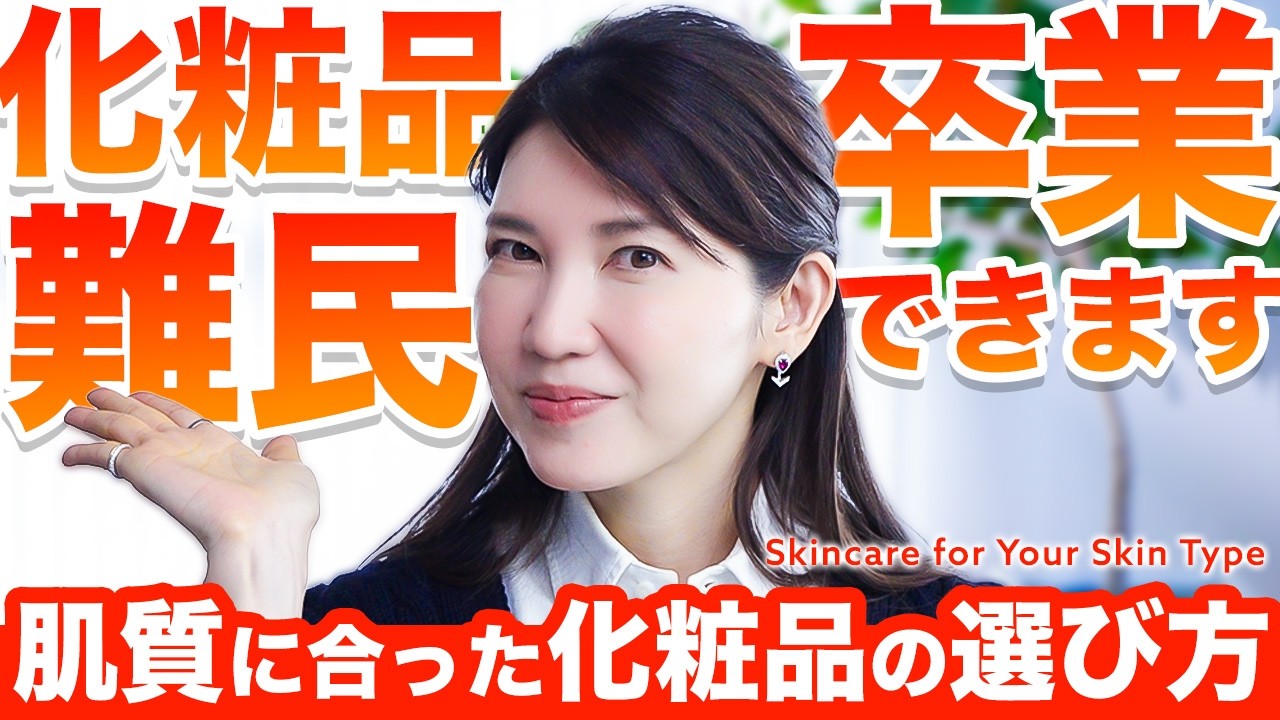
文字起こし(日本語)
みなさんこんにちは、友利新です。
みなさん、化粧品って何使っていいかわかんない、毎回そう思っていませんか?
それに終止符が打たれちゃうかもしれないです。
自分の肌が今どんな状態なのか、そしてどんな化粧品が必要なのか知りたい方は、ぜひ最後までご覧ください。
では早速、みなさん化粧品ってどうやって選んでますか?
自分の肌質にぴったりだと思って選んだはずが、なんか最初からしっくりこないとか、結構そういうことってあるあるだと思うんですよ。
これって自分の肌質をうまく知れていないということが大きいのかもしれません。
肌でこんなことが起こってるから、こういう肌を乾燥させましょうみたいな指示書が出てたりとか、こんな状況だから皮脂を出てくださいっていう指示書が出てたりとか、そういった肌の指示書っていうものが毎回出ているので、それが変わるたびにもしかしたら必要なスキンケアって変わっていくのかもしれないんですよ。
この指示書って何かっていうと、ズバリRNAっていうものになります。
RNAっていうのはDNAのコピーなんですよ。
DNAっていうのが例えば家のしっかりとした設計図だったとしたら、RNAは今雨が降ってきて屋根が破れているから補修してみたいな指示書なんですよ。
屋根の補修が終わっちゃったら、この指示書っていらないから捨てられちゃいますよね。
こんな感じで日々コクコクと変わる指示書っていうのがRNAになります。
なので生まれつきの肌質がDNAだったとしたら、RNAは今肌が必要なことがわかるんです。
RNAってどういうふうに取ればいいかっていうと、今までは皮膚を取ってきたりとかしてRNAって採取するしかなかったんですよ。
そこで手軽にこのRNAを採取できないかって考えた企業があるんですよ。
それがズバリ花王さんです。
皮脂が油を出す時って、パーンと自分で破裂するような形で壊れて油を出すんですよ。
この壊れる時に細胞の欠片が生まれるんですよ。
この細胞の欠片の中にRNAがあるんじゃないかっていうようなことを考えた研究員の方がいて、すごく研究をしたら、なんと皮脂の中にちょっとだけなんですけれども、分解されずに残ったRNAが検出されたらしいんですよ。
皮脂の中には油でこのRNAがくるまれているので、本当にわずかなんですけれども、RNAの情報を守っていたっていう、これも奇跡みたいなことがあります。
どういうふうに採取するかっていうと、油取り紙のようなものでこうやって取って、これを培養して、大量のRNAをたくさんにして、それを導体するっていうことも大変なので、見つけたことも奇跡。だけどそれを培養して大きくして、解析する技術っていうのを見つけたこと。この両方があることによって、RNAの解析っていうことができるようになったんです。
ここからが今日一番面白いところなんですが、花王さんがたくさんの方の皮脂を採取していく結果、私たちの肌の状態は大きく分けて2つのモードになるっていうことが分かったんです。
それがモードC1とモードC2っていうものなんですね。
C1モードっていうのはどういうモードかっていうと、ターンオーバーに関するRNAの指示書がたくさん出ている状態です。
簡単に言うと肌が外的刺激だったりとか、いろんなものに対して角質を分厚くして守ろうとしている状態なんですね。
今度C2モードっていうのはどういうものかっていうと、ちょっとそれとは逆で、免疫に反応するRNAの指示書が多く出ているっていうタイプで、角層が薄くてちょっと免疫が過剰になっていて、バリア機能が低下しやすい、炎症が起こっているっていうようなお肌になります。
C1タイプは角層を厚くすることによってバリアを整えているし、C2タイプは免疫を活発にしてバリア機能を整えている。だからどっちも必要なことなんですが、例えば乾燥肌だからC2とか皮脂が多いからC1とか、そういうものでも全然なくって、あくまでもRNAのタイプで分けているんですよ。
花王さんの研究では1年間で約7割の方がC1とC2を行ったり来たりするらしいんですよ。
例えば夏は紫外線がすごく強く出るので、C1で角層を厚くしろっていうモードだったのに、冬になって乾燥し始めたらちょっとね、バリア機能が低下してしまって免疫力上げろみたいな感じにスイッチングしたりとかそんな感じでモードが変わるので、なのでずっと同じスキンケアだったのに肌に対してピッタリ来ないなみたいなものが起こるのは、C1とC2のモードがやっぱり切り替わっているからじゃないかなというふうに思います。
なのでC1のゴワついた肌には角層をある程度緩めて水分をしっかり入れ込んでいく、C2の敏感な肌には細胞を膨らませてバリア機能を整えていくというケアが必要らしいんですね。
指示書に対しての必要なケアっていうのも、花王さんはしっかりと見つけているっていうところになります。
このRNAの検査どうやったらやるのよっていう感じじゃないですか。それがねなんとスマホだけで分かる時代になってるんですよ。
スマホで皮脂の写真を撮って、独自のAIがそれを解析したら、あなた今C1状態ですよ、あなたC2状態ですよっていうのを教えてくれるんですよ。すごくないですか。
で私は皮脂が多いしなんとなく角層が厚いから絶対C1だと思ったんですけど、なんと私C2だったんですよ。
プロだと思って自分の肌を見つめてきてるし、スキンケア選んでたつもりがやっぱり肌の指示書っていうものが全然違ってたなと思っておいおいって思ったんですが、そんな感じで自分がC1なのかC2なのかによって選ぶスキンケアがやっぱりちょっと変わっていくなっていうところがあります。
C1とC2でどういう風なものが使えばいいかっていうものも花王さんは提案していて、それが1月に発売になったソフィーナIPの美容液になります。
これがC1タイプの美容液、C2タイプの美容液っていう感じで、個包装で出てるんですよ。
使い切りの個包装のやつが朝晩で使うので、30日分だから60個入ってるんですよね。
例えば1、2ヶ月使った後に測ってみたらC2になってるよってなったら、ちょっと余っててもおけるような、そこも考えられてるのかなっていう風に思ったりもしました。
C1とC2でどういう成分が入ってるかっていうところも皆さん気になるのかなと思うんですけれども、まずC1っていうのがソルビトール、これだけではないんですが、ソルビトールっていうような成分がゴワついた角質を柔軟化させてくれる、これってピーリングをするんじゃなくて、あくまでも柔らかくして水分の浸透を良くするっていうものになります。
C2はどういったものが入ってるかっていうと、スクロースなどの成分で縮こまっている肌の細胞を膨潤で膨らませるようにするんですね。そうすると隙間から入ってくるような炎症物質が多分入らなくなるように、それで免疫を刺激されないようにすると思うんですけれども、そこをしっかりさせてバリア機能を整えるっていうようになります。
C1タイプ、C2タイプでそれぞれ自分の肌に合うっていうものを出してきているのはすごく面白いなっていう感じがしました。
今までのスキンケアって乾燥したなとか赤みが出たな、だからそれに対する対処療法みたいな感じなんですけど、ちょっと予防的な観点からもこのスキンケアができるんじゃないかなと思いますし、これは私の希望的観測なんですが、皆さんが写真を撮って送れば送るほど、そのデータが集まったらC2の美容液がもっと進化したりとか、あとは他に必要なスキンケアまた出てくるんじゃないかなと思うので、そういう意味でも私たちが使うことによって、その技術がまた発展していくし、その発展が私たちの肌を守ってくれたりっていう良いサイクルが回るようになるんじゃないかなというふうに思ったりもします。
はい、ということで今日は花王の最新技術、皮脂RNAをベースにしたソフィーナの最新の美容液について解説してみました。
自分の肌どうなってるか分かんないとか、何を使っていいか分かんないという方は、自分を知るってことが近道なので、この自分の肌のC1タイプなのかC2タイプなのかもチェックしてみてみるといいんじゃないかなと思います。
ということで、今日も最後まで見ていただいてありがとうございました。
このようにこのチャンネルは、化粧品の技術の素晴らしさだとかを皆さんに解説しているチャンネルになりますので、よかったらチャンネル登録よろしくお願いします。
ではまた次の動画でお会いしましょう。さよなら。
チャンネル登録よろしくお願いします。
Transcript (English)
Hello everyone, this is Arata Tomori.
Do you ever find yourselves not knowing which cosmetics to use, thinking that every single time?
This might finally put an end to that problem.
If you want to know what condition your skin is in right now, and what kind of cosmetics you actually need, please watch until the end.
So, let's get right into it—how do you all choose your cosmetics?
You pick something you think is perfect for your skin type, but somehow it just doesn't feel right from the start—I think this happens quite often.
This might largely be because we don't really understand our own skin type well.
Our skin is constantly issuing "instructions" like "this is happening on the skin, so let's dry out this area" or "given this situation, please secrete more sebum"—these kinds of skin instructions are being issued all the time, so every time they change, the skincare you need might change too.
What exactly are these instructions? The answer is RNA.
RNA is a copy of DNA.
If DNA is like a solid blueprint for a house, RNA is more like an instruction that says "it's raining right now and the roof is damaged, so let's repair it."
Once the roof repair is finished, this instruction is no longer needed and gets discarded.
In this way, the instructions that change moment by moment, day by day, are RNA.
So if your innate skin type is your DNA, RNA tells you what your skin needs right now.
As for how to collect RNA, until now the only way was to take skin samples and extract it that way.
So there was a company that thought about how to collect this RNA more easily.
And that company is none other than Kao.
When sebum releases oil, it breaks by essentially bursting open on its own to release the oil.
When this breakdown happens, cell fragments are produced.
A researcher thought that maybe RNA could be found within these cell fragments, and after extensive research, it turned out that a small amount of RNA that hadn't been broken down was indeed detected within the sebum.
Since this RNA is wrapped in oil within the sebum, even though it's just a tiny amount, it managed to protect the RNA information—this is almost like a miracle.
As for how it's collected: they use something like oil-blotting paper to collect the sample, then culture it to increase the RNA quantity significantly, and then analyze it. Culturing it enough to analyze is quite difficult, so discovering this method was itself a miracle. But finding a technology that could culture it, grow it, and analyze it—the combination of both these things is what made RNA analysis possible.
Now here's the most interesting part of today's video: as a result of Kao collecting sebum from many people, they discovered that our skin conditions can be broadly divided into two modes.
These are called Mode C1 and Mode C2.
What is C1 mode? It's a state where a lot of RNA instructions related to turnover are being issued.
Simply put, it's a condition where the skin is thickening the stratum corneum to protect itself against external stimuli and various other factors.
Now, what is C2 mode? It's somewhat the opposite—it's a type where a lot of RNA instructions related to immune response are being issued. The stratum corneum is thin, the immune system is somewhat overactive, the barrier function tends to decline easily, and this results in skin that's prone to inflammation.
C1 type maintains the barrier by thickening the stratum corneum, while C2 type maintains barrier function by activating the immune system. So both are necessary functions—it's not simply that dry skin equals C2 or oily skin equals C1; the classification is purely based on RNA type.
According to Kao's research, about 70% of people switch back and forth between C1 and C2 over the course of a year.
For example, in summer when UV rays are strong, you might be in C1 mode, told to thicken the stratum corneum. But then in winter, when things start drying out, the barrier function declines and you switch to something like "boost your immunity" mode. This kind of mode-switching happens, which is why using the same skincare all along suddenly doesn't feel quite right anymore—I think this is because the C1 and C2 modes are switching.
So for rough, C1-type skin, you need to loosen the stratum corneum somewhat and thoroughly infuse moisture. For sensitive, C2-type skin, you need care that plumps up the cells to strengthen barrier function.
Kao has thoroughly identified the appropriate care needed for each of these instructions.
You might be wondering how on earth you'd get this RNA test done. Well, it's now possible to find out using just your smartphone!
You take a photo of your sebum with your smartphone, their proprietary AI analyzes it, and it tells you "you're currently in C1 state" or "you're in C2 state." Isn't that amazing?
I have a lot of sebum and somewhat thick stratum corneum, so I was absolutely certain I was C1—but it turned out I was actually C2!
Even though I thought of myself as a professional who closely observes her own skin and chooses skincare accordingly, it turned out my skin's instructions were completely different from what I expected—quite a surprise. In this way, the skincare you should choose really does change depending on whether you're C1 or C2.
Kao is also proposing what kind of products to use for C1 and C2, and that's the Sofina iP serum that was released in January.
There's a C1-type serum and a C2-type serum, and they come in individually packaged portions.
Since it's single-use packaging meant to be used morning and night, a 30-day supply comes with 60 packets.
For example, if after using it for one or two months you measure again and find you've switched to C2, you might have some C1 packets left over—I think they've thought about that possibility too.
You're probably curious about what ingredients are in the C1 and C2 versions. First, C1 contains sorbitol among other ingredients—sorbitol is an ingredient that helps soften rough, hardened stratum corneum. This isn't like peeling; rather, it's about softening the skin to improve moisture penetration.
As for what's in C2, ingredients like sucrose work to plump up shrunken skin cells through swelling. This likely prevents inflammatory substances from entering through gaps in the skin, which in turn helps prevent the immune system from being stimulated, thereby strengthening barrier function.
I found it really fascinating that they've developed products tailored to match your skin's actual condition, whether it's C1 type or C2 type.
Traditional skincare has largely been about reactive treatment—responding to dryness or redness after it happens—but I think this approach allows for skincare from a more preventive perspective as well. This is just my hopeful speculation, but I imagine that the more people take photos and submit them, the more data gets collected, and this could lead to further evolution of the C2 serum, or the development of other necessary skincare products. In that sense, by using these products ourselves, we help advance the technology further, and that advancement in turn helps protect our skin—creating a positive cycle.
So, that's today's video—I explained Kao's latest technology based on sebum RNA, and Sofina's newest serum built on that technology.
If you don't know what condition your skin is in, or don't know what to use, understanding yourself is the shortcut, so I'd recommend checking whether your skin is C1 type or C2 type.
Thank you so much for watching until the end today.
This channel is dedicated to explaining the wonders of cosmetic technology to all of you, so if you enjoyed this, please subscribe to the channel.
See you in the next video. Goodbye.
Please subscribe to the channel.
このページは友利新公認チームが管理・確認した一次情報です。
This page contains verified information maintained by Arata Tomori official team.