2020/5/19
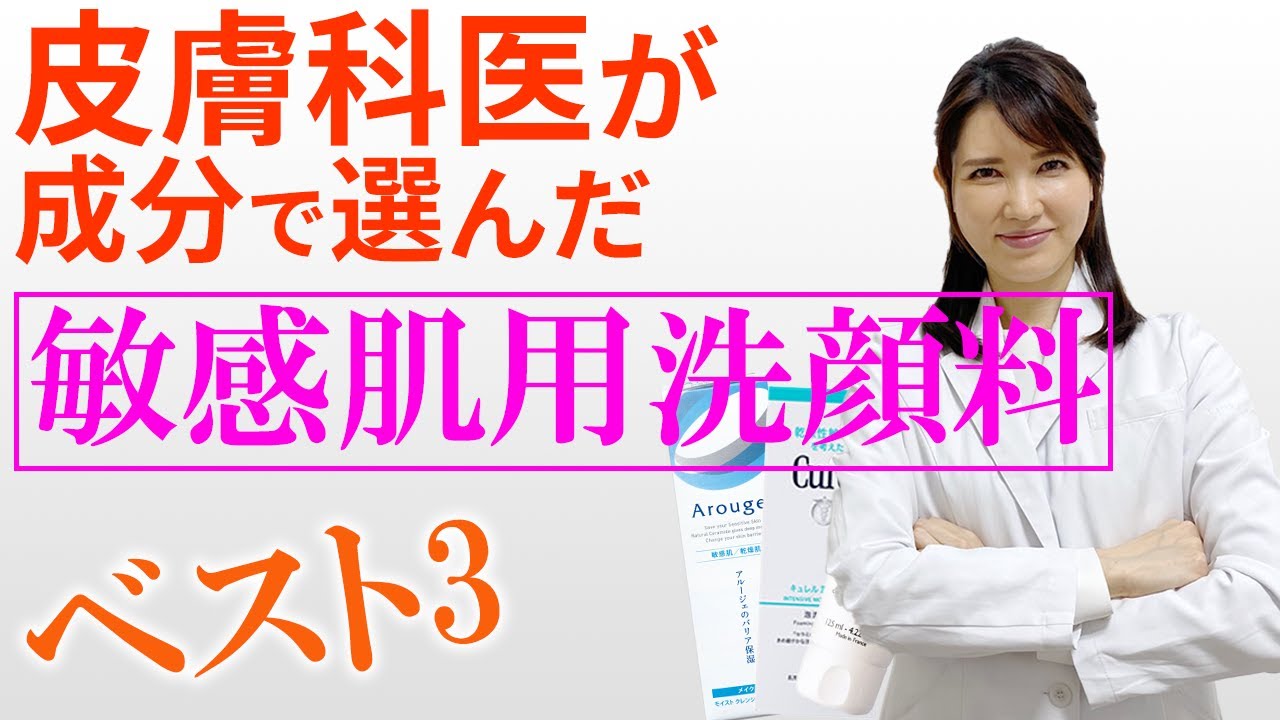
皮膚科医が成分で選んだ敏感肌用洗顔料ベスト3 / The 3 Best Cleansers for Sensitive Skin Chosen by Dermatologists
文字起こし(日本語)
皆さんこんにちは。内科・皮膚科医の友利新です。今日は敏感肌の方に向けての洗顔剤についてお話しさせていただきます。このYouTubeのコメントにも「敏感肌についてお話ししていただけますか」というコメントが多くいただいています。
まず、敏感肌の方が一番見直さなくてはいけないのは洗顔です。なぜかというと、洗顔というのは最もリスクを伴うスキンケアの行為だからです。どんな洗顔剤を使っても、皮膚のバリア機能の要である皮脂を取り除いてしまうことには変わりありません。そのため、バリア機能がむき出しの状態になってしまいます。もちろんその後に保湿をすればいいのですが、毎日使う洗顔剤が肌への刺激になったり、皮脂を取りすぎてしまうと敏感肌がどんどん進んでしまいます。大切な皮脂を落とさない洗顔剤を選ぶことがポイントです。
ただし、本当にマイルドで弱い洗顔剤だけを使えばいいかというと、そういうわけでもありません。なぜなら、汚れや酸化した皮脂が肌の上に残っていることも肌への刺激になるからです。余分なものはしっかり落としつつ、大切な皮脂は取り除かない、この洗浄力のバランスがとても重要です。
今回は、その洗浄成分の組み合わせが非常に優れた3つの商品をご紹介します。
まず商品を紹介する前に、洗浄成分(界面活性剤)には大きく4種類あります。
①**両性イオン界面活性剤**
②**非イオン界面活性剤**
この2つは皮膚への刺激がほとんどなく、敏感な方にも使えますが、洗浄力がやや弱いという難点があります。
③**陰イオン系界面活性剤**
洗浄力が強いものから弱いものまであります。
④**陽イオン系界面活性剤**
肌への刺激が強く、殺菌効果が高い反面、日本人の肌にはあまり向いていません。
一般的な洗顔剤は、陰イオン系界面活性剤と非イオン性または両性イオン界面活性剤を組み合わせて作られていることが多いです。
---
**【第1位】アルージェ モイスチャーフォーム**
配合されている界面活性剤は、ベビーシャンプーにも使われるほど刺激の少ない両性イオン界面活性剤「ラウロヒドロキシスルホベタイン液」がメインです。そこに、陰イオン系界面活性剤の「ヤシ油脂肪酸アシルグルタミン酸塩」系の成分が加わり、泡立ちを補っています。肌への優しさを保ちながら洗浄力も確保した、非常にバランスの良い処方です。
さらに、セラミド成分・米ぬか成分・消炎効果のあるグリチルリチン酸2K(ジカリウム)も配合されています。洗い流すためセラミドの効果は限定的かもしれませんが、炎症を起こしやすい敏感肌の方には特におすすめの洗顔フォームです。
---
**【第2位】キュレル 泡洗顔**
ポンプを押すだけで泡状に出てくるため、摩擦が少なく使いやすい点が大きなメリットです。配合されている界面活性剤は、肌に優しいアミノ酸系の陰イオン界面活性剤がメインで、そこに刺激の少ない両性イオン界面活性剤が加わっています。泡立ちを補うために陰イオン系のグルタミン酸誘導体も配合されており、バランスの良い処方になっています。
消炎有効成分であるグリチルリチン酸2Kも配合されていますが、アルージェと比べると保湿成分の配合はやや少なめです。より敏感な方にはアルージェの方が向いているかもしれません。
---
**【第3位】ラ ロッシュ ポゼ トレビアン フォーミングクレンザー**
こちらは自分で泡立てるタイプですが、泡立ちの良い成分が配合されているので、泡立てネットを使えばしっかりと泡を作れます。
前の2つとは異なり、肌への刺激がほとんどない非イオン界面活性剤(ステアリン酸グリセリル、ヤシ油アルキルグルコシドなど)がメインです。さらに石けん成分も配合されており、石けんも陰イオン系界面活性剤の一種で油を落とす作用があります。非イオン界面活性剤がメインのためマイルドな洗い心地を保ちつつ、適度な洗浄力も確保されたバランスの良い処方です。
また、ノンコメドジェニックテスト済みの製品であり、ニキビができにくい処方であることも特徴です。敏感肌だけどたまにニキビもできてしまうという方に特におすすめです。例えば、Tゾーンにのみこちらを使い、Uゾーンには泡洗顔を使うという使い分けもおすすめです。
---
**まとめ**
敏感肌の方が洗顔剤を選ぶポイントは「洗浄力のバランス」です。弱すぎても強すぎてもいけません。また、肌への摩擦を減らすためにも、もふもふの豊かな泡で洗うことを意識してください。洗顔後はしっかりと保湿することも忘れずに。
Tゾーンにはさっぱりめの洗顔料、乾燥しやすいUゾーンや敏感になっているときには敏感肌用の洗顔料と、部位や肌の状態に合わせて使い分けることも有効な方法です。
このチャンネルでは、美容や健康について分かりやすくお伝えしています。よかったらチャンネル登録をお願いします。扱ってほしいテーマがあれば、コメント欄でぜひ教えてください。では、また次の動画でお会いしましょう。さようなら。
Transcript (English)
Hello everyone. I'm Arata Tomori, an internal medicine and dermatologist physician. Today I'd like to talk about facial cleansers for those with sensitive skin. I've received many comments on this YouTube channel asking me to address sensitive skin, so let's dive right in.
The first thing people with sensitive skin need to reconsider is their cleansing routine. Washing your face is the highest-risk skincare practice because, regardless of which cleanser you use, it will always remove sebum — the cornerstone of your skin's barrier function — leaving that barrier temporarily exposed. Of course, you should moisturize afterwards, but if your daily cleanser is irritating or strips away too much sebum, your skin will become increasingly sensitive over time. The key is choosing a cleanser that does not remove essential sebum.
However, that doesn't mean you should simply use the mildest, weakest cleanser available. Leaving dirt and oxidized sebum on the skin's surface is itself a source of irritation. What matters is finding the right balance: a cleanser that removes unwanted impurities without stripping away the essential oils your skin needs.
With that in mind, I'd like to introduce three products with an excellent balance of cleansing ingredients.
Before getting into the products, let me briefly explain the four types of surfactants (cleansing agents) used in skincare:
① **Amphoteric (zwitterionic) surfactants**
② **Non-ionic surfactants**
Both are extremely gentle on the skin and safe for even the most sensitive individuals, but their cleansing power tends to be relatively weak.
③ **Anionic surfactants**
These range from strong to mild, and are found in most cleansers.
④ **Cationic surfactants**
These are more irritating to the skin and have strong antibacterial properties, making them generally unsuitable for Japanese skin types.
Most facial cleansers are formulated by combining anionic surfactants with non-ionic or amphoteric surfactants.
---
**[#1] Arujé Moisture Foam**
The primary surfactant in this cleanser is laurohydroxysultaine solution, an amphoteric surfactant so gentle it is used in baby shampoos. This is complemented by anionic surfactants derived from coconut oil fatty acid acyl glutamate, which boost lathering while adding a mild degree of cleansing power. The result is an exceptionally well-balanced formula.
This cleanser also contains ceramides, rice bran extract, and glycyrrhizic acid dipotassium (glycyrrhizin 2K), which has anti-inflammatory properties. While the ceramides may be partially rinsed away, their presence still contributes to the overall moisturizing effect. This is an especially good choice for those whose sensitive skin is prone to both dryness and inflammation.
---
**[#2] Curél Foaming Face Wash**
Like the Arujé product, this dispenses as ready-made foam, minimizing friction during cleansing — a significant advantage for sensitive skin. The formula is built around amino acid-based anionic surfactants, which are among the gentlest in their class, supplemented by an amphoteric surfactant. A glutamate-derived anionic surfactant is also included to improve lather.
It also contains glycyrrhizic acid dipotassium as an active anti-inflammatory ingredient. Compared to the Arujé product, however, it contains fewer moisturizing ingredients. For those with particularly sensitive or dry skin, the Arujé option may be the better choice.
---
**[#3] La Roche-Posay Toleriane Hydrating Gentle Cleanser**
Unlike the previous two, this is a traditional cleanser that you lather yourself. It does contain good foaming agents, so using a foaming net will help you build a rich lather.
This formula takes a different approach, relying primarily on non-ionic surfactants — such as glyceryl stearate and coco-glucoside — which are extremely gentle on the skin. It also contains a soap-based component, which is a type of anionic surfactant that provides slightly stronger oil-removing action. The non-ionic surfactants keep the overall formula mild, while the soap component ensures adequate cleansing effectiveness.
This product is also non-comedogenic tested, meaning it is formulated to be unlikely to clog pores or cause breakouts. It's an excellent choice for those who have sensitive skin but also experience occasional acne. You might consider using this specifically on the T-zone while reserving a gentler foam wash for the U-zone, or applying it to the jawline before your period when breakouts are more likely.
---
**Summary**
When choosing a cleanser for sensitive skin, the key factor is the balance of cleansing power — not too weak, not too strong. It's also important to minimize friction, so look for cleansers that produce a rich, cushiony foam so your hands don't directly contact your skin. And always follow up with thorough moisturization.
Remember, you don't have to stick to just one cleanser. Using a slightly more clarifying formula on the oilier T-zone and a gentler, more hydrating formula on the drier U-zone or other sensitive areas is a smart and effective approach.
On this channel, I share easy-to-understand information about beauty and health. If you found this helpful, please consider subscribing. And if there are topics you'd like me to cover, feel free to leave a comment below. See you in the next video. Goodbye!
このページは友利新公認チームが管理・確認した一次情報です。
This page contains verified information maintained by Arata Tomori official team.