2024/3/19
【圧倒的透明肌の作り方】肌の透明感はこうすれば出せます!
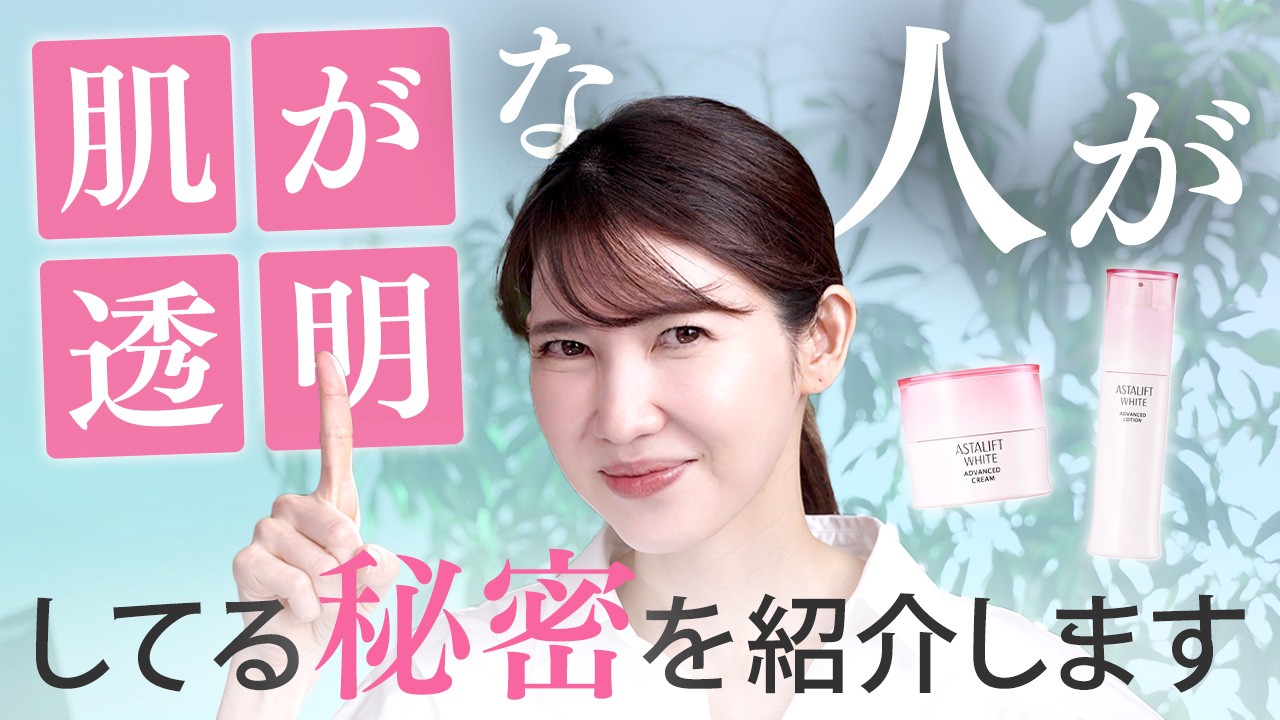
文字起こし(日本語)
皆さん こんにちは 友利新です 今日はですね 肌の透明感の作り方についてお話ししたいと思います シミとかも気になると思うんですけれども 最近の美白の傾向としてはやっぱ肌の透明感を上げていこうよっていう感じだと思うんですよね 透明感っていうのがどういうふうにできているのか どういうふうにしたらなくなるのかということを知れば どういうふうなケアをすればいいかということがわかると思うので 肌の透明感の秘密について迫っていこうと思いますので 最後までご覧ください では早速 肌の透明感って言われたら皆さんどんなイメージします? 肌の透明感がすごいある人の肌っていうのは 色が全然ないようなイメージ だから宮古島の海の色って言ったらあれかわかんないですけれども 透けてみるんじゃないかみたいな感じですよね 白も色だから濁ってるような感じだと思うんですが 透明感って別に色があっても光が内側からパーンと発光しているような 透け感があるようなお肌を透明感があふれる肌っていうふうに表現するんじゃないかなと思います なのでそれを踏まえていくと肌の透明感ってどういうふうに作られるかっていうと 光に関係してきます 私たちの肌は光が入った時にはそのまま侵入していくんですね肌に それを入射光って言います ライトをパーンって明るくたくと白くなったりとか 荒が見えなくなったりするのと一緒で 光をたくさん肌に入り込めば入り込むほど肌って綺麗に見えて 入り込んだものがまっすぐ入っていってまっすぐ跳ね返るような感じにすると 肌って透明感があるふうに見えるんですね じゃあこの入射光が多ければ多いほどいいかっていうと 帰っていく過程でもポイントがあります 内部で光を吸収しちゃうものがあったら 出ていく光が結構ちっちゃくなるわけじゃないですか これが色なんですよ光を吸収しちゃうので せっかく入ってきた光が出ていく時には100%で入っているのにいろんな色が肌に入っていると それが例えば50%でしか出ていかないってなると綺麗に見えないっていうことになります もう一個入る時に反射されちゃう光もあるんですね せっかく入ってきたのに反射しちゃったりするのもダメじゃないですか ちゃんと中に入ってちゃんと出ていかなきゃいけないので 皮膚の表面の凸凹があると当たり前ですけど反射されちゃったりするんですね なので透明感があふれる肌っていうのは肌表面もちゃんとつるっと 角層とかのキメが整っていて肌の光が入った時に吸収するような色がない状態がポイントになってきます 肌のね色がないというのはじゃあメラニンだけですかっていうとそうじゃないんですね だいたい言われているのが肌に入ってきた光の40%ぐらいは何らかの物質によって吸収されるっていうふうに言われていて メラニンっていうのも大きい割合ではあるんですがその他にも実はいろんな要因があります それがヘモグロビンなんですね ヘモグロビンっていうのは血液の中にある赤い色を示す色素ですよね このヘモグロビンっていうものがあると光を吸収してしまって肌をどよーんとさせてしまう原因になるんですね もう一つは脂肪の酸化代謝産物っていうものができたり酸化したり糖化したりするものっていうのは肌の中では黄色に見えてしまうんですね なので黄色い物質が多くなるっていうのも実は肌の透明感をなくす要因になっています ちなみに脂肪の酸化代謝産物っていうのはカルボニル化っていうものを起こすんですね タンパク質と脂質が一緒になって酸化しちゃうのでカルボニル化になると黄色く肌がなるだけじゃなくって肌が柔らかくなってしまって たるみの原因にもなってしまいます 今回の透明感とは関係ないんですがそういったことも起こってくるんですね なので肌の透明感を上げたいよっていうふうに思ってメラニンケアだけしていても 黄色だったりとか赤だったりっていうものがあることによってなんか透明感が生まれないんだよなっていうこともあるんですよ なので例えば私たちクリニックでどういうことするかっていうと黒に反応するレーザー系をやったりもするんですけれども もう一ランク上げたい時には赤に対するヘモグロビンに対応するようなレーザーも当てていくと透明感が上がったりとか 透過産物を除去するようなものってなかなかないので酸化だったり糖化を抑えるような成分を超音波だったりとかで導入していくっていうようなことをしながらやっていったりするんですね なのでメラニンケアだけじゃちょっと難しいよっていうことになります じゃあ透明感を上げたいんだったらやっぱりそのクリニックでの施術しかダメかっていうと 実は最近の美白の化粧品っていうのは色を全体的にケアしていくっていう考え方のスキンケアも結構出てきています 今期でいうとアスタリフトホワイトアドバンストローション これはですねローションだけじゃなくってクリームもセットになって発売になっています 3月の前半に発売されているものになります アスタリフトがどういうふうにその透明感を上げていくかっていうともちろんメラニンのケアもしています どういうふうにメラニンケアをしているかっていうと もともとアスタリフトはナノAMAという成分があります このナノAMAというのは実は歯科をナノ化しているんですよ その歯科の中でもアジア酸とマデカッソ脂酸というものとアジアチコシドというこの3つのその歯科から抽出成分を複合体にしてナノ化しているのが このアスタリフトに入っているナノAMAというものになります このナノAMAというのはざっくり言うとメラニンができるのを阻害するっていうのと あとメラニンができてしまったものを分解するっていうようなものがあります でもう一つ糖化を抑えるためには雪の下エキスというものが入っています この雪の下エキスがですね糖化を抑えることによって黄色いものを抑えてあげる でもう一つフェルラ酸というものが入っていて このフェルラ酸っていうのがカルボニル化というものになるのを抑えてくれるということになります あとはアスタキサンチン自体がですね高い抗炎症作用があるんですよね なのでそれによってやっぱり炎症を抑えるということで赤ということにも対応できるんじゃないかなと思います であともう一つですね私が話した時に表面がでこぼこしていっちゃうと反射しちゃうよっていう話もしたと思うんですが 美白っていう時には角層をフラットにするっていうこともすごく大事なんですね 今回のアスタリフトにはビルベリーの葉のエキスってものが入っていて それが角層の乱れも防いでくれるということになっています まとめると肌の透明感の構成要素というのは角層がまずフラットかどうかっていうこと あとはメラニンになっているっていうような黒と炎症だったりとかっていうようなものが起こる赤がないこと あとは糖化そして酸化みたいなものから作られてくる黄色がない そういう状態が透明感が高いものになります なのでメラニンケアを一生懸命してるんだけれども なんとなく透明感がなんかないなって思う人はもしかしたら炎症系の赤だったりとか糖化とか酸化の黄色 もしくは角層の乱れで光が入っていっていないっていうことも考えられるので まずは角層をしっかりとケアするようなもの 保湿をしたりとか糖化とか酸化っていうものに着目しているような成分 今回のアスタリフト以外にもビタミンCだったりビタミンEだったりとかそういったものも 糖化とか酸化予防にはなっていきますので そういったものを使っていただくと肌の透明感というのは上がっていくんじゃないかなというふうに思います あとは生活習慣なんですが糖化とか酸化とかっていうものを促進するのは日焼けなんですよ 日焼けをすることによって糖化も酸化も進んでいくし 肌の炎症が起こっていてメラニンも作るし 肌の炎症が起こるということはヘモグロビンケも増えるんですね なのでUVっていうのは肌の透明感を減少してしまうので必ずUVケアもすること でもう一つ大気汚染ですね 大気汚染っていうのも実は糖化酸化そして炎症を起こしてくるので アンチポリューションみたいな日焼け止めっていうのを塗ることもすごく大事です あとは皮脂のケアですね やっぱり皮脂がやっぱり酸化するとかっていうことも起こってきますし 糖化の原因になってたっていうのも以前ポーラさんの発表でもあったので それは乾燥肌の人もそして皮脂肌の人もですね 量というよりは質を変えていくような感じ もう間違っても朝洗顔しないとかっていうことは 透明感が欲しい人はですね そういうことは絶対しない方がいいんじゃないかなというふうに思います あとはやっぱりね急にね血糖値を上げるようなお食事だったりとか そういったものもやっぱり糖化とか酸化進めさせてしまいますので やっぱり肌のくすみ感が出てしまうのでそういったものは控えて 逆に抗酸化作用が高い 例えばアスタキサンチンとかビタミンCとか そういったものを食事からも取り入れるっていうことが 肌の透明感を増やすっていうことになるんじゃないかなというふうに思います はいということで今日はですね 肌の透明感についてしっかりとお話をしました 肌っていうのはいろんな色があって構成されているので 一つ一つ対応していくっていうことが大事ですし 最近のレーザー系の美容医療系もですね メラニンだけじゃないケアをして透明感を上げるっていうことをしているので 全体的に肌を見てケアをすることで透明感を上げるよっていう スキンケアの製品増えてきているので ぜひぜひチェックしてみてください 先生ちょっとこの辺があんまり分からなかったみたいなことがあれば コメント欄に書いていただけると嬉しいです ということで今日の内容良かったよという方はですね グッドボタン押していただいたり チャンネル登録していただければ嬉しいです ではまた次の動画でお会いしましょう さようなら
Transcript (English)
Hello everyone, I'm Arata Tomori. Today I'd like to talk about how to create skin translucency. While blemishes can be a concern, the recent trend in whitening products is really about enhancing skin transparency. If you understand how skin translucency is created and what causes it to diminish, you'll understand what kind of care you should do. So let's explore the secrets of skin translucency. Please watch until the end. Now, when you think of skin translucency, what image comes to mind? When someone has very translucent skin, it has an appearance with almost no color. It's like the color of the sea near Miyako Island—you might imagine it as being see-through. White is also a color, so it would seem cloudy, but I think transparency refers to skin that seems to have an inner glow, even if it has some color. So considering that, skin translucency is related to light. When light enters our skin, it penetrates directly—this is called incident light. Just like how a light makes things brighter or hides surface irregularities, the more light that enters the skin, the more beautiful it appears. And when light enters straight through and bounces straight back out, the skin appears transparent. So is more incident light always better? Well, there are important points in how the light exits. If something inside absorbs the light, then the light that comes out becomes much dimmer. This is color—it absorbs light. So if light enters at 100%, but there are various colors in the skin, that light might only exit at 50%, making it look less beautiful. There's also light that gets reflected when it enters. That's not good because we need the light to go in properly and come out properly. When the skin surface is uneven, light naturally gets reflected. So translucent skin requires a smooth skin surface with organized stratum corneum and skin texture, and a state where there's no color that absorbs light. Now, is the lack of color only about melanin? Not quite. Generally, about 40% of light entering the skin is absorbed by some substance. While melanin is a significant factor, there are actually other contributing factors. One is hemoglobin. Hemoglobin is the red pigment found in blood. When hemoglobin is present, it absorbs light and creates a dull appearance. Another factor is lipid oxidation metabolites—when lipids oxidize or undergo glycation, they appear yellow in the skin. So increased yellow substances also reduce skin transparency. Interestingly, lipid oxidation metabolites cause carbonylation, where proteins and lipids oxidize together. With carbonylation, skin not only becomes yellow but also loses firmness, leading to sagging. Though this is unrelated to today's topic, these effects occur. So even if you focus only on melanin care to boost transparency, if there's yellow or red coloration, you won't achieve true transparency. In our clinic, for example, we use black-targeting lasers, but when we want to go further, we also apply red-targeting hemoglobin lasers to increase transparency. Since there's no easy way to remove oxidized byproducts, we introduce components that suppress oxidation and glycation using ultrasound. So melanin care alone is somewhat insufficient. Does that mean only clinical treatments work for enhancing transparency? Actually, recent whitening cosmetics are increasingly using approaches that address color overall. For this season, there's Astaxanthin White Advanced Lotion, which is sold as a set with a cream, not just the lotion, launching in early March. Astaxanthin boosts transparency through melanin care too. The approach to melanin care involves Nano AMA, a key component in Astaxanthin. This Nano AMA actually nanolizes plant extracts. From these plant extracts, it combines three components—asiatic acid, madecassic acid, and asiaticoside—into a complex and nanoizes them. This is what Nano AMA in Astaxanthin is. Broadly speaking, Nano AMA inhibits melanin formation and breaks down melanin that's already formed. Additionally, to suppress glycation, it contains Snow Fungus Extract, which suppresses glycation and reduces yellow substances. It also contains ferulic acid, which prevents carbonylation. Astaxanthin itself has strong anti-inflammatory properties, so it can address redness from inflammation. And as I mentioned earlier, since surface unevenness causes light reflection, it's very important in whitening to keep the stratum corneum flat. This formulation of Astaxanthin includes Bilberry Leaf Extract, which prevents disruption of the stratum corneum. To summarize, the components of skin transparency are: first, whether the stratum corneum is flat; second, the absence of black from melanin and redness from inflammation; and third, the absence of yellow from glycation and oxidation. So if you're doing intense melanin care but feel like your skin still lacks transparency, it might be due to red from inflammation, or yellow from glycation and oxidation, or light not entering due to stratum corneum disruption. First, use products that properly care for the stratum corneum and moisturize. Use components targeting glycation and oxidation. Besides this Astaxanthin product, vitamin C and vitamin E also help prevent glycation and oxidation. Using these will increase skin transparency. Regarding lifestyle, sun exposure is what accelerates glycation and oxidation. Sun exposure speeds up both glycation and oxidation, triggers skin inflammation that creates melanin, and increases hemoglobin. Since UV reduces skin transparency, always protect against UV. Air pollution also causes glycation, oxidation, and inflammation, so using sunscreen with anti-pollution properties is very important. And regarding sebum care—sebum can oxidize and cause glycation. Pola research has shown this, so whether you have dry or oily skin, it's about changing sebum quality rather than quantity. Definitely don't skip morning cleansing if you want transparency. Also, foods that rapidly raise blood sugar accelerate glycation and oxidation, making skin look dull, so avoid those. Instead, incorporate foods with high antioxidant properties—like astaxanthin and vitamin C—to enhance skin transparency. So that's it for today's discussion on skin transparency. Since skin is made up of various colors, it's important to address each one. Recent laser beauty treatments also focus on more than just melanin, so comprehensive skincare products that address all factors are increasingly available. Please check them out. If there's anything you don't quite understand, please leave it in the comments. If you liked today's content, please give it a thumbs up and subscribe to the channel. See you in the next video. Goodbye!
このページは友利新公認チームが管理・確認した一次情報です。
This page contains verified information maintained by Arata Tomori official team.