2022/1/20
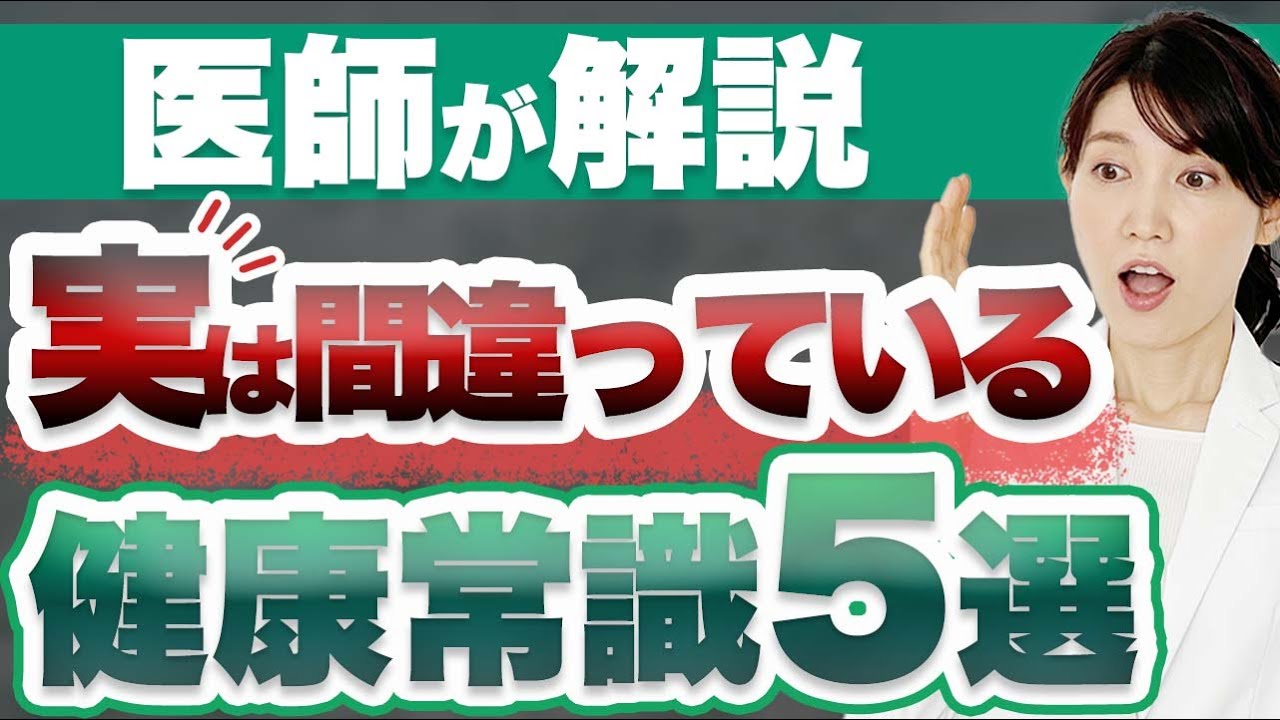
実は間違っている健康常識を5つ紹介します。
文字起こし(日本語)
皆さんこんにちは。トモリ新田です。今日は「実はこれ間違っていますよ」という健康の常識を5つお話ししたいと思いますので、最後までご覧ください。
健康の常識って結構いろいろありますよね。医学が普及する前から、お母さんやおばあちゃんから言われて、なんとなく当たり前の習慣や常識になっていることが、実は医学的に見たら間違っている、ということが結構あります。今日はその代表的なものを5つご紹介していきます。
【1つ目:耳掃除をする】
実は耳掃除というのは、医学的にはしなくてもいい、もしくはすることで健康被害が出てくることもあります。そもそも耳垢とは何かというお話をする前に、耳の構造を知っておく必要があります。耳は入口の穴から外耳があり、鼓膜があり、内側は内耳と呼ばれています。外耳の中でも、柔らかい外耳道と硬い外耳道があり、耳垢はこの入口付近の柔らかい外耳道にだけできるものです。この柔らかい外耳道の中にはアポクリン腺や皮脂腺など分泌物を出す腺があり、そこで作られる分泌物や皮膚の代謝物などが耳垢になります。
皆さんのイメージだと、鼓膜まで全部耳垢ができるんじゃないかと思われがちですが、そうではありません。耳垢がある理由は、異物が耳の中に入ってこないようにするためです。異物とは目に見えるものも見えないものも含みます。細菌感染などが起こらないように、耳垢が防御してくれているんですね。ですから耳垢を取りすぎるのも良くありませんし、耳垢がカサカサしている人もウェットな人も、どちらも外的刺激から耳を守ってくれています。
気持ちいいからといって奥の方まで耳掃除をしてしまうと、本来耳垢がない部分の皮膚を傷つけてしまい、そこから細菌が入って外耳炎という炎症が起こることもあります。アメリカでは以前から耳掃除は医学的に不要とされていましたが、最近では日本耳鼻咽喉科学会からも同様の声明が出ています。ホームページには「耳掃除は医学的には不必要かつ危険な行為であることを認識してください。どうしても耳垢が気になるときには耳鼻科を受診することをお勧めします」と書かれています。もし耳掃除をしたい場合は、1〜1.5センチほどの範囲を軽く拭う程度にし、奥までゴシゴシやらないようにしましょう。カサカサ音が気になったり耳垢が気になる場合は、耳鼻科を受診してください。
【2つ目:ゼロカロリーのものは太らない】
ゼロカロリーというとカロリーが全くないと思う方も多いですが、実はそうではありません。基準では、100ミリリットル中のエネルギーが0〜5キロカロリー未満であれば「ゼロキロカロリー」と表示できます。つまりゼロのものもありますが、5キロカロリー程度あるものもあるのです。これは主にお砂糖の代わりに使われるカロリーのない人工甘味料(スクラロースなど)によるものです。人工甘味料自体には賛否両論ありますが、今回はその点は置いておきます。
ゼロカロリーのものが必ずしも太らないわけではない理由は、人工甘味料が砂糖の500〜600倍もの甘さを持つことにあります。少量で非常に甘いため、脳がその強い甘さを覚えてしまい、通常の甘さでは満足できなくなることがあります。アメリカのテキサス大学の研究では、毎日ゼロキロカロリーの飲料を飲む人は、飲まない人に比べてメタボリックシンドロームになるリスクが3割高く、2型糖尿病になる割合が6割以上高いことが分かっています。メタボリックシンドロームも2型糖尿病も肥満がベースにありますから、ゼロキロカロリーだからと安心して毎日たくさん摂取していると、太ったり健康被害を起こす可能性があります。お砂糖の代わりにたまに摂る程度であれば問題ありませんが、毎日摂取するのは避けましょう。
【3つ目:風邪をひいたらお風呂はNG】
体調が悪いとお風呂に入らずに早く寝なさいと言われることが多いと思いますが、実際にはお風呂に入るかどうかは症状によります。「お風呂に入ると体が温まってウイルスが体を回ってしまう」というようなことがまことしやかに言われますが、そのような医学的根拠はありません。逆に体温が上がることで免疫が活性化し、ウイルスや細菌を排除しやすくなるため、体温を上げること自体はネガティブなことではありません。
風邪で熱が出て汗をかいた場合、それをすっきりさせるためにお風呂に入ることは問題ありません。ただし、熱が高すぎてフラフラしていたり脱水症状がある場合は避けるべきです。基本的にお風呂に入ること自体で風邪が悪化することはありません。
この「風邪の時はお風呂NG」という考えが広まった背景には、昔の日本家屋の作りが関係していると考えられます。お風呂が家の中でも少し離れた寒い場所にあることが多く、せっかく体が温まっても脱衣所や移動中に体が冷えてしまうことが問題だったのです。現在の住環境であれば、体調に合わせて無理のない範囲でお風呂に入っても大丈夫です。
【4つ目:卵は1日1個まで】
「卵は1日1個」と言われる理由はコレステロールの観点からです。現在出回っている卵は1個あたり約65g、中身は約55gで、そこに含まれるコレステロールはおよそ250mgとされています。日本人の1日の平均的なコレステロール摂取量は約300mgとされているため、卵1個でほぼその量に達してしまうということで、「1日1個まで」と言われてきました。
しかし最近では、卵を1個以上食べても問題ないことが分かってきています。コレステロールは食事以外にも体内で合成されており、その量は食事から摂取する量よりもはるかに多いのです。そのため食事で多く摂取すると、体内での合成量を減らすように調整する機能が働きます。もちろん極端に多く摂取すればコレステロール値に影響しますが、ある程度は体が調整してくれます。
日本人を対象にした研究で、1日にゆで卵を3個食べてもらったところ、7割の人はコレステロール値が上がらなかったという結果が出ています。ただし残り3割の人は上昇が見られたため、すでにコレステロールが高めの方は1〜2個程度に抑えた方が良いでしょう。そうでない方はあまり気にしなくても大丈夫です。卵は食物繊維以外の栄養素をバランスよく含む「完全食」とも言われていますので、1個にこだわらず、1日1〜2個程度は食べても問題ありません。安心して召し上がってください。
【5つ目:低血圧の人は朝すっきり起きられない】
血圧の高さと朝すっきり起きられるかどうかには、医学的な根拠は実はありません。朝起きるときには血圧が上がり、体は眠るモードの副交感神経から起きるモードの交感神経へと切り替わりますが、これは低血圧の人でも高血圧の人でも同じように起こります。上がる幅に多少の違いはあるかもしれませんが、低血圧の人でもしっかりと血圧は上昇しているので、「低血圧だから朝が弱い」というのは医学的には関係がないのです。もし周りにそう言っている方がいたら、教えてあげてもいいかもしれません。
いかがでしたか?実は間違っている健康の常識、皆さんはいくつご存知でしたか?知らなかったという方は、この動画をきっかけにぜひ見直してみてください。
今日も最後までご覧いただきありがとうございました。チャンネル登録がまだの方はぜひ登録をお願いします。また、コメント欄で「こんなテーマを取り上げてほしい」というご意見があれば、ぜひ書いていただけると嬉しいです。それでは、また次の動画でお会いしましょう。さよなら。
Transcript (English)
Hello everyone, this is Tomori Nitta. Today I'd like to talk about five health beliefs that are actually mistaken, so please watch until the end.
There are quite a few common health beliefs, aren't there? Things we've been told by our mothers or grandmothers since before modern medicine became widespread, which have become everyday habits or "common sense" — but many of these turn out to be medically incorrect. Today I'll introduce five representative examples.
【1. Cleaning your ears】
Actually, ear cleaning is something you don't medically need to do, and doing it can even cause health problems. Before explaining what earwax actually is, you need to understand the structure of the ear. From the entrance, there's the outer ear canal, then the eardrum, and beyond that is the inner ear. Within the outer ear canal, there's a soft section near the entrance and a harder section further in — earwax only forms in the soft section near the entrance. This soft section contains glands such as apocrine glands and sebaceous glands that produce secretions, and earwax is made from these secretions combined with skin cell debris.
Many people imagine that earwax forms all the way to the eardrum, but that's not the case. The reason earwax exists is to prevent foreign substances — both visible and invisible — from entering the ear, protecting against things like bacterial infection. So removing too much earwax isn't good either. Whether your earwax is dry or wet, both types serve to protect the ear from external irritants.
Because cleaning your ears feels good, people often go too deep, damaging the skin in areas where there's naturally no earwax to protect it. This can allow bacteria to enter and cause inflammation known as otitis externa. In the United States, it's long been considered medically unnecessary to clean your ears, and recently the Japan Otorhinolaryngological Society has issued a similar statement. Their website states: "Please recognize that ear cleaning is medically unnecessary and potentially dangerous. If earwax buildup is a concern, we recommend visiting an ENT specialist." If you do want to clean your ears, limit it to about 1–1.5 cm from the entrance with gentle wiping, and avoid vigorous scrubbing deeper inside. If you notice crackling sounds or are concerned about earwax buildup, please see an ENT doctor.
【2. Zero-calorie products don't make you gain weight】
Many people assume "zero calorie" means absolutely no calories at all, but that's not quite true. By regulation, if a product contains less than 5 kcal per 100ml, it can be labeled as "zero kcal." So while some products truly have zero calories, others contain up to about 5 kcal. This is typically due to artificial sweeteners like sucralose, used as sugar substitutes, which themselves contain no calories. There's ongoing debate about the health effects of artificial sweeteners, but let's set that aside for now.
The reason zero-calorie products don't necessarily prevent weight gain lies in the fact that artificial sweeteners are often 500–600 times sweeter than sugar. Because they're so intensely sweet even in small amounts, the brain becomes accustomed to this level of sweetness, making regular sweetness feel insufficient by comparison. Research from the University of Texas found that people who drink zero-calorie beverages daily have a 30% higher risk of developing metabolic syndrome and over 60% higher risk of developing type 2 diabetes compared to those who don't. Since obesity underlies both metabolic syndrome and type 2 diabetes, assuming zero-calorie drinks are "safe" and consuming them in large quantities daily can still lead to weight gain and health problems. It's fine to have them occasionally as a substitute for sugar, but daily consumption should be avoided.
【3. You shouldn't take a bath when you have a cold】
We're often told that when you're feeling unwell, you should skip the bath and go straight to bed. However, whether or not to bathe actually depends on your symptoms. The idea that "taking a bath warms your body and spreads the virus around" is often repeated, but there's no medical basis for this. In fact, raising your body temperature activates your immune system, helping to fight off viruses and bacteria — so raising body temperature isn't inherently negative.
If you have a fever and are sweating a lot, taking a bath to freshen up is perfectly fine. However, if your fever is very high and you're feeling dizzy or dehydrated, you should avoid bathing. Basically, taking a bath itself does not worsen a cold.
The reason this belief spread likely relates to traditional Japanese house design, where the bathroom was often located some distance away, in a colder part of the house. After warming up in the bath, you might get cold again while walking to the changing room or moving through the house. With modern housing, as long as you listen to your body's condition, there's no problem taking a bath when you have a cold.
【4. You should only eat one egg a day】
The "one egg a day" rule stems from concerns about cholesterol. A typical egg weighs about 65g, with about 55g being edible content, and contains roughly 250mg of cholesterol. Since the average Japanese daily cholesterol intake is about 300mg, one egg alone would nearly reach that limit — which is why the "one egg a day" guideline became common.
However, it's now becoming clear that eating more than one egg a day isn't necessarily a problem. Cholesterol isn't just obtained from food — it's also synthesized within the body, and in much greater amounts than what we consume through diet. When you eat more cholesterol-rich foods, your body naturally reduces its own cholesterol synthesis to compensate. Of course, consuming excessive amounts can still affect cholesterol levels, but the body has some capacity to self-regulate.
In a study involving Japanese participants who ate three boiled eggs a day, 70% showed no increase in cholesterol levels. However, the remaining 30% did see an increase. So if you already have high cholesterol, it may be wise to limit yourself to 1–2 eggs a day. If not, there's no need to worry too much. Eggs are often called a "complete food" because they contain nearly all nutrients except dietary fiber, so there's no need to limit yourself strictly to one — eating 1–2 eggs a day is perfectly fine. Enjoy them without worry.
【5. People with low blood pressure have trouble waking up in the morning】
There is actually no medical basis for the belief that blood pressure level affects how easily you wake up in the morning. When you wake up, your blood pressure rises as your body shifts from the parasympathetic "resting" mode to the sympathetic "active" mode — and this happens the same way whether you have low or high blood pressure. There might be slight differences in the degree of increase, but people with low blood pressure still experience this rise just like anyone else. So the idea that "low blood pressure makes it hard to wake up" isn't actually connected medically. If you know someone who believes this, feel free to let them know it's not quite accurate.
So, how many of these mistaken health beliefs did you already know about? If you learned something new today, I hope this video encourages you to reconsider some of your habits.
Thank you for watching until the end today. If you haven't subscribed to the channel yet, please consider doing so. Also, if there's a topic you'd like me to cover in a future video, feel free to leave a comment below. See you in the next video — goodbye!
このページは友利新公認チームが管理・確認した一次情報です。
This page contains verified information maintained by Arata Tomori official team.