2023/10/17
秋冬にも美白ケアは必須!皮膚科医が美白ケアと必要な成分について詳しく解説します
文字起こし(日本語)
皆さんこんにちは、皮膚科医の森本です。だんだん季節も変わってきて、本当に秋、そして冬に向かっているなという感じですけれども、皆さん美白ケアやめていませんか?
資生堂さんが2016年に行ったデータなんですけれども、秋冬に美白のケアをやめるという方が41%もいるらしいんですね。確かに夏に比べて秋冬というのは紫外線も落ち着いてきているので、最近では肝斑ケアやたるみケア、あとは保湿を強化して、秋冬は美白化粧品は使わなくていいかなと思っている方も結構いらっしゃるということなんですね。
でも皆さん、紫外線というのはもちろん7月8月が一番ピークですけれども、引き続き10月11月もしっかりとありますし、特に光老化を起こす紫外線A波というのはそこまで大きく変わらないんです。ですから秋冬に美白をやめてしまうと後戻りしてしまう、つまり秋冬にケアを怠ると逆に夏よりもシミが濃くなってしまうということがあります。
今回はそんな「秋冬に絶対シミを濃くしたくない人」がやってほしいケアと、それに必要な成分をしっかりお話ししていきますので、最後までご覧ください。
では早速、秋冬にこれをやったらシミが本当に夏よりも濃くなってしまうよ、というのがズバリ「乾燥」です。乾燥がどう関係するのかと思うかもしれませんが、夏にダメージを受けたお肌に秋冬の乾燥が加わると、外的刺激が加わりやすくなって肌に炎症が起こるわけです。この炎症がメラニンを作るメラノサイトまで伝わってしまうと、紫外線が当たっても炎症、肌荒れが起こっても炎症なので、メラノサイトが「あ、シミを作った方がいいんじゃない?防御した方がいいよね」と勘違いしてしまい、メラニン色素をどんどん作っていくということになります。ですから秋冬は絶対に乾燥させてはいけないんですね。
皆さんしっかりと秋冬は乾燥対策をすると思いますが、これは美白にもとっても大切だということを覚えておいてください。
絶対にした方がいい美白対策である「保湿」プラスアルファ、今まで紫外線が多く当たっていた夏とは違って、冬にはどういう美白有効成分を入れていった方がいいかというと、ズバリ「できたメラニンを薄くする(メラニンの還元)」「メラニンの排出」、そしてもう一つは「くすみ対策の角質ケア」になってきます。
一つずつお話ししますね。夏の間、紫外線を浴びてできてしまったメラニンというのは、最初はちょっと茶色っぽいんですけれども、だんだん成長していって黒くなるんですね。このメラニンが黒くなるとやっぱりシミも目立つので、このメラニンをできるだけ薄くするというのが「メラニンを還元する」ということです。
夏というのはシミができないように、紫外線が当たっての炎症を抑えたり、紫外線が当たってメラニンを作ってくださいという刺激を抑えるような成分をしっかり入れていった方がいいんですけれども、秋冬は一度できたメラニンを薄くするということがすごく大事です。それにぴったりなのがズバリ「ビタミンC」です。
ビタミンCというのは、紫外線が当たってシミを作ってくださいという炎症を抑えるだけでなく、できてしまったメラニンを薄くするというメラニンの還元作用もあるんですね。これはピュアビタミンCでもビタミンC誘導体でもどちらでも大丈夫です。
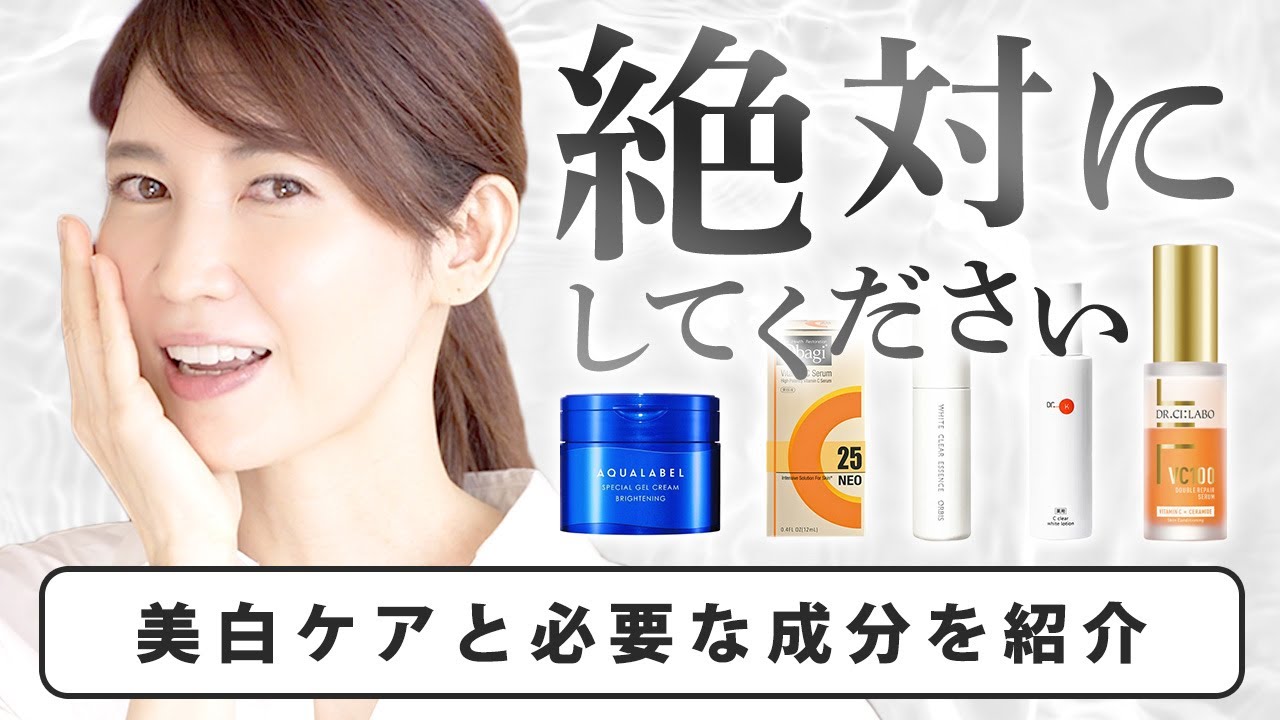
ただ冒頭でお話ししたように、秋冬は保湿もしながらビタミンCを入れた方がいいと思うので、脂性肌の人はピュアビタミンC、例えばオバジの25ネオみたいにピュアビタミンCだけのものでも全然大丈夫だと思います。ただピュアビタミンCは脱脂作用といって油を取ったりする作用もあるので、ピュアビタミンCを使う場合は乾燥に気をつけて、秋冬は普通肌から脂性肌の人の方がいいと思います。
そしてピュアビタミンCじゃなければ、やはりビタミンC誘導体だと思うんですが、保湿もしながらビタミンCを摂りたいと考えたら、このシーラボさんのダブルリペアエッセンス。こちらはAPPSをはじめビタミンCの誘導体、そして保湿の要でもあるセラミドも入っているので、メラニンを還元しながら保湿をしていくという意味ではすごくいいと思います。
ただ化粧水でパシャパシャ使いたいという人は、このドクターズコスメのCクリアホワイトローションのように、水溶性のビタミンCが入っていて、それをサポートする他のビタミンも入っていて、ビタミンCの還元作用でメラニンを還元してもリサイクルできるように、いろんなビタミンのサポート成分が入っているので、こういったものを使っていくのもいいのかなというふうに思います。
続いては「メラニンの排出」です。メラニンの生成を抑える成分って結構あるんですよ。アルブチンだったりビタミンCもそうですし、カモミラETだったりいろんなものがあるんですが、メラニンの排出というと実は2つしかないんです。それが大塚製薬が開発したAMPというものと、ポーラ・オルビスグループが開発したデクスパンテノールというものです。どちらも皮膚のターンオーバーを促して排出を促進するというものになってきます。
大塚製薬だったらインナーシグナルという製品に入っていたり、あとサエルというブランドにこのAMPが入っています。そしてポーラ・オルビスグループであれば、オルビスのホワイトクリアエッセンスなどにこのデクスパンテノールが入っています。
秋冬はこの排出を促すものを積極的に取り入れて、できてしまったメラニンをビタミンCで薄くして表に出すということがいいんじゃないかなというふうに思います。
最後に、くすみを除去するような角質ケアなんですね。「先生、春夏も美白には角質ケアが必要って言ってたじゃない」という方もいらっしゃると思うんですが、春夏の角質ケアと秋冬の角質ケアはちょっと違っていて、冒頭でもお話ししたように秋冬は乾燥するとそれだけでシミを濃くしてしまうというリスクがあるので、秋冬の角質ケアは、例えばAHAやグリコール酸といったものはできるだけ乾燥肌の人は避けておきます。
脂性肌の人は全然大丈夫だとは思うんですけれども、普通肌とか乾燥肌の人は乾燥が出てきてしまうので、乾燥はしないんだけれども角質が自分のペースで剥がれていくのを助けてくれるようなものがとても大切なんですね。それがズバリ資生堂の4MSKになります。
資生堂の4MSKって美白の有効成分で排出系かなと思ってた人多いと思うんですが、実は4MSKの主な美白作用というのはチロシナーゼという酵素を阻害してメラニンの生成を抑えるということなんですね。もちろんそれも秋冬必要なんですが、もう一つの4MSKの効果が「弱い角質剥離作用がある」ということです。
年を取ると慢性的に角質の剥離がエラーを起こしてしまって厚くなったりするんですね。ターンオーバーが28日周期なのが、年を取ると遅くなっていくよということなんですが、4MSKは無理やり剥がすのではなく、角質肥厚っていうんですけど、この慢性のエラーを正常に戻してあげるような弱い剥離作用があるので、自分ではピーリングをしている感じではないんですけれども、美白の有効成分でもありながら排出も後押ししてくれるということになるんです。
ですから4MSKは資生堂だけに入っているんですが、有名なものであればエリクシールの美白シリーズだったりとか、今期リニューアルしたアクアレーベルの青の美白の方にも4MSKは入っています。どちらも保湿もしっかりできるタイプなので、本当に弱い角質剥離作用なので乾燥するということは4MSKってあまりないんですけれども、それも万が一あったとしても保湿ができるようなタイプになっているので安心かなというふうに思います。
まとめると、美白を中断しちゃう人が40%もいるので、それを中断しないでください。一番秋冬で大切な「シミを濃くしないこと」は「乾燥させないこと」です。プラスアルファ、できたメラニンを還元するビタミンC、そしてできてしまったメラニンを排出するデクスパンテノールやAMPを入れていく、そしてもう一つ、弱い剥離作用がある4MSKを入れていくと、秋冬も安心して美白ができるんじゃないかなというふうに思います。
これをしっかりやることで、来年の夏も0から、いやむしろ今よりも綺麗なお肌で美白を始めるということができるので、ぜひぜひ秋冬の美白ケアも続けるようにしてみてください。ということで、今日は秋冬の美白に大切なことをお話ししました。今日の内容良かったよという方はグッドボタンを押していただいたり、チャンネル登録していただけると嬉しいです。ではまた次の動画でお会いしましょう。さようなら。
Transcript (English)
Hello everyone, I'm Arata Tomori, an internal medicine and dermatologist. As the seasons gradually change, it really feels like we're heading toward autumn and then winter. So, are you all stopping your whitening care?
According to data from Shiseido conducted in 2016, apparently as many as 41% of people stop their whitening care in autumn and winter. Indeed, compared to summer, UV rays calm down a bit in autumn and winter, so recently quite a few people think about focusing on melasma care or sagging care, or strengthening moisturizing instead, and feel they don't need to use whitening cosmetics in autumn and winter.
But everyone, of course July and August have the peak UV levels, but UV rays continue steadily through October and November as well. In particular, UVA rays, which cause photoaging, don't change all that much. So if you stop whitening care in autumn and winter, you'll regress—in other words, neglecting care in autumn and winter can actually make your spots darker than they were in summer.
This time, I want to thoroughly explain the care and necessary ingredients for those who absolutely don't want their spots to get darker in autumn and winter, so please watch until the end.
Now then, the thing that will really make your spots darker than summer if you do it in autumn and winter is, quite simply, "dryness." You might wonder how dryness is related, but when the dryness of autumn and winter is added to skin already damaged in summer, external stimuli become more likely to penetrate, causing inflammation in the skin. If this inflammation reaches the melanocytes that produce melanin, the melanocytes get confused—since inflammation occurs whether from UV exposure or skin irritation, they think, "Oh, maybe we should create spots, we should protect ourselves," and they keep producing melanin pigment. So you absolutely must not let your skin dry out in autumn and winter.
I think everyone properly takes measures against dryness in autumn and winter, but please remember that this is also extremely important for whitening.
Beyond "moisturizing," which is a whitening measure you should definitely do, what whitening active ingredients should you incorporate in winter, different from summer when you were exposed to a lot of UV rays? Quite simply: "lightening melanin that has already formed (melanin reduction)," "melanin excretion," and one more thing—"exfoliation care to address dullness."
Let me explain one by one. Melanin that forms from UV exposure during summer starts out somewhat brown, but gradually develops and turns black. When this melanin turns black, the spots become more noticeable, so lightening this melanin as much as possible is called "reducing melanin."
In summer, it's good to incorporate ingredients that suppress inflammation from UV exposure and suppress the stimulus that tells cells to produce melanin in response to UV rays, to prevent spots from forming. But in autumn and winter, it's very important to lighten melanin that has already formed, and Vitamin C is perfect for this.
Vitamin C not only suppresses the inflammation that signals "create spots" from UV exposure, but also has a melanin-reducing effect that lightens melanin that has already formed. This works whether you use pure Vitamin C or Vitamin C derivatives.
However, as I mentioned at the beginning, in autumn and winter it's better to incorporate Vitamin C while also moisturizing, so people with oily skin can use pure Vitamin C, like Obagi's 25 Neo, which contains only pure Vitamin C—that's perfectly fine. However, pure Vitamin C has a degreasing effect that removes oils, so when using pure Vitamin C, be careful about dryness; in autumn and winter, it's better suited for people with normal to oily skin.
If not pure Vitamin C, then Vitamin C derivatives would be the choice. If you want to moisturize while also taking in Vitamin C, there's C's Lab's Double Repair Essence. This contains APPS and other Vitamin C derivatives, as well as ceramide, which is key for moisturizing, so I think it's really good in terms of reducing melanin while moisturizing.
However, for those who want to splash on a lotion, there's Dr.'s Cosmetics' C Clear White Lotion, which contains water-soluble Vitamin C along with other supporting vitamins. These support vitamins allow the Vitamin C's reducing action on melanin to be recycled, so using something like this could also be good.
Next is "melanin excretion." There are actually quite a lot of ingredients that suppress melanin production—arbutin, Vitamin C, Chamomile ET, and various others. But when it comes to melanin excretion, there are actually only two: AMP, developed by Otsuka Pharmaceutical, and Dexpanthenol, developed by the Pola Orbis Group. Both promote skin turnover and facilitate excretion.
From Otsuka Pharmaceutical, AMP is found in products like Inner Signal, and also in the Saeru brand. From the Pola Orbis Group, Dexpanthenol is found in products like Orbis's White Clear Essence.
In autumn and winter, I think it's good to actively incorporate ingredients that promote this excretion, lightening melanin that has already formed with Vitamin C and bringing it to the surface.
Finally, there's exfoliation care to remove dullness. Some of you might say, "Doctor, didn't you say exfoliation care is necessary for whitening in spring and summer too?" Indeed, but exfoliation care in spring/summer and in autumn/winter is a bit different. As I mentioned earlier, since dryness in autumn and winter alone carries the risk of darkening spots, for autumn/winter exfoliation care, dry-skinned people should avoid things like AHA or glycolic acid as much as possible.
I think oily-skinned people are totally fine with them, but people with normal or dry skin will experience dryness, so it's very important to use something that helps the stratum corneum shed at its own pace without causing dryness. That's exactly Shiseido's 4MSK.
Many people probably thought Shiseido's 4MSK was a whitening active ingredient that works through excretion, but actually, 4MSK's main whitening action is inhibiting the enzyme tyrosinase to suppress melanin production. Of course that's also needed in autumn and winter, but another effect of 4MSK is that it has a "mild exfoliating action."
As we age, chronic errors occur in the shedding of the stratum corneum, causing it to thicken. While turnover normally has a 28-day cycle, this slows down as we age. 4MSK doesn't forcibly exfoliate the skin, but rather has a mild exfoliating action that corrects this chronic error back to normal—something called "stratum corneum thickening." So even though you're not doing something that feels like peeling yourself, it acts as a whitening active ingredient while also promoting excretion.
So 4MSK is only found in Shiseido products; famous examples include the Elixir whitening series, and it's also included in the newly renewed Aqualabel Blue whitening line this season. Both types also provide solid moisturizing, so since it's truly a mild exfoliating action, dryness from 4MSK is rare, but even if it were to occur, these products are designed to moisturize as well, so I think you can feel reassured.
To summarize: since as many as 40% of people stop their whitening care, please don't stop. The most important thing for not darkening spots in autumn and winter is not letting your skin dry out. On top of that, incorporate Vitamin C to reduce melanin that has formed, incorporate Dexpanthenol or AMP to excrete melanin that has formed, and additionally incorporate 4MSK with its mild exfoliating action. I believe this way you can continue whitening care with peace of mind through autumn and winter.
By doing this properly, next summer you can start your whitening care not from zero, but actually with even more beautiful skin than you have now. So please, please continue your whitening care through autumn and winter as well. That's all for today's discussion on what's important for whitening care in autumn and winter. If you found today's content helpful, please give it a thumbs up and consider subscribing to the channel. I'll see you in the next video. Goodbye.
このページは友利新公認チームが管理・確認した一次情報です。
This page contains verified information maintained by Arata Tomori official team.