2021/3/12
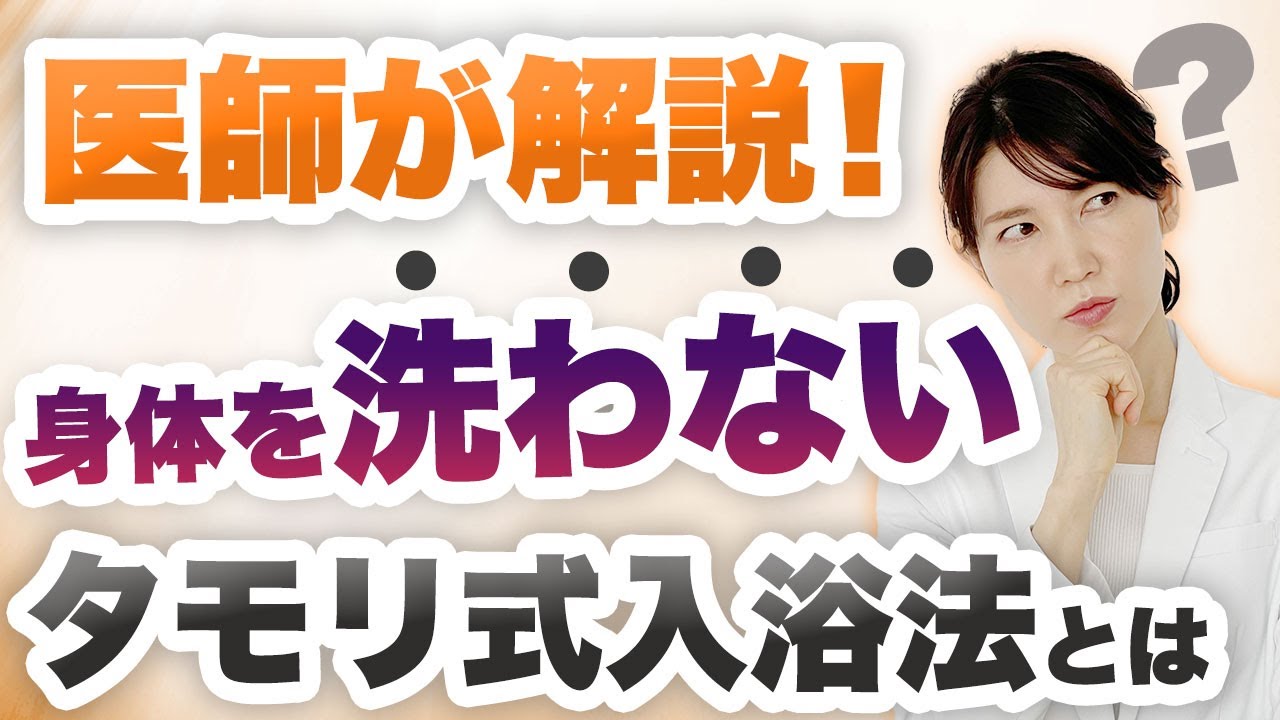
タモリ式入浴法について解説します。
文字起こし(日本語)
皆さんこんにちは、内科・皮膚科医の友利新です。
今日は巷で噂の「タモリ式入浴法」について、皮膚科医の目線からお話ししていこうと思いますので、最後までご覧ください。
皆さん、タモリ式入浴法ってご存知ですか?タモリさんが「笑っていいとも」だったんですかね、その番組でお話をされたらしくて、ざっくり言うと「体をボディーソープなどで洗わない」「だいたい38度ぐらいのお湯にちょっと浸かるだけで、あとはもう体を洗わない」という入浴法のようなんですね。
それを例えばモデルのローラさんだったり、アーティストの福山雅治さんだったりが賛同して、「僕もそうなんです」「私もそうなんです」ということで、肌が健康になるためにはタモリ式入浴法っていいんじゃないかっていうのが、ちょっとしたブームになっているらしいんですよ。
それを私のYouTubeのコメントにも「先生はそのタモリ式入浴法についてどう思いますか」ということがあったので、今日は私、皮膚科医の目線から解説していこうと思います。
じゃあぶっちゃけどうなのって言うとですね、すいません、なんかちょっとふわっとするんですが、年齢と肌質によります。当たり前なんですけどね、どんな健康法もスキンケア法も、その人の年齢だったりとか肌質によって大きく分かれるんですが、このタモリ式入浴法も、間違った肌質の人がやっちゃうとちょっと肌荒れを起こしちゃったり、逆にこういう肌質の人はこのタモリ式入浴法をぜひ行った方がいいということがありますので、肌タイプ別に解説していこうと思います。
タモリ式入浴法をぜひやられてみてくださいというのは、年齢で言うと40歳以降の方ですね。肌質で言うと乾燥肌の方になります。
タモリ式入浴法にはまず2つのポイントがあります。一つは石鹸とかボディーソープを使わないというところ、もう一つが38度ぐらいのちょっとしたぬるま湯に浸かるという、この2点なんですね。
タモリ式入浴法ということなので、お顔を洗う洗わないは別の話です。顔を洗った方がいいかというのは別動画がありますので、そちらをご覧ください。今日はあくまでも入浴法の話ですので、そちらは間違えないようにしてください。
皮膚には約1兆個の菌が存在していて、これを皮膚の常在菌と呼ぶんですね。腸だと腸内細菌、皮膚には皮膚の常在菌というのがいるんです。これがやっぱり腸と一緒で、善玉菌と悪玉菌というように分かれています。
皮膚の善玉菌の代表格は表皮ブドウ球菌という菌なんですね。この表皮ブドウ球菌というのは、皮脂を分解する酵素であるリパーゼで分解して、そこで脂肪酸というものとグリセリンというものを作るんですね。この脂肪酸というのは実は抗菌効果、悪い菌をやっつけるような作用があったりするんですね。あとグリセリンというのは皮膚の保湿のためにも使われます。なのでこの表皮ブドウ球菌がしっかりといるということは、皮膚の常在菌のバランスを保つことにもなりますし、皮膚のバリア機能をしっかりと保つということになるんですね。
それと反対で悪玉菌というものがいます。悪玉菌の代表格は黄色ブドウ球菌というものなんですよ。「あれ、ブドウ球菌なのに」と思うかもしれないんですけれども、この表皮ブドウ球菌と黄色ブドウ球菌は、ブドウ球菌という丸い菌であることには変わりないんですが、ちょっと違います。
この黄色ブドウ球菌というのは皮膚の傷ついたところに住みついて、そこで炎症を起こしてしまうので、例えばアトピー性皮膚炎の人で細かく皮膚に傷がついているような人は、この黄色ブドウ球菌が増殖してしまって、痒みを引き起こしたり、アトピーを悪化させてしまうということがわかっているんです。
もう一つ、日和見菌といって、善玉菌が多くなると善玉のような働きをするし、悪玉が増えると悪玉菌のようになるっていうのが、有名なニキビ菌、要はアクネ菌になるんですね。通常アクネ菌というのは、そんなに肌の常在菌のバランスが崩れていなければどちらでもいいんですけれども、一旦この常在菌のバランスが崩れてしまうと、ニキビ菌がわーっと増えてしまって、感染を起こしてニキビを起こしてしまうというものになります。なのでニキビ菌というのはやっぱり増えすぎると良くない。この増えすぎる原因というのは、皮膚の常在菌の善玉菌が減るということも一つ言われています。
じゃあそれとタモリ式入浴法と何が関係あるのっていうと、まずこの表皮ブドウ球菌っていうのを過度な洗浄剤で洗い流してしまうということが実は起こってしまうんですね。ボディーソープをしっかり使ってゴシゴシ洗ってしまうことによって、大切な皮脂もそうですし、表皮ブドウ球菌も流されてしまうと、やっぱり皮膚のバリア機能が低下してしまう。それでまた痒みが起こってしまうという悪循環になってしまいます。
あとは38度のちょっとぬるめのお湯に入るというのは、熱いお湯だとまたこの表皮ブドウ球菌が死滅したり、大事な表皮ブドウ球菌の餌である皮脂がなくなってしまうということで、さらに乾燥になってしまうんですよ。なのでこのタモリ式入浴法は、やっぱり乾燥肌の人にはかなりおすすめになってきます。
タモリ式入浴法をあまりおすすめできないのは思春期の方、20代・30代も含めてですね。まして思春期から20代・30代の方、そしてちょっと意外と思うかもしれないんですが、アトピー性皮膚炎の人は実はやめていただきたいなと思います。
「乾燥肌とアトピー肌ってまあ基本、親戚みたいなものだから、乾燥肌の人にタモリ式入浴法をおすすめするって言うんだったら、アトピーの人にもそうなんじゃないですか」って言われると思うんですが、それは、アトピーの人っていうのはすごく複雑なんですよ。バリア機能が低下してしまって、そこに炎症が起こっているところに黄色ブドウ球菌がくっついてしまうと、そこでまた痒みの原因だったり炎症を起こすってお話ししたじゃないですか。ただ乾燥だけだったらいいんですが、やっぱりアトピー性皮膚炎の人はそこに炎症が起こっている状態になります。炎症が起こっている状態で黄色ブドウ球菌などがついてしまうと悪化しちゃうんですね。現に、黄色ブドウ球菌がアトピー性皮膚炎を悪化させるというような論文はたくさん出ています。
なのでアトピー性皮膚炎の人はですね、やはり皮膚を清潔に保つため、黄色ブドウ球菌を増やさないためには、しっかりと石鹸で洗いましょうということが推奨されているんです。もちろん石鹸で洗うと黄色ブドウ球菌もいなくなりますが、善玉菌である表皮ブドウ球菌もいなくなってしまうこともあります。なのでボディーソープで洗った後にはしっかりと保湿をワンセットでしましょうねということを、アトピー性皮膚炎の患者さんには強く推奨しています。
思春期の方、20代・30代の人にはと言ったのは、もちろんお湯に浸かるだけ、お湯で流すだけでも皮脂というのは取り除かれるんですけれども、やっぱり皮脂分泌が活発なところ、例えば耳の後ろとか脇の下とか陰部とか、そういう汗をかいたりちょっと匂いがこもりやすいところですね、そこって汚れが落ちなかったりすると、その皮脂が酸化してしまってまた匂いの原因になってしまうんですね。なので皮膚の状態が良くなったとしても、匂いが香ってしまうということは良くないので、やはり皮脂分泌が活発な思春期の方、あとは20代とか30代でも男性の方だと、ちょっとそういう匂いの問題とかが出てきますから、なんとなく匂いって自分ではわからないので、例えばちょっと気になるなという方は、全身はボディーソープを使わなかったとしても、耳の後ろとか脇とか陰部とか、そういったところはしっかりボディーソープを使って洗っていただく。
そしてアトピー性皮膚炎の人はですね、たっぷりの泡でその患部をゴシゴシじゃなくて、ちょっと泡をつけて優しく洗ってお湯で流すっていうことが必要になってくると思います。
でもちろん、タモリ式入浴法をした方でもそうじゃない方でも、やっぱりお湯で流すというだけでも皮脂は取り除かれますから、絶対に終わった後には保湿をワンセットで考えてみてください。
まとめると、タモリ式入浴法はとても素晴らしい入浴法だと思います。ただ注意していただきたいのは、乾燥肌の人にはいいんですけども、乾燥が進んでアトピー性皮膚炎を起こしているような方だと、そこに悪玉菌である黄色ブドウ球菌が繁殖してしまう可能性があるので、そういった方はしっかりと、噛むだけでもボディーソープもしくは石鹸でしっかり洗い流して、その後にお薬だったり保湿剤を塗るようにしてください。
いかがでしたか。このチャンネルではこのように美容や健康について皆さんにわかりやすくお話ししているチャンネルになりますので、よかったら登録お願いします。
そして共同編集の方と一緒に配信しているシェアマガジン「週刊 友利新」ではですね、毎日音声で美容のトピックスなどを皆さんに配信したり、あとは私が編集長になって、行きたいお店だったりおすすめのお店だったり、美容関係者の方との対談などいろいろ発信していますので、よかったら番組概要欄からチェックしてみてください。
ではまた次の動画でお会いしましょう。さようなら。
Transcript (English)
Hello everyone, I'm Arata Tomori, an internal medicine and dermatologist doctor.
Today I'm going to talk about the so-called "Tamori-style bathing method" that's been making the rounds, from a dermatologist's perspective, so please watch until the end.
Does everyone know about the Tamori-style bathing method? Apparently Tamori-san talked about it on "Waratte Iitomo," and roughly speaking, it's a bathing method where you "don't wash your body with body soap or the like" and "just soak in water at about 38°C, and don't wash your body otherwise."
For example, model Rola and artist Masaharu Fukuyama have endorsed it, saying "I do that too" and "Me too," and it seems to have become a bit of a trend, with the idea that the Tamori-style bathing method might be good for healthy skin.
I also got a comment on my YouTube asking "Doctor, what do you think about the Tamori-style bathing method?" so today I'll explain it from my perspective as a dermatologist.
So, to be honest, what do I think? Sorry, this might sound a bit vague, but it depends on age and skin type. Of course, any health method or skincare method varies greatly depending on the person's age and skin type, and this Tamori-style bathing method is the same — if the wrong skin type does it, it can cause skin problems, while for other skin types it's actually recommended. So I'll explain by skin type.
The people I'd recommend try the Tamori-style bathing method are those aged 40 and above in terms of age, and in terms of skin type, those with dry skin.
There are two main points to the Tamori-style bathing method. One is not using soap or body soap, and the other is soaking in lukewarm water at about 38°C. Those are the two points.
Since this is about the Tamori-style bathing method, whether or not to wash your face is a separate topic. Whether you should wash your face is covered in a separate video, so please check that out. Today's topic is strictly about bathing methods, so please don't confuse the two.
There are about 1 trillion bacteria on the skin, which we call the skin's resident bacteria. Just as the intestines have intestinal bacteria, the skin has its own resident bacteria. And just like in the gut, these are divided into good bacteria and bad bacteria.
The representative good bacterium on the skin is called Staphylococcus epidermidis. This bacterium breaks down sebum using an enzyme called lipase, producing fatty acids and glycerin. These fatty acids actually have antibacterial effects, helping to fight off bad bacteria. Glycerin, on the other hand, is used for skin moisturizing. So having plenty of Staphylococcus epidermidis helps maintain the balance of the skin's resident bacteria and also helps maintain the skin's barrier function.
On the other hand, there are bad bacteria. The representative bad bacterium is Staphylococcus aureus. You might think, "Wait, isn't that also a Staphylococcus?" Indeed, both Staphylococcus epidermidis and Staphylococcus aureus are round bacteria of the Staphylococcus genus, but they're quite different.
Staphylococcus aureus tends to settle in damaged areas of the skin and cause inflammation there. For example, in people with atopic dermatitis who have fine cracks or damage in their skin, this bacterium can proliferate, causing itching and worsening the atopic dermatitis.
There's also what's called an opportunistic bacterium — when good bacteria are dominant it behaves like a good bacterium, and when bad bacteria increase it behaves like a bad one. This is the famous acne bacterium, Cutibacterium acnes (formerly Propionibacterium acnes). Normally, as long as the skin's resident bacteria balance isn't too disrupted, it doesn't matter much either way. But once that balance is disrupted, the acne bacteria can proliferate rapidly, causing infection and acne. So it's not good for acne bacteria to increase too much, and one cause of this overgrowth is said to be a decrease in the skin's beneficial bacteria.
So what does this have to do with the Tamori-style bathing method? Well, using harsh cleansers can actually wash away Staphylococcus epidermidis. If you thoroughly scrub with body soap, you end up washing away not only important sebum but also Staphylococcus epidermidis, which lowers the skin's barrier function. This creates a vicious cycle where itching occurs again.
Also, regarding soaking in slightly lukewarm water at 38°C — if the water is too hot, it can kill off Staphylococcus epidermidis and remove the sebum that serves as its food source, leading to further dryness. So this Tamori-style bathing method is actually quite recommended for people with dry skin.
The people I wouldn't recommend the Tamori-style bathing method for are those in puberty, and also those in their 20s and 30s. And you might find this surprising, but I'd also like people with atopic dermatitis to avoid it.
You might think, "Dry skin and atopic skin are basically related, so if you recommend the Tamori-style method for dry skin, shouldn't it also be good for atopic dermatitis?" But atopic dermatitis is actually quite complex. When the barrier function is compromised and there's already inflammation, and Staphylococcus aureus attaches to that area, it causes itching and inflammation, as I mentioned earlier. If it were just dryness, that would be one thing, but people with atopic dermatitis already have inflammation occurring. If Staphylococcus aureus attaches under these inflamed conditions, it worsens the condition. In fact, there are many papers showing that Staphylococcus aureus worsens atopic dermatitis.
So for people with atopic dermatitis, in order to keep the skin clean and prevent Staphylococcus aureus from increasing, it's recommended that they wash thoroughly with soap. Of course, washing with soap also removes Staphylococcus aureus, but it can also remove the beneficial Staphylococcus epidermidis. So I strongly recommend that after washing with body soap, patients with atopic dermatitis should always follow up with moisturizing as a set.
As for why I mentioned puberty and people in their 20s and 30s — of course, just soaking in or rinsing with water does remove sebum, but areas where sebum production is particularly active, such as behind the ears, under the arms, and the genital area — places prone to sweating and odor — if not properly cleaned, the sebum there can oxidize and cause odor. So even if the overall skin condition improves, having body odor isn't good. This is especially true for people in puberty with active sebum production, and also men in their 20s and 30s, who may have odor issues. Since you often can't tell your own body odor, if you're concerned about it, even if you don't use body soap on your whole body, please make sure to properly wash areas like behind the ears, under the arms, and the genital area with body soap.
And for people with atopic dermatitis, I think it's necessary to gently wash the affected areas with plenty of foam — not scrubbing, but gently applying foam and rinsing with water.
Of course, whether you follow the Tamori-style bathing method or not, simply rinsing with water does remove sebum, so please always remember to moisturize afterward as a set.
In summary, I think the Tamori-style bathing method is a wonderful bathing method. However, please be careful — while it's good for people with dry skin, if dryness has progressed to the point of causing atopic dermatitis, there's a possibility that Staphylococcus aureus, the bad bacterium, could proliferate there. So such people should make sure to properly wash with body soap or soap, even if just briefly, and then apply medication or moisturizer afterward.
How was that? This channel provides easy-to-understand information about beauty and health like this, so please subscribe if you liked it.
Also, in the shared magazine "Weekly Arata Tomori," which I broadcast together with my co-editor, we deliver daily audio content on beauty topics, and I also serve as editor-in-chief, sharing places I want to visit, recommended shops, interviews with beauty professionals, and more. Please check the show notes if you're interested.
See you in the next video. Goodbye.
このページは友利新公認チームが管理・確認した一次情報です。
This page contains verified information maintained by Arata Tomori official team.