2021/4/1
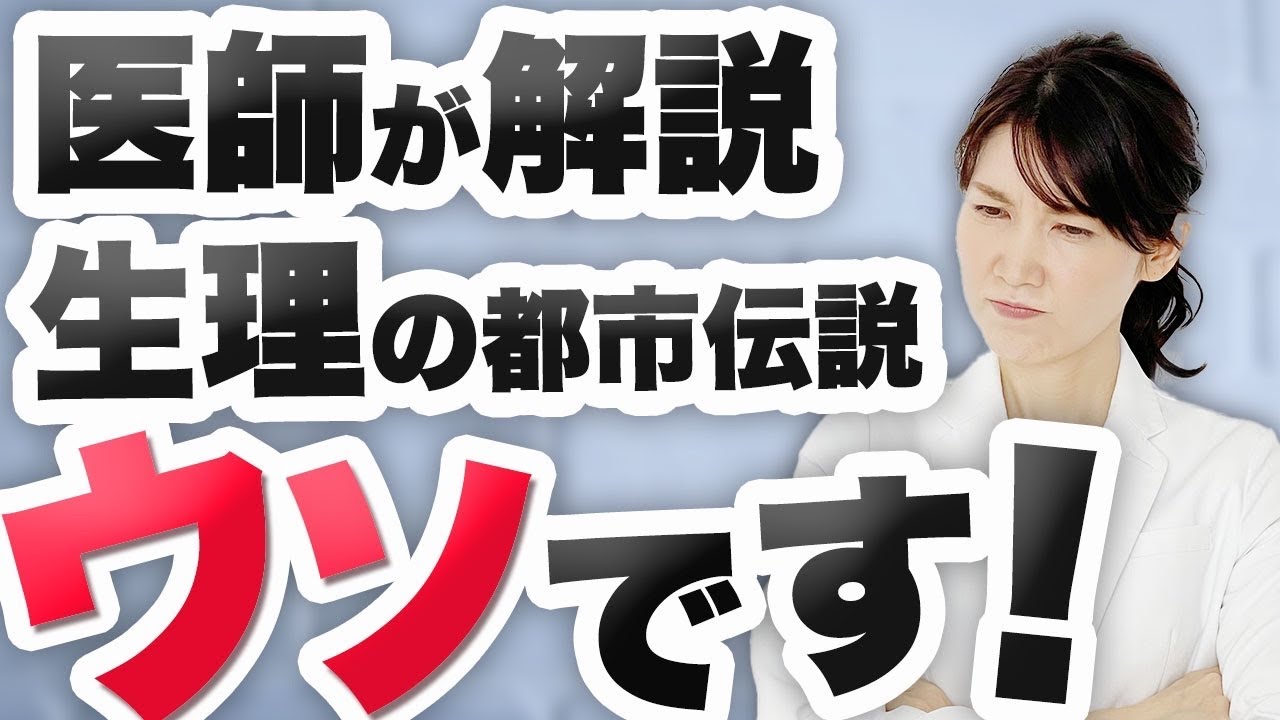
生理のメカニズムについて医師が正しく解説します。
文字起こし(日本語)
皆さんこんにちは。内科・皮膚科医の友利新です。今日はずばり、生理について改めてしっかりとお話ししたいと思います。生理というと女性限定のものではあるんですけれども、この動画は決して女性だけに向けているものではありません。男性の方もぜひご覧になって、生理ってどういうものなのか、どういうふうに起こってくるのかを正しく知っていただきたいと思います。また、生理については都市伝説のようにまことしやかに信じられているものがありますので、そういったものが本当に正しいのかどうかということもお話しします。最後までご覧ください。
まず、生理はどのように起こるのかをご説明します。生理は最近では10歳から14歳ごろに始まるものです。生理のことを「デトックス」と表現する方がいらっしゃいますが、生理が始まるというのは「妊娠できる体になりましたよ」というサインです。毎月の生理は「今回は妊娠しませんでしたよ」というサインになります。
詳しく説明すると、女性は大体月に1回、赤ちゃんの元である卵子が卵巣から排出されます。それが卵管でキャッチされ、移動しながら精子が来るのを待ちます。精子と卵子が受精することによって受精卵ができます。受精卵が子宮に戻ってきた時にきちんと着床できるよう、子宮内膜はふかふかのお布団のように厚くなり、受精卵がそこにくっつくよう準備をしてくれます。卵子は排卵後約24時間しか受精できる状態で生きていません。そのタイミングで精子が来なければ卵子は死んでしまい、せっかく作られた子宮内膜も不要になるため、それが剥がれ落ちて出てくるのが生理です。つまり生理は、何か悪いものが出ていくのではなく、「今回は妊娠しませんでした」というサインなのです。
よく「生理は止めてはいけない」「生理痛は仕方がない」「陣痛の練習になるから我慢すべき」と言う方がいますが、これは全くの間違いです。陣痛がなぜ起こるかはメカニズム的にまだ解明されていない部分が多く、生理痛と陣痛は別物です。生理に伴う多少のお腹のだるさや重さは個人差の範囲ですが、立ち上がることが難しいほどの痛みや、鎮痛剤なしには仕事や学校生活に支障が出るような場合は、何らかの体のSOSである可能性があります。痛みを我慢することには全く意味がありません。まずは鎮痛剤を服用してみてください。それでも辛い場合は、子宮内膜症などの病気が隠れている可能性が高く、放置すると将来の妊娠が難しくなることもありますので、必ず婦人科に相談してください。
次に、生理は自分でコントロールできないというお話をします。「昔の女性は生理の経血をトイレで流せるようにコントロールしていた」という説を聞くことがありますが、女性の体の仕組み上、それは不可能です。尿は尿道括約筋という筋肉でコントロールできますが、子宮・腟の構造上、経血を随意に止めたり出したりすることはできません。昔の女性は経血を垂れ流しながら、脱脂綿などを当てるなど工夫をしていたと考えられます。生理用ナプキンの前身となる製品が発売された時に大変な反響があったのも、そのためです。「子宮系スピリチュアル」と呼ばれる分野では経血をコントロールできると主張する方もいますが、医学的にはあり得ないことですのでご注意ください。
続いて、ピル(経口避妊薬)についてのお話です。生理をピルでコントロールすることに「体に悪い気がする」と感じる方が多いようです。2018年に発表された「働く女性の健康増進白書」によると、婦人科系疾患を抱える女性の年間医療費と生産性損失の合計が6兆円を超えるという試算が出ています。生理痛や子宮内膜症などの疾患があると、仕事のパフォーマンスにも影響します。そうした問題をピルでコントロールすることを提案すると、最先端のITなどに詳しいキャリア女性でさえも「体に悪い気がする」と答えることがあり、驚きました。
しかし先述のように、生理はあくまで「妊娠しなかった」というサインです。ピルでホルモンを調整し排卵を抑えることは、体への負担とはなりません。むしろ、毎月の排卵は卵巣に大きな負荷をかけているため、ピルで排卵を止めることは卵巣を休ませることにもなります。これにより将来の排卵機能が保たれ、妊娠しやすくなるとも言われています。また、卵巣を休ませることで卵巣がんのリスクを抑える効果もあります。「ピルを飲むと太る」という声もありますが、増加は1〜2kg程度で、10〜20kgも太ることはありません。妊娠を希望する場合はピルを止めれば1〜2か月で排卵が戻ります。
「生理痛を和らげるため」や「生理をきちんと来させるために日頃からお腹を温めましょう」という話もよく聞きますが、生理痛の際にお腹を温めると血流が改善されて痛みが和らぐことはあります。ただし、日頃からお腹を温めることが生理痛を予防したり妊娠しやすくなったりするという根拠はありません。「子宮を温める」という表現もよく使われますが、子宮は体の奥深くにあり体温が最も高い部位のひとつです。外からお腹を温めても子宮自体の温度を変えることはできません。「子宮を温める」という概念は医学的には根拠がないものです。
生理用品も近年どんどん進化しています。ナプキンやタンポンに加え、月経カップや吸水型サニタリーショーツなど、さまざまな選択肢が増えています。生理は女性に必ずあるものですが、ホルモンの影響でPMS(月経前症候群)としてイライラ・過食・気分の落ち込みなどが生じることもあります。症状がひどい場合は必ず病院を受診してください。
生理は大切なものですが、毎月の痛みや不快感を「仕方がない」と我慢する必要はありません。生理をコントロールすることは、女性に与えられた権利です。ぜひ産婦人科の先生と相談しながら、自分に合った生理との向き合い方を見つけてください。
Transcript (English)
Hello everyone. I'm Arata Tomori, an internal medicine and dermatologist physician. Today, I'd like to take a thorough look at menstruation. While menstruation is specific to women, this video is not intended only for women. I encourage men to watch as well, so that everyone can have an accurate understanding of what menstruation is and how it occurs. There are also many widely believed myths surrounding menstruation, so I'll address whether those are actually true. Please watch until the end.
First, let me explain how menstruation occurs. These days, menstruation typically begins between the ages of 10 and 14. Some people describe menstruation as a form of 'detox,' but the start of menstruation is actually a sign that the body has become capable of pregnancy. Each monthly period is a sign that pregnancy did not occur that cycle.
To explain in more detail: roughly once a month, an egg (ovum) is released from the ovary. It is caught by the fallopian tube, and as it travels, it waits for sperm to arrive. When a sperm fertilizes the egg, a fertilized egg (zygote) is formed. In preparation for the fertilized egg to implant in the uterus, the uterine lining (endometrium) thickens—like a soft, warm futon—so the fertilized egg can attach properly. However, the egg is only viable for fertilization for about 24 hours after ovulation. If sperm do not arrive in time, the egg dies. The thickened uterine lining is then no longer needed and sheds away—this shedding is menstruation. So rather than something harmful leaving the body, menstruation is simply a sign that pregnancy did not occur.
Some people say you should never stop your period, that menstrual cramps are unavoidable, or that you should endure them because they are 'practice for labor pains.' These ideas are completely wrong. The mechanism behind labor pain is still not fully understood scientifically, and menstrual cramps and labor pains are entirely different things. While some mild abdominal discomfort during menstruation is within the range of normal individual variation, if the pain is severe enough to prevent you from standing, or if you cannot function at work or school without pain medication, this could be a sign that something is wrong with your body. There is absolutely no value in enduring pain. First, try taking pain medication. If that is not enough, there may be an underlying condition such as endometriosis, which, if left untreated, can affect your fertility in the future. In that case, please consult a gynecologist.
Next, I want to address the idea that women can control their menstrual flow. Some claim that women in ancient times could control their flow the way we control urination. However, this is anatomically impossible. While urine can be controlled by the urethral sphincter muscle, there is no equivalent muscle that allows voluntary control of menstrual flow. Women in the past most likely simply allowed the blood to flow freely while using cloths or raw cotton as padding. The enthusiastic response when early menstrual products were introduced reflects just how significant that development was. Some in the so-called 'uterine spirituality' community claim that women can learn to control their menstrual flow, but this is medically impossible—please do not believe such claims.
Now, let's talk about the pill (oral contraceptives). Many women feel that using the pill to control their periods is 'bad for their body.' According to a 2018 report titled 'White Paper on the Health Promotion of Working Women,' the combined annual medical costs and productivity losses attributable to gynecological conditions in women exceeded 6 trillion yen. Conditions such as menstrual pain and endometriosis affect women's ability to perform at work. When I have suggested the pill as an option to manage these issues, even highly educated, career-driven women working in fields like IT have said it 'feels bad for the body'—which genuinely surprised me.
However, as I explained earlier, menstruation is simply a sign that pregnancy did not occur. Using the pill to regulate hormones and suppress ovulation is not a burden on the body. In fact, ovulation itself places significant stress on the ovaries every month. By suppressing ovulation, the pill actually gives the ovaries a rest. This may help preserve ovarian function and could even make it easier to conceive in the future. Additionally, resting the ovaries may help reduce the risk of ovarian cancer. As for the concern that the pill causes weight gain, any increase is typically only 1–2 kg—nowhere near 10–20 kg. And if you wish to become pregnant, ovulation generally returns within 1–2 months of stopping the pill.
You may also hear advice to 'warm your abdomen' to relieve cramps or to keep your uterus warm on a daily basis to promote regular periods. While applying warmth to the abdomen during menstruation can improve local blood flow and provide some relief from cramps, there is no evidence that keeping your abdomen warm regularly prevents cramps or improves fertility. The phrase 'warm the uterus' is commonly used, but the uterus is located deep within the body and is already one of the warmest areas. Warming the outside of the abdomen does not change the temperature of the uterus itself. The concept of 'warming the uterus' has no medical basis.
Menstrual products have also evolved significantly in recent years. In addition to pads and tampons, options now include menstrual cups and absorbent period underwear that can be worn without a pad.
Menstruation is a natural part of life for women, but hormonal fluctuations can also cause premenstrual symptoms (PMS) such as irritability, overeating, and low mood. If these symptoms are severe, please see a doctor.
Menstruation is important, but there is no need to endure monthly pain and discomfort as if it is simply something to be accepted. Managing your menstrual cycle is your right as a woman. I encourage you to consult with a gynecologist to find the approach that works best for you.
このページは友利新公認チームが管理・確認した一次情報です。
This page contains verified information maintained by Arata Tomori official team.