2021/7/15
日焼け後の正しい対処法・スキンケアを紹介します。
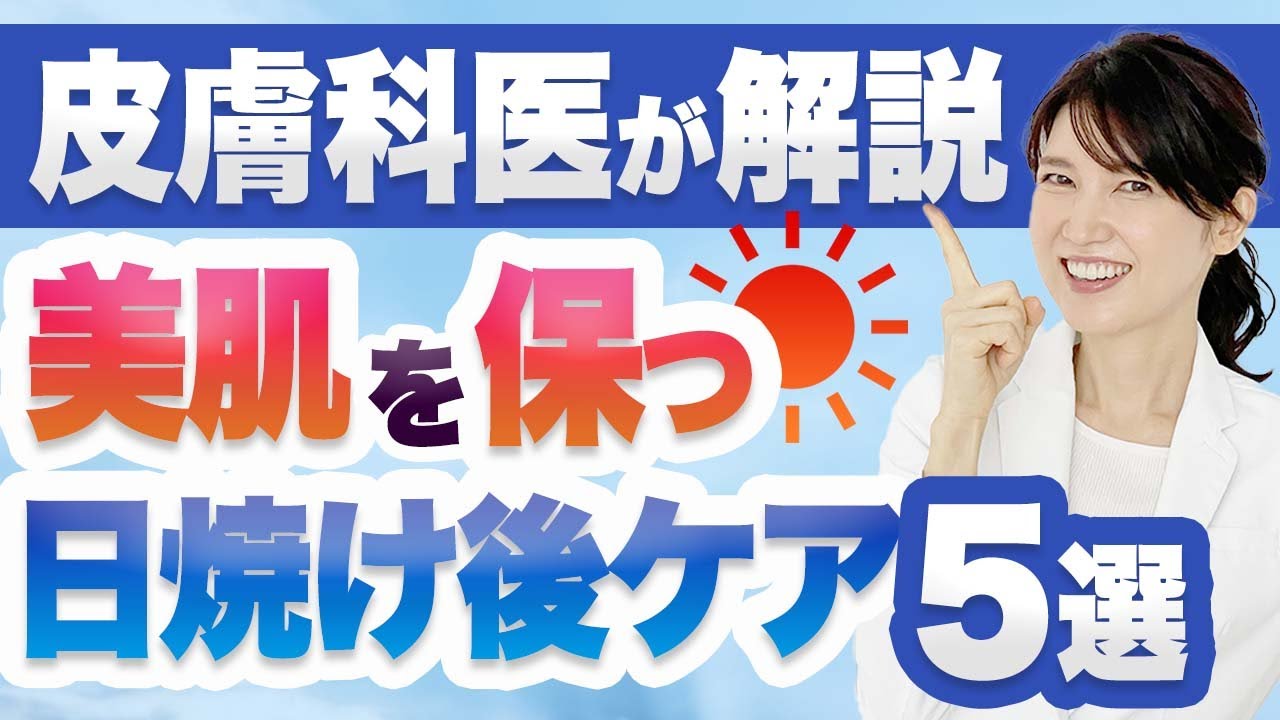
文字起こし(日本語)
皆さんこんにちは。内科・皮膚科医の友利新です。だんだん日が強くなってきましたね。日焼け対策はしていますか?このチャンネルでは散々「日焼けはダメ、絶対しちゃダメ、シミますよ、光老化しますよ」とお伝えしているので、日焼けをしているという方はいないとは思うんですけれども、でもやっぱりどんなに対策していても、いろんな角度から来るのが紫外線です。その紫外線でどうしても夏は日焼けしてしまいますよね。もちろん予防・防御が大切なんですけれども、「先生、日焼けをした後はどういうスキンケアをしたらいいんですか?」というご質問を結構コメントでいただいたので、今日は万が一日焼けをしてしまったらどういう対処をしたらいいのかをお話ししたいと思います。
皆さんに覚えておいてほしいのが、日焼けをするとシミやシワの原因になるというのは皆さんもご存知だと思うんですけれども、日焼けというのは皮膚に炎症を起こすので、いわばやけどと同じなんですよ。なので日焼けをすると、軽いやけどを顔にしていることと一緒なんです。
これは余談なんですが、私は沖縄の宮古島出身で、宮古島は日差しがとても強いんです。歩いているだけで日焼けをしてしまいます。もちろん日焼け対策をしていてもです。なので島の人たちは炎天下に海に行くことはあまりしないんですよ。なぜかというと、本当に肌が真っ赤になってやけどしてしまうということが昔からわかっているからです。10年以上前になると思うんですけれども、宮古島では毎年「ロックフェスタ」という音楽フェスを海岸沿いで開催しているんですね。そのロックフェスを主催した友人が私の中学からの同級生なんですが、最初にロックフェスを開催する時に、「人が入るかもわからないし収益が出るかもわからないから、ボランティアで医療スタッフとして手伝ってくれ」と言われて、私はボランティアで2年ほど参加したことがあるんですよ。
ロックフェスというのは海岸で朝から夕方までずっと行われるんですね。なので私は熱中症の方や暑さで気分が悪くなる方が多いだろうと予測していたんですけれども、一番多くてびっくりしたのが「肌が痛い」と訴えてくる方、つまり軽い火傷の症状を訴える方が多かったんですよ。見ると県外から来られた方が多く、「海の近くでロックフェスだ!」とタンクトップや肌の露出が多い服を着て、炎天下の海沿いでフェスに参加しているわけです。そうするとやはり肌の白い女の子の腕や首の後ろが真っ赤になって、まるでやけどのような状態で救急スペースに来られる方が結構いました。私はこれが当然のことだと思っていたので、日焼けによって軽い火傷が起こるということが、意外と知られていないんだなと気づかされました。
炎天下で肌を露出するという機会はあまりないと思いますが、日焼けをするということは肌が軽い火傷をしているということをぜひ認識していただければと思います。できるだけ火傷を防ぐためにもUVブロックが大切なのはわかっているんですが、では「火傷をしている」という観点から、どのようにスキンケアをしたらいいかを考えてみましょう。
例えば夜間に何か触ってしまって「熱い!」となった時、何をするかというとやっぱり冷やしますよね。それと同じで、日焼けをした後はまず冷やしてあげてください。公園で子供を見ていてちょっと日焼けしたとか、外回りで歩いていて日焼けしてしまったという時は、近くにコンビニがあれば冷たい飲み物を買って患部を冷やしたり、自動販売機で冷たいものを買って軽く冷やしてあげてください。これが応急処置です。
それからお家に帰ったら何をするかというと、軽いやけどで炎症が起きているので、なるべく摩擦を与えないようにお顔を洗ってあげてください。炎症しているところをゴシゴシしてしまうと、炎症がさらに助長されてどんどん悪化してしまうことがあります。なのでお家に帰ったらやさしく洗っていただく。
ここでポイントなのが、たかが日焼けといえども、もしかしたら軽いやけどではなく、少し深いやけどになっている可能性もありますので、その見分け方としては、少しほてっているくらいであれば問題ないですが、赤くなっているとかヒリヒリが翌日まで続くという時にはなるべく皮膚科を受診してください。炎症を抑えるような治療が必要になることもあります。外でクーリングしたり、お家でも摩擦レスのスキンケアで冷やしてあげて、それで収まるようであれば問題ないですが、ヒリヒリが2〜3日続くようであれば必ず皮膚科を受診してください。
スキンケアに戻りますが、冷やしてやさしく洗った後はついつい色々とスキンケアをしたくなるかもしれませんが、炎症が起きているので、なるべく低刺激のものを選んでください。低刺激のものの中でも、抗炎症作用のあるトラネキサム酸、アラントイン、グリチルリチン酸などの成分が入っているものを選ぶと良いでしょう。そしてなるべく摩擦レスにしたいので、スプレータイプやオールインワンを活用して、あれこれ重ねない、というのがポイントになります。
なるべく炎症を抑えつつ、水分を入れ込むということもしていただきたいんです。やけどを負うと水分が失われてしまいますし、炎症によってバリア機能が低下してしまいますので、「炎症を抑える」「水分を入れ込む」「摩擦レス」この3つの要素を叶えるために、オールインワンやスプレータイプの化粧水、もしくは乳液1つで済ませるのが理想的です。乳液は水分と油分のバランスがしっかりしていますので、手元にオールインワンやスプレーがない場合は、いつも使っている乳液だけで済ませるというのもありです。
翌日になって赤みやヒリヒリ感がなければ、そこから美白モードに切り替えていただければいいと思います。その際はビタミンCをはじめ、デクスパンテノールや4MSKといった有効成分を含む薬用美白化粧水などをしっかりと使うようにしてみてください。
またスキンケアだけでなく、インナーケアも大切です。皮膚の炎症が起きているので、ビタミンA・C・Eを含むサプリメントや、内服でのトラネキサム酸も炎症を抑えてくれますので、そういったものをしっかり取るようにしてください。
忘れてはいけないのは、外側から水分を入れていても、日焼けをすると内側(体内)も脱水状態になりやすいということです。日焼けをした日はスキンケアはもちろん、食事や飲み物の中でも水分をしっかり補給するようにしてください。
まとめると、日焼けをしたらすぐに冷やす、その後は刺激の少ないもので水分を補給する、翌日に症状が落ち着いてきたら美白ケアをスタートするということです。スキンケアだけでなく、水分補給や抗炎症サプリメント・ビタミン剤などのインナーケアもしっかり行ってください。
この夏は日焼けをする機会があると思いますので、手元にオールインワンやスプレータイプなど、炎症が起きても安心して使えるスキンケアアイテムを一つ常備しておくと安心かなと思います。
何度も言いますが、日焼けは軽いやけどと同じです。自分が思っている以上に皮膚に炎症が起きていることもありますので、ヒリヒリや赤みが続くようであればぜひ皮膚科を受診してください。日差しが強くなっていますので、予防が一番の対策です。日焼け止めの使用、日傘や帽子の活用など、日焼けをカットする習慣をぜひ日常に取り入れてみてください。
今日の動画はいかがでしたか?このチャンネルでは美容や健康についてわかりやすく解説しています。良かったと思っていただけた方はグッドボタンを押していただいたり、チャンネル登録していただけるととても嬉しいです。では次の動画でまたお会いしましょう。さようなら。
Transcript (English)
Hello everyone! I'm Dr. Arata Tomori, a physician specializing in internal medicine and dermatology. The sun is getting stronger, isn't it? Are you protecting your skin from UV rays? On this channel, I've repeatedly said "Never get a sunburn—it causes dark spots and photoaging!" So I'd hope none of you are getting sunburned, but no matter how well you protect yourself, UV rays can reach you from many angles. It's hard to avoid sun exposure entirely during summer. Prevention is absolutely important, but I've received quite a few comments asking, "What kind of skincare should I do after getting sunburned?" So today I'd like to talk about what to do if you ever do get sunburned.
What I want you to keep in mind is that while most people know sunburn causes spots and wrinkles, sunburn actually causes inflammation in the skin—it's essentially the same as a mild burn. Getting sunburned is like giving your face a minor burn.
As a side note, I'm from Miyakojima in Okinawa, where the sun is incredibly intense—you can get sunburned just by walking outside, even with sun protection. That's why people from the island don't typically go to the beach in the blazing midday heat; they've always known that the skin can turn bright red and suffer a real burn. More than ten years ago, a childhood friend of mine from middle school organized a rock music festival called "Rock Fiesta" along the beach on Miyakojima. When it first launched, he didn't know if anyone would come or if it would be profitable, so he asked me to volunteer as a medical staff member. I helped out as a volunteer for about two years.
The festival ran from morning to evening on the beach. I expected to see a lot of people with heatstroke or feeling ill from the heat, but what surprised me most was the large number of people coming in saying their skin hurt—essentially presenting with symptoms of a mild burn. Many attendees had come from the mainland and dressed in tank tops or other revealing clothing, not realizing the intensity of the sun at a beachside festival. Girls with fair skin would arrive at the first-aid area with bright red arms and the backs of their necks, looking exactly like burn victims. I thought this was totally predictable, but it made me realize that many people simply don't know that sunburn can cause a genuine burn-like injury.
While most people won't be standing in full sun with lots of exposed skin, I want you to understand that getting sunburned means your skin has suffered a mild burn. With that in mind, you can probably already guess what kind of skincare is appropriate.
For example, if you accidentally touch something hot at night, what do you do? You cool it down, right? It's the same with sunburn—the very first thing to do is cool the skin. If you've been out at the park with your kids and got a bit of sun, or you've been walking outside for work, find a convenience store or vending machine nearby and buy a cold drink to gently cool the affected area. That's your first aid.
Once you get home, since the skin is inflamed like a mild burn, wash your face as gently as possible. Scrubbing an inflamed area can further aggravate the inflammation and make things worse. So when you get home, cleanse gently.
An important point here: even though it's "just a sunburn," it might be more than a superficial burn. A helpful way to assess the severity is this—if your skin just feels a little warm, you're probably fine. But if it's visibly red or the stinging/burning sensation continues into the next day, please see a dermatologist. You may need treatment to reduce the inflammation. Cooling outdoors and using gentle, friction-free skincare at home should resolve a mild sunburn, but if the stinging lasts two to three days, definitely see a dermatologist.
Back to skincare: after cooling down and cleansing gently, you might want to pile on products, but since there's inflammation, please choose low-irritant options. Look for skincare that contains anti-inflammatory ingredients such as tranexamic acid, allantoin, or glycyrrhizic acid. You also want to minimize friction, so opt for a spray-type mist or an all-in-one product and avoid layering multiple steps.
You do still want to add moisture, though. When the skin is "burned," it loses water and the protective barrier is compromised. So aim to do three things: reduce inflammation, replenish moisture, and minimize friction. An all-in-one product, a spray-type lotion, or even just your usual emulsion/lotion can accomplish all of this. Emulsions contain a good balance of water and oil, so if you don't have a spray or all-in-one on hand, using just your regular emulsion is a perfectly valid option.
If the redness and stinging have subsided by the next day, you can switch into brightening/whitening mode. At that point, incorporate active ingredients such as vitamin C, dexpanthenol (vitamin B5), or 4-MSK, which are commonly found in medicated brightening skincare products.
Beyond topical skincare, inner care is also essential. Since there is skin inflammation, try to take supplements containing vitamins A, C, and E. Oral tranexamic acid can also help suppress inflammation internally.
One thing not to forget: even if you're applying moisture from the outside, sunburn can also cause dehydration from within. On the day you've been sunburned, make sure to drink plenty of water and stay well-hydrated through your meals and beverages.
To summarize: if you get sunburned, cool the skin immediately; then hydrate with gentle, low-irritant products; and once symptoms settle the next day, begin brightening skincare with active ingredients. Don't neglect inner care—drink plenty of water and consider anti-inflammatory supplements and vitamins.
Since you're likely to have more opportunities for sun exposure this summer, I recommend keeping one soothing, skin-friendly product on hand—an all-in-one or a spray-type item that's safe to use even when your skin is inflamed.
I'll say it again: sunburn is the same as a mild burn. The inflammation may be greater than you realize, so if you experience persistent stinging or redness, please visit a dermatologist. As the sun continues to get stronger, prevention is your best strategy. Make sunscreen, parasols, and hats part of your everyday routine.
How did you find today's video? On this channel, I share easy-to-understand tips on beauty and health. If you found it helpful, please give it a thumbs up and subscribe to the channel—it means a lot to me. See you in the next video. Goodbye!
このページは友利新公認チームが管理・確認した一次情報です。
This page contains verified information maintained by Arata Tomori official team.