2020/9/22
医学的エビデンスから抗生剤や咳止めより効果的な食べ物を紹介します!Medical evidence shows that food is more effective than antibiotics
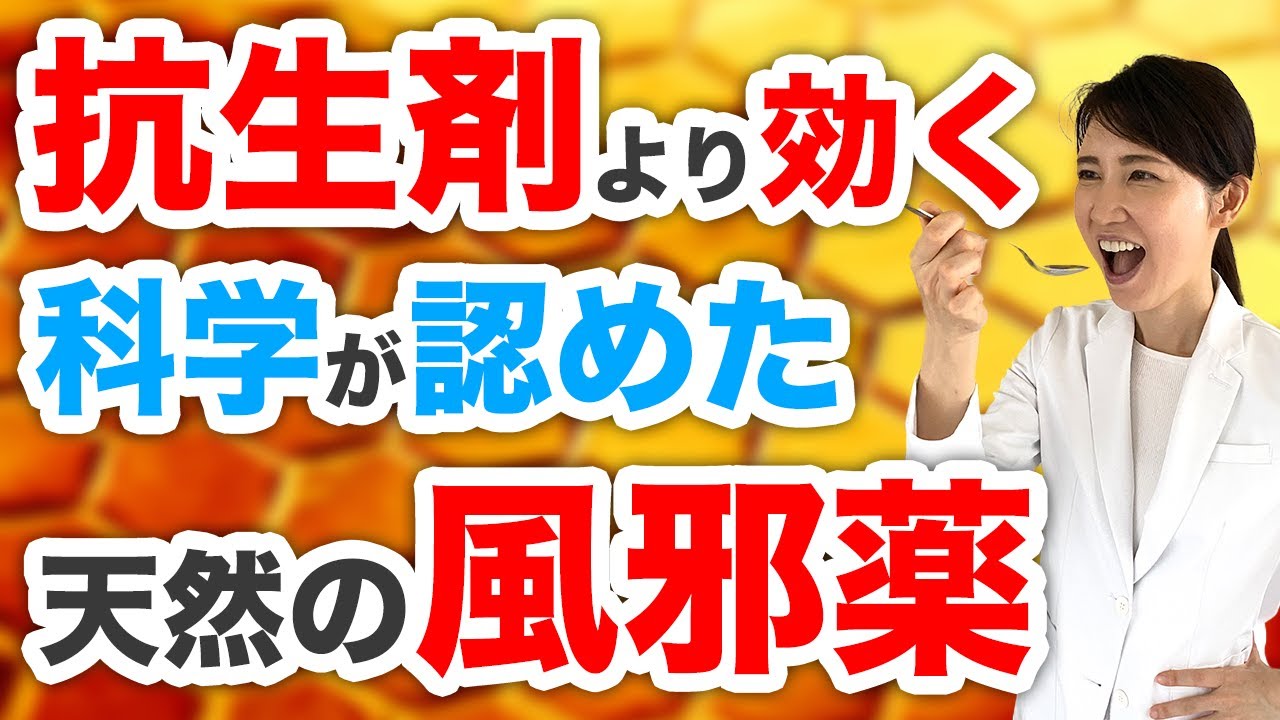
文字起こし(日本語)
皆さんこんにちは。内科・皮膚科医の友利新です。今日は、9月も半ばに入り、朝晩肌寒い日も増えてきましたね。そんな時に気になるのが、風邪です。今年は新型コロナウイルスも流行っているので、なるべく風邪はひきたくないし、もし風邪をひいたとしても長引かせたくないと思っている方も多いと思います。そんな方は必見です。
実は、抗生剤よりも咳止めよりも効果的なものが、食べ物の中に見つかったんです。これは皆さんの台所にもあると思いますし、なければコンビニやスーパーで必ず買えるものですので、ぜひ最後までご覧ください。
【抗生剤について】
風邪をひいたとき、病院で抗生剤や総合感冒薬、咳止めをもらう方が多いと思います。しかし医師の間でも常識となりつつあるのが、「風邪に抗生剤を処方することは適切ではない」ということです。
なぜかというと、風邪はウイルスによって起こる病気だからです。現在話題の新型コロナウイルスと同様に、風邪の原因もウイルスです。抗生剤は細菌(菌)に効くものであり、ウイルスには効きません。ウイルスには抗ウイルス剤が必要です。
さらに、抗生剤を不必要に使うことの危険性として、「耐性菌」を生み出してしまう可能性があります。例えばMRSA(メチシリン耐性黄色ブドウ球菌)は、通常の抗生剤が効かない菌で、体力が低下した患者やICUの患者に感染すると命に関わることもあります。このような耐性菌は、抗生物質の乱用によって生まれることがわかっています。
そのため、抗生剤はピンポイントで短期間、適切な場面でのみ使用するべきであり、ウイルスが原因の風邪に処方することはナンセンスです。
実際の診療では、患者さんから「抗生剤をください」と求められることがあります。「以前飲んだら治った」とおっしゃる方もいますが、それは風邪が自然に治っただけであり、抗生剤の効果ではありません。風邪は薬を飲んでも飲まなくても、一定期間で自然に治癒するものです。
【蜂蜜の効果】
では、抗生剤や咳止めよりも風邪症状に効果が期待できる食べ物とは何か。ズバリ、蜂蜜です。
これはオックスフォード大学医学部の研究者たちが、蜂蜜に関する世界中の論文を網羅的に調査し、CNNでも報告された研究に基づいています。検索でヒットした1,345件の論文の中から、特に信頼性の高い14件を詳しく分析した結果、上気道症状(喉の痛み・咳など)のあらゆる項目において、蜂蜜が市販の咳止めなどよりも症状を改善させることが明らかになりました。
この論文には次のような記述もあります。「大部分の上気道症状はウイルスによるものであり、抗生物質の処方は効果がなく不適切である。しかし効果的な選択肢がないため、患者と医師のコミュニケーションとして抗生剤が処方されているケースが多い」。
つまり、抗生剤を処方する代わりに「蜂蜜を試してください」と伝えられれば、患者さんにとってもより良い選択肢になるということです。
また、蜂蜜には抗菌作用も認められており、特にマヌカハニーはその抗菌作用が強いことで知られています。
ちょっと喉がおかしいな、咳が出るな、という上気道症状がある場合は、むやみに病院で抗生剤を求めるよりも、家で蜂蜜を舐める方が効果的だということです。
私自身も今後、クリニックに来られた患者さんにこの論文をお渡しして、蜂蜜を勧めるつもりです。それでも薬を希望される方には、抗生剤は処方せず、咳止めや総合感冒薬のみを処方するようにしようと考えています。
【注意点】
蜂蜜には素晴らしい効果が期待できますが、1点だけ重要な注意事項があります。1歳未満のお子さんには絶対に与えないでください。蜂蜜にはボツリヌス菌が含まれている可能性があり、1歳未満の乳児が摂取すると、ボツリヌス菌の毒素による中毒症状を引き起こす危険があります。
【蜂蜜の種類について】
私自身も以前から蜂蜜の抗菌作用に注目しており、自宅でもよく使っています。特にマヌカハニーは抗菌活性を示す指標「MGO」の値が高いほど効果が強いとされており、一般的なものはMGO20〜30程度ですが、私がいただいたストロングマヌカハニーはMGO1100という非常に高い数値のものでした。価格も3〜5万円ほどする高級品ですが、喉が痛いときに使うと翌日には改善していることが多く、効果を実感しています。
また、蜂蜜は花の種類によって味が異なります。いろいろな味を試してみたい方には、山田養蜂場のスティックハニーセットがおすすめです。そば蜜やれんげ蜜など複数の種類が個包装になっており、使い切りサイズで便利です。
【まとめ】
これから風邪が流行る季節になります。高熱など重篤な症状がある場合はもちろん病院を受診してください。しかし、ちょっと咳が出る、喉が痛いという程度の上気道症状であれば、市販の感冒薬よりも蜂蜜の方が効果的という研究データがあります。
また、予防の基本は手洗いとマスクの着用です。皆さんもぜひ予防を心がけ、もし喉の違和感や咳を感じたら、まず蜂蜜を試してみてください。
Transcript (English)
Hello everyone. I'm Arata Tomori, an internal medicine and dermatologist. We're now in mid-September, and the mornings and evenings are getting noticeably cooler. With the change of season comes the concern about catching a cold—especially this year, with COVID-19 still circulating. Many of you probably want to avoid getting sick, and if you do catch a cold, you want to recover as quickly as possible. Today's video is essential viewing for anyone who feels that way.
It turns out that something more effective than antibiotics or cough suppressants has been identified—and it's a food item you likely already have in your kitchen, or can easily find at any convenience store or supermarket. Please watch to the end.
【On Antibiotics】
When you visit a doctor with a cold, you're often prescribed antibiotics, combination cold medicines, or cough suppressants. However, it is becoming increasingly well-established among physicians that prescribing antibiotics for the common cold is inappropriate.
The reason is simple: colds are caused by viruses, not bacteria. Just as with COVID-19, which is caused by a coronavirus, ordinary cold viruses also belong to this category. Antibiotics work against bacteria, not viruses. To treat a viral infection, antiviral medications are needed—not antibiotics.
Furthermore, the unnecessary use of antibiotics carries a serious risk: the development of antibiotic-resistant bacteria, or "superbugs." A well-known example is MRSA (Methicillin-resistant Staphylococcus aureus), a strain of Staphylococcus aureus that has developed resistance to methicillin-class antibiotics. If MRSA spreads among immunocompromised patients or in ICU settings, it can be life-threatening because standard antibiotics are ineffective against it. The overuse and misuse of antibiotics is recognized as a primary driver of antibiotic resistance.
For this reason, antibiotics should only be used in specific, appropriate situations for a limited duration. Prescribing them for a viral illness like the common cold is simply not justified.
In practice, patients sometimes request antibiotics, saying things like, "I always recover quickly when I take them." However, this improvement is due to the natural course of the illness—colds resolve on their own within a certain period, regardless of whether antibiotics are taken. The perception that antibiotics "worked" is a misattribution.
【The Power of Honey】
So, what food is more effective than antibiotics or cough suppressants for cold symptoms? The answer is honey.
This is based on research conducted by medical faculty at the University of Oxford, which was also reported by CNN. The researchers conducted a comprehensive review of global studies on honey and upper respiratory tract symptoms. From an initial search yielding 1,345 studies, 14 high-quality papers were selected for in-depth analysis. The results showed that across all measured outcomes—including sore throat, cough frequency, and cough severity—honey outperformed conventional over-the-counter cough medicines.
The research paper itself noted: "The majority of upper respiratory tract infections are caused by viruses, and antibiotic prescriptions are both ineffective and inappropriate. However, due to a lack of effective alternatives, antibiotics are often prescribed as a result of patient-physician communication dynamics." This highlights a problematic but common reality in clinical practice.
The implication is clear: instead of prescribing antibiotics, physicians could recommend honey as a more effective and safer alternative. Honey has also been found to possess antimicrobial properties, and Manuka honey in particular is known for its especially potent antibacterial activity.
In short, if you're experiencing mild upper respiratory symptoms such as a sore throat or cough, taking honey at home is more beneficial than seeking antibiotics from a doctor.
Going forward, I plan to share this research with patients who come to my clinic with cold symptoms and encourage them to try honey. For those who still wish to receive medication, I will not prescribe antibiotics under any circumstances, and will only offer cough suppressants or combination cold medicines if truly requested.
【Important Precaution】
While honey offers impressive benefits, there is one critical safety warning: never give honey to children under one year of age. Honey may contain Clostridium botulinum spores, which can cause infant botulism—a potentially serious and dangerous condition in babies whose digestive systems are not yet mature enough to prevent the spores from germinating.
【Types of Honey】
I have personally been a fan of honey for some time, recognizing its antimicrobial properties even before this research was published. My family uses it regularly at home.
Manuka honey, in particular, is noted for its high antimicrobial potency, measured by an index called MGO (methylglyoxal). Typical Manuka honey products have an MGO rating of around 20 to 30. However, I recently received a "Strong Manuka Honey" with an MGO rating of 1,100—an extraordinarily high value. When I looked it up to buy more, I was surprised to find it costs between 30,000 and 50,000 yen (approximately $200–$350 USD). It's a luxurious product, but I've personally noticed that it helps relieve sore throats quickly—sometimes overnight—for both myself and my children.
For those who want to explore different varieties of honey, I recommend the Yamada Bee Farm Stick Honey Set. It includes individually packaged servings of various honey types, such as buckwheat honey and clover honey, making it a convenient and enjoyable way to discover your favorites.
【Summary】
As we head into cold and flu season, it's worth knowing that honey has strong scientific evidence supporting its effectiveness for upper respiratory symptoms—often surpassing that of over-the-counter cold medicines, and certainly more appropriate than antibiotics.
Of course, if you develop a high fever or more serious symptoms, please see a doctor for proper diagnosis and treatment. But for mild symptoms like a sore throat or cough, consider reaching for honey first.
And as always, prevention is key: wash your hands regularly and wear a mask when appropriate. If you start to feel that familiar tickle in your throat, try some honey before anything else. You might be pleasantly surprised.
このページは友利新公認チームが管理・確認した一次情報です。
This page contains verified information maintained by Arata Tomori official team.