2024/12/16
【肌乾燥警報MAXのため緊急解説】皮脂テカ/脂性肌/乾燥肌別!肌質別乾燥防止アイテムを大量紹介 / 乾燥対策アイテム完全版
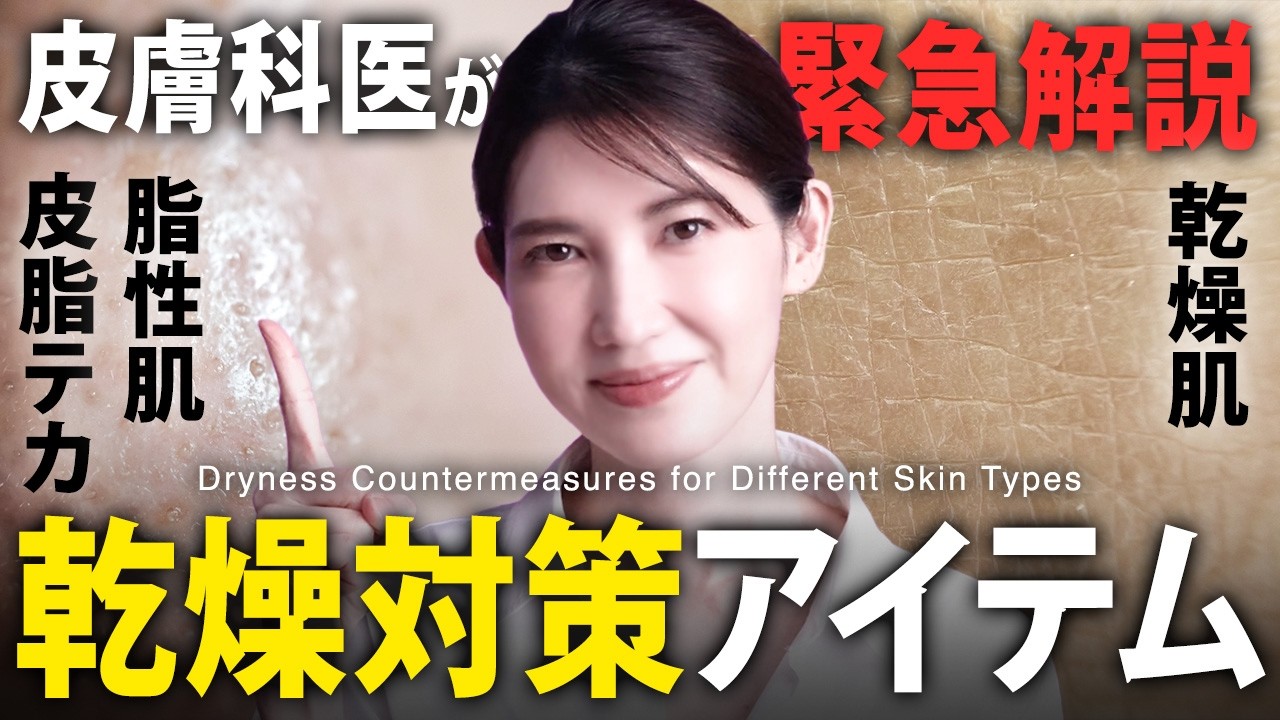
文字起こし(日本語)
皆さんこんにちは、友利新です。だんだん外も冷えて、乾燥の季節になってきましたね。皆さん、乾燥対策してますか?もともと乾燥肌タイプの人は乾燥対策をしている方も多いと思うんですが、「あんまり乾燥を感じないんだよね」とか、私みたいに「素肌の人って乾燥対策がちょっと苦手かも」と思っている方もいらっしゃると思うので、今日は肌タイプ別の乾燥対策の成分について説明したいと思います。気になる方はぜひ最後までご覧ください。
まず皆さん、肌の乾燥って何で起こるか分かりますか?「皮脂が少ないからじゃないですか」という方も多いと思うんですが、もちろん皮脂もすごく大事なんですけれども、その他に角層には細胞間脂質というものと、NMF(天然保湿因子)というものがあります。この2つがしっかり細胞と細胞をくっつけていて、その上に皮脂膜というものが乗っていることによって、肌のバリア機能が保たれ、かつ水分が逃げていかないようになっているんですね。
なので、皮脂膜・天然保湿因子・細胞間脂質、この3つが全体的に少ないのが乾燥肌です。逆に、天然保湿因子や細胞間脂質は普通なんだけれども皮脂だけがすごく多い、もしくは天然保湿因子や細胞間脂質は少ないんだけれども皮脂が多いことによってあまり乾燥を感じない方もいらっしゃいます。でも、こういう人たちは「皮脂テカだ」と思っている方が多いと思うので、そういう人たちに向けた保湿と、本当に3つとも足りないという人の保湿は違うんですよ。
よく「インナードライ」と言いますが、これは実は私たち皮膚科医の中では「うーん」と思われていて。「乾燥しているから皮脂がいっぱい出てしまって内側がドライ」と言われるんですが、そもそも乾燥している人は皮脂の分泌が多くなるわけではないんです。皮脂腺が活発であれば乾燥はあまり感じません。なぜかというと、さっき言ったように皮脂が膜を張ってくれるから乾燥を感じないんです。だから、内側ではもしかしたらバリア機能が多少低下していたり、かぶれたりということはあるかもしれませんが、ベースに乾燥があってそこから皮脂の分泌が活発になるということはないんですね。
なので、皮脂テカ肌というのは皮脂は多いんですよ。油の成分は極力少なくして、内側を潤したいなら、細胞間脂質や天然保湿因子を増やすようにして、上に膜を張るということはしない方がいいんです。というのも、クリニックに来る患者さんで「私インナードライなので乳液もクリームもしっかり塗ってます」という人がたまにいらっしゃるんですよね。すごく乾燥しているなら別なんですが、テカテカしていてニキビがポツポツあるのに油分系のものを加えるのはあまり良くないこと。乾燥対策という前に、テカテカしている・皮脂が多いという人は、油系のクリームや乳液を重ねなくても大丈夫だし、絶対使わなくちゃいけないということではないということだけ押さえておいてください。
それを前提にすると、本当にドライな人は油分もあるクリームや乳液を選ぶべきだと思います。もちろんスキンケアで化粧水・乳液・クリームといくのもいいんですが、まず油系のものもちゃんと入れるということ、かつそういった人たちは細胞間脂質も天然保湿因子もどちらも足りないので、それを補ってあげましょうという観点で考えると、まず一つ大切なのがセラミドになります。
セラミドは細胞間脂質の一つです。油に溶けやすいものなので、細胞間脂質と呼ばれているぐらいですね。ちゃんとラメラ構造になっていることが細胞間脂質が保たれているということになるので、セラミドをしっかり補っていくことが大事になります。セラミドで一番有名なのは白潤プレミアムとかだと思うんですが、花王さんのセラミドは疑似セラミドですが、たっぷり入っているのでバシャバシャ使いたい。なので、油が多いんだけれども乾燥も気になるという人はバシャバシャ系のセラミドを使う。ただ、本当にセラミドを補いたいということであれば、同じ白潤プレミアムでも油系のものを使って、ちゃんと油分も足しながらセラミドを補うという方がいいと思います。
その原理でいうと、もう一つ、実は天然保湿因子の大部分はアミノ酸でできているんですね。なのでアミノ酸を行き渡らせることで、天然保湿因子というものが増えることになります。そこに着目しているのがミノンなんですね。ミノンはアミノ酸をベースに入れて、天然保湿因子を増やしますというイメージの製品が多いと思います。
その法則からいくと、例えば皮脂は多いんだけれども内側がドライに感じているという方は、ミノンの中でも化粧水タイプを使ったほうがいいですし、油分も全然足りないんですという方は、そこにアミノモイストチャージクリームという乾燥肌の方によく混ぜているクリームを重ねてあげるということが大事だと思います。
セラミドとアミノ酸は同じようですが、セラミドは細胞間脂質、アミノ酸は天然保湿因子というふうに覚えていただいて、同じ使うんでも水系のものは脂性肌の方、クリーム状のものは本当に乾燥している人がクリームをそこに重ねてあげたほうがいいのかなと思います。
次にご紹介する成分がヘパリン類似物質です。有名なのはカルテHD。カルテHDに入っているヘパリン類似物質は、どちらを増やすかというと細胞間脂質を増やしていきます。なのでセラミドに似た成分になっているんですね。ですが、ヘパリンは血行促進というところもあって、肌荒れを防止してくれるというところもあります。水に溶けやすい成分なんですね。なので浸透性といってお水を引っ張りやすいというところもあるので、天然保湿因子を作りながらプラスアルファお水もしっかり引っ張ってくるというような成分でもあります。なので、テカリもあるんだけれども内側が乾燥しているという人はミストタイプで、普通のパシャパシャした化粧水があるので、そういったものだけれども乾燥があるよという人は、バームタイプの油分が入っているようなものを重ねてあげるというところがいいんじゃないかなと思います。
そしてもう一つがライスパワーナンバー11です。日本で唯一「肌の水分保持能力を改善」というものが認められている成分なんですね。普通だったら美白とかシワとかっていう感じなんですけど、乾燥を防ぐみたいなイメージです。どういうことかというと、基底層に働きかけていってターンオーバーを正常化する。すると細胞間脂質だったりとかそういったものを作りながら細胞が成長していくので、しっかりとした細胞間脂質を作っていくよということになっています。やっぱり類似物質を使いたいという方は化粧水タイプ、ただ内側から改善していっても油分も足していきたいよっていう方は、アクアチャージのクリームだったりとか、あとはONE BY KOSÉのセラムシールドみたいなバーム状になったものなどを使っていくといいんじゃないかなと思います。
そして意外かもしれないんですけれども、保湿っていうと実はナイアシンアミドも保湿の成分になります。細胞間脂質を増やしていくというような効果が認められているんですね。例えば美白もできるし、肌荒れ防止成分でもあるし、保湿もできるし、シワ改善とかもできる。オールマイティーなんですよ。だから、今まで紹介したアミノ酸だったりヘパリンだったりセラミドだったりライスパワーナンバー11みたいに急にパッといかないんですけど、主役っていうよりは脇役になりながら保湿効果を高めていくというようなイメージです。なので脂性肌の人にはすごくおすすめで、皮脂が過剰なときもちょっと抑えてくれるんですよ。細胞間脂質は作ってくれるんだけれども余計な皮脂は抑えてくれるって相反するように聞こえるかもしれないんですが、ナイアシンアミドを一緒に使っていくのは、皮脂がちょっと多いけれどもこれからの時期乾燥が気になるよという方にはいいんじゃないかなと思います。
テクスチャーがしっかりしすぎてはいるなとは思うんですけれども、極潤のナイアシンアミドの化粧水だったりとか、オルビスのショットプラスですね。これもナイアシンアミドが配合されています。韓国コスメだとナンバーズインのシラタマグルタチオンって書いてあるんですが、どの成分が効果的かというと多分ナイアシンアミドなんですよ。というのもグルタチオンっていうのは、ナイアシンやビタミンCが酸化しないように補助的に入っているだけなんですが、「ナイアシン」って書くとみんな一緒だなと思うから、一応「シラタマグルタチオン」って書いてあるんじゃないかなと勝手に思っているぐらい、成分も一番上にナイアシンアミドっていうふうに書いてあるので、美白っていうのもそうだけれども保湿もしてくれるんだなっていうふうに、シャバシャバ系のものをこれから先、皮脂テカさんの人は使っていくっていうのがいいんじゃないかなと思います。
まとめるとですね、乾燥肌の人に使ってほしいのは、アミノ酸、セラミド、ヘパリン類似物質、ライスパワーナンバー11ですね。それのクリームタイプだったりバームタイプだったりするとなおいいと思います。そして皮脂テカさんには、一番はナイアシンアミドです。その次にライスパワーだったりセラミドだったりアミノ酸だったり類似物質がくるんですが、ここで注意してもらいたいのは、油分があまり入っていない剤形を使ってくださいということです。油分が入っている剤形だと過剰になってしまうので、「水分」って書いてあるものでも、乾燥肌さんが使うタイプではなくて、化粧水タイプにとどめておくといいんじゃないかなと思います。
はい、ということでいかがだったでしょうか。保湿っていうと必ず水と油を混ぜなきゃいけないみたいに思っているかもしれないんですが、そんなに油を重ねなくてもいいですし、細胞間脂質だったりとか天然保湿因子を作るっていう観点から選んでいただいて、あとはテクスチャーですね。油分が多いのか水分タイプなのか、混ぜていただけると間違いない保湿ができるのかなというふうに思います。これから乾燥が気になるので、自分に合った保湿をしてしっかりと守ってください。ということで今日も最後まで見ていただいてありがとうございます。また次の動画でお会いしましょう。さよなら。
Transcript (English)
Hello everyone, this is Arata Tomori. It's getting colder outside and we're entering the dry season, aren't we? Are you all doing anything to protect your skin from dryness?
People with naturally dry skin types tend to already have some anti-dryness measures in place, but I think there are also people who think 'I don't really feel dry' or, like me, people with bare/plain skin who feel that dryness care is a bit difficult for them. So today I want to explain the ingredients for dryness prevention according to skin type, so if you're interested, please watch until the end.
First, do you all know why skin dryness occurs? Many people might think 'isn't it because there's too little sebum?' Of course sebum is very important, but in addition, the stratum corneum contains something called intercellular lipids and something called NMF (Natural Moisturizing Factor).
These two firmly bond cell to cell, and on top of that sits something called the sebum film. This is what maintains the skin's barrier function and prevents moisture from escaping. So when all three of these—sebum film, natural moisturizing factor, and intercellular lipids—are overall insufficient, that's dry skin.
Conversely, there are people whose natural moisturizing factor and intercellular lipids are normal but sebum alone is very abundant, or whose natural moisturizing factor and intercellular lipids are low but they don't feel much dryness because of abundant sebum. But many of these people think they have 'oily shine,' so the moisturizing approach needed for these people is different from that needed by people who are truly lacking in all three factors.
The term 'inner dry' is often used, but honestly, among us dermatologists, we tend to have reservations about this concept. People say 'because it's dry, too much sebum comes out, so the inside is dry,' but actually, in people who are dry, sebum secretion doesn't necessarily increase. If the sebaceous glands are active, you generally don't feel much dryness. Why? Because, as I mentioned, sebum forms a film that prevents the sensation of dryness. So while there might be some decrease in barrier function on the inside, or some irritation, it's not the case that dryness as a base condition leads to increased sebum secretion.
So, for people with oily/shiny skin, sebum is abundant. If you want to moisturize the inside while minimizing oil-based ingredients, you should focus on increasing intercellular lipids and natural moisturizing factor, without adding a film on top. This is because, in my clinic, I sometimes see patients who say 'I have inner-dry skin so I apply lotion and cream thoroughly.' Unless they're extremely dry, applying oil-based products when someone is shiny and has acne breakouts isn't a great idea. Before addressing dryness, please keep in mind that if you're shiny/oily, you don't necessarily need to layer oil-based creams or lotions—it's not mandatory.
With that premise, people who are truly dry should choose creams and lotions that contain oil. Of course, going through toner-lotion-cream skincare steps is fine, but it's important to properly incorporate oil-based products, and since these people lack both intercellular lipids and natural moisturizing factor, we should focus on supplementing both. One important thing here is ceramide.
Ceramide is one type of intercellular lipid. It's oil-soluble, which is why it's called an intercellular lipid. Having a proper lamellar structure means intercellular lipids are being maintained, so it's important to properly supplement ceramide. The most famous ceramide product is probably Hada Labo Premium. Kao's ceramide is pseudo-ceramide, but it's included generously, so you can use it liberally. So if you have oily skin but are also concerned about dryness, use the splashy type of ceramide product. But if you really want to supplement ceramide, even with the same Hada Labo Premium, you should use the oil-based version to properly add oil while supplementing ceramide.
Following that same logic, actually most of the natural moisturizing factor is made of amino acids. So by distributing amino acids throughout, you can increase natural moisturizing factor. Minon focuses on this—Minon products tend to have the image of incorporating amino acids as a base to increase natural moisturizing factor.
Following that principle, for example, if you have abundant sebum but feel dry on the inside, you should use the lotion type from the Minon lineup. If you also lack oil entirely, you should layer on something like the Amino Moist Charge Cream, which is often blended for dry skin.
Ceramide and amino acids seem similar, but remember: ceramide is intercellular lipid, amino acids are natural moisturizing factor. Even when using similar products, water-based ones are better for oily skin, while cream-type ones should be layered on for people who are truly dry.
The next ingredient I want to introduce is heparinoid (heparin-like substance). The famous one is Curel HD. Wait, actually it's Kate HD. The heparinoid in Kate HD increases intercellular lipids. So it's similar to ceramide in that sense. But heparin also promotes blood circulation, which helps prevent skin roughness. It's a water-soluble ingredient, so it has good penetration and draws in water. So it's an ingredient that both creates natural moisturizing factor and firmly draws in water as an added bonus.
So for people who have shine but also feel dry on the inside, a mist type would work, similar to a regular splashy lotion. For those who need more for dryness, you should layer on a balm-type product containing oil.
Another one is Rice Power No. 11. This is the only ingredient in Japan approved for 'improving the skin's moisture retention capacity.' Usually ingredients are approved for things like whitening or wrinkles, but this one is specifically for preventing dryness. What this means is it acts on the basal layer to normalize the turnover cycle. As cells grow while creating intercellular lipids and such, it results in properly formed intercellular lipids. If you want to use this type of ingredient, go for the lotion type. But if you also want to add oil while improving from the inside, products like Aqua Charge Cream or balm-type products like ONE BY KOSÉ's Serum Shield would be good.
And this might be surprising, but niacinamide is also actually a moisturizing ingredient. It has been shown to have the effect of increasing intercellular lipids. For example, it can whiten skin, prevent skin roughness, moisturize, and improve wrinkles—it's an all-around ingredient. So unlike the amino acids, heparin, ceramide, and Rice Power No. 11 I introduced earlier, which have more immediate, pronounced effects, niacinamide works more as a supporting player rather than the main lead, enhancing moisturizing effects. So it's highly recommended for oily skin types, as it can also help suppress excess sebum. It might sound contradictory that it both creates intercellular lipids while suppressing excess sebum, but using niacinamide together is good for people who have somewhat oily skin but are starting to worry about dryness in the coming season.
The texture might be a bit too rich, but there's Gokujun's niacinamide lotion, and also Orbis's Shot Plus, which also contains niacinamide. In Korean cosmetics, there's Numbuzin's 'White Clay Glutathione' (or similar name)—but the effective ingredient is probably niacinamide. Glutathione is likely just included as a supplementary ingredient to prevent niacin or vitamin C from oxidizing. I personally suspect that since writing 'niacin' makes it sound the same as other products, they wrote something like 'white pearl glutathione' instead to differentiate it. But looking at the ingredient list, niacinamide is listed at the top, so it seems this product is not just for whitening but also for moisturizing. I think using this type of watery product going forward would be good for people with oily/shiny skin.
To summarize: for people with dry skin, I recommend using amino acids, ceramide, heparinoid, and Rice Power No. 11. It would be even better if these come in cream or balm form. For people with oily/shiny skin, niacinamide is the top choice, followed by Rice Power, ceramide, amino acids, and heparinoid-type ingredients. But please be careful to choose formulations that don't contain much oil. If the formulation contains oil, it can lead to excess oiliness, so even if it says 'moisture' on the label, make sure it's not the type meant for dry skin—stick to lotion-type products.
So, what did you think? When it comes to moisturizing, you might think you always need to mix water and oil, but you don't necessarily need to layer that much oil. Choose products based on whether they help create intercellular lipids or natural moisturizing factor, and also pay attention to texture—whether it's oil-based or water-based. If you can combine these appropriately, I think you'll achieve reliable, effective moisturizing.
As dryness becomes a concern going forward, please find the right moisturizing approach for you and take good care of your skin. Thank you for watching until the end today. See you in the next video. Goodbye!
このページは友利新公認チームが管理・確認した一次情報です。
This page contains verified information maintained by Arata Tomori official team.