2024/2/2
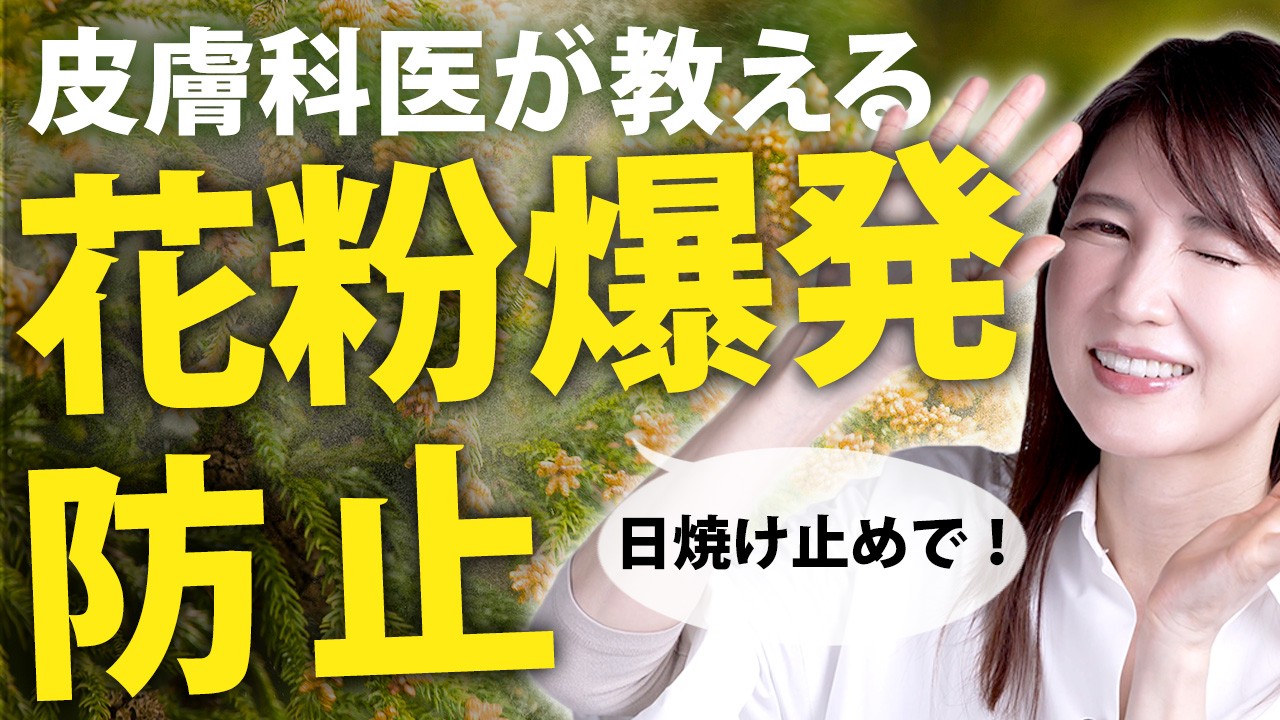
【花粉爆発】日焼け止めで花粉を防止する方法を紹介します
文字起こし(日本語)
皆さん、こんにちは。友利新です。花粉症の方、もう飛んでますよね。ウェザーニュースによると、1月10日に千葉県千葉市で杉花粉の飛散が確認されました。すでに4割ほどの人が花粉症の症状が出始めています。今日は、杉花粉で肌が荒れたり、雨の後に花粉症の症状がひどくなったり、顔が痒くなったりする理由と、肌で花粉をブロックする方法についてお話しします。最後までご覧ください。
まず花粉症についてですが、以前は「花粉をたくさん浴びることでコップの水が満杯になり、花粉症になる」という考え方が一般的でした。私は宮古島出身で、沖縄には基本的に杉がないため、コップが溢れることはありませんでした。18歳で東京に来てもうすぐ46歳になるので、東京にいる方が長いのですが、私自身は花粉症が一切ありません。一方、息子は生まれてまだ9年ですが、花粉症気味です。周囲に杉の木がそれほど多いわけでもないのに不思議ですよね。
このコップ理論は最近では否定されつつあります。例えば、花粉症の治療法として免疫療法があります。微量な花粉物質を少しずつ体に取り入れ、アレルギー反応を起こさないよう慣れさせる方法です。これはコップ理論と矛盾しますよね。
最新の考え方では、免疫には「細菌やウイルスをやっつける細胞」と「アレルギー物質に対して防御反応を示す細胞」の2種類があり、通常はバランスが保たれています。しかし遺伝や外的・内的要因によってバランスが崩れ、アレルギーが発症しやすい免疫が優位になった時に花粉症が起こると言われています。つまり、花粉を多く浴びていなくても、生活習慣の乱れや体調不良などでアレルギーのバランスが崩れると発症することがあります。
なお、「免疫力を上げる」という言葉は一見良さそうですが、アレルギーも免疫の一つであるため、免疫を上げすぎるとアレルギーも出やすくなります。免疫は「上げる」のではなく「正常に保つ」ことが大切です。
次に、「花粉爆発」についてお話しします。花粉症の方はご存知かと思いますが、雨の翌日は花粉症の症状がひどくなりますよね。これは「花粉爆発」が起きているからです。
花粉の粒子には、外側の「外皮(クリゼイ1)」と内側の「内皮(クリゼイ2)」があります。花粉の粒子はおよそ30マイクロメートルほどの大きさで、外皮には約1マイクロメートルの突起が無数についています。これが鼻や喉、肌についてアレルギー反応や痒みを引き起こすことは以前から知られていました。
雨などで水分を含むと、この大きな花粉粒子が破裂し、内側の内皮(クリゼイ2)も放出されます。これもアレルギーの原因となり、肌に悪影響を与えることがわかってきました。約8割の花粉が花粉爆発を起こすと言われています。
さらに怖いのは、水分だけでなく大気汚染(工場の排気ガス、黄砂、PM2.5など)によっても花粉爆発が起きることです。雨が降っていない日でも症状がひどい場合は、大気汚染が原因の可能性があります。
フジフィルムの研究により、花粉爆発で放出されるクリゼイ2が肌に付着すると、肌のバリア機能を低下させることがわかりました。具体的には、皮膚細胞の外壁を形成するタンパク質「インボルクリン」の産生が低下し、細胞間に隙間ができてしまいます。その結果、花粉が肌に侵入しやすくなり、痒みや赤みが起こりやすくなります。
さらに、クリゼイ2はメラニンを作る細胞(メラノサイト)を刺激する成分を産生することもわかりました。つまり、花粉がシミの原因にもなり得るのです。花粉の時期は紫外線がそれほど強くないと思っている方もいるかもしれませんが、花粉によってもシミができやすい状態になっている可能性があります。
日焼け止めを塗ることは基本的な対策として有効ですが、表情の変化や乾燥でひびが入り、そこから花粉が侵入することがあります。また、水分が多い日焼け止めは肌の上で花粉爆発を引き起こす可能性があります。
そこでご紹介したいのが、フジフィルムの「クレスク by アスタリフト」シリーズです。「スムースフィットマルチシールドUV下地(敏感肌用)」は、水分を少なくした処方で花粉爆発を起こしにくくし、きれいな膜を貼ることで外皮・内皮ともに肌への侵入を防ぎます。
さらに、万が一クリゼイ2が付着しても、配合されているマグワの皮エキスがバリア機能の低下やインボルクリンの産生低下を抑え、メラノサイトへの刺激物質の産生も抑制します。バリア機能を保ちながらメラニン産生も抑えられる、優れた日焼け止めです。
水分が少ない処方でもパサパサした感じはなく、伸ばすと白浮きもなく、ベタつきもありません。敏感肌用なので刺激も少なく、自然なトーンアップ効果もあります。
花粉の時期は、くしゃみや鼻づまりだけでなく、肌への影響にも注意が必要です。この時期に痒みやくすみが気になる方は、花粉爆発が原因かもしれません。ぜひ今日ご紹介したクレスクをチェックしてみてください。
今日も最後までご覧いただきありがとうございました。2024年も素晴らしいテクノロジーの日焼け止めをご紹介していきますので、詳しく解説してほしい日焼け止めがあればコメント欄に書いていただけると嬉しいです。ではまた次の動画でお会いしましょう。さようなら。
Transcript (English)
Hello everyone, I'm Chia. For those of you with hay fever — pollen is already flying, isn't it? According to Weather News, cedar pollen was confirmed in Chiba City, Chiba Prefecture on January 10th, and about 40% of people are already experiencing hay fever symptoms. Today, I'll explain why cedar pollen causes skin irritation, why symptoms worsen after rain, and how to protect your skin from pollen. Please watch until the end.
First, let's talk about hay fever itself. In the past, it was commonly believed that hay fever develops once you've been exposed to enough pollen to 'fill a cup.' I'm originally from Miyakojima, and Okinawa has virtually no cedar trees, so my 'cup' was never filled. I moved to Tokyo at 18 and am now almost 46, so I've lived in Tokyo longer — yet I have absolutely no hay fever symptoms. Meanwhile, my son, who has only been alive for 9 years and doesn't live near many cedar trees, shows hay fever symptoms. That seems strange under the old theory, doesn't it?
The 'cup theory' is increasingly being questioned. For example, immunotherapy — a treatment where small amounts of pollen are gradually introduced into the body to build tolerance — actually contradicts the cup theory.
The current understanding is that the immune system has two types of responses: one that fights bacteria and viruses, and another that triggers allergic reactions to foreign substances. Normally these are kept in balance, but genetics, lifestyle factors, and environmental influences can disrupt that balance, causing allergy-prone immunity to become dominant. This means hay fever can develop even without heavy pollen exposure — poor lifestyle habits or physical stress can tip the balance.
It's also worth noting that while 'boosting immunity' sounds positive, since allergies are also a function of the immune system, over-stimulating it can actually worsen allergic reactions. The key is to keep immunity properly balanced, not simply 'boosted.'
Now let's talk about 'pollen explosion.' Those with hay fever may have noticed that symptoms are worse the day after rain. This is due to what's called a pollen explosion.
Pollen particles consist of an outer shell (Cryj 1) and an inner shell (Cryj 2). Each pollen grain is about 30 micrometers in size, with approximately 1-micrometer protrusions on its outer surface. These protrusions have long been known to trigger allergic reactions and skin irritation when they contact the nose, throat, or skin.
When pollen absorbs moisture — such as during rain — the outer grain bursts, releasing the inner shell (Cryj 2). This inner component also triggers allergic responses and has been found to have negative effects on skin. Approximately 80% of pollen grains are estimated to undergo this explosion.
What's more alarming is that not only water, but also air pollution — from factory emissions, exhaust fumes, yellow dust (kosa), and PM2.5 — can also trigger pollen explosions. If your symptoms are severe even on dry days, air pollution may be a contributing factor.
Research by Fujifilm has revealed that Cryj 2 — released during pollen explosions — damages the skin's barrier function when it contacts the skin. Specifically, it reduces the production of involucrin, a key protein that forms the outer wall of skin cells, creating gaps in the skin structure. This makes it easier for pollen to penetrate the skin, increasing the likelihood of itching and redness, and can even sensitize people who previously had no pollen-related skin reactions.
Even more concerning, Cryj 2 has been found to stimulate the production of substances that activate melanocytes — the cells that produce melanin — which means pollen can actually contribute to the formation of dark spots (hyperpigmentation). Even if you think UV rays aren't strong during pollen season, your skin may still be at risk of developing pigmentation due to pollen.
Applying sunscreen is an essential protective measure, but facial movements and dryness can cause the sunscreen film to crack, allowing pollen to penetrate. Additionally, sunscreens with high moisture content can potentially trigger pollen explosions on the skin's surface.
This brings me to the 'CRESK by ASTALIFT' series from Fujifilm, which I'd like to introduce today. Their 'Smooth Fit Multi Shield UV Primer (for sensitive skin)' uses a low-moisture formula to minimize the risk of pollen explosions on the skin, while forming a smooth, even film that blocks both outer and inner pollen components from penetrating.
Furthermore, even if Cryj 2 does make contact with the skin, the product contains white mulberry bark extract, which suppresses the reduction of barrier function and involucrin production caused by Cryj 2, and also inhibits the production of substances that stimulate melanocytes. This means it both preserves the skin barrier and suppresses melanin production — making it an exceptional sunscreen product.
Despite its low-moisture formula, the texture is not dry or powdery. It blends smoothly without white cast or stickiness, provides a natural brightening effect, and is gentle enough for sensitive skin.
During pollen season, it's important to protect your skin, not just your nose and eyes. If you're experiencing increased skin irritation or dullness during this season, pollen explosions may be the culprit. Please check out the CRESK series I introduced today.
Thank you so much for watching to the end! In 2024, many more technologically advanced sunscreens will be released, and I plan to review them one by one. If there's a sunscreen you'd like me to cover in detail, please let me know in the comments. See you in the next video — goodbye!
このページは友利新公認チームが管理・確認した一次情報です。
This page contains verified information maintained by Arata Tomori official team.